
Documenting the places where people and wildlife meet.
Channel Islands Harbor, Oxnard, California • January 20th, 2026
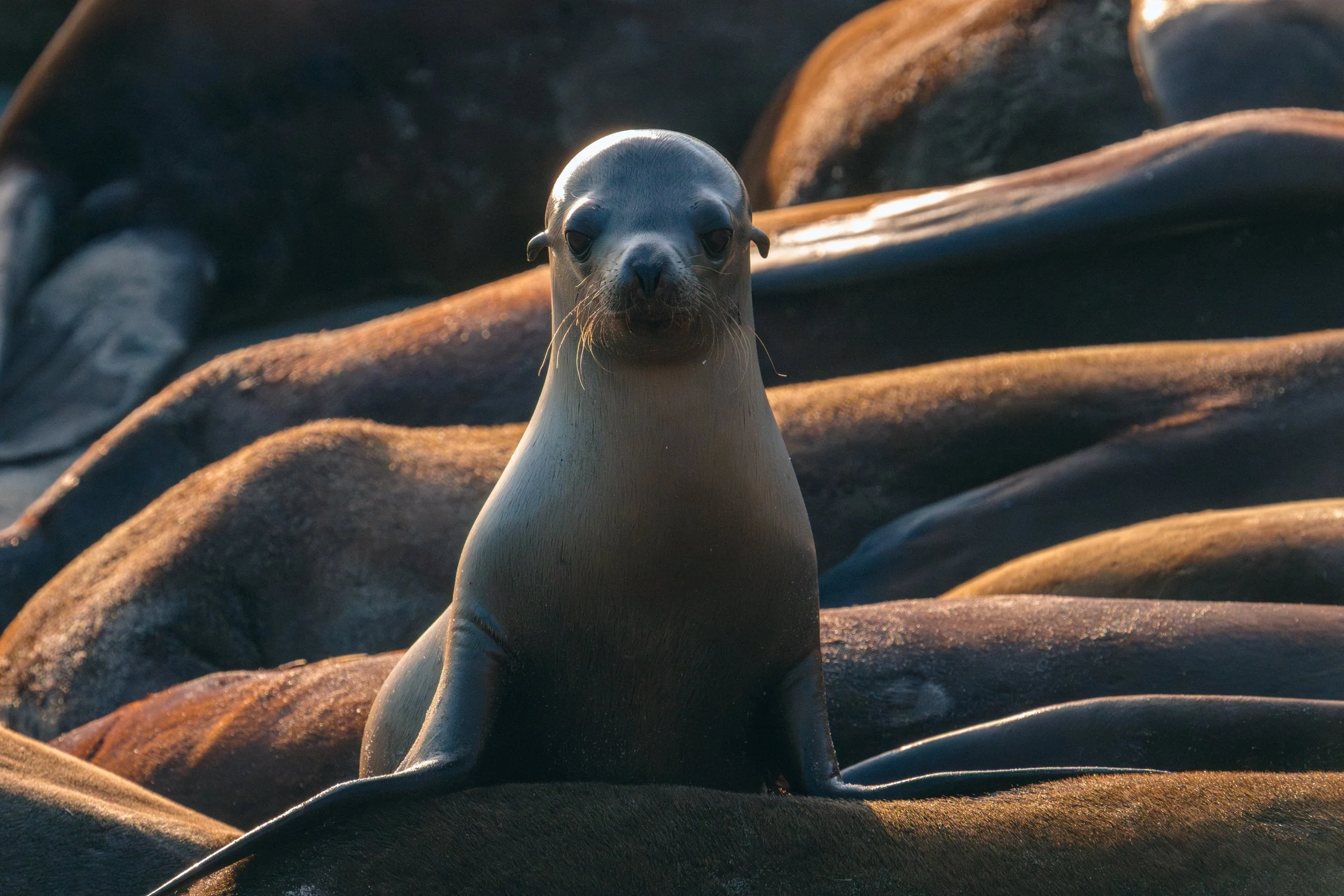
☀
☀
Equipment
To Admire from Afar requires a diverse set of tools. We utilize a specialized range of equipment tailored to the nuances of each environment, selecting each piece for its ability to capture the field with precision while maintaining a low-profile presence.
-
Primary Systems:
Sony a1 II
Sony α6700
iPhone 17 Pro
DJI Action Pro 5
Insta 360 X5 -
Field Optics:
Sony FE 200-600mm F5.6-6.3 G OSS Super Telephoto Zoom Lens
Sony Alpha 70-350mm F4.5-6.3 G OSS Super-Telephoto APS-C Lens
Sony FE 24-105mm F4 G OSS
Sigma 18-50mm f/2.8Equipment:
Sony FE 1.4X Teleconverter -
The coast is a demanding workplace, and we only carry what has proven it can handle the salt, the spray, and the long hours of waiting. This list isn't just a collection of gear; it’s a selection of trusted essentials that meet our rigorous standards for field documentation. Whether we’re dockside or miles out at sea, these are the tools we rely on to keep the focus where it belongs: on documenting the wild exactly as it is.
Gear and Tech:
SIRUI P-325FS Monopod
SIRUI VA-5X Fluid Video
SmallRig HawkLock Quick Release Case
Peak Design Slide Camera Strap
INIU 140W Power Bank, 27000mAh
iShoot Replacement Lens Foot IS-THS260 for Sony FE 200-600mm
SMALLRIG Magnetic Metal Phone Mount with Cold Shoe Mount
SMALLRIG 9 in 1 CFexpress Type A Card Reader Docking Station
SmallRig x FILM RIOT 7-in-1 Folding Tool SetField Gear:
YETI 100L Panga Duffel
YETI 28L Panga Backpack
YETI 6L Dry Sidekick
YETI Large Rambler Bottle Sling
The North Face Recon Luxe Backpack
Therm-a-Rest Z Seat Cushion
Think Tank Emergency Rain Cover
LensCoat® Sony FE 200-600 G OSS
Grundens Deck-Boss Boots
Locations
-
📍 Channel View Park — 29 Ocean Dr, Oxnard, CA 93035
Small park at the harbor entrance, just steps from Hollywood Beach. Sea lions often gather on the rocks and in the water - listen for their signature “arf”! No restrooms at the park, but facilities are available elsewhere in the harbor. Limited street and lot parking.📍 Bench Viewpoint (Near Salt + Noelle’s Dockside Studio) — 3141 Victoria Avenue, Oxnard, CA 93035
Public bench along the harbor walking path. Offers a clear view of occasional sea lions and local bird activity. Essentially the Salt + Noelle view, without being on our patio. Restroom on-site. Large parking lot available; parking fees unknown.📍 Kiddie Beach Park — 2721 Victoria Ave, Oxnard, CA 93035
Calm, protected cove inside Channel Islands Harbor. Great for families and swimming. Lifeguard on duty in summer. Showers, restrooms, and free parking on-site. Check water advisories after storms. Recently a major sea lion haul-out - maintain a safe distance and follow posted restrictions.📍 Hobie Beach — 2974-3098 Victoria Ave, Oxnard, CA 93035
Designated launch site for kayaks, SUPs, and small sailboats. Calm harbor water, easy marina access. Free parking in adjacent lot. Restrooms & showers nearby at Kiddie Beach.📍 Harbor East Park — Victoria Ave & Murre Way, Oxnard, CA 93035
Small, grassy park near Channel Islands Sportfishing. Free, limited parking on-onsite. Great place for casual birding.📍 Silver Strand Beach — 2525 Ocean Dr, Oxnard, CA 93035
Stretch of beach near harbor mouth, featuring rocky jetty haul-outs popular with sea lions. Parking and restrooms available at nearby beach access points.
Life for Sea Lions in a Working Harbor
It has been over a month since my last update. Usually, when I’m quiet, it’s because I’m deep in an archive of media. Most recently, I have been culling through over 6,000 photos from our trips to the pinniped colonies at Point Bennett and a cruise to Anacapa Island. I have a pending gallery of ‘Gingerbread,’ the very first elephant seal pup of the 2025–26 season at Piedras Blancas, and a trip to Cuyler Harbor on San Miguel Island from October that still needs to make it to the blog.
The truth is, I’ve been remarkably behind on content due to a whirlwind of professional growth. I recently upgraded my kit to the Sony α1 II, marking my first step into the world of full-frame photography. It’s an exhilarating shift in my workflow, though I’m still fine-tuning my process for downressing those massive files to make media uploads a bit more pliable for the web.
Beyond the gear, I’ve been focused on the foundational side of stewardship. I’ve been busy redoing the website while pursuing my CAWS (Community Active Wildlife Stewardship) certification through Sea Otter Savvy. Amidst all this, I was also incredibly honored to have my work selected for the Griffin Museum of Photography's online exhibit, Enduring Ground.
It has been a productive season, but this January, the reason for my silence has been more visceral. The harbor has been through the ringer. It stormed for most of December, and after the holidays, the Pacific seemed to double down. The rhythmic life of the coast has been interrupted by harsh winter systems that changed the nature of my fieldwork. Twice this month, the role of observer was set aside for the role of active steward.
The Sacrifice of the Jacket
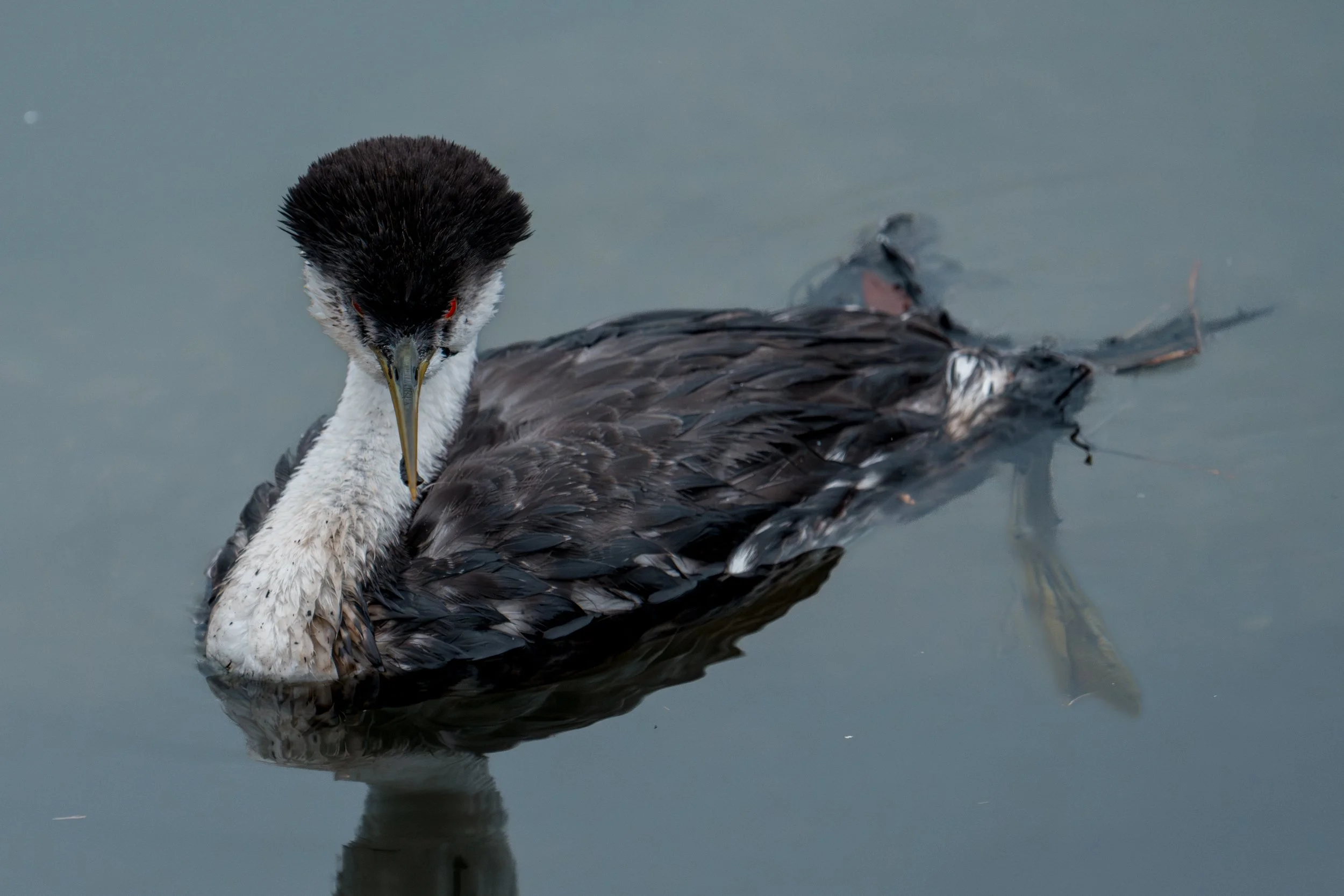
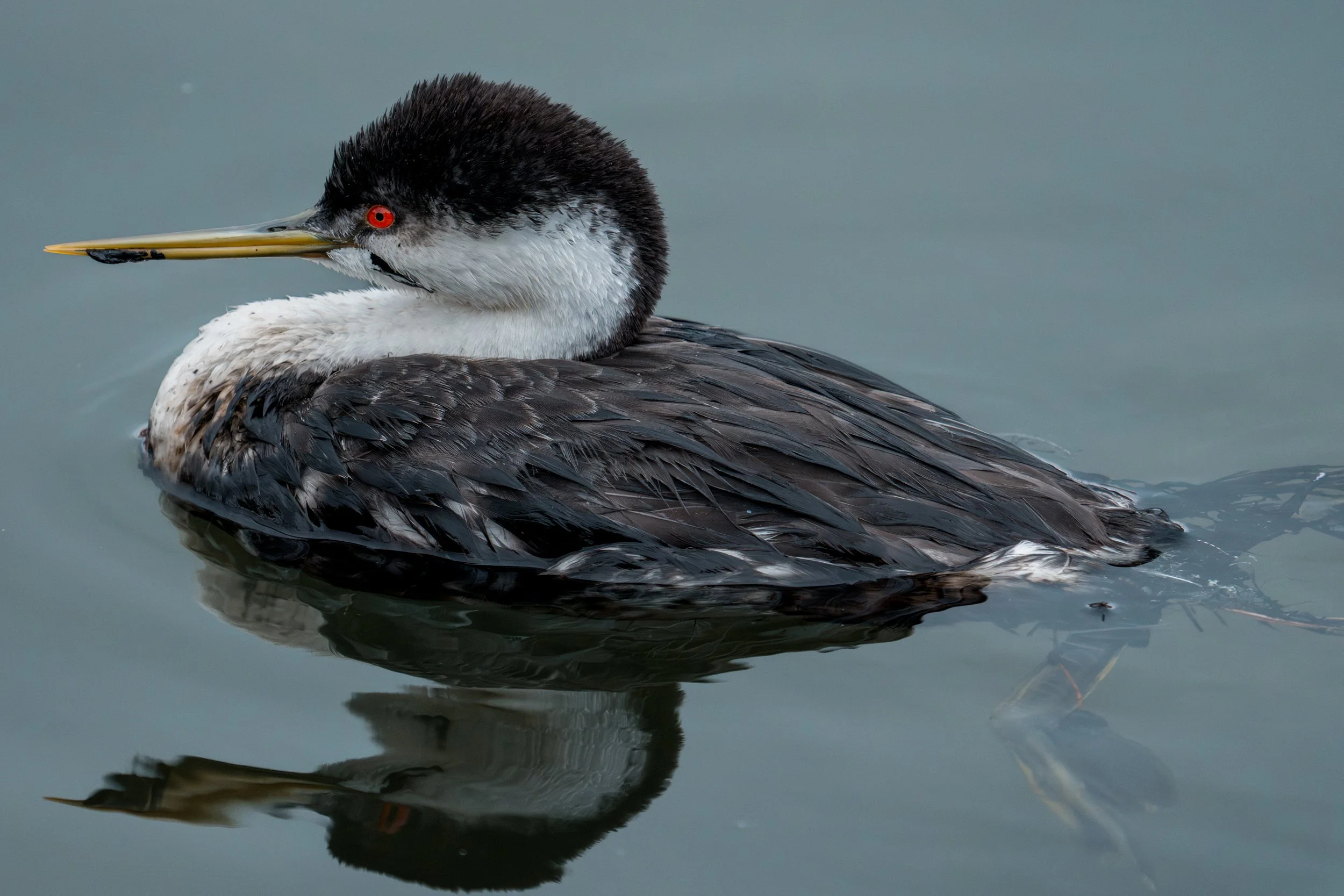
The shift began in early January. I started my morning at the Channel Islands Sportfishing Company with my camera, planning to photograph pelicans before heading to the beach to capture a new entry for Whiskers in the Wild. Instead, I noticed a Western Grebe behaving strangely. It was swimming slowly, sticking to one small area near the side of the harbor.
I knew from experience that if a grebe ends up on land, it cannot take off again, so I wanted to be absolutely sure before interfering. I watched for a while, attempting to identify an injury or entanglement through my camera’s viewfinder. The grebe looked like it was struggling with its leg or rear area. When a sea lion appeared from under the dock, the grebe stared at it, seemingly unable to maneuver away. Unable to dive, the grebe would die - I knew I had to take action.
I called the Santa Barbara Wildlife Care Network. They confirmed my understanding: the grebe would be stranded if it ended up on land. Their team was fantastic, and quickly connected me with a local volunteer, but they were honest about the logistical reality. An ocean rescue was not possible for their team at that moment. I was informed that ocean rescues of grebes are incredibly challenging, especially due to their impressive diving ability. However, because I was on site and equipped to navigate the terrain, they gave me explicit permission to attempt the rescue if it seemed safe.
I followed the grebe as it moved along the harbor edge, crawling down slippery, mussel-covered rocks in my Grundens. King tides had just passed, so everything was wet and slick. As I closed the distance, the grebe held its ground, neck extended and beak wide open in a sharp defensive posture. It began "yelling" at me - a series of three piercing, rhythmic “eeeee” calls that echoed off the rocks (you can hear this in the video below).
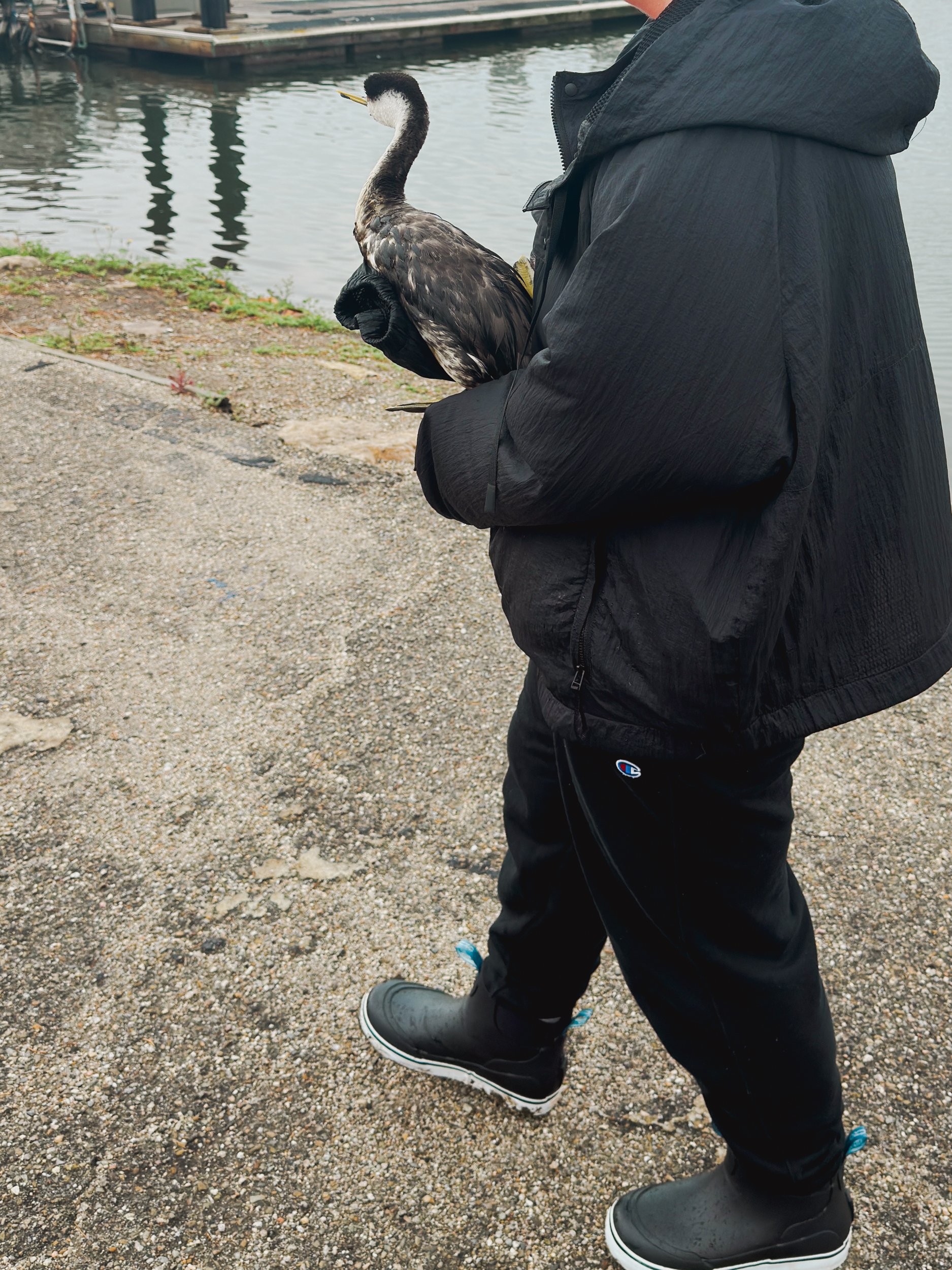
Getting that close, I could finally see the extent of the damage: oil was smeared across its bill, under its body, and heavy on its legs. There was no way it would survive without help. As it snapped, I performed a 'bite test' and offered my jacketed arm. When I didn’t react to the bite, the grebe and I seemed to enter a moment of mutual understanding - it needed help, and I was there to offer it.
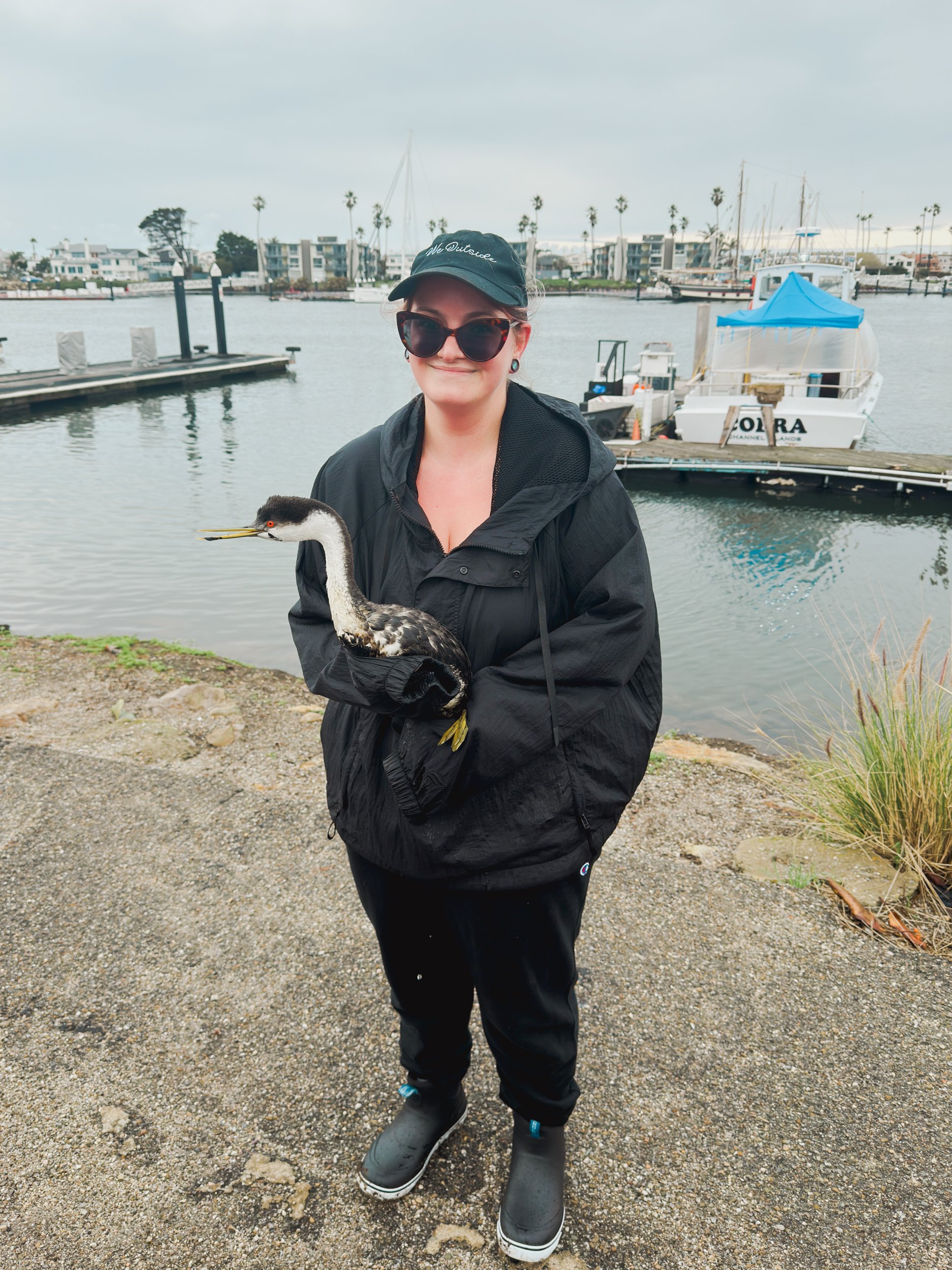
I carefully picked up the grebe and climbed back up the rocks. The Channel Islands Harbor Patrol, especially Tim Brown, were quick to help. Tim found a dog crate, and we got the grebe settled inside. At that point, my jacket was so stuck to the oil on the bird’s feathers that trying to remove it would have hurt him and damaged his plumage even more. I left my jacket in the crate as a small sacrifice to keep him safe and let the professionals handle the rest.
For the record, I was absolutely not prepared for a photo op. If I look soaked and frazzled, it was because I had just been in the harbor rocks with an oiled bird while still in my sweatpants. My hair was still wet from a morning shower and pulled into a messy bun, I had zero makeup on, and I was definitely not dressed for a blog appearance. If you see me smiling in the photo, it was a brief moment of relief while waiting for Tim from Harbor Patrol to prep the rescue crate. We used those few seconds of mandatory downtime for documentation to help tell this bird's story, but my focus never left his care. There was no wasted time. As soon as the crate was ready, we were back to the task at hand.
The Rescue Loop: Wait, Evaluate, Evidence
This sequence shows a logistical pause while waiting for Harbor Patrol, the documentation of the grebe's piercing calls and bite test, and the heavy oiling that confirmed the need for immediate intervention.
❣️ Never attempt a rescue on your own. I acted only with explicit professional guidance while on-site. If you see an animal in distress, prioritize observation and contact local experts ❣️
Hot Dogs on a Roller
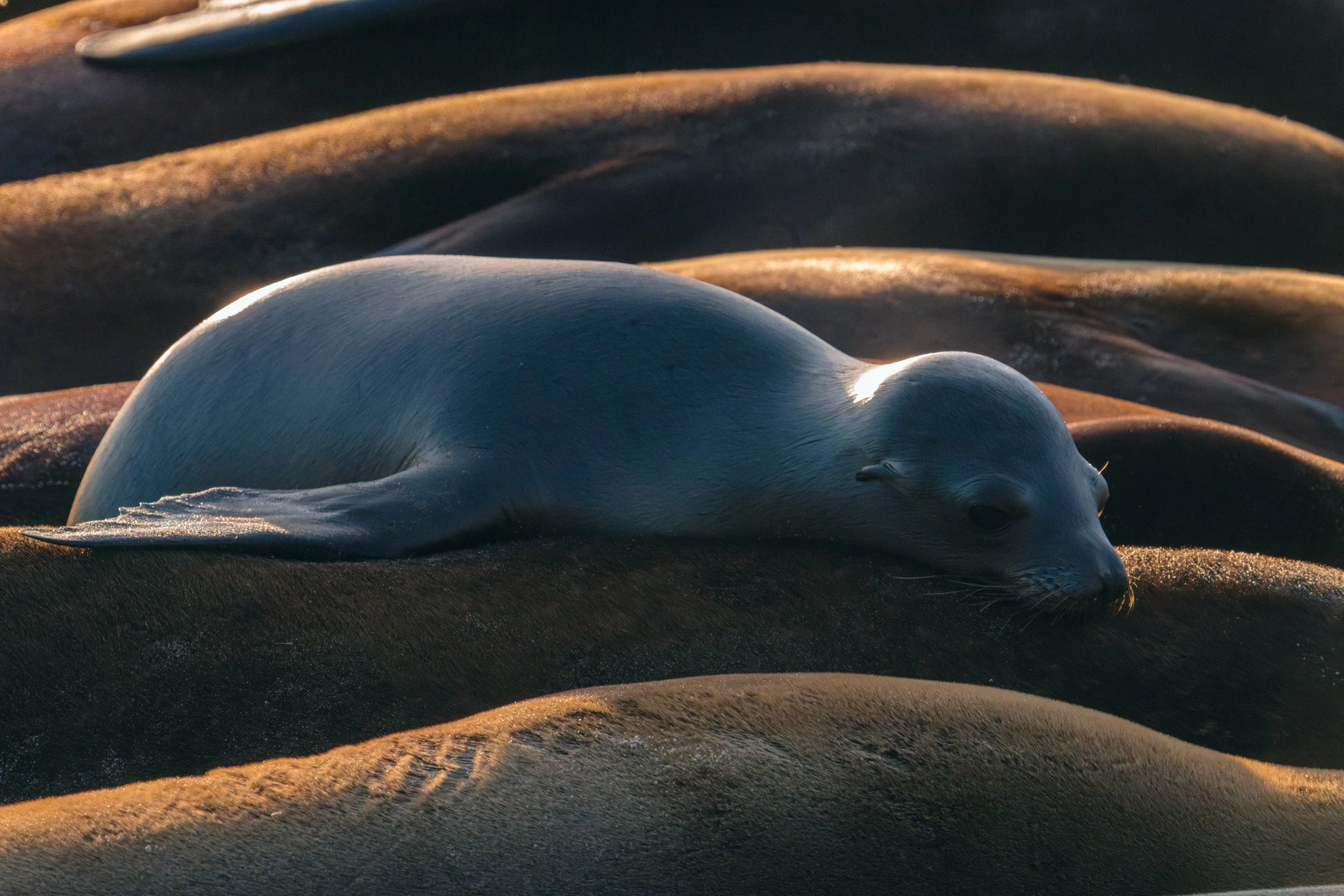
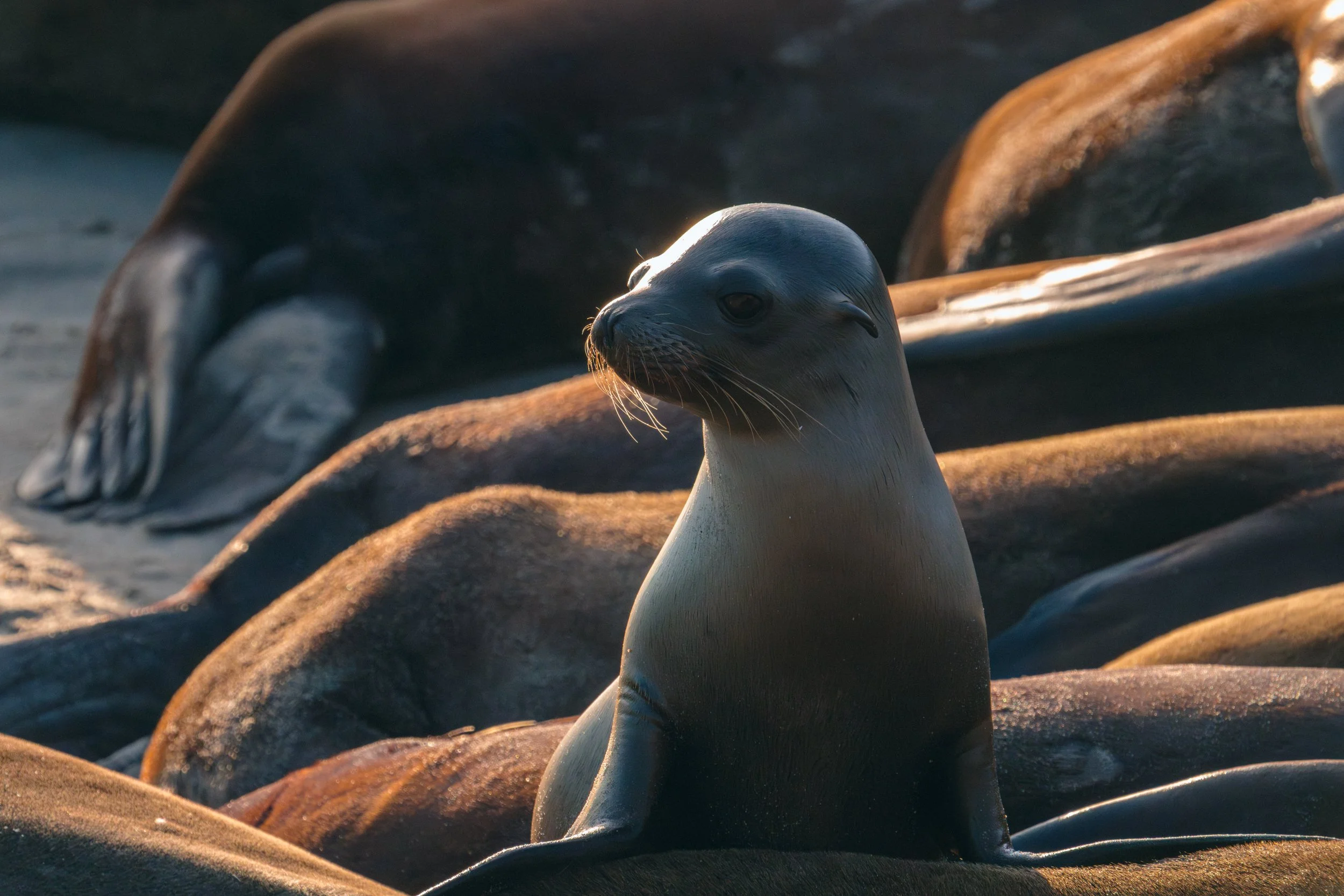
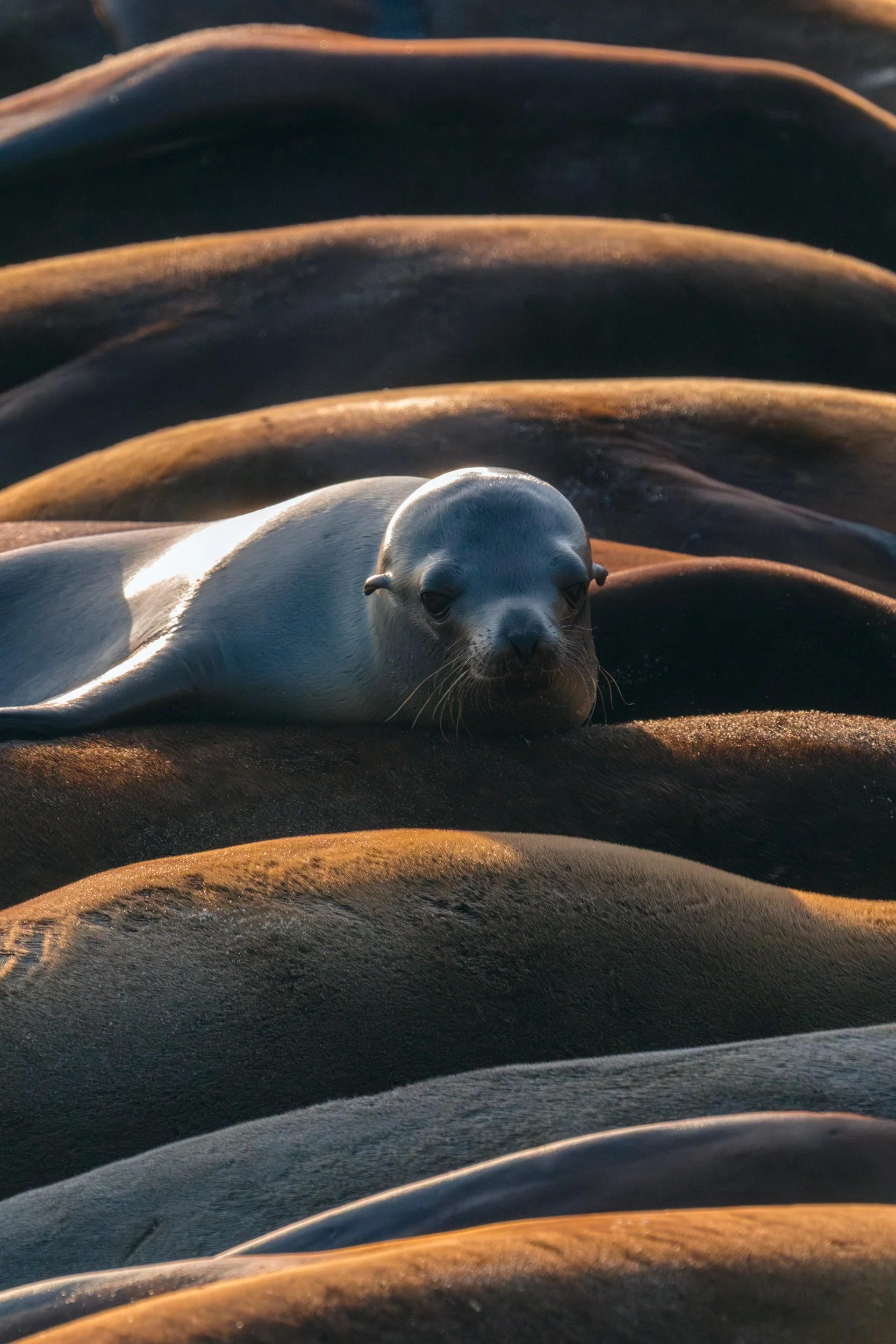
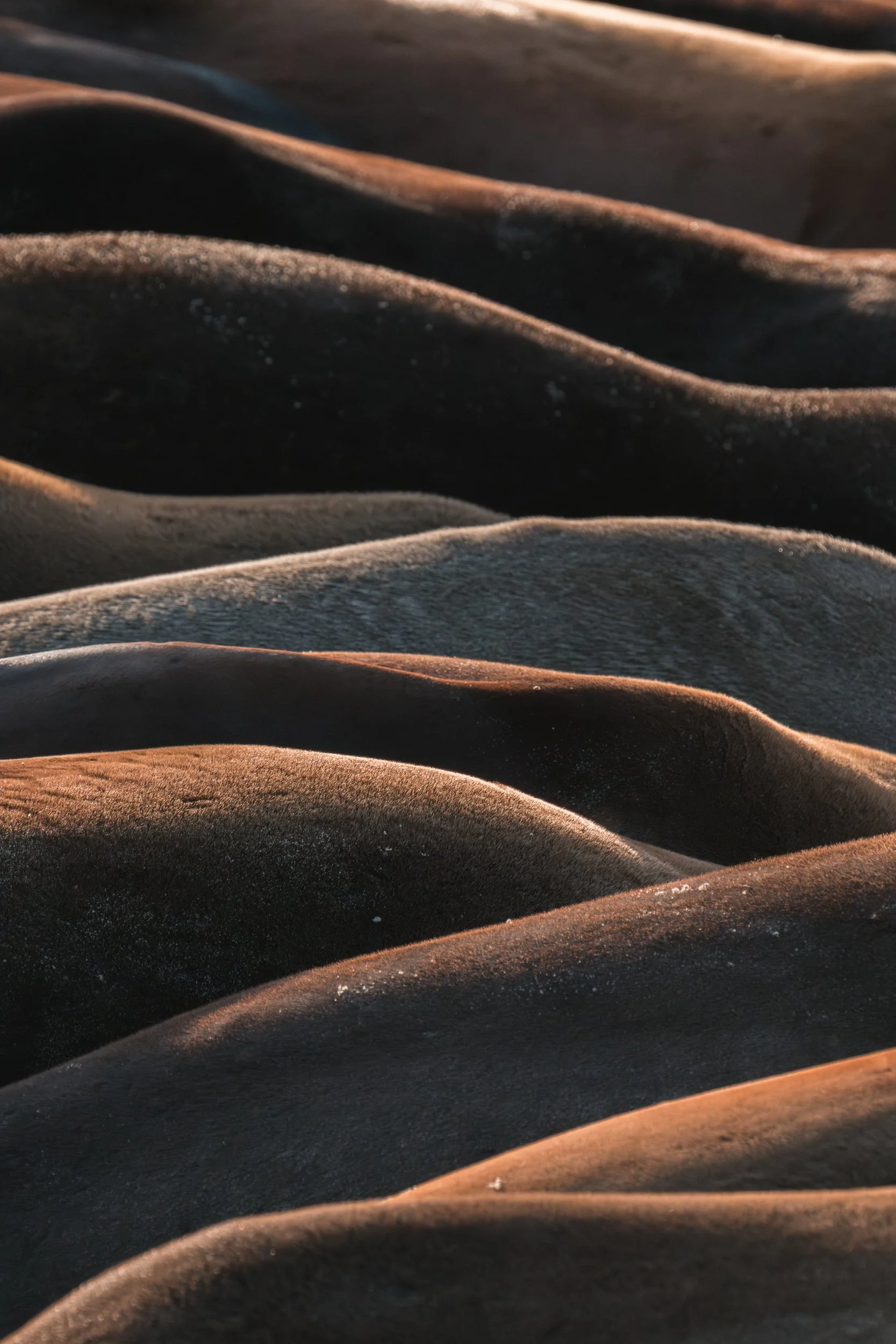
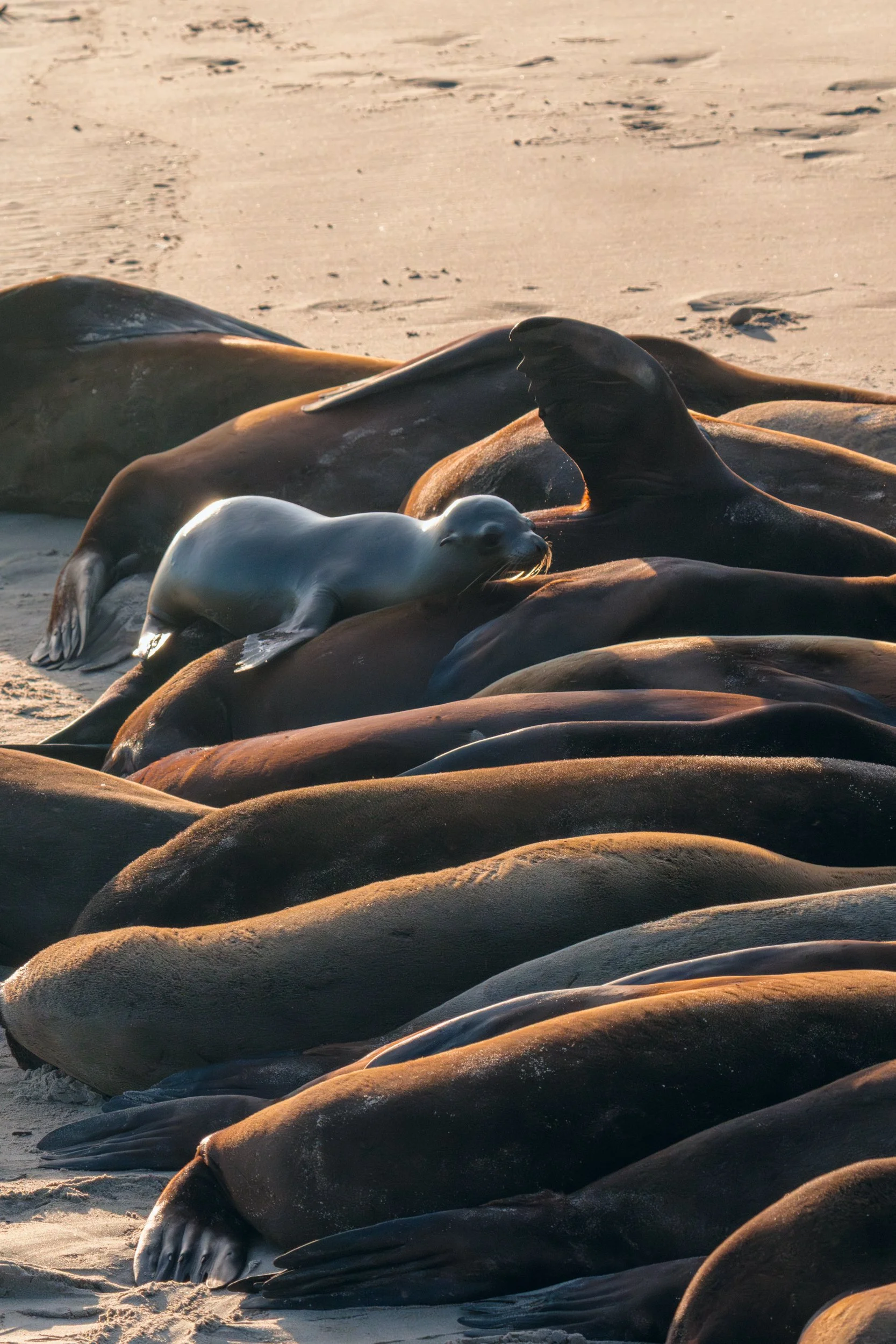
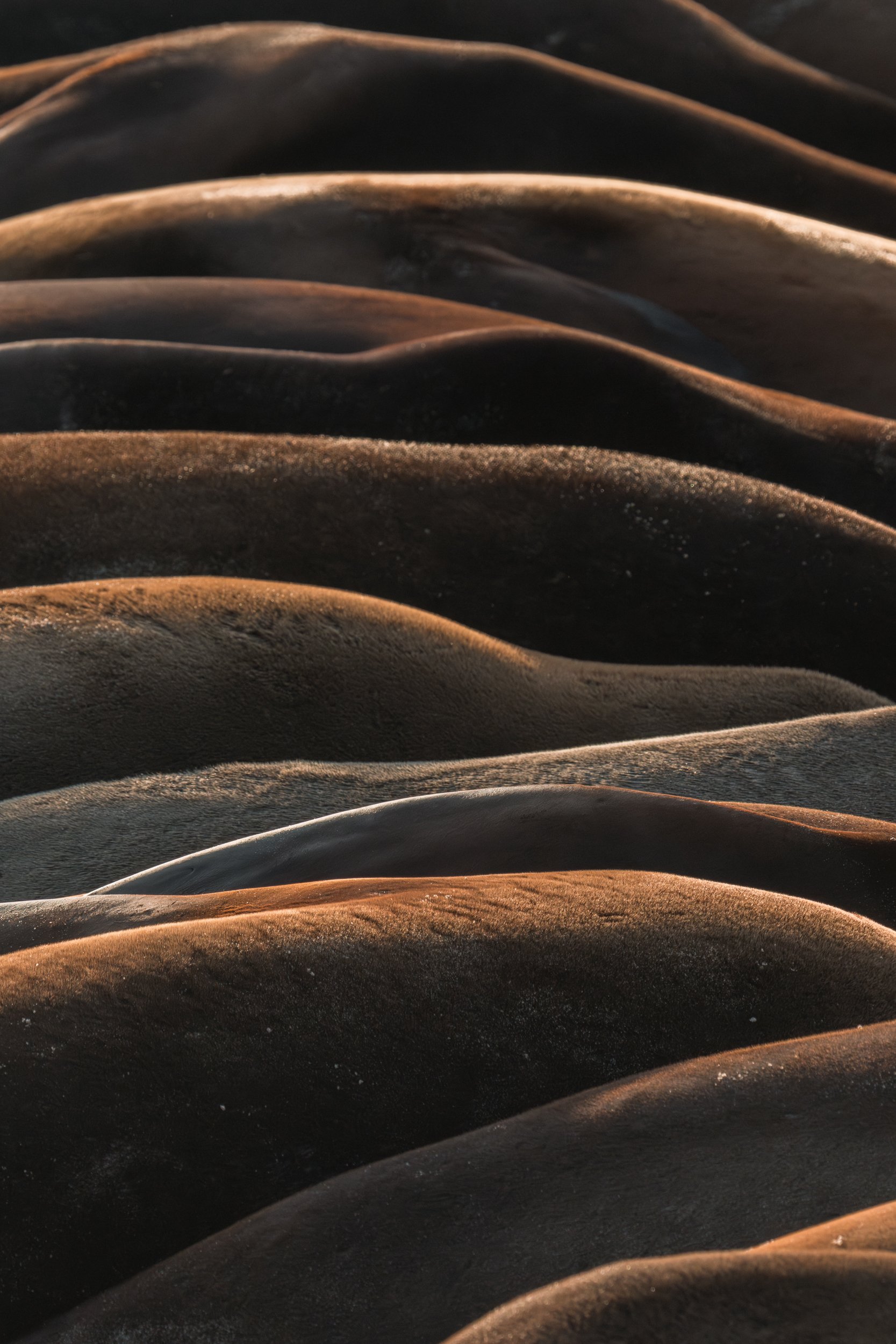
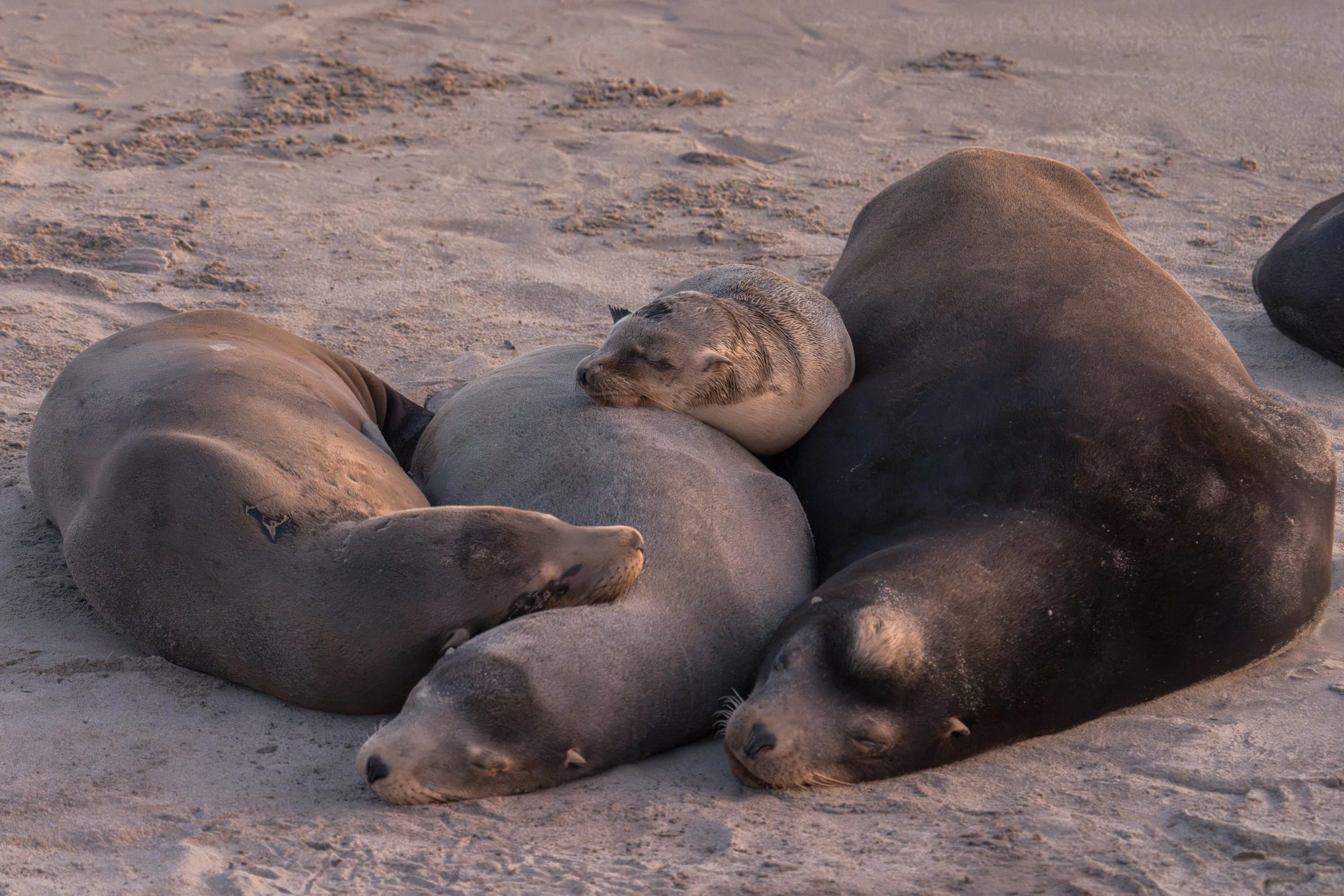
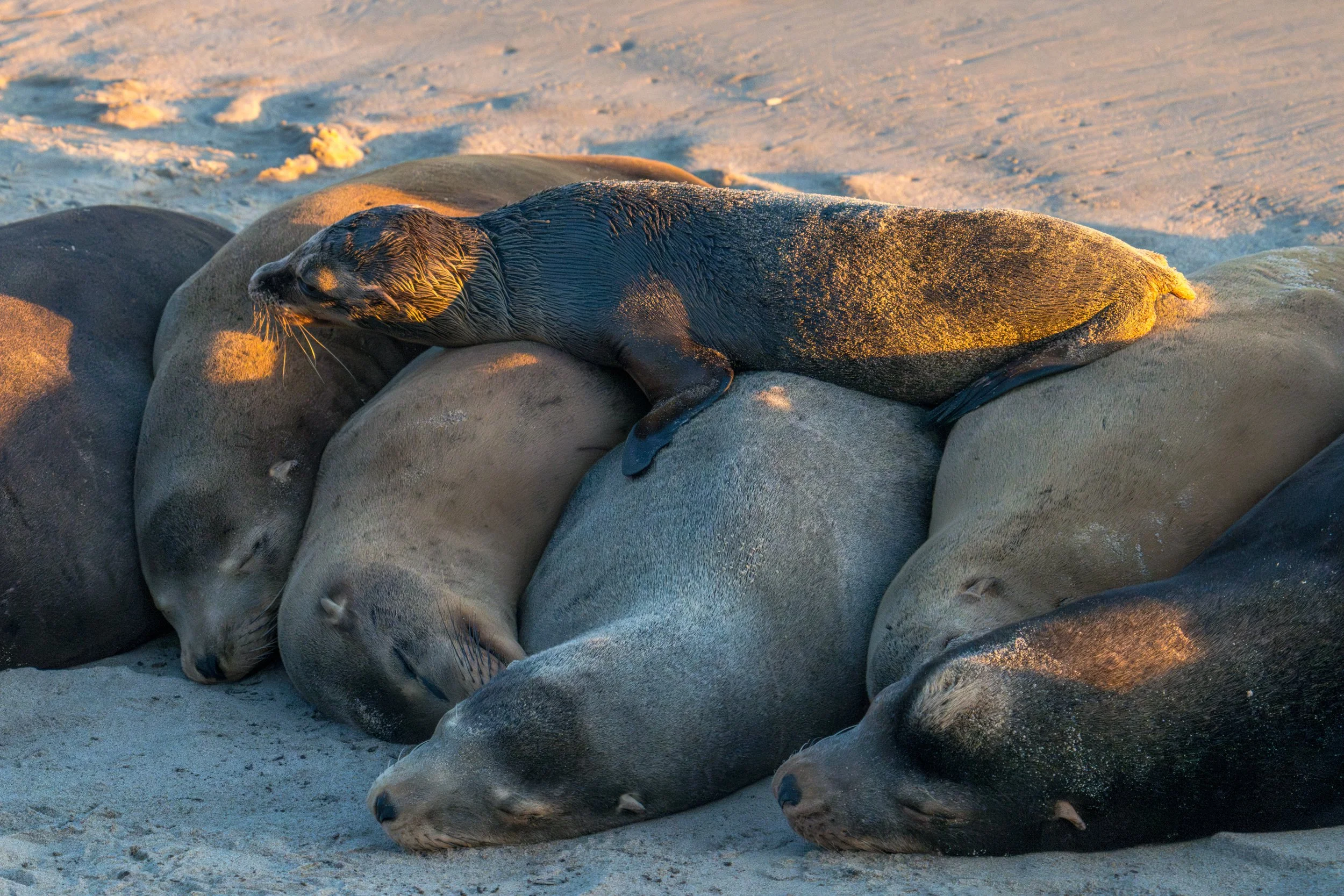
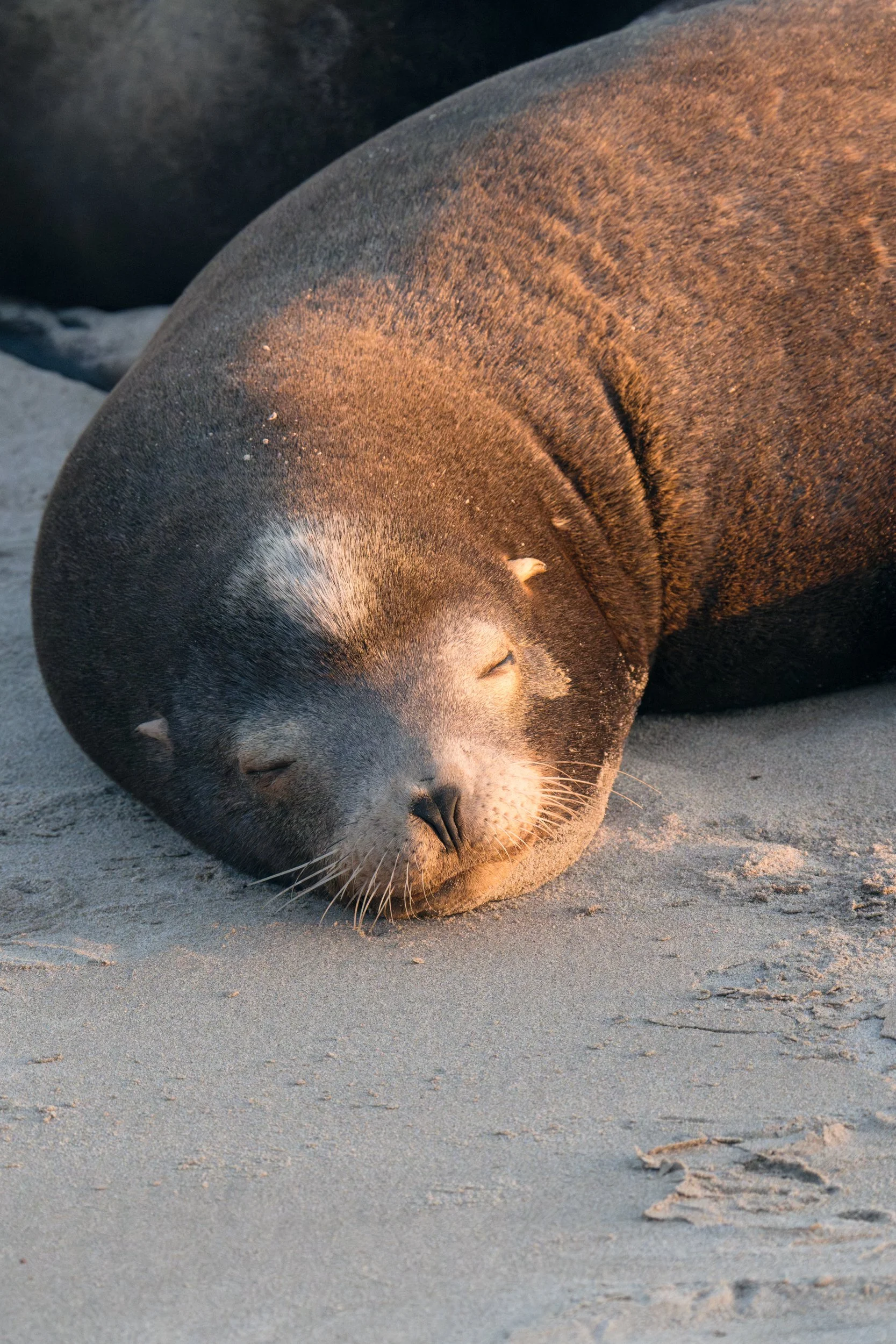
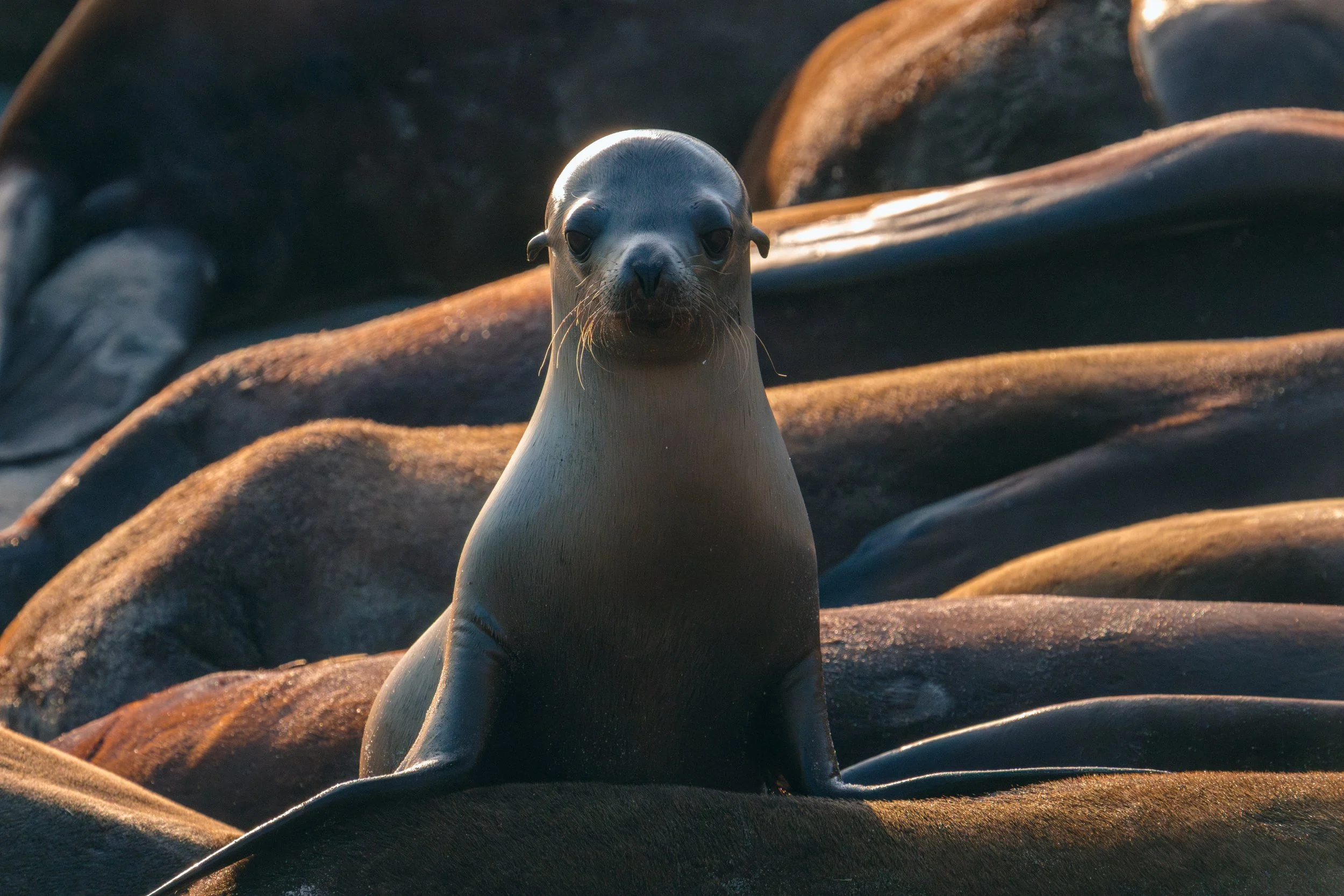
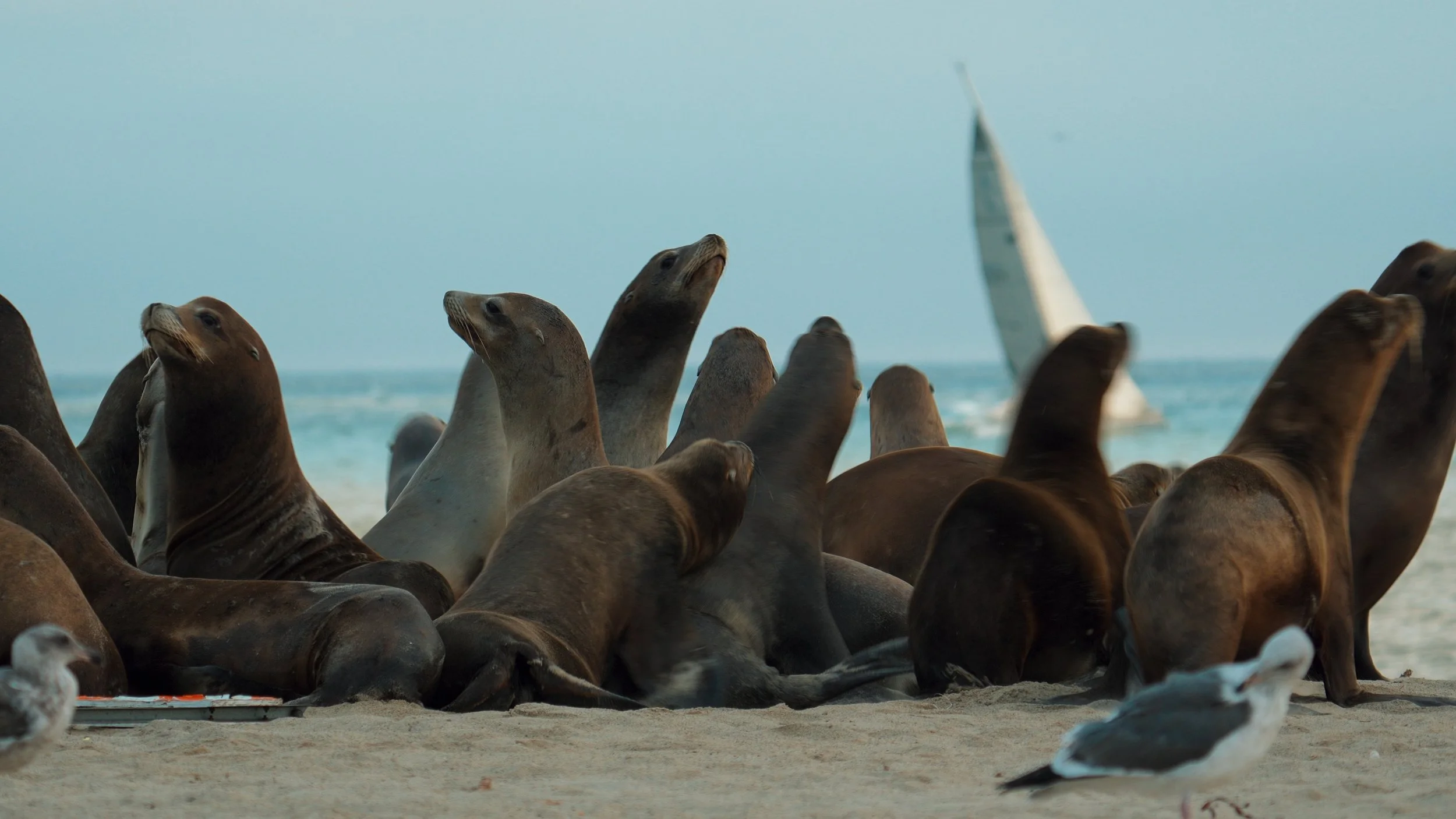
Just a week later, Michael and I headed to Channel View Park to capture the Whiskers in the Wild update I had planned on shooting the previous week. After a month of storms and king tides, it was a nice change of pace to see the colony hauled out on the sand under golden light. From a sophisticated perspective, they looked like smooth river stones laid on top of one another. From a humorous one, they resembled a row of hot dogs on a gas station rolling grill.
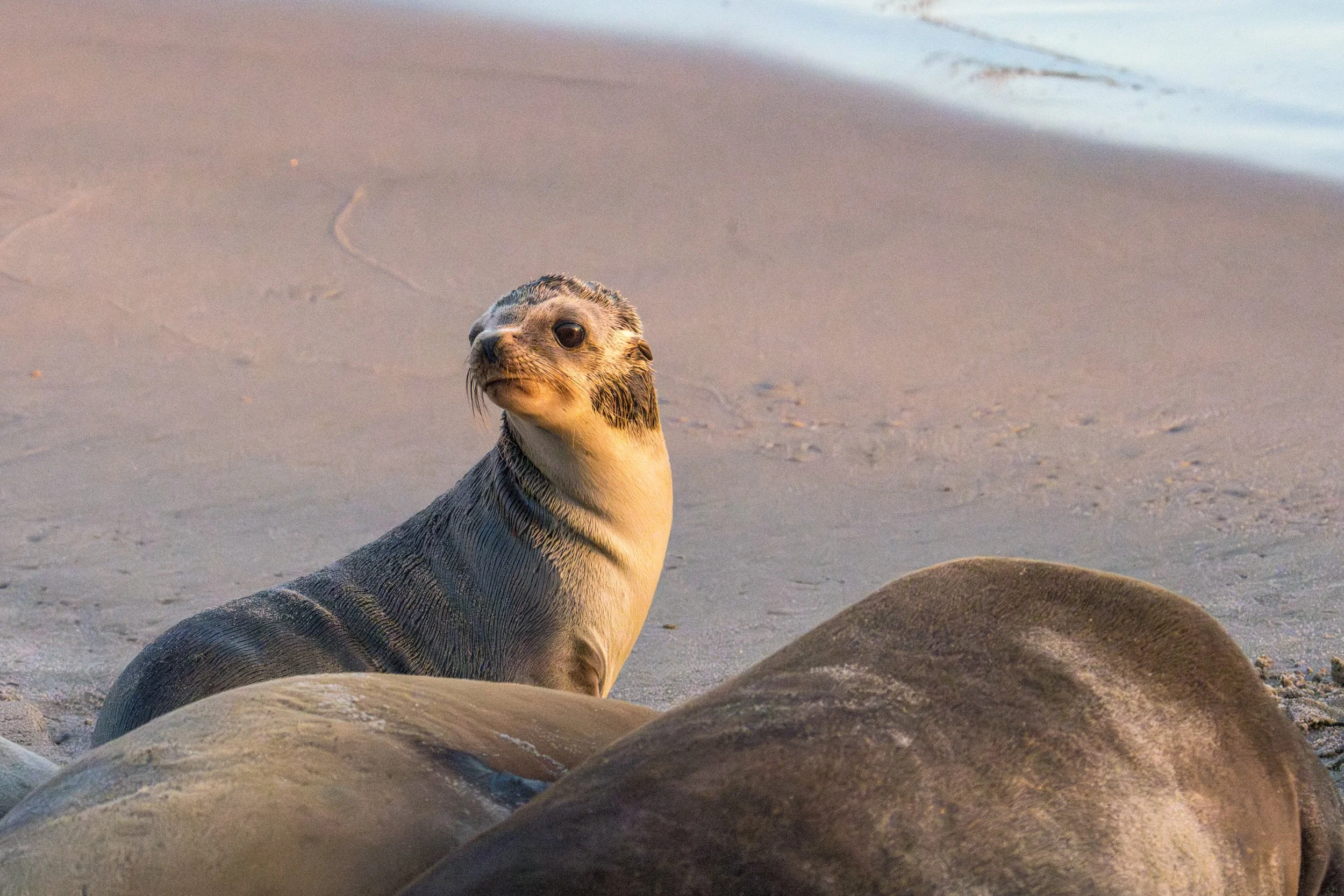
While we were relaxing, a sea lion emerged from the ocean, smaller than any we had seen before on land. Immediately, the crowd around us started exclaiming how cute it was, but something felt off.
He tried to join the pile, crawling over the other sea lions and plopping right in the middle. Some adults greeted him, while others, mostly large bulls, screamed at him to back off. Then I noticed a worrying behavior: shaking. I know about sea lion jugging and thermoregulation, but this looked like a medical emergency. I reached out to my mutuals at the Sierra Club Seal Society of San Diego, who confirmed that what I was looking at should be investigated.
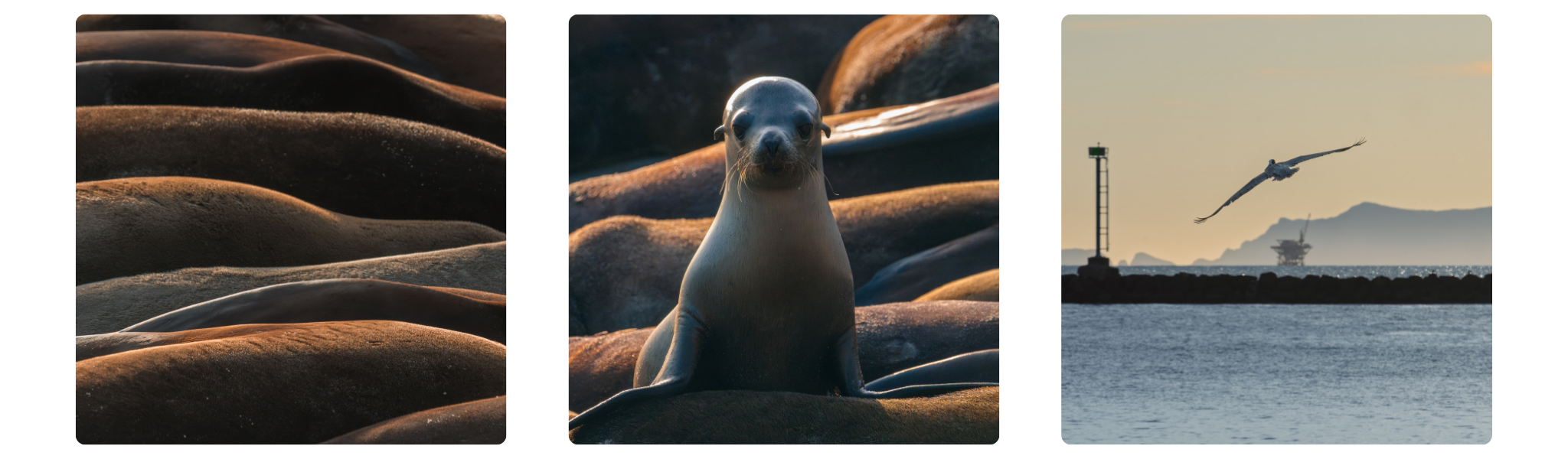
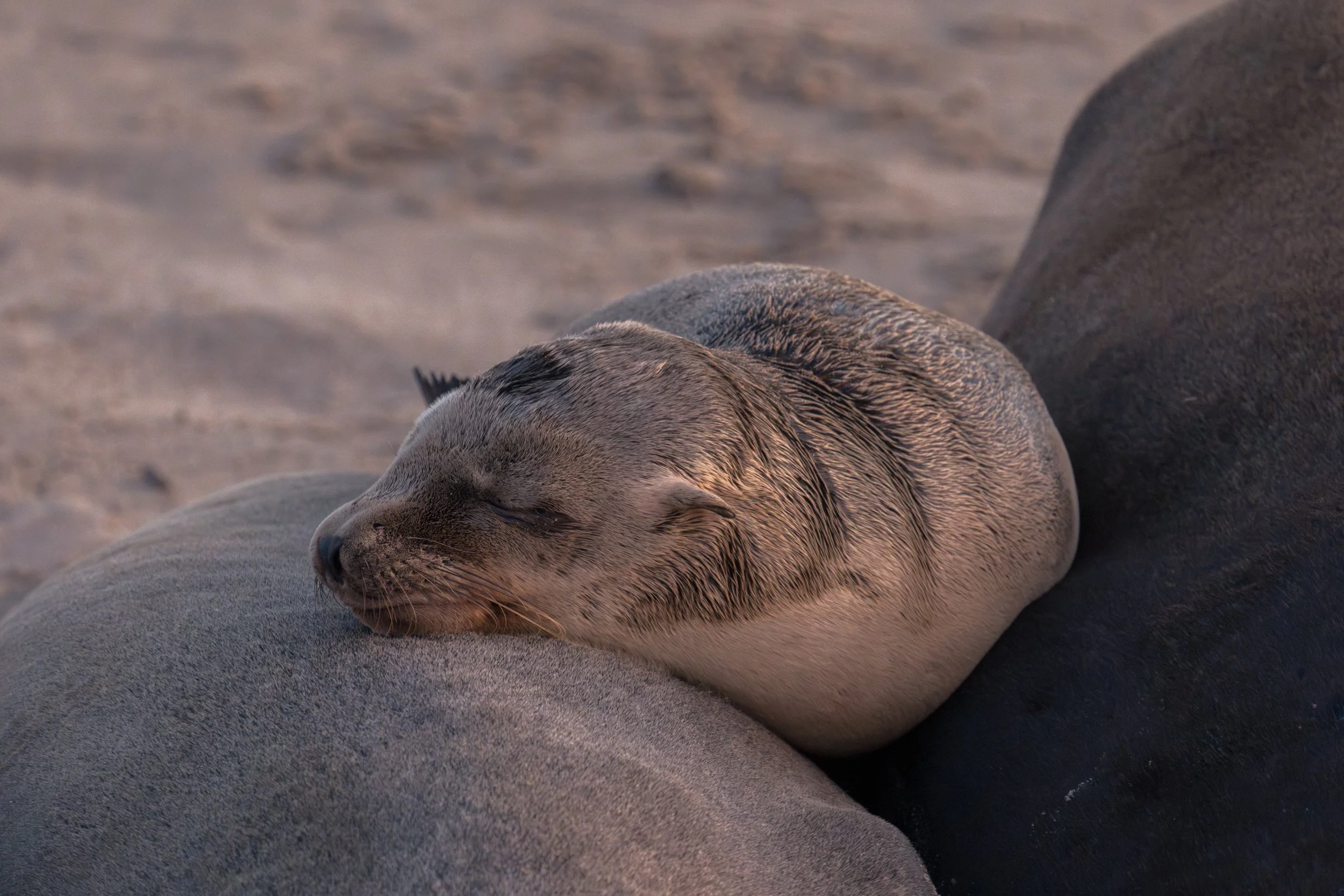
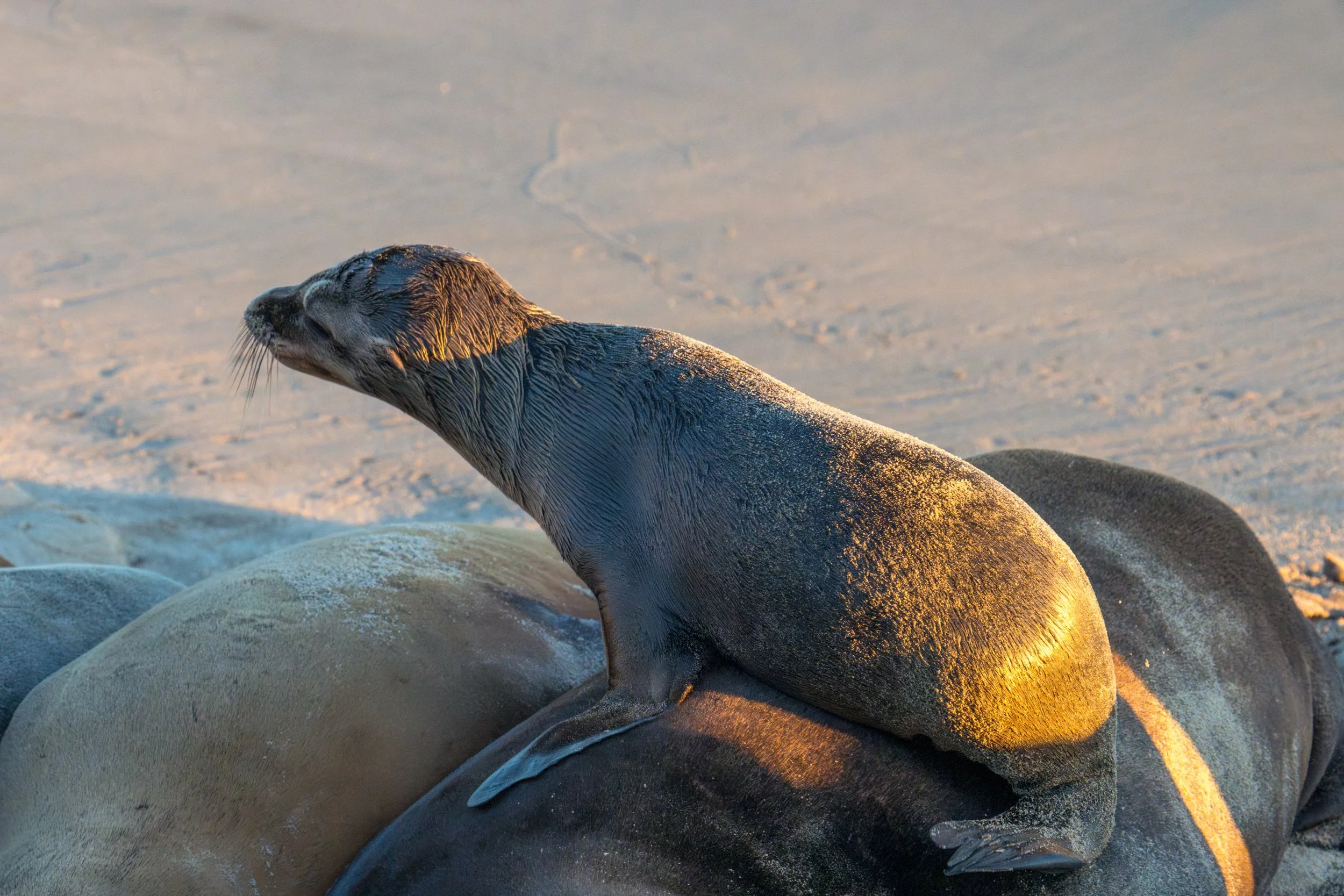
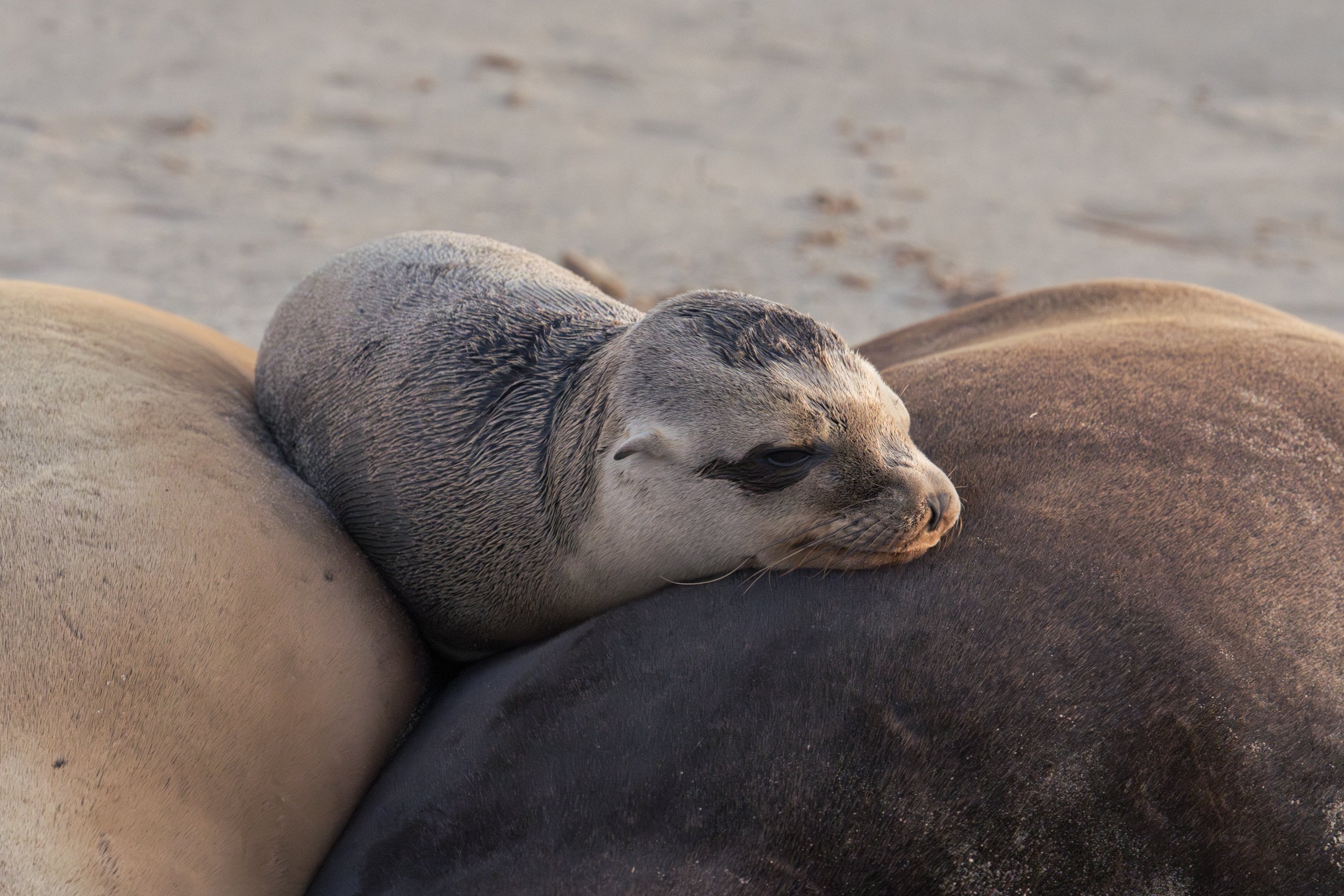
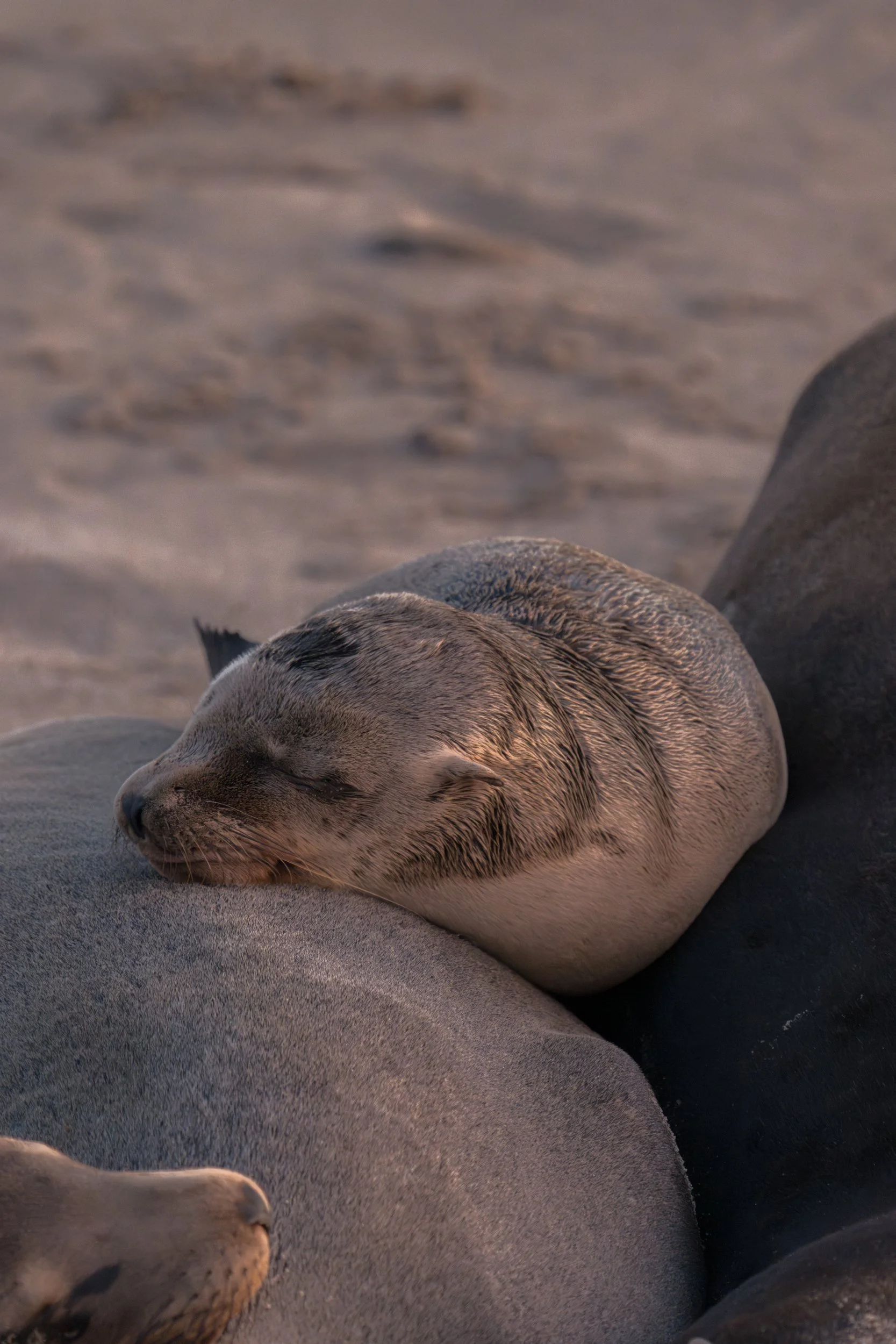
From left to right: the "hot dogs on a roller" photo, a shaking pup seeking warmth atop the pile, and sunset over the channel.
An Extended Silence
Then the system reached its structural limit. I immediately reached out to CIMWI, but the hotline was down and the mailboxes were reported as full. While I typically report via form (and had already done so earlier that morning for an entangled adult) this situation felt too critical to leave until the next day. We spent the evening in a frantic back-channel triage, calling Marine Mammal Care Los Angeles and working with Elena at SD Seal Society to ensure a report was logged. As the sun went down, the pup was still snuggled into the pile. We had to head home, but I did not sleep a wink.
At 8:30 AM the next morning, we were back. The first pup was still there, but now he had company. A second, emaciated pup had washed up, entangled in orange construction safety fencing from local dredging operations. She was calling out for a mother who was not there and, in a heartbreaking display of desperation, trying to nurse from the bulls on the beach.
To the untrained eye, a pup nursing from a bull or drinking from the harbor looks like a desperate struggle for survival, and to some, it even looks "cute." In reality, it’s a clinical sign of severe physiological distress. Sea lions do not drink seawater; doing so accelerates organ failure through salt toxicity. Nursing from a bull is a misplaced, end-stage instinct that risks a crushing injury. These were not just hungry pups. While one was certainly in a state of metabolic crisis, both required immediate stabilization rather than an extended wait on a public beach.
It took hours and several more calls, including one to the NOAA West Coast stranding line, before a combination of back-channel coordination and a direct assist from Harbor Patrol finally bridged the communication gap. By the time the volunteer arrived, Michael and I had been on-site for hours. We were unshowered, caffeineless, and acting as a human barrier between the sick pups and the weekend crowds. After the handoff, I finally headed home to decompress, but the quiet did not last long. I went back to the harbor later that afternoon to check on the site and found the beach empty. There were only fresh footprints leading away from where the pups had been, which was a welcome sign that the rescue was successful.
Since then, CIMWI has posted updates regarding the pups. It’s heartening to see their improved condition, and readers can visit CIMWI socials for further updates on their progress.
I left my jacket in that first crate because the bird’s life was worth more than the fabric. But as I stood on the sand watching a sea lion pup shiver in the dark, I realized that the community cannot be the only jacket these animals have. We need a system that does not rely on the luck of a passing wildlife photographer.
Behind the Lens: The Ethical Record
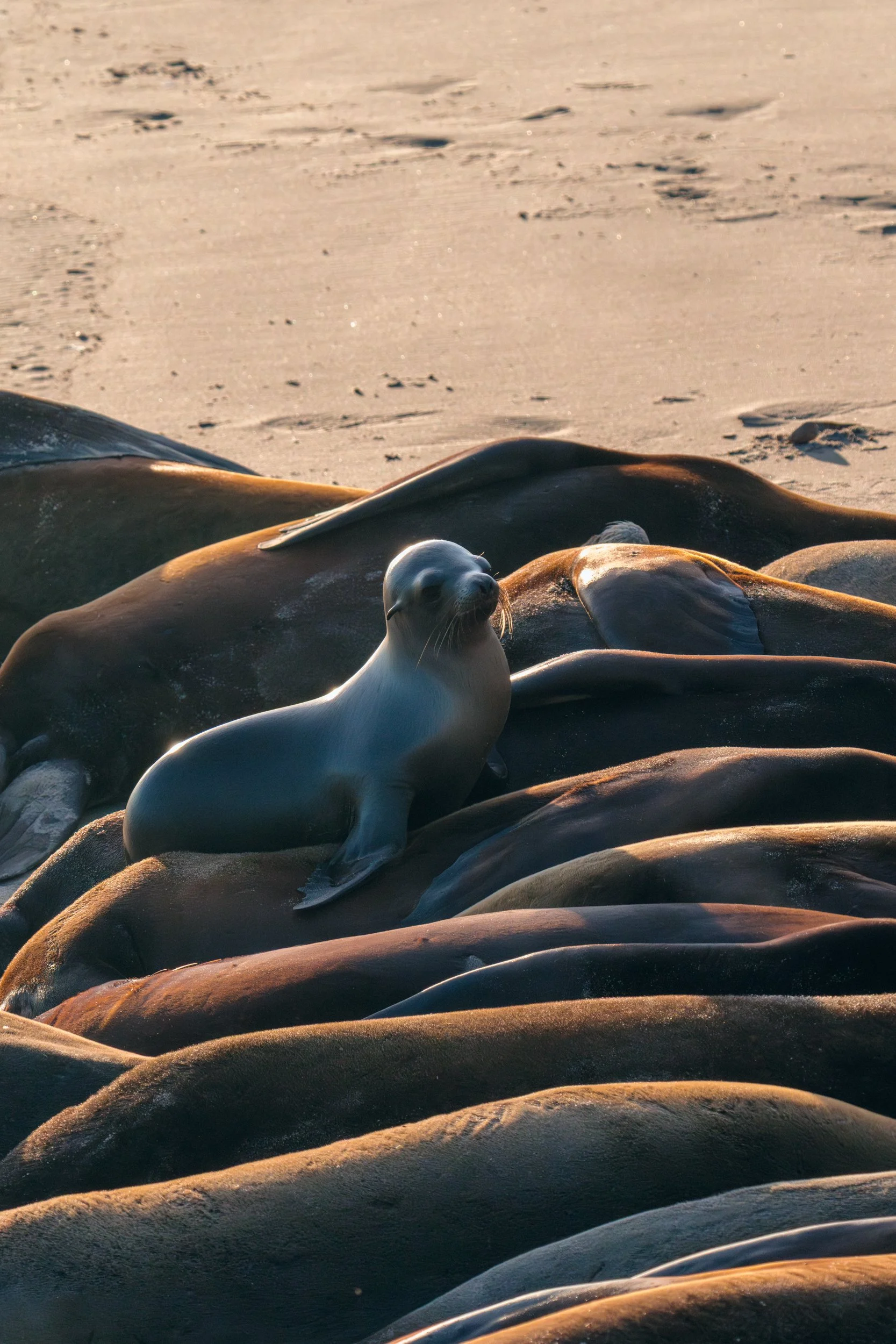
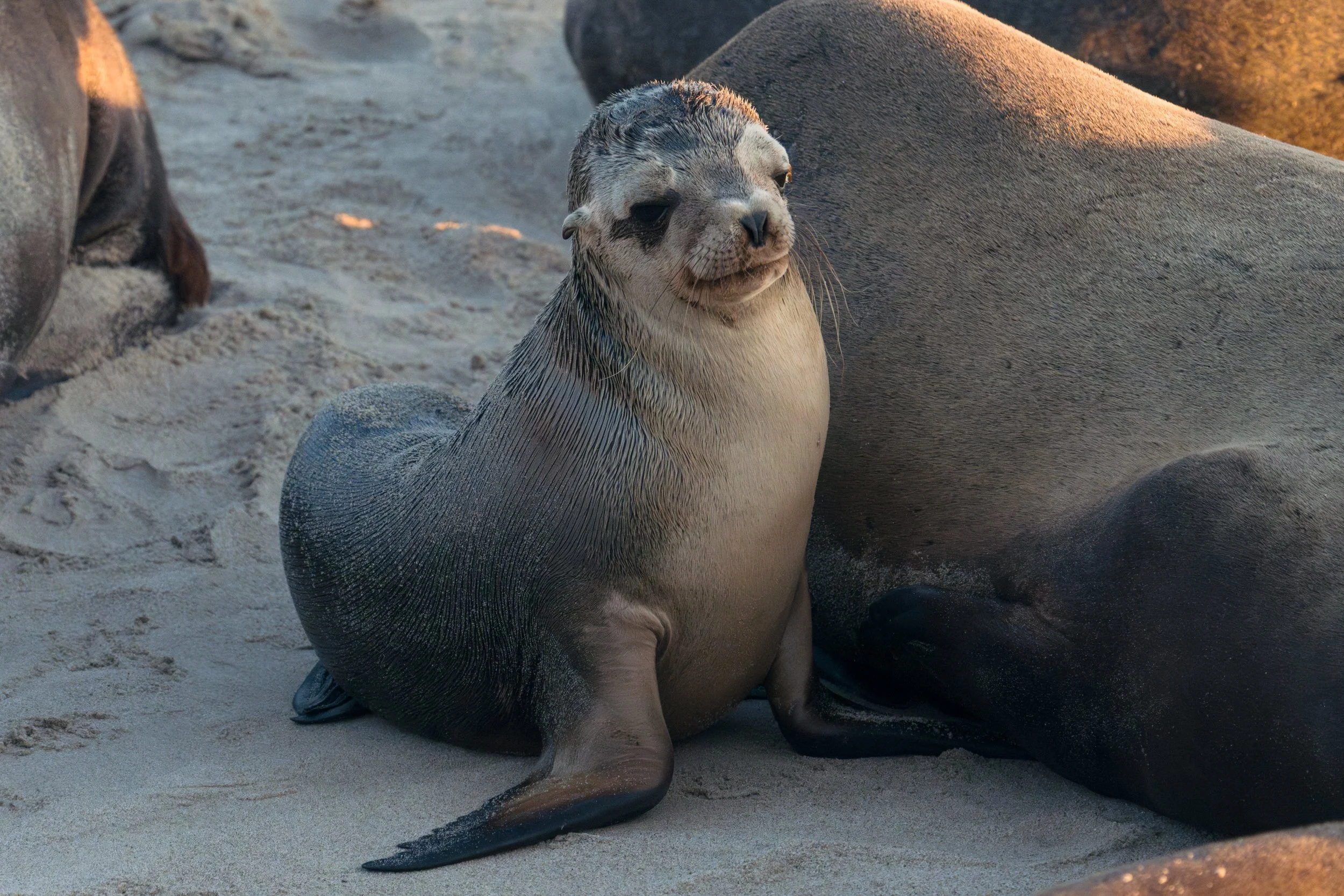
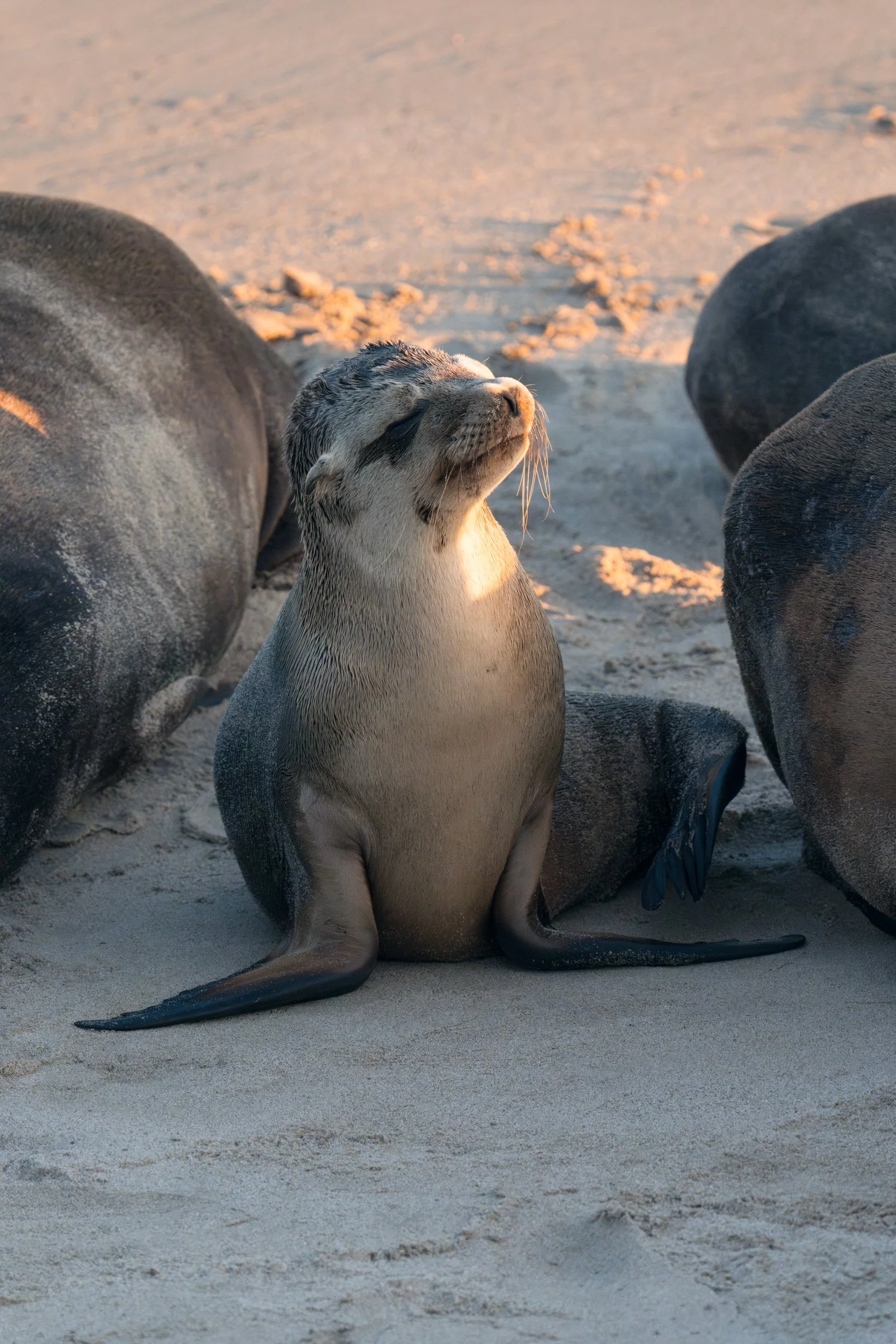
While the photographs included in this post provide a window into the reality of the harbor, they are only part of the record. I have intentionally limited the gallery to photos of the first pup. This was the one who, while in need of observation, was not yet in a state of visible emaciation. I’m doing this to keep this space focused on the broader story of stewardship.
I plan on withholding the second pup’s image and more graphic video footage of this collapse, including clips of the animals desperately drinking seawater, from public view to maintain an ethical boundary. However, these records serve a higher purpose than content. They exist as formal documentation of the event and as a testament to why a local triage hub is a biological necessity. For scientific or reporting purposes, I have the complete archive of footage and photos available. Please contact me directly if you represent a rescue or research organization that requires access.
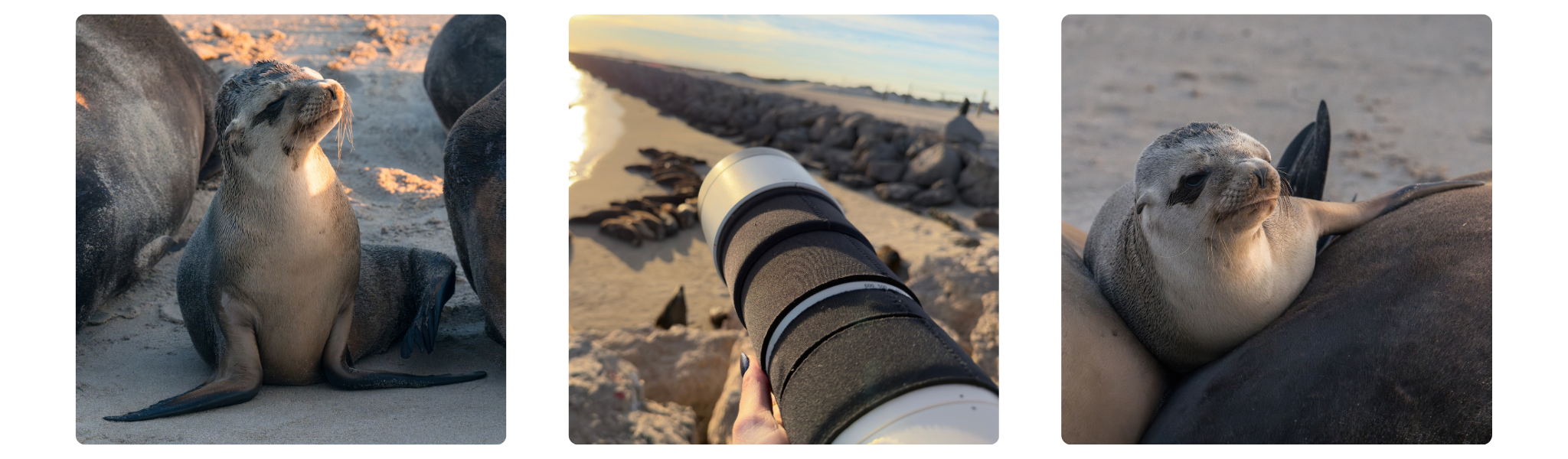
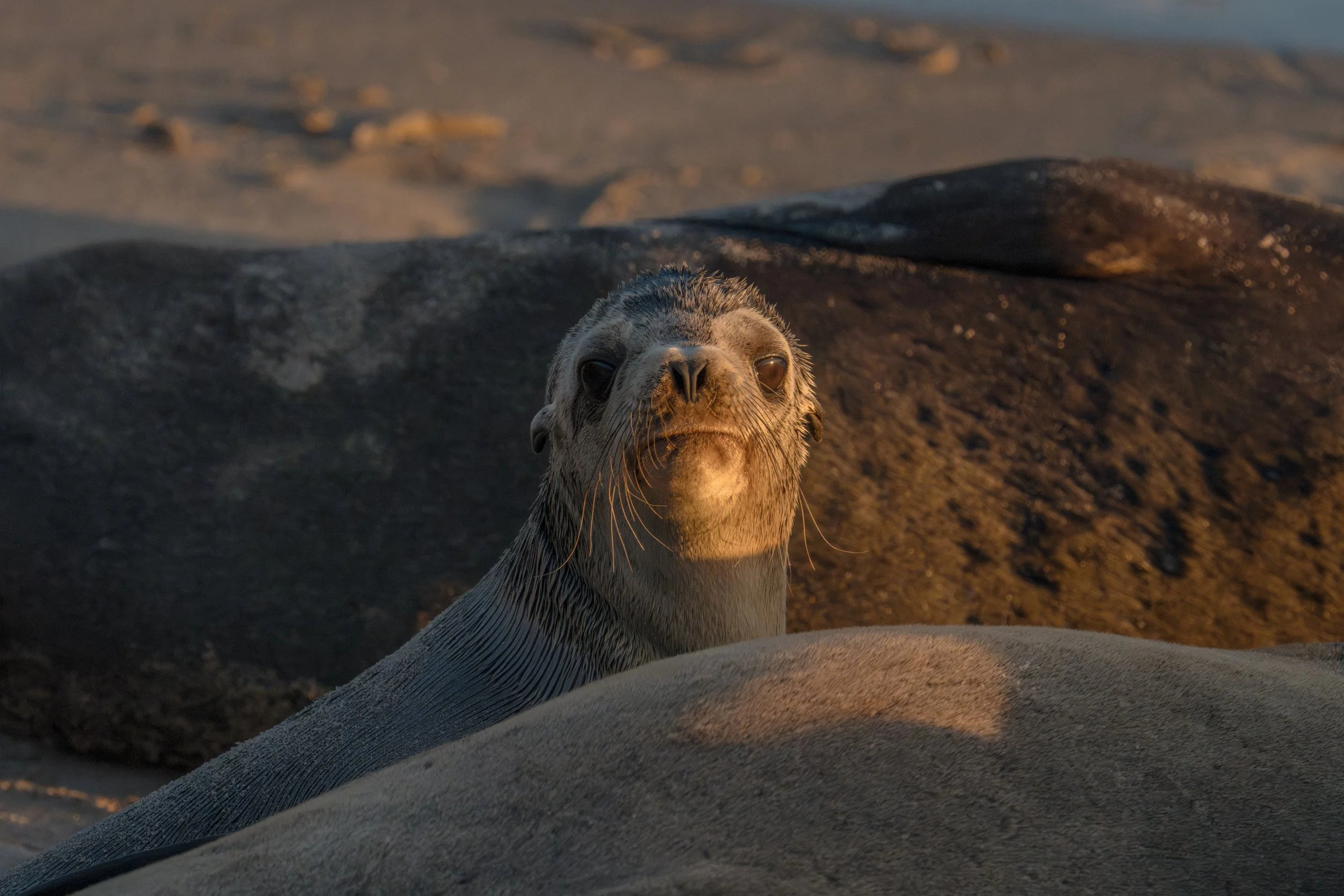
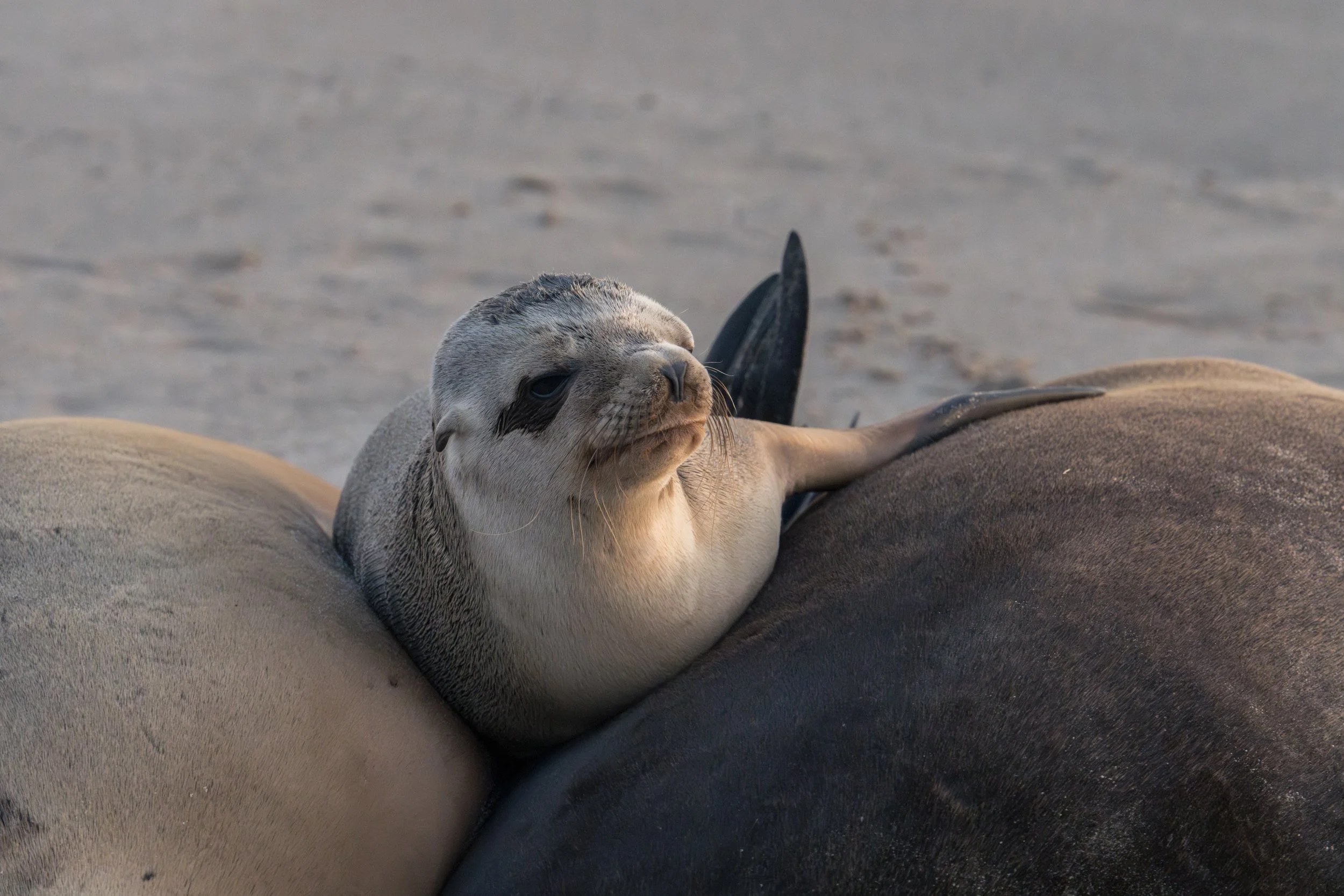
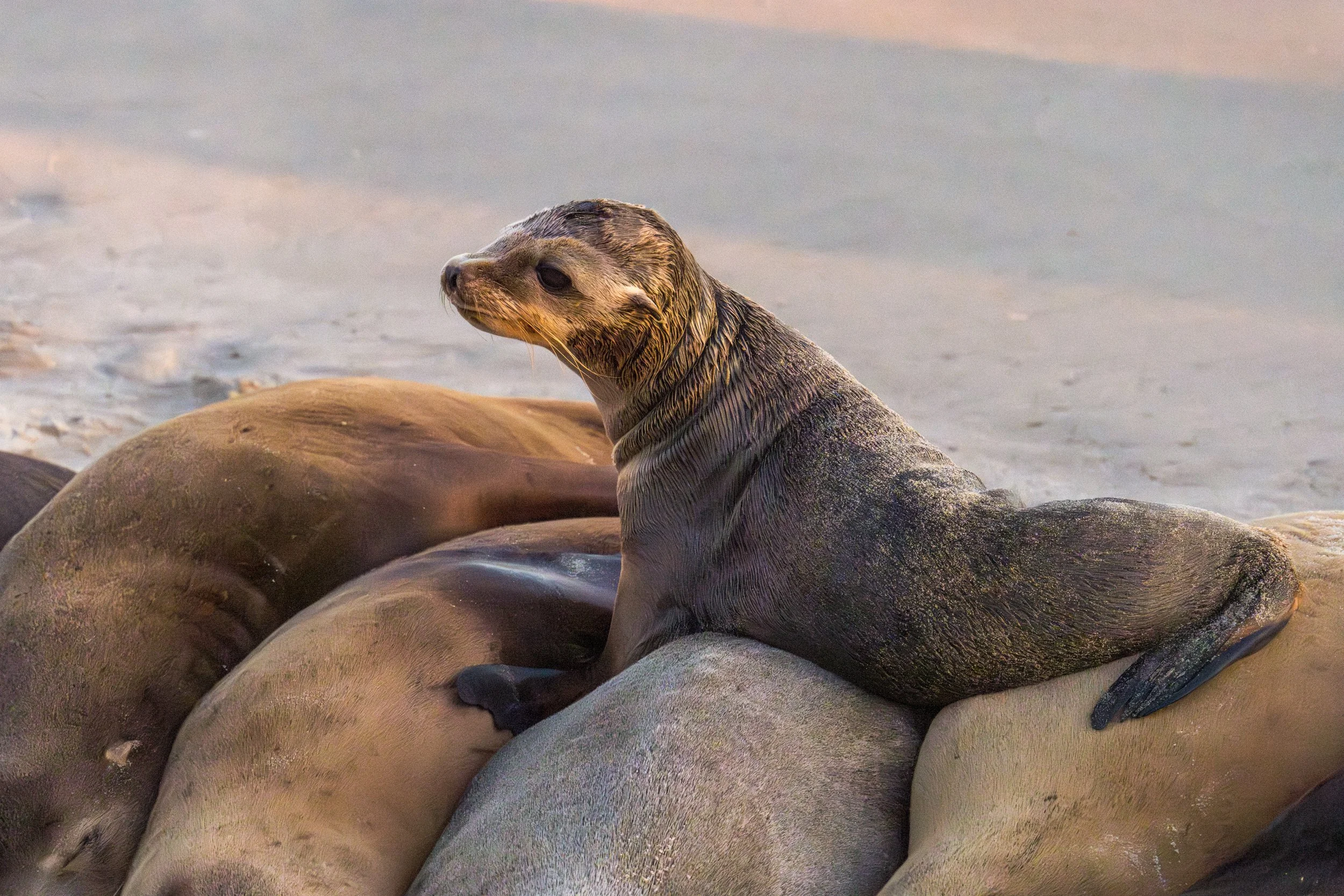
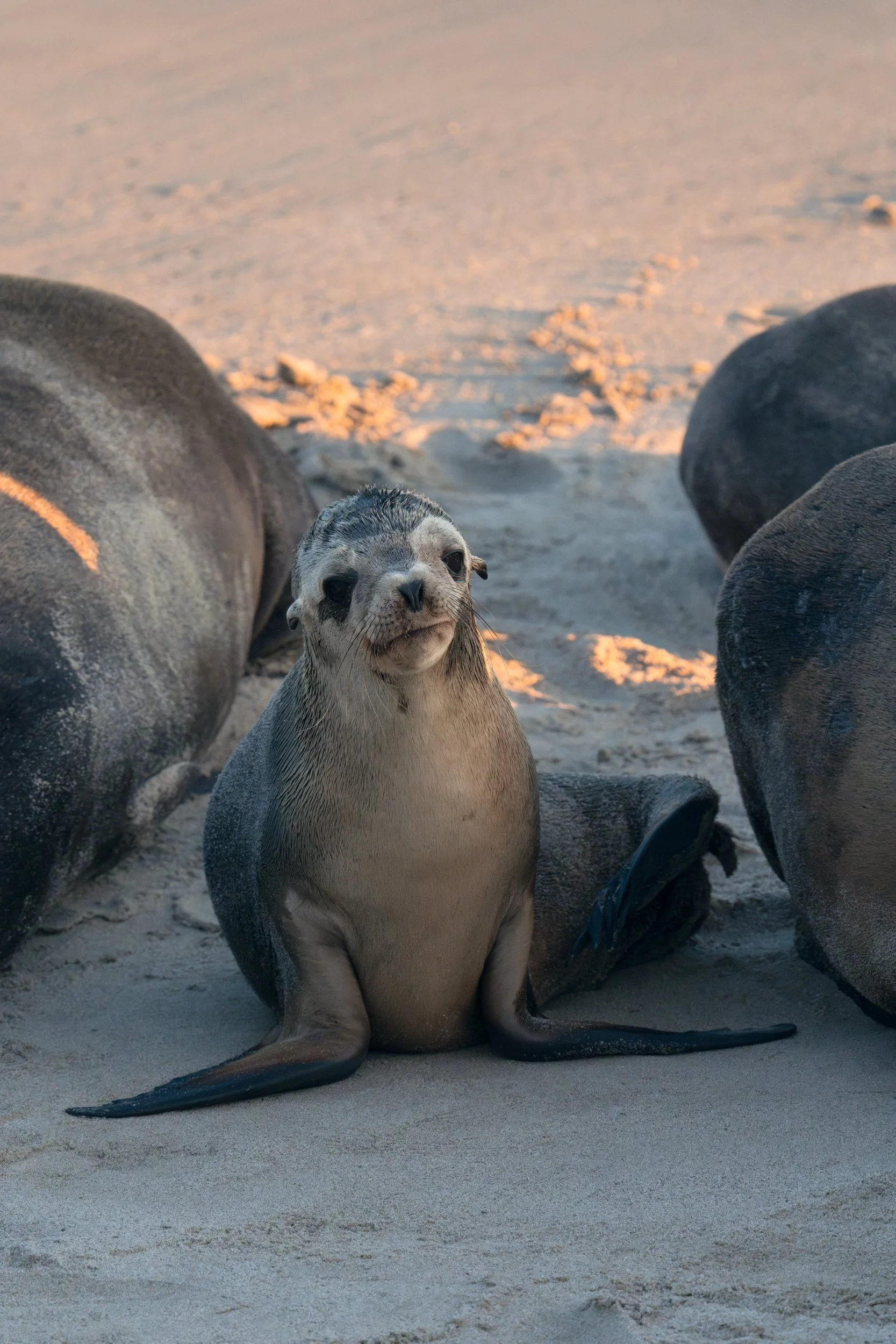
From left to right: the first pup sitting alone on the sand, a view of my 200–600mm lens maintaining a respectful distance per our Admire from Afar methodology, and the same pup seeking warmth atop the colony pile.
The Bridge: A Vision for Triage
These two rescues exposed a glaring gap. We have incredible, dedicated rescue organizations, but they are currently red-lined. Our coastal neighbors are fighting a war on two fronts. An early, massive bloom of toxic algae is sickening hundreds of sea lions and dolphins. Additionally, since November 2025, over 120 Western Grebes have been admitted for care following a mysterious oil slick off our coast.
When a network like CIMWI is handling upwards of 100 calls a day across hundreds of miles of coastline, rescue teams are forced to make the soul-crushing decision of which animals to prioritize based on their chance of recovery. The neurotoxin from the algae causes seizures and physiological collapse, while the oil on the grebes' feathers leads to rapid hypothermia. When hotlines go down or volunteer teams are stretched thin, the "response vacuum" is filled by whoever happens to be standing on the shore.
Living dockside at Channel Islands Harbor, I have committed my business and my strategic focus to the protection of this ecosystem. Standing on the beach for 24 hours watching the system reach its structural limit made it clear that we do not just need more volunteers. We need collaborative infrastructure.
This is why I’m championing the vision for a Regional Stewardship Collective.
A Note on the "Why"
If you are reading this and wondering, "Who is this woman coming in hot with a plan?" I get it.
I’m relatively new to the specialized world of marine mammal rescue. I do not have a degree in marine biology and I’m standing on the shoulders of giants who have been doing this back-breaking work for decades. While our backgrounds might differ, our mission is identical.
I’m approaching this as a strategist and a neighbor. I spent a decade in strategic partnerships and operations building the frameworks that make complex organizations function. Right now, I see the pipes of our local rescue chain are under immense pressure. I’m not here to reinvent the wheel or step on toes. I’m here to help build a stronger hub so the experts have the support they need to succeed. I’m currently pursuing my Associate Wildlife Rehabilitator (AWR) designation to ensure I have the formal education to assist professionally. I’m eager to contribute my skills to this effort, as I believe we are all more effective when we work toward these goals together.
The Vision: A Phase 1 Hub
I view this as a strategic initiative to bridge the critical gap between community reports and professional rescue. The vision is a local Phase 1 Triage Hub designed to serve the Channel Islands Harbor, Port Hueneme, and Ventura.
This would be a specialized, low-stress space for immediate stabilization and real-time data collection. It would act as a logistical bridge for our regional partners, such as CIMWI for marine mammals, the Santa Barbara Wildlife Care Network (SBWCN) for shorebirds, and the International Bird Rescue (IBR) for specialized aquatic cases. Think of it as an "animal day spa" for triage. This would be a quiet, clinical environment where patients are stabilized before being escorted to these primary rehab facilities.
In my dream world, this would eventually evolve into a permanent community landmark at the mouth of the channel. I envision a center that marries clinical triage with Salt + Noelle’s mission of high-end conservation media, featuring:
Two-way mirror viewing areas where the public can observe the triage process without causing stress to the patients.
A rooftop overlook for responsible, natural wildlife viewing of the channel and haul-out sites.
A community hub with a gift shop, small café, and beach access focused on education, stewardship, and response training.
By inviting the community into the process of care, we replace the impulse for a photo with the responsibility of stewardship.
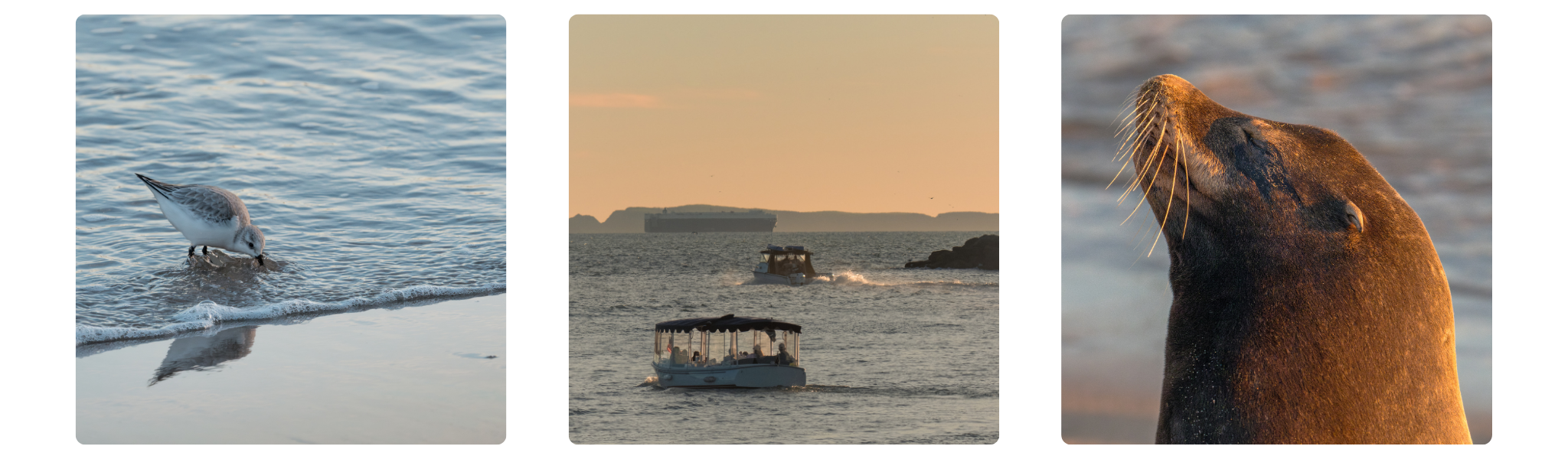
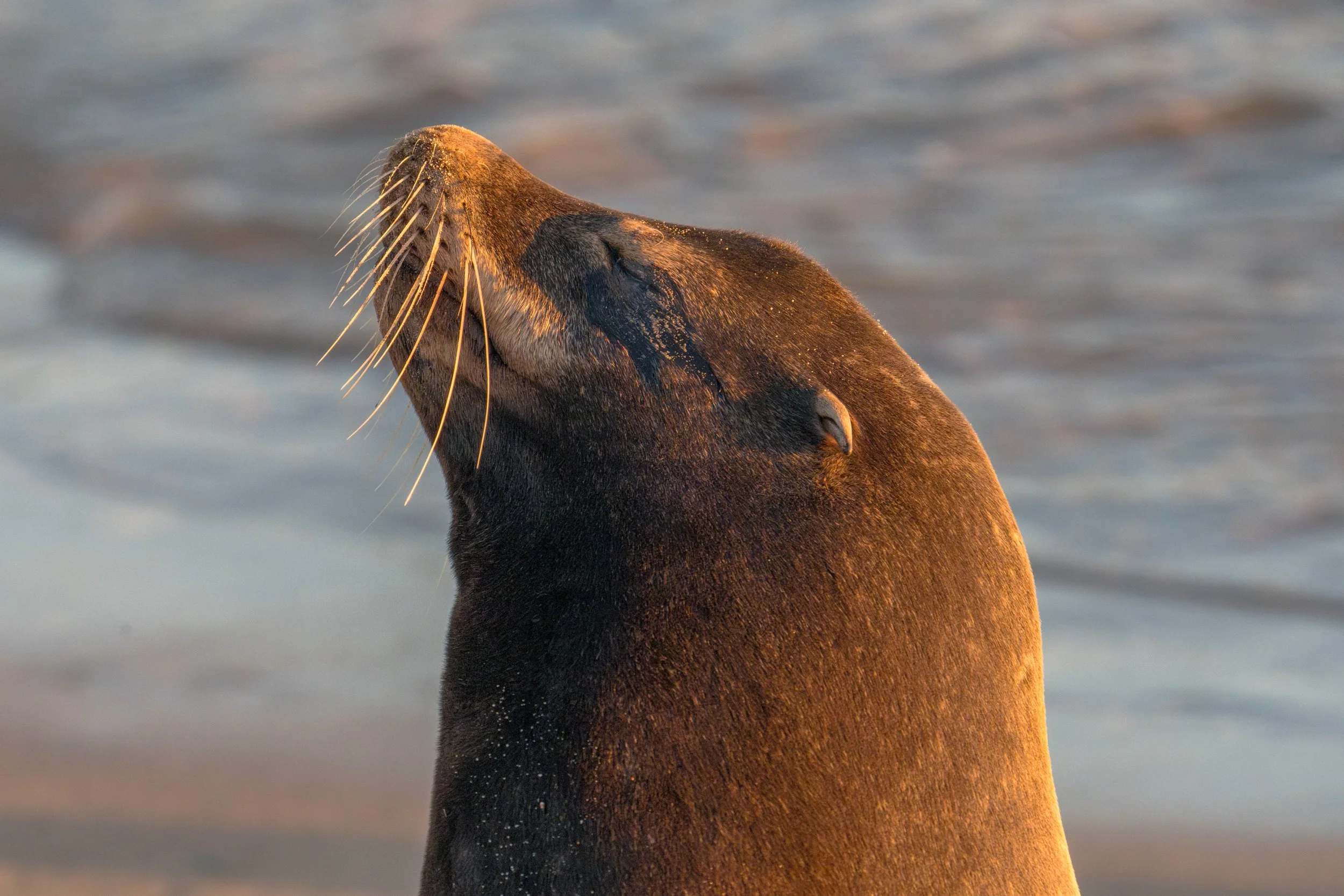
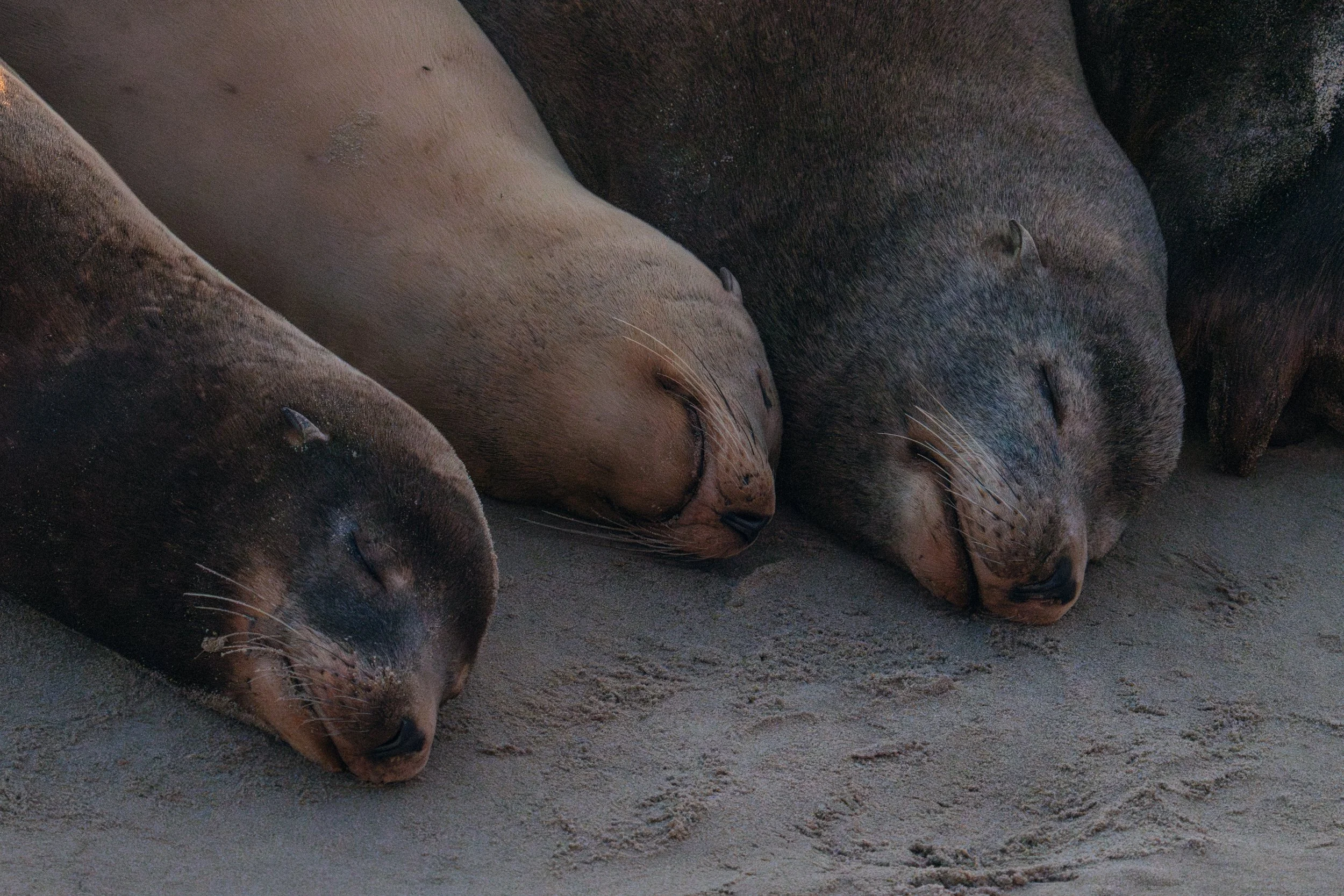
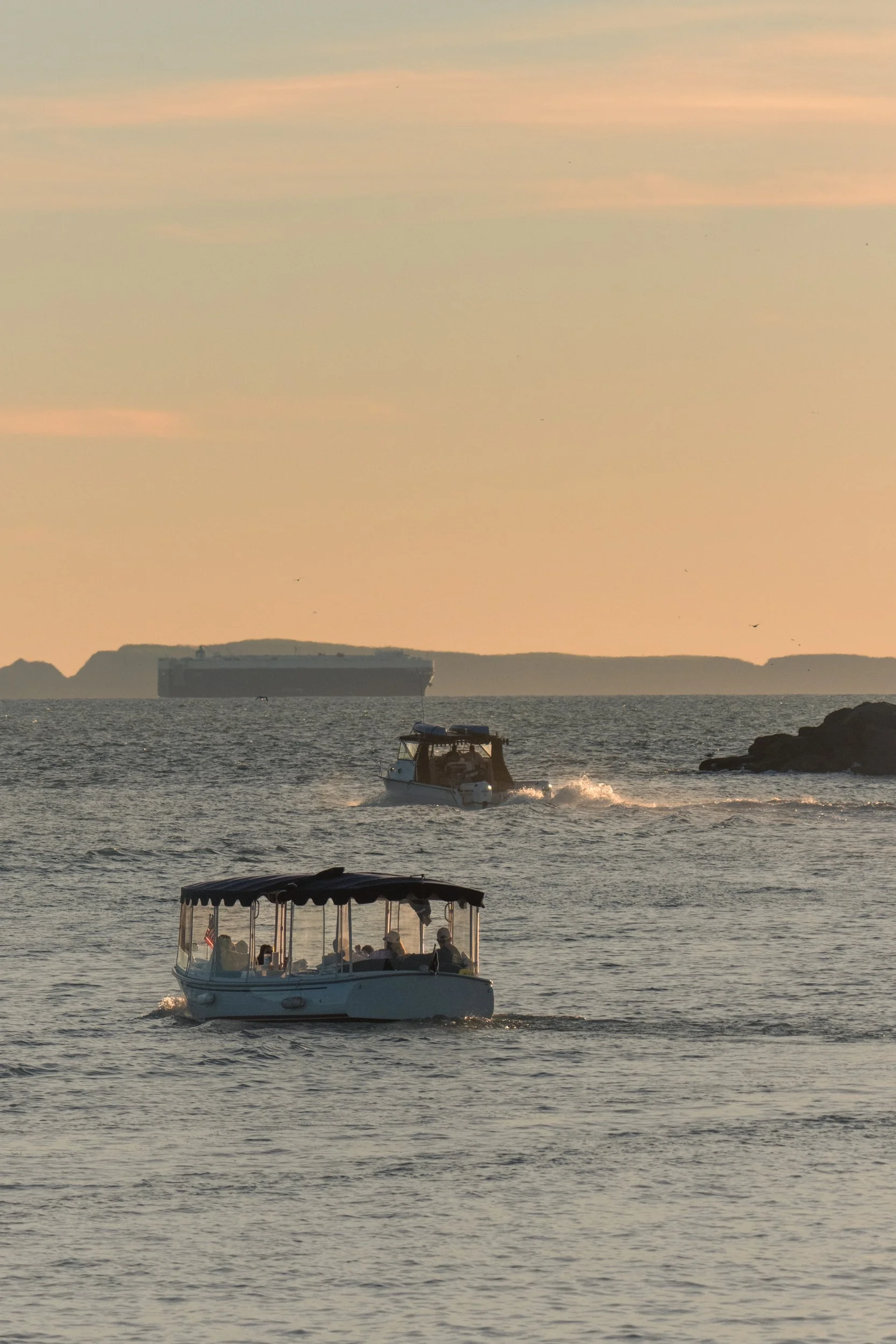
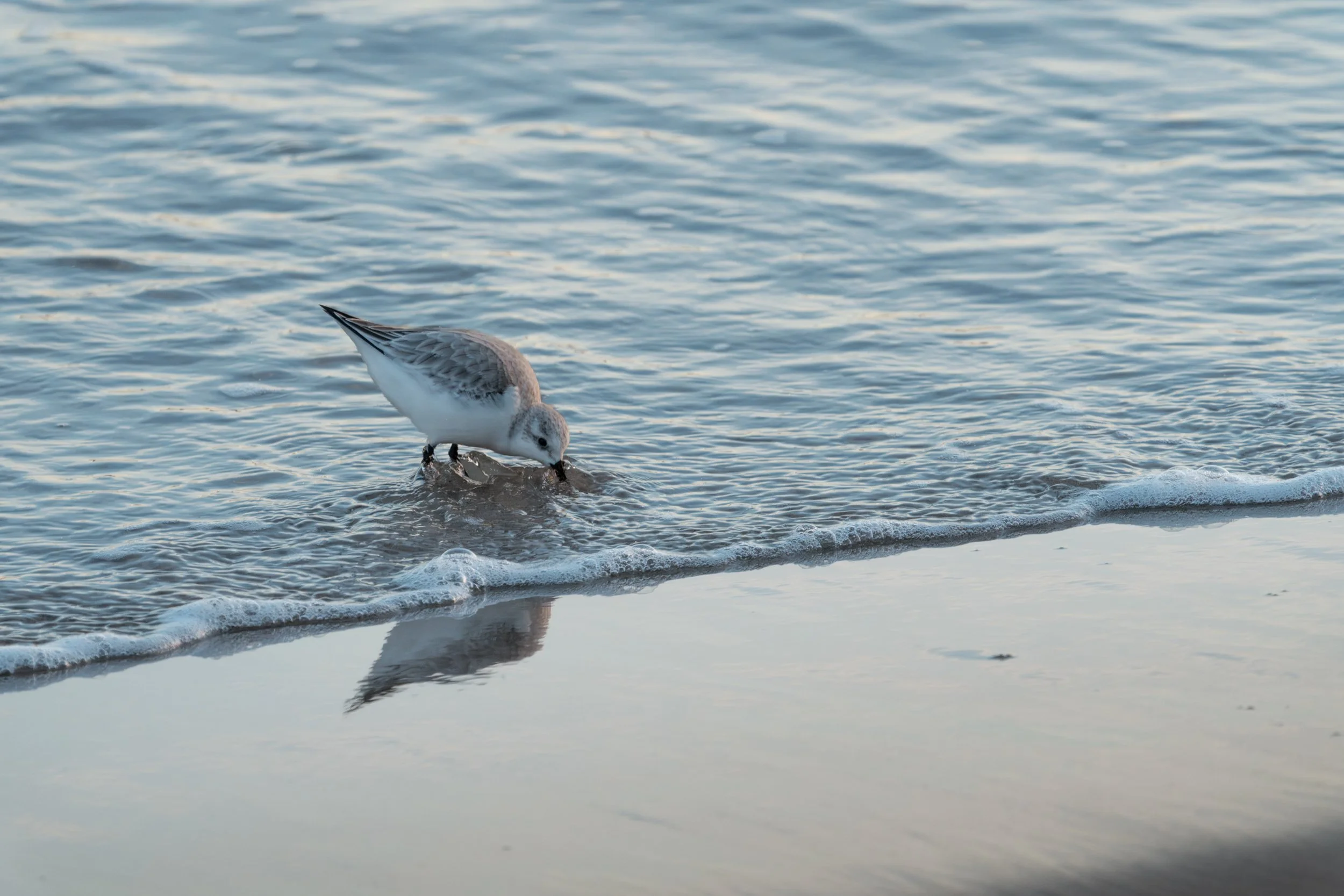
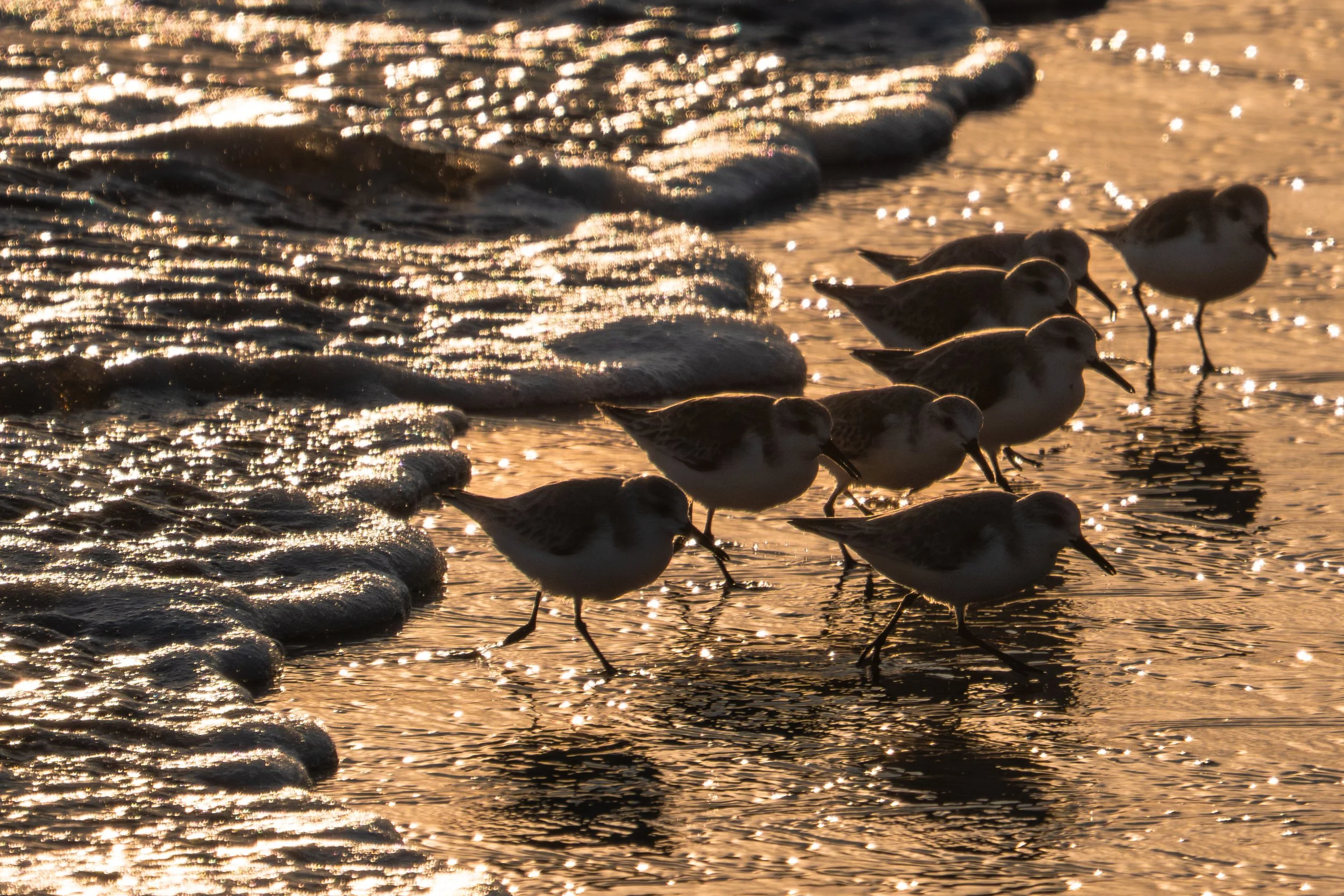
From left to right: a sanderling wading in the shallows, boats at rest during a harbor sunset, and a sea lion basking in the golden light.
The Call for Strategic Partnership
If you're as passionate about closing this triage gap as I am, I want to hear from you. I’m looking for stakeholders and partners to help bring this vision to life. Please reach out and let's see what we can build together.
Mission: To bridge the critical gap between wildlife distress and professional rescue through strategic partnership. We aim to support a Phase 1 Triage Hub for the Channel Islands Harbor, Port Hueneme, and Ventura, providing a site for immediate stabilization, real-time data for the federal stranding network, and a physical space for public education and responsible viewing.
The View from the Docks
I left my jacket in that first rescue crate because a life was worth more than the fabric. But as I stood on the sand watching a sea lion pup shiver in the dark, I realized that our coastal neighbors deserve more than just the temporary protection of a passing witness. We have a unique opportunity to build a functional system that supports the incredible heart and compassion of this community.
Living dockside at Channel Islands Harbor has shifted my perspective from a visitor documenting a colony to a neighbor watching over them. Whether the Regional Stewardship Collective remains a vision or becomes a physical reality at our harbor's edge, the mission remains the same: to ensure our wildlife is met with a reliable safety net. This move was more than a change of address; it was a commitment to this ecosystem. I look forward to seeing many of you out on the docks as we work together to protect it.

Gallery
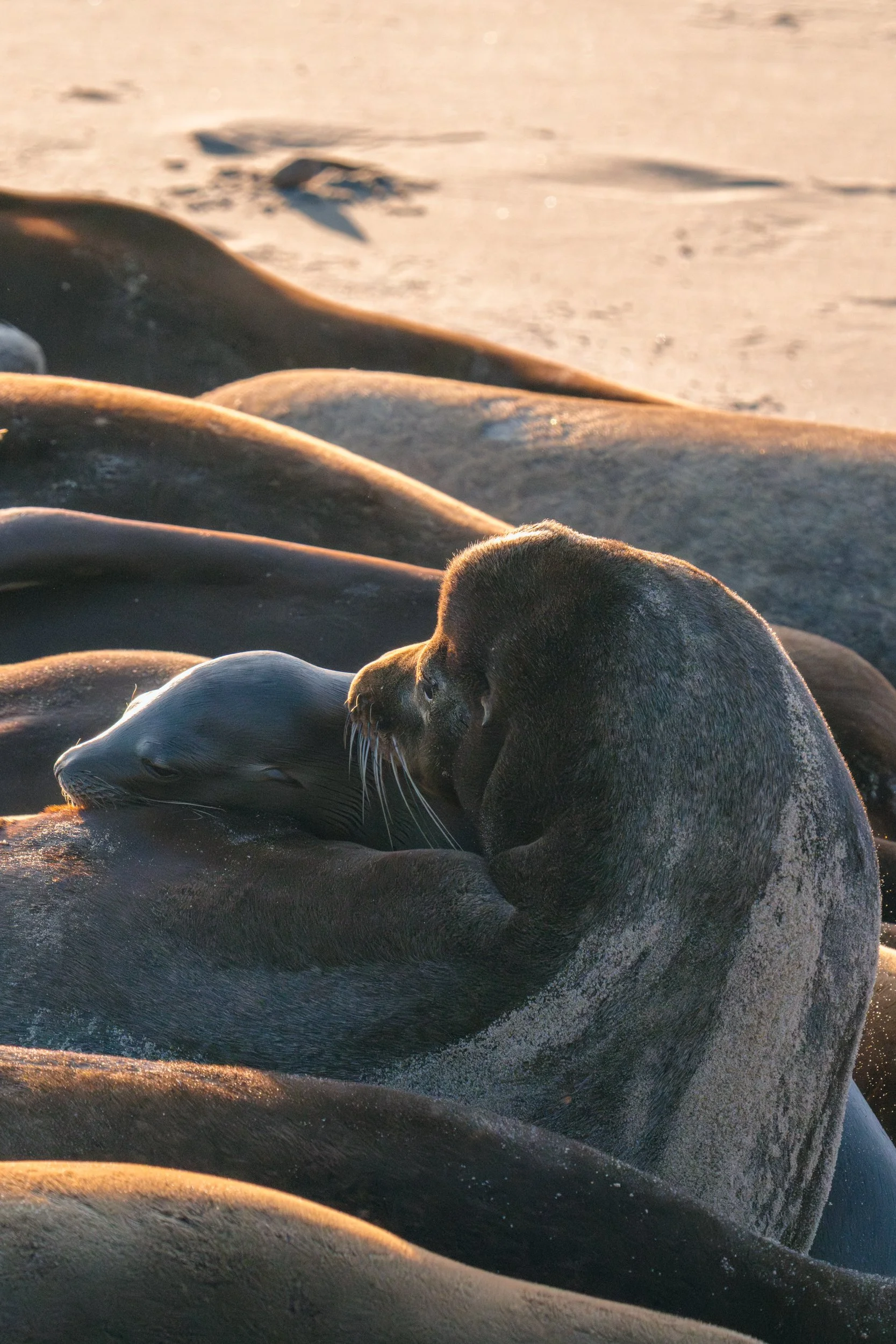
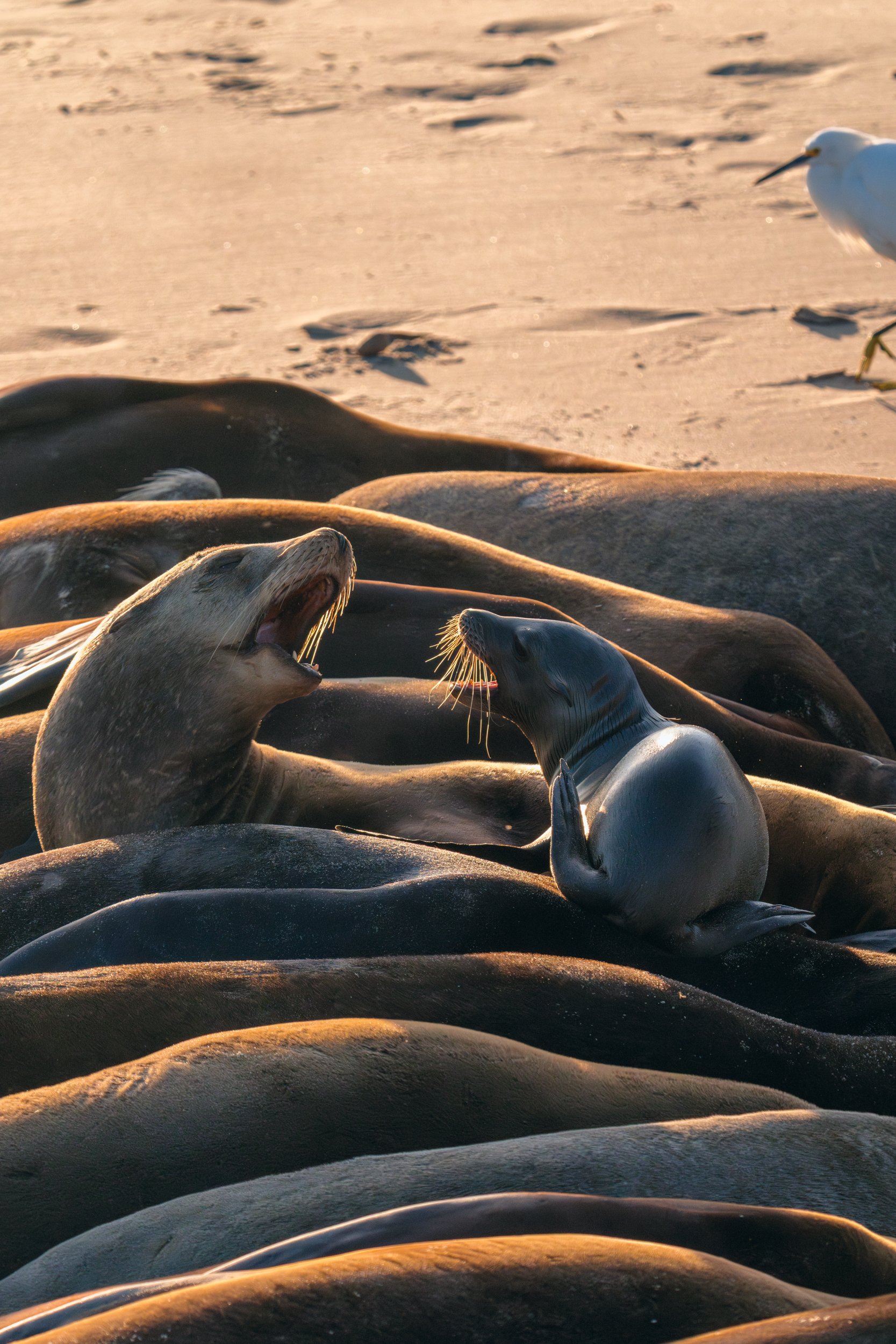
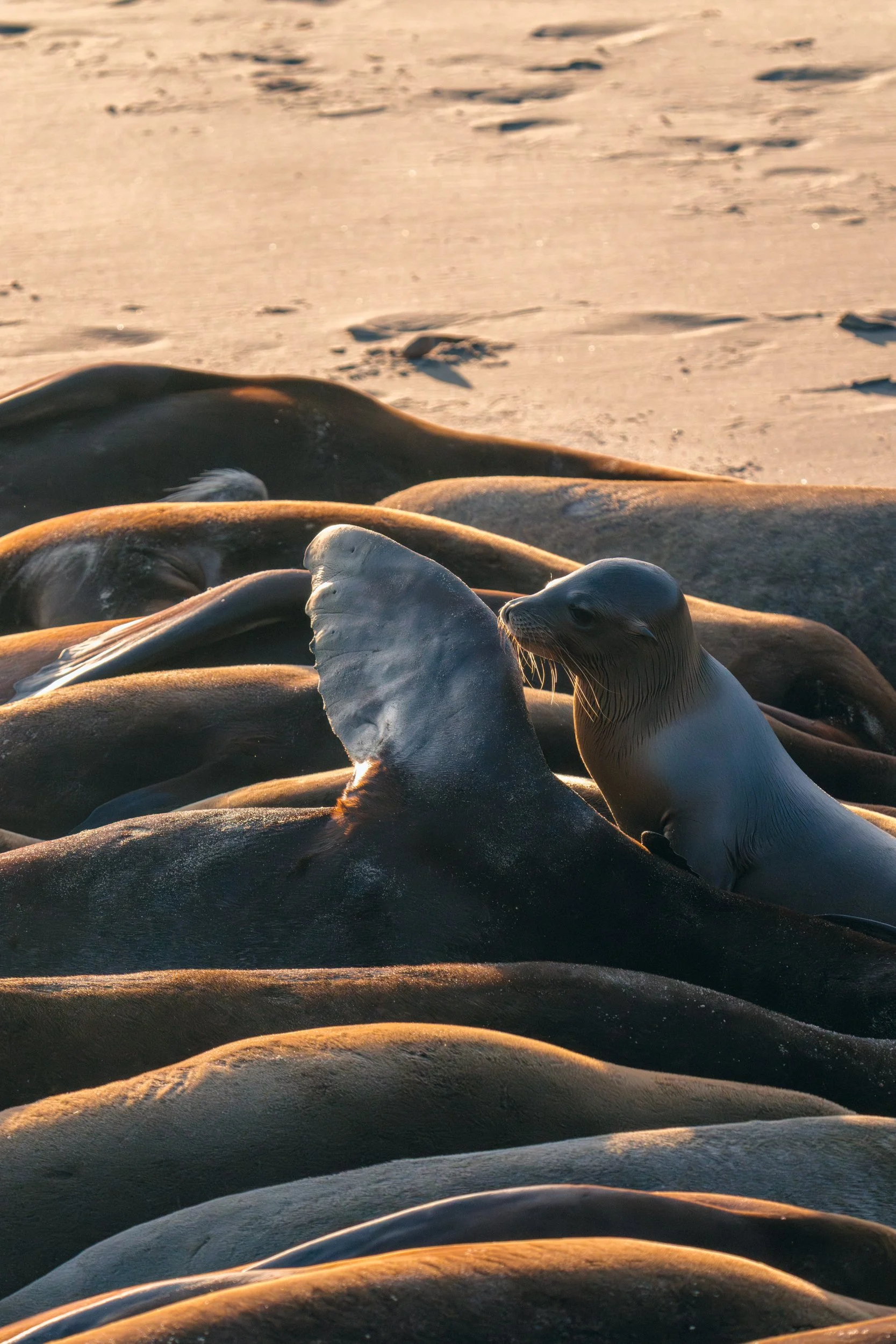
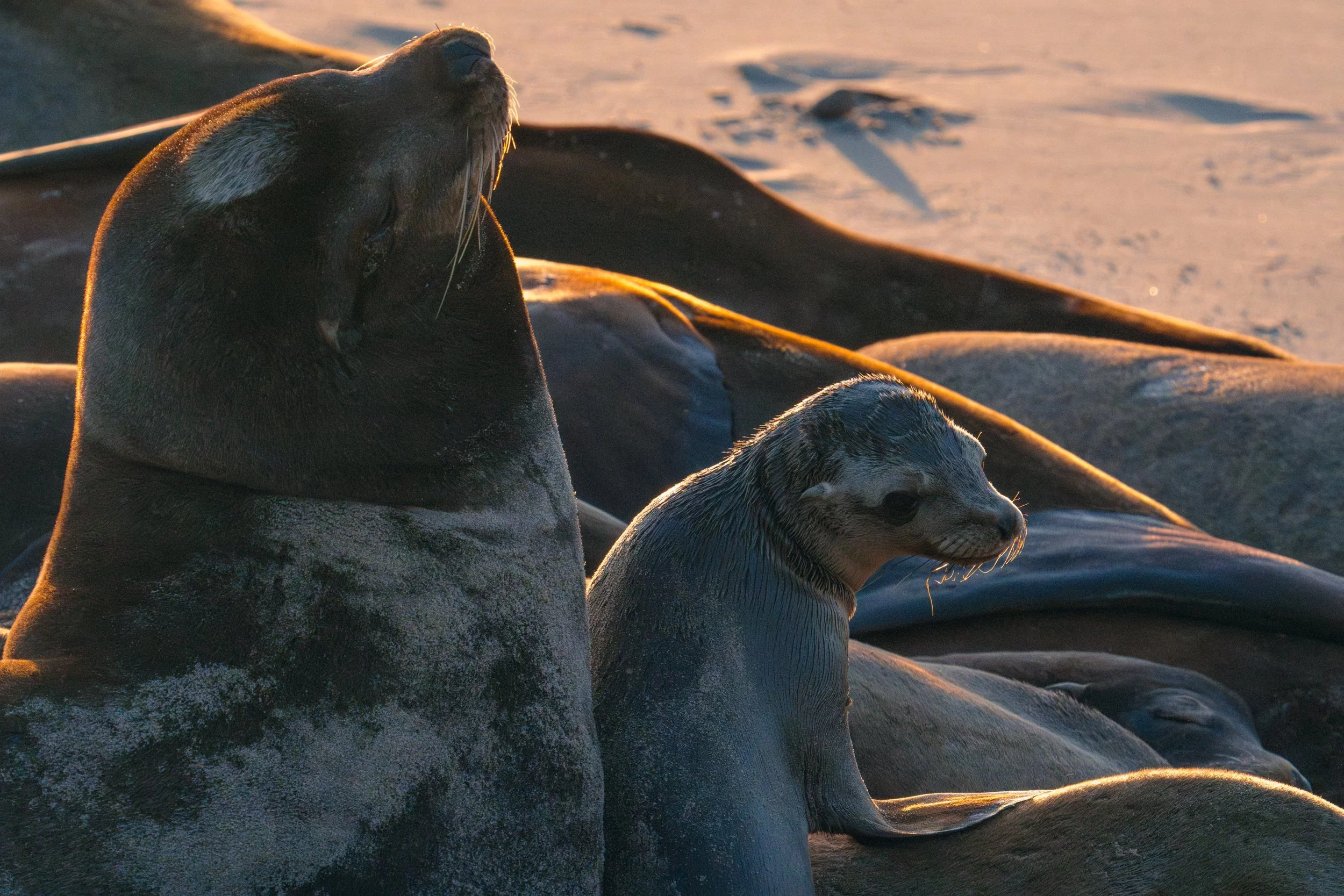
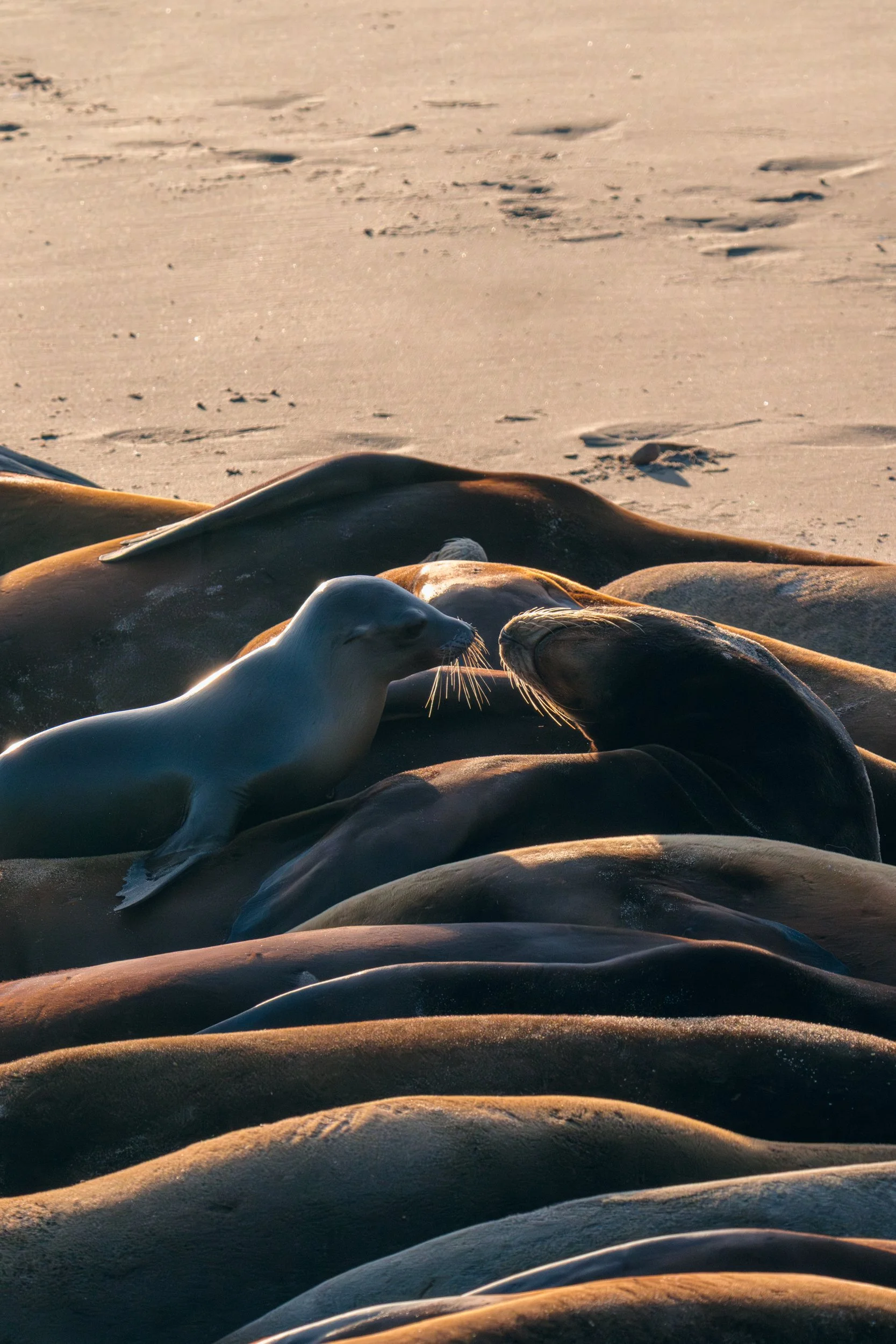
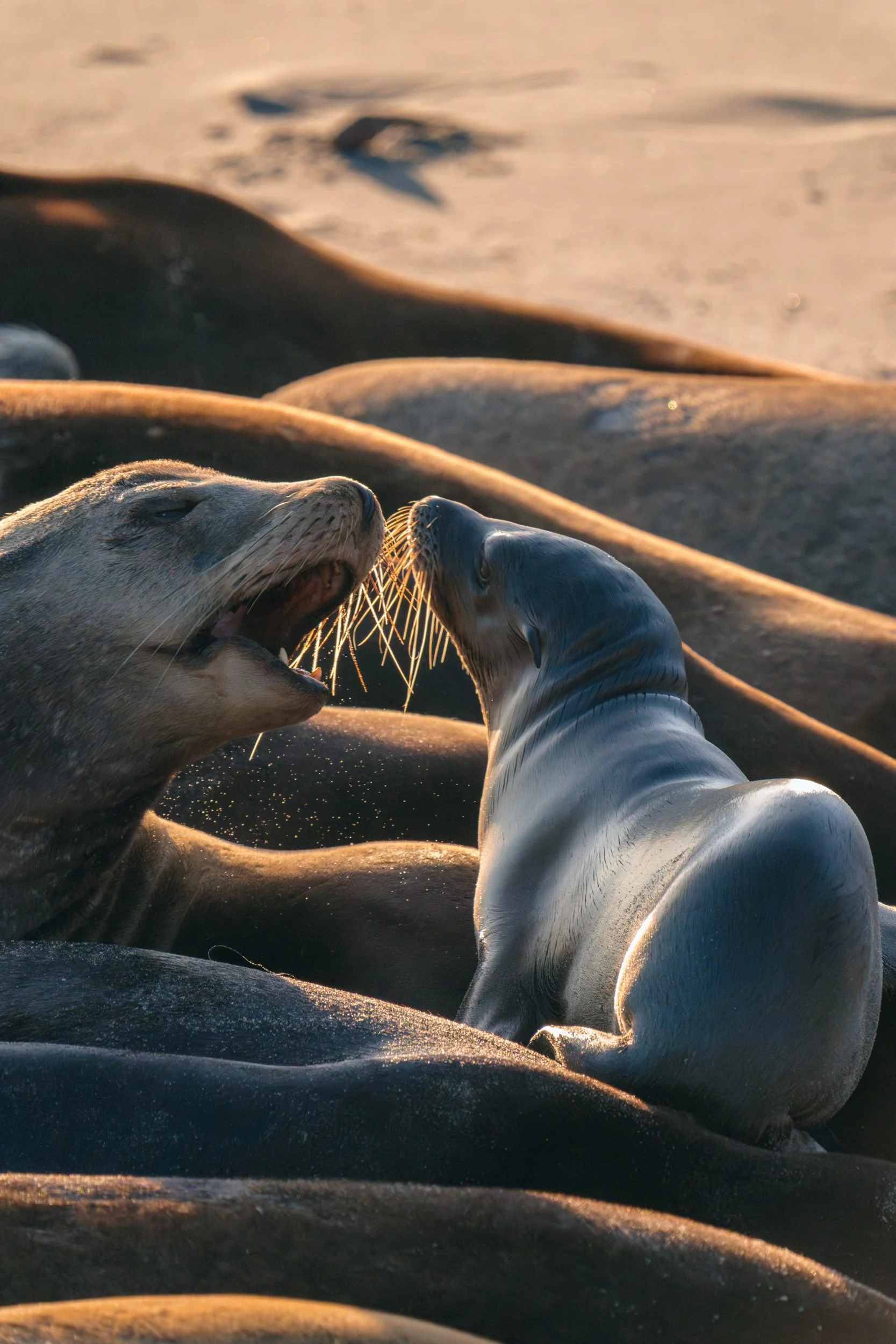
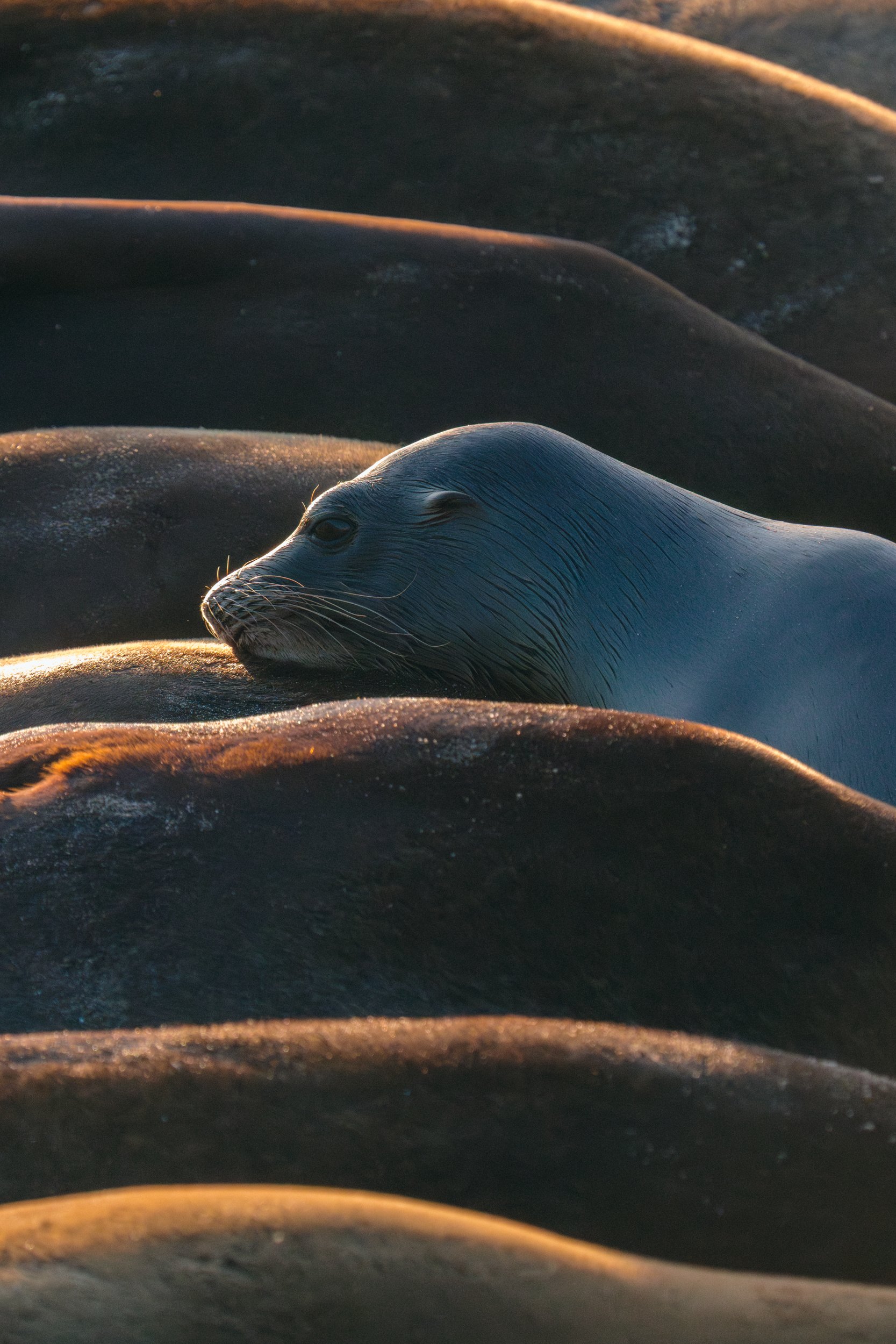
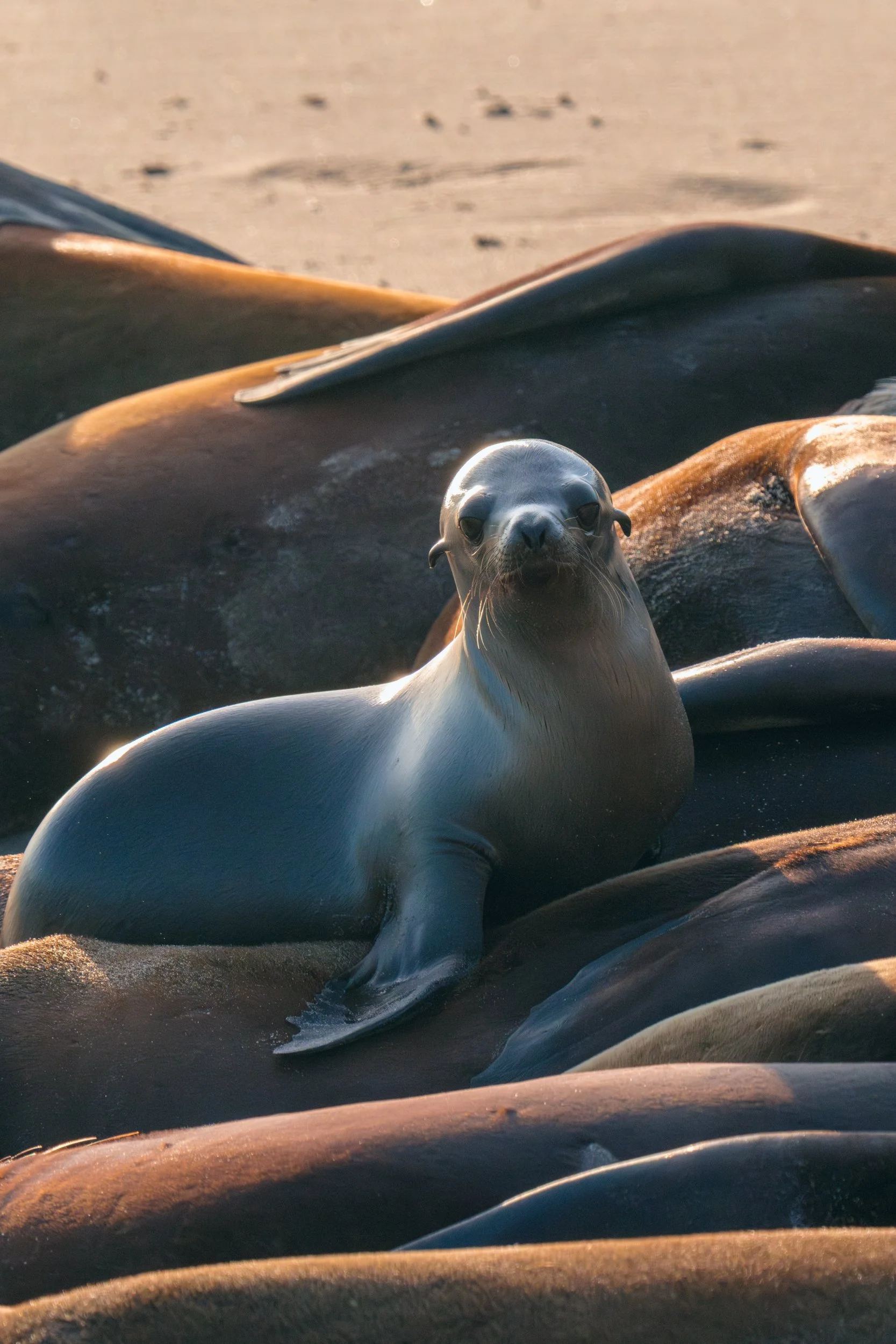
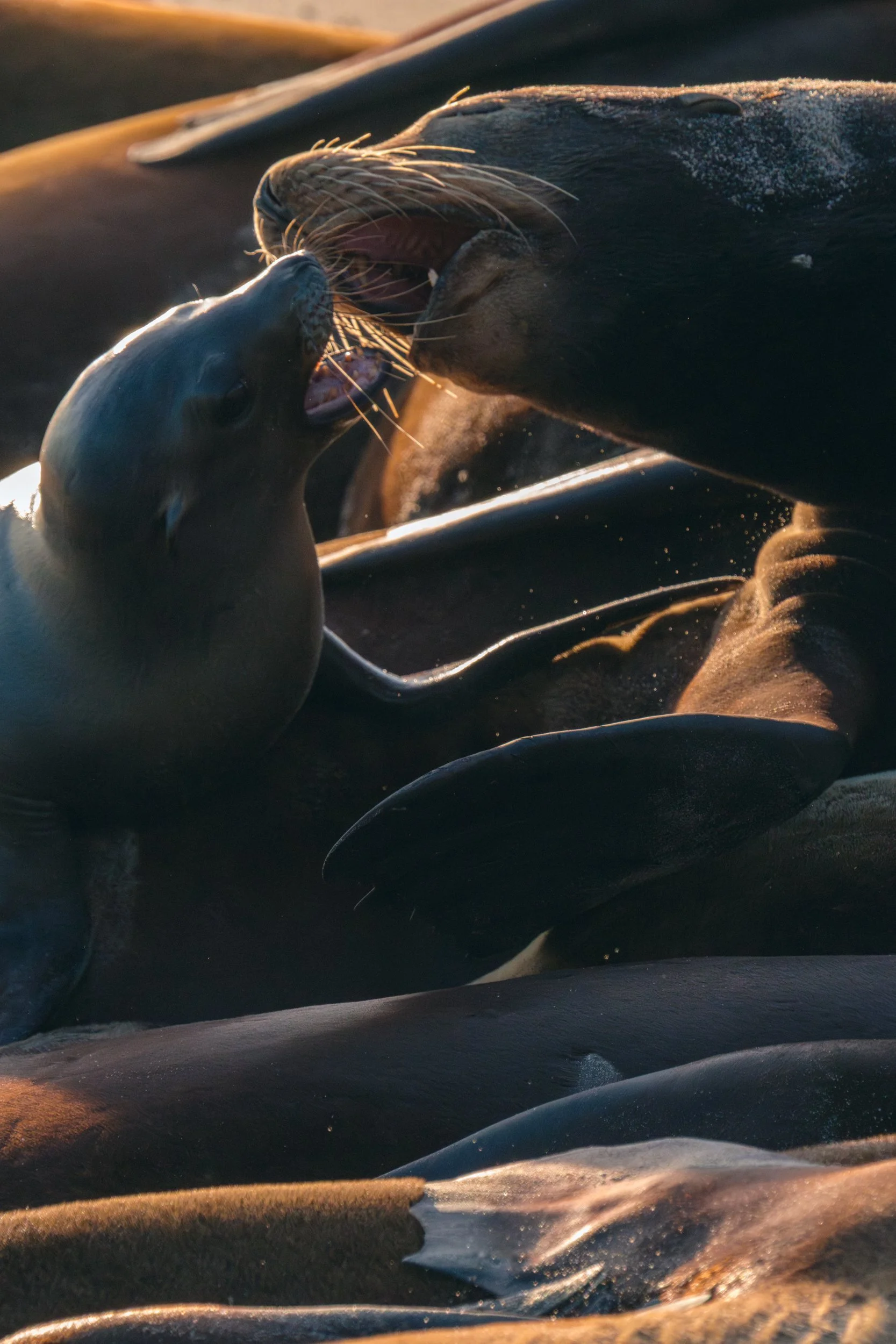
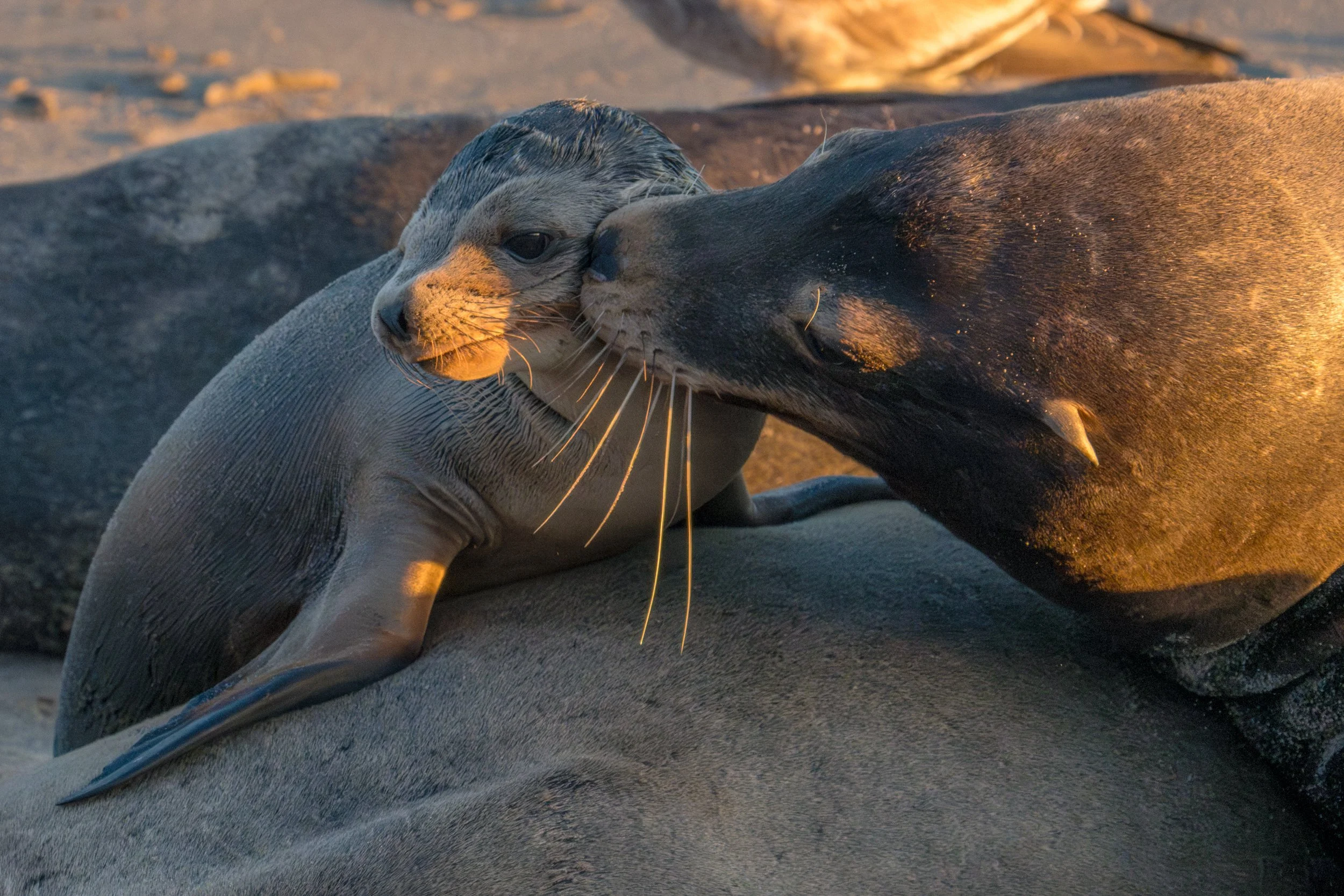
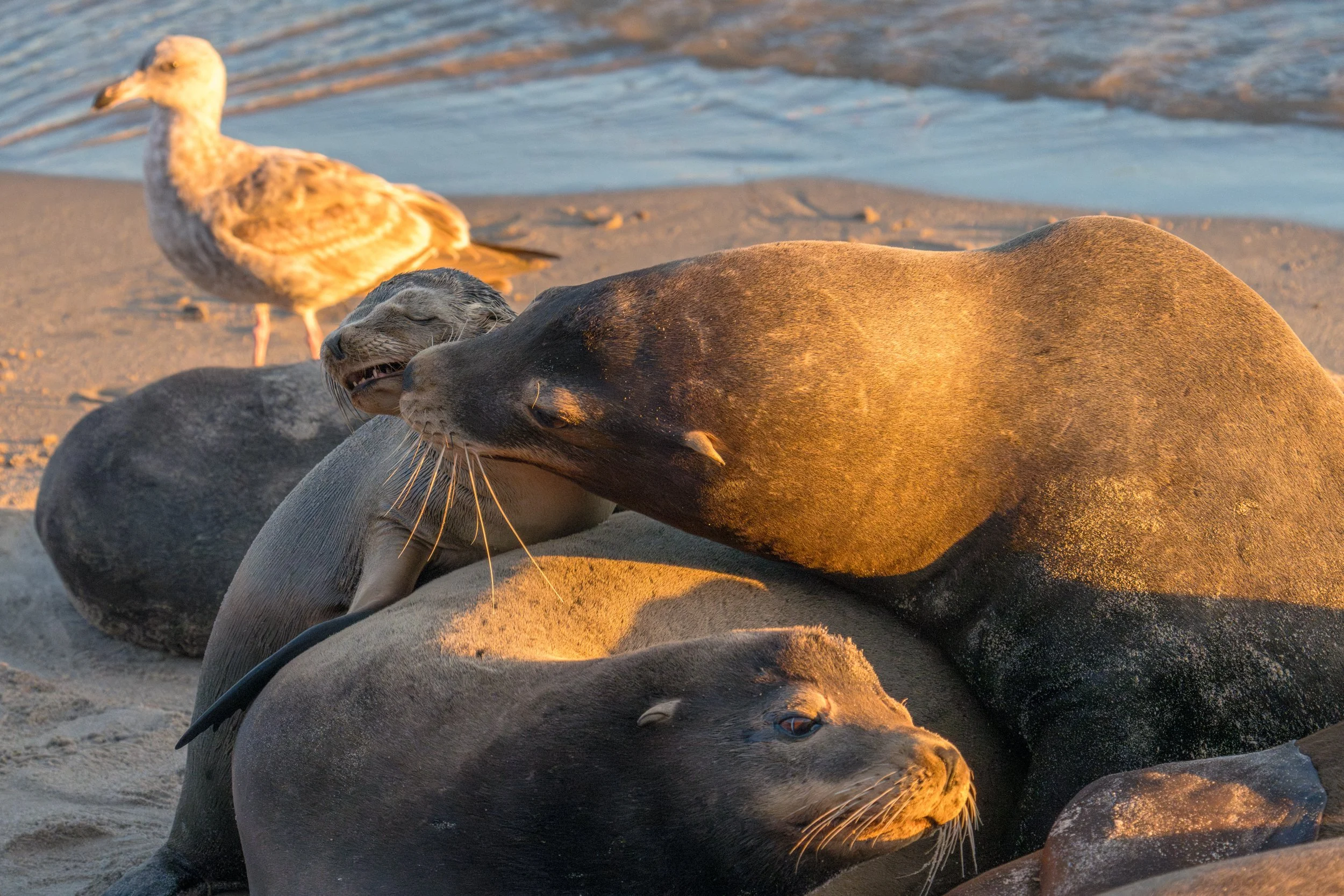
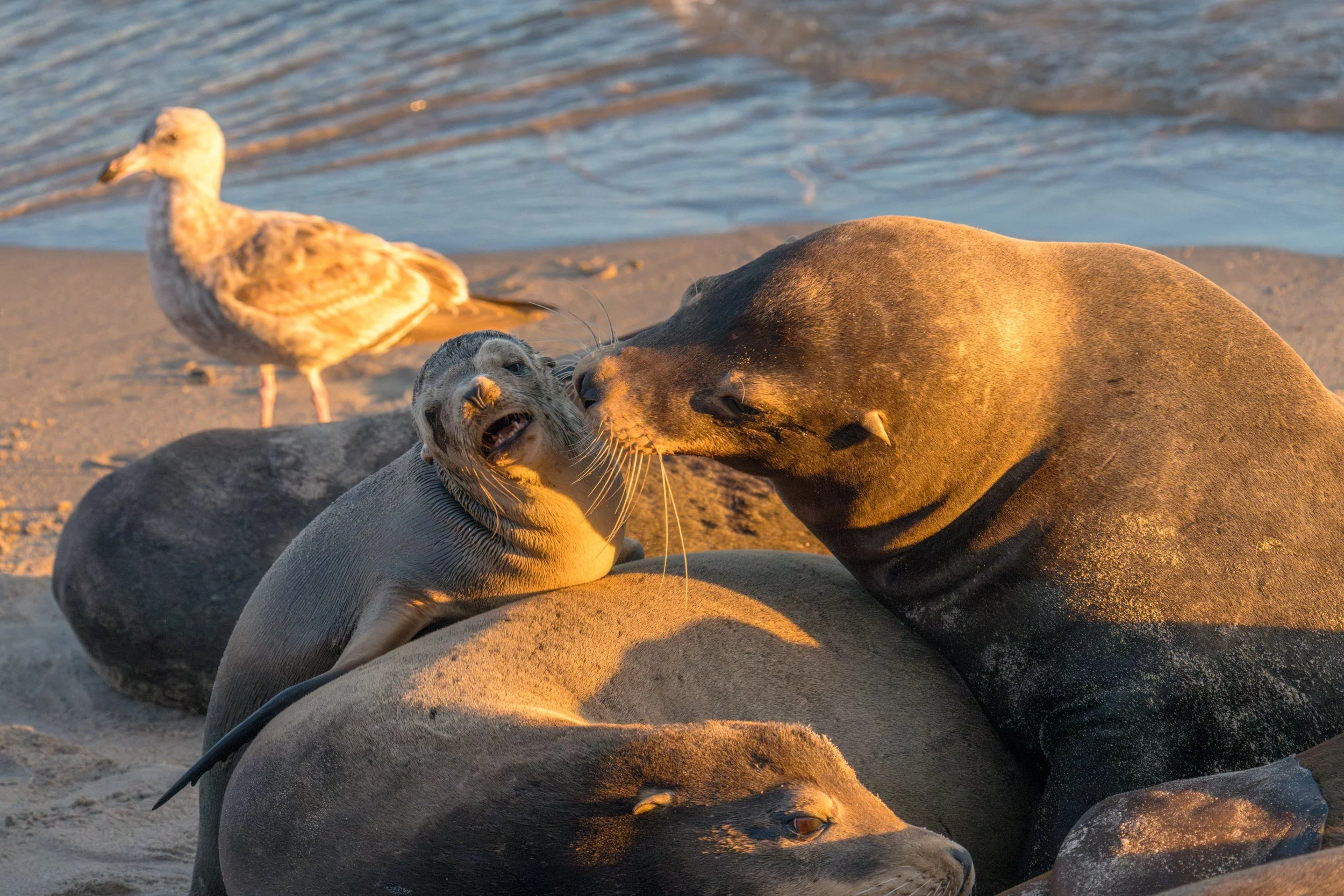
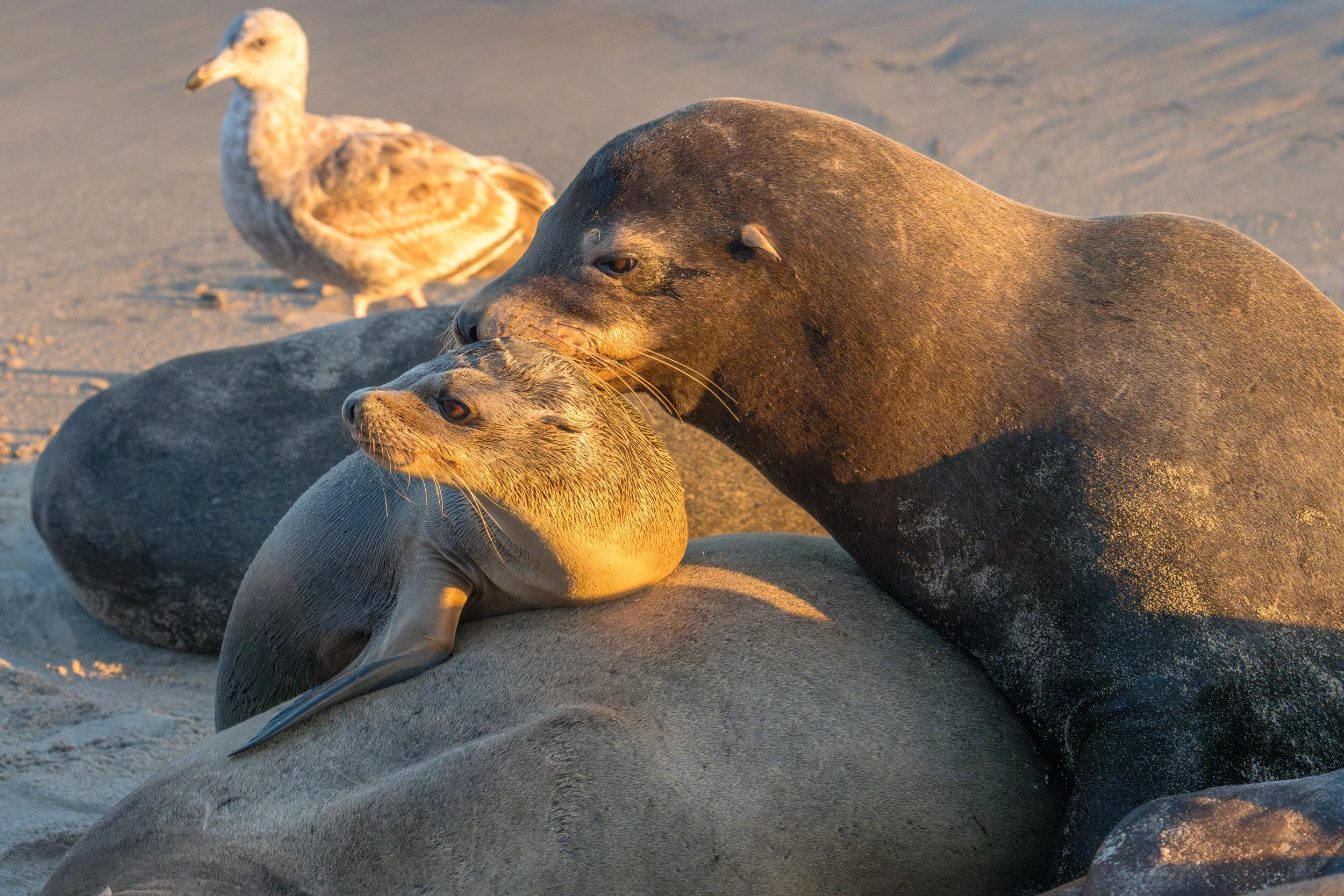
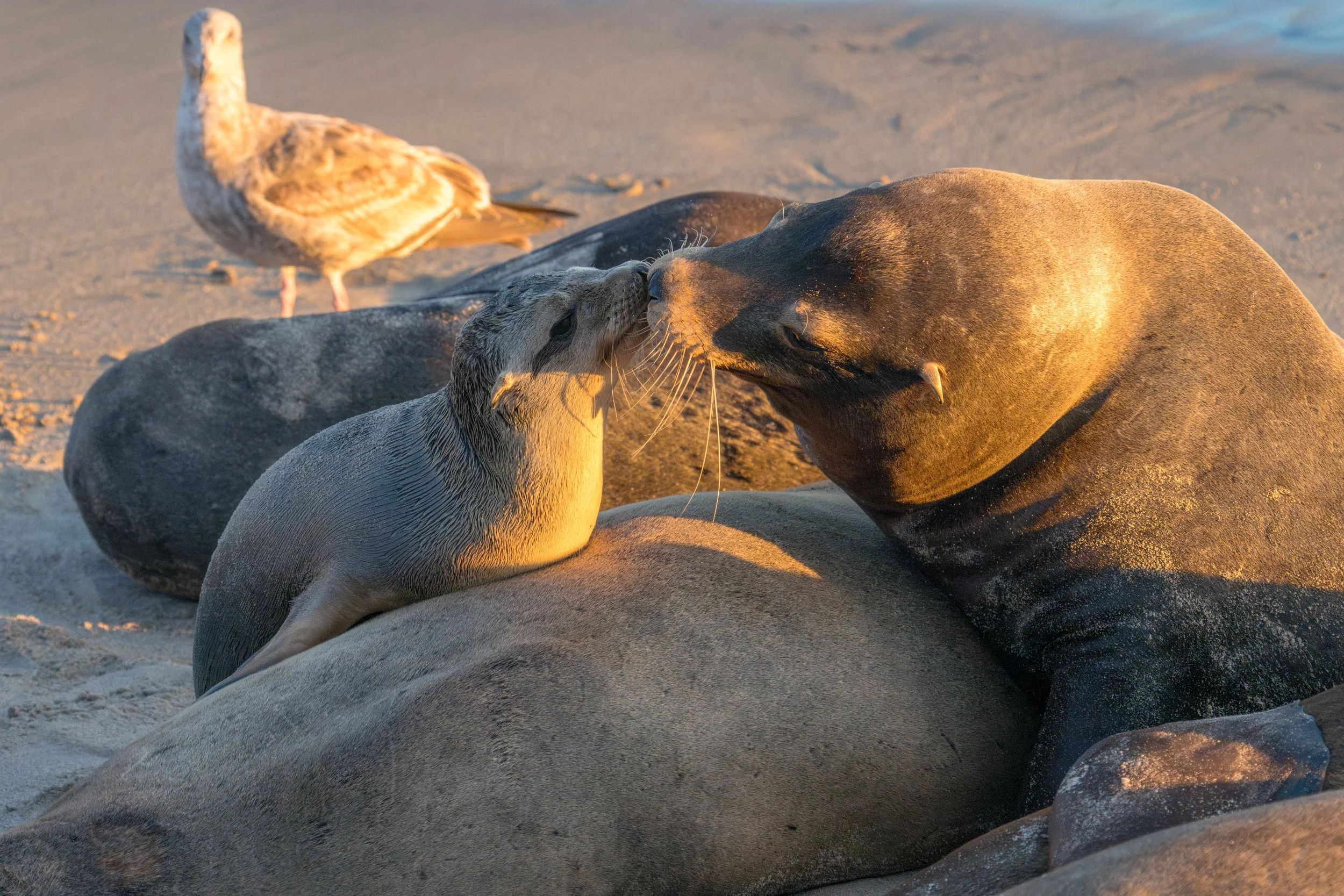
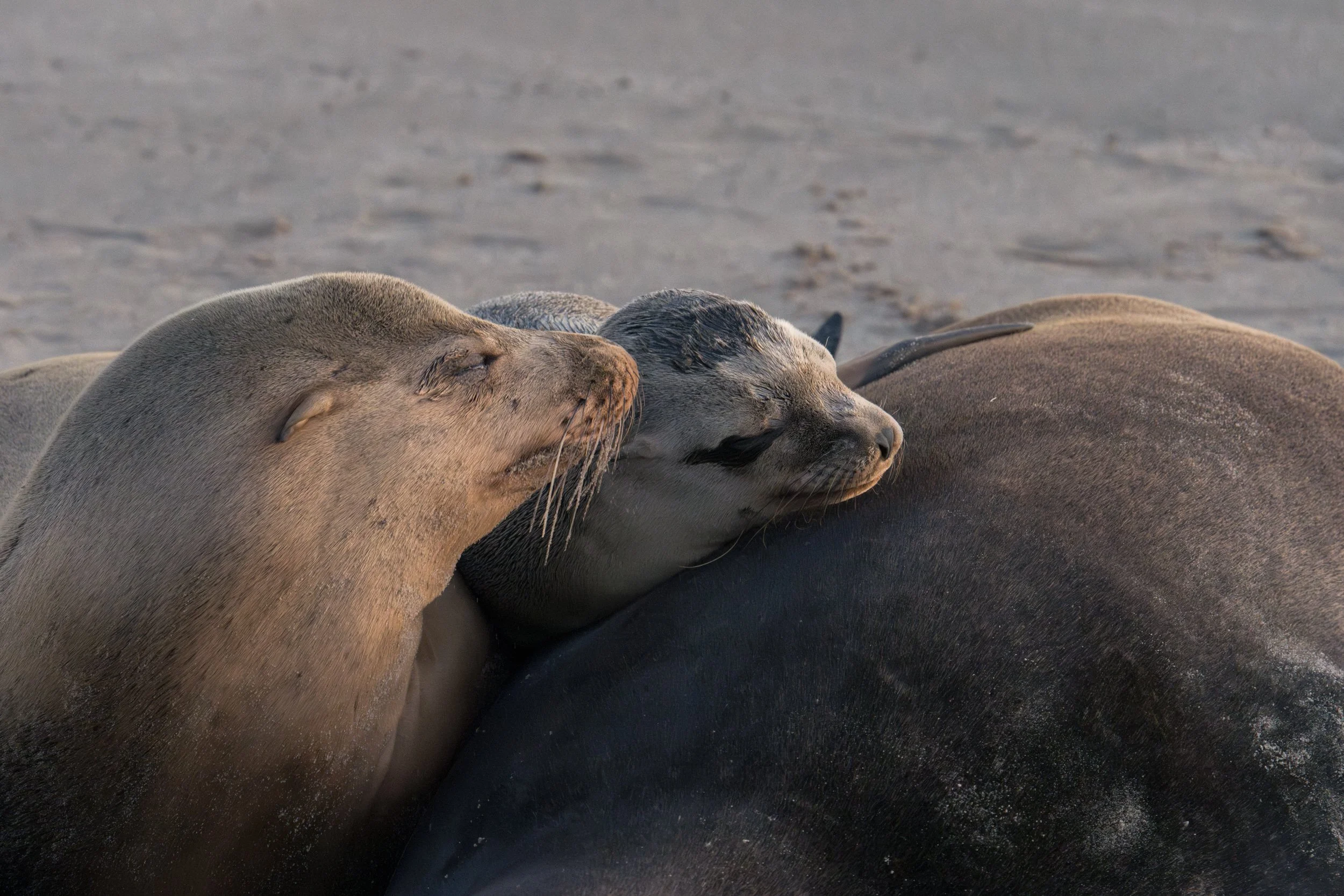
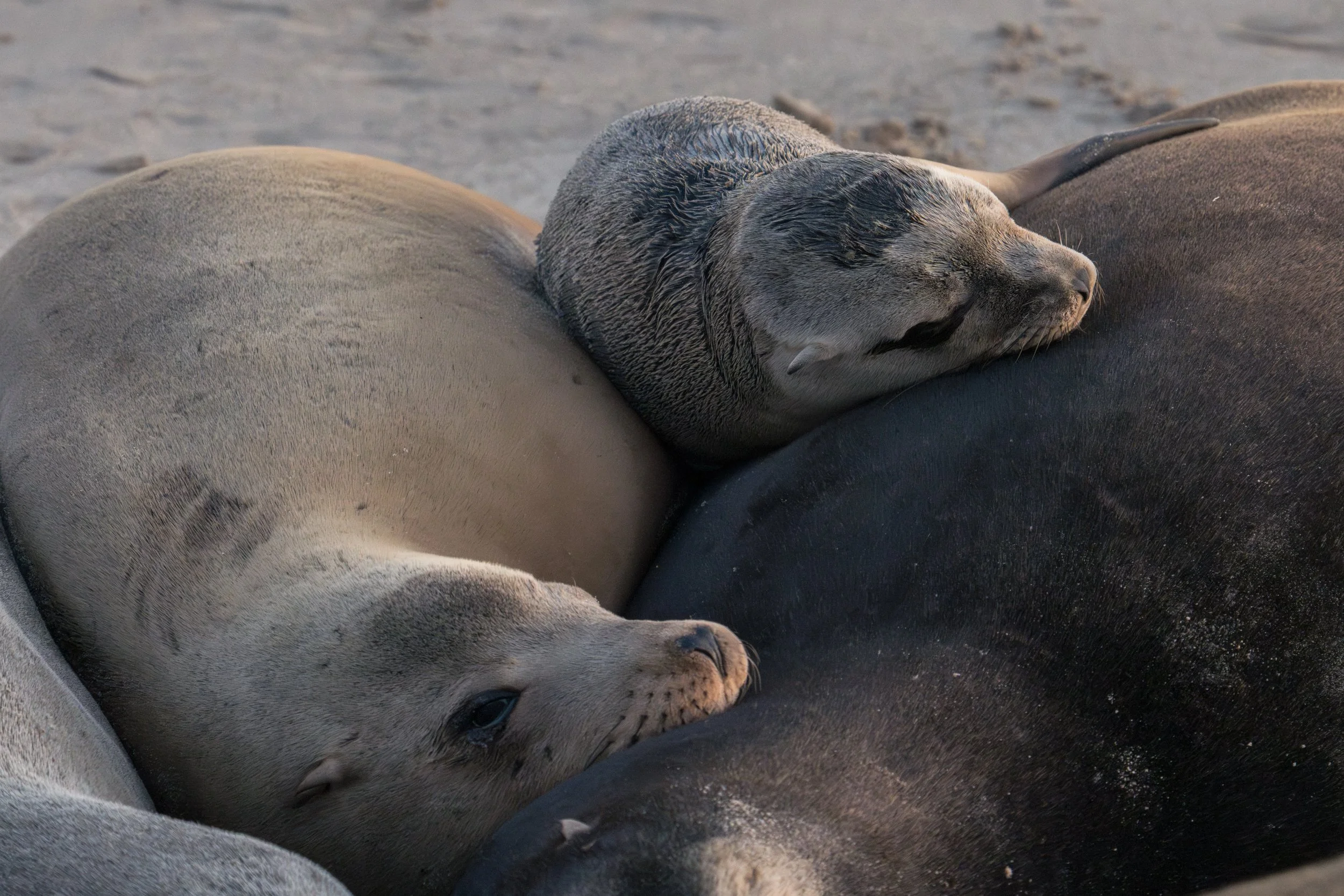
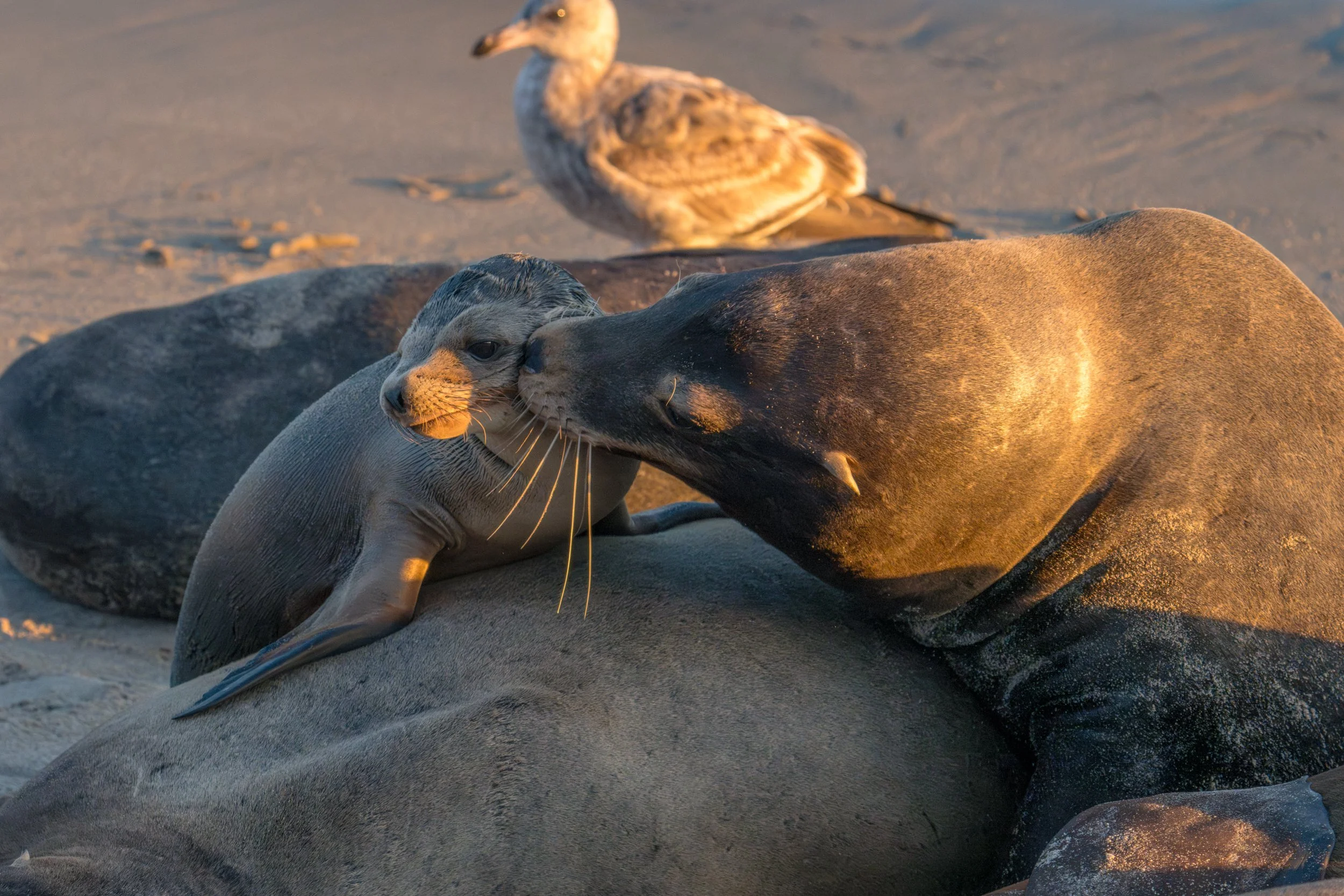
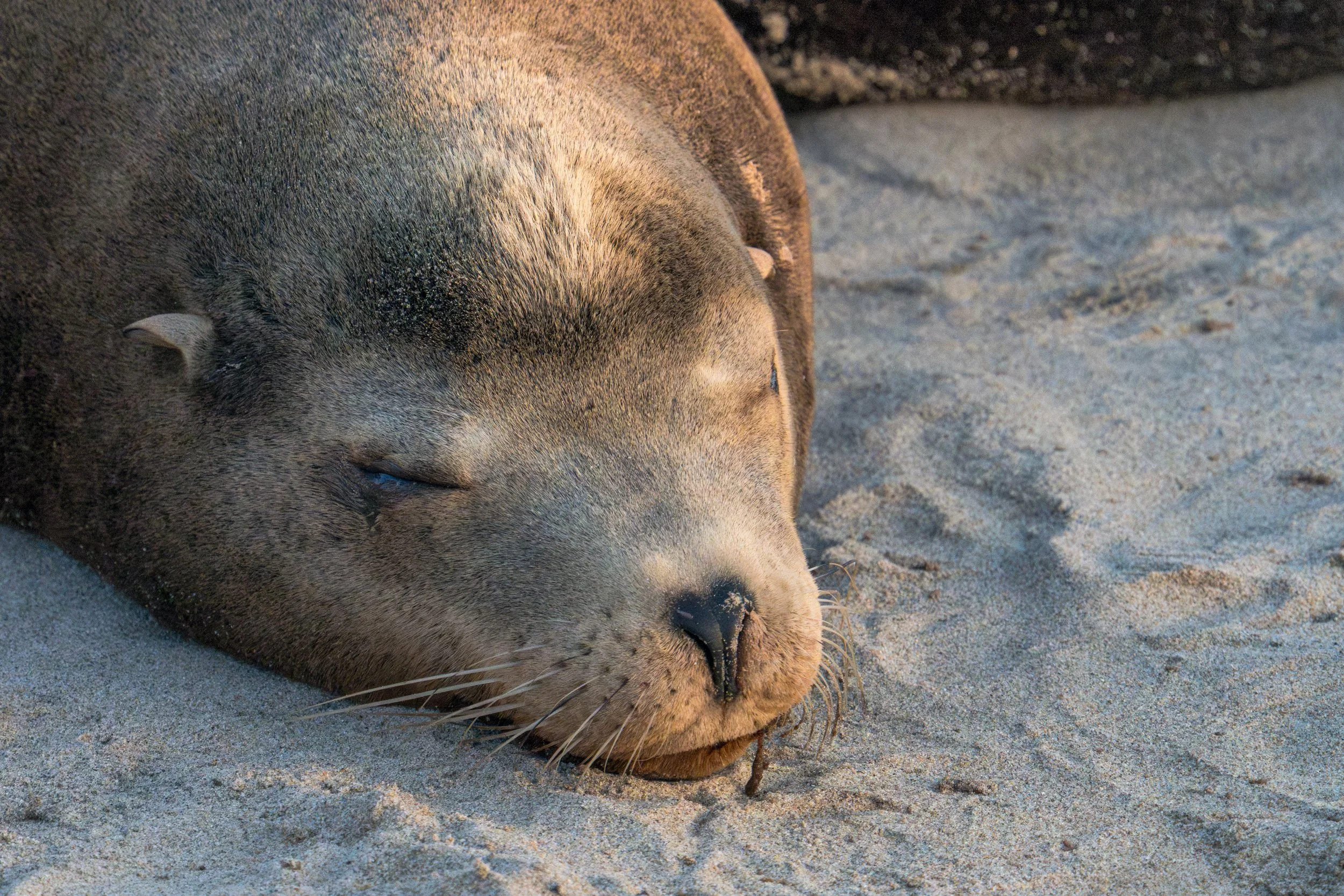
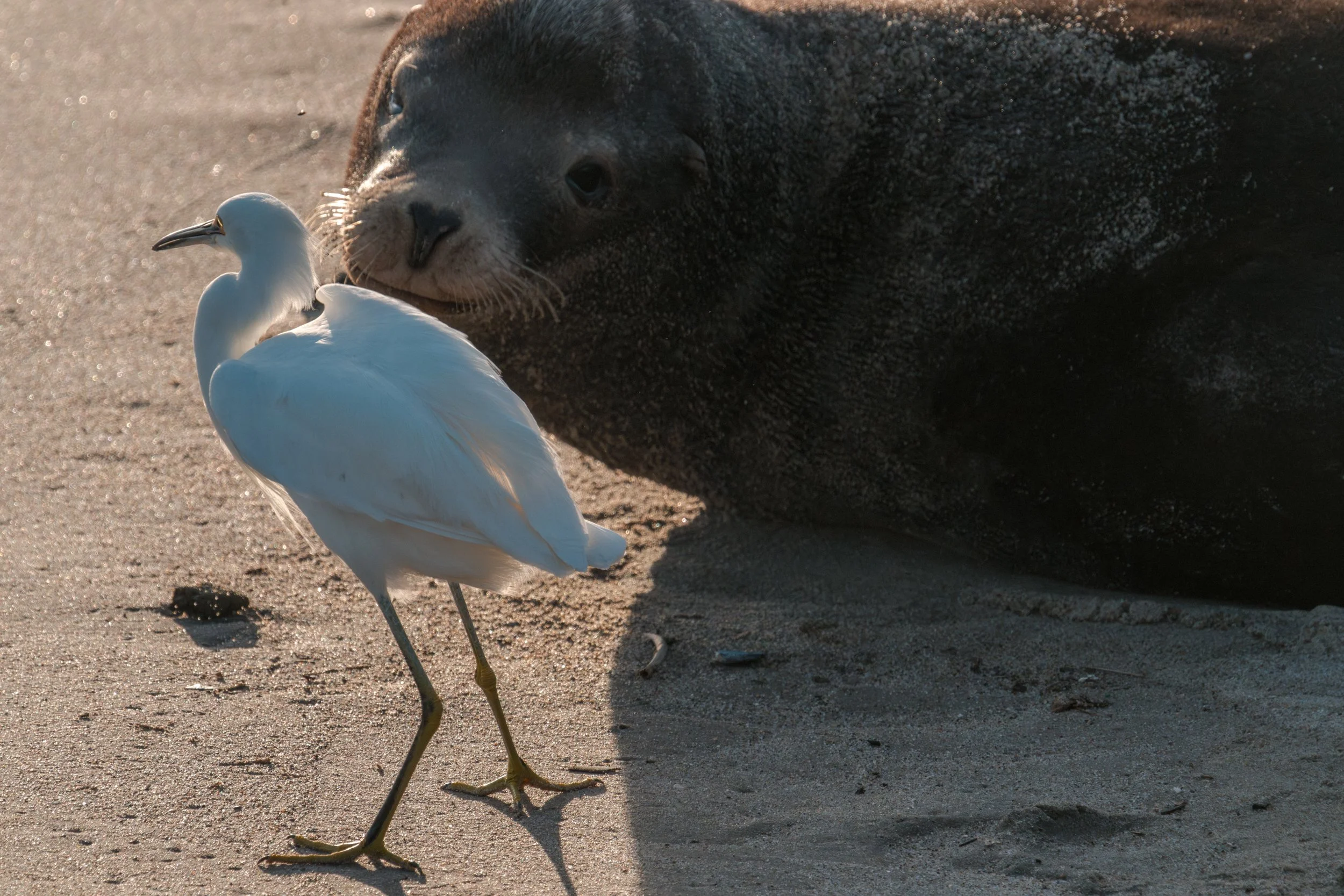
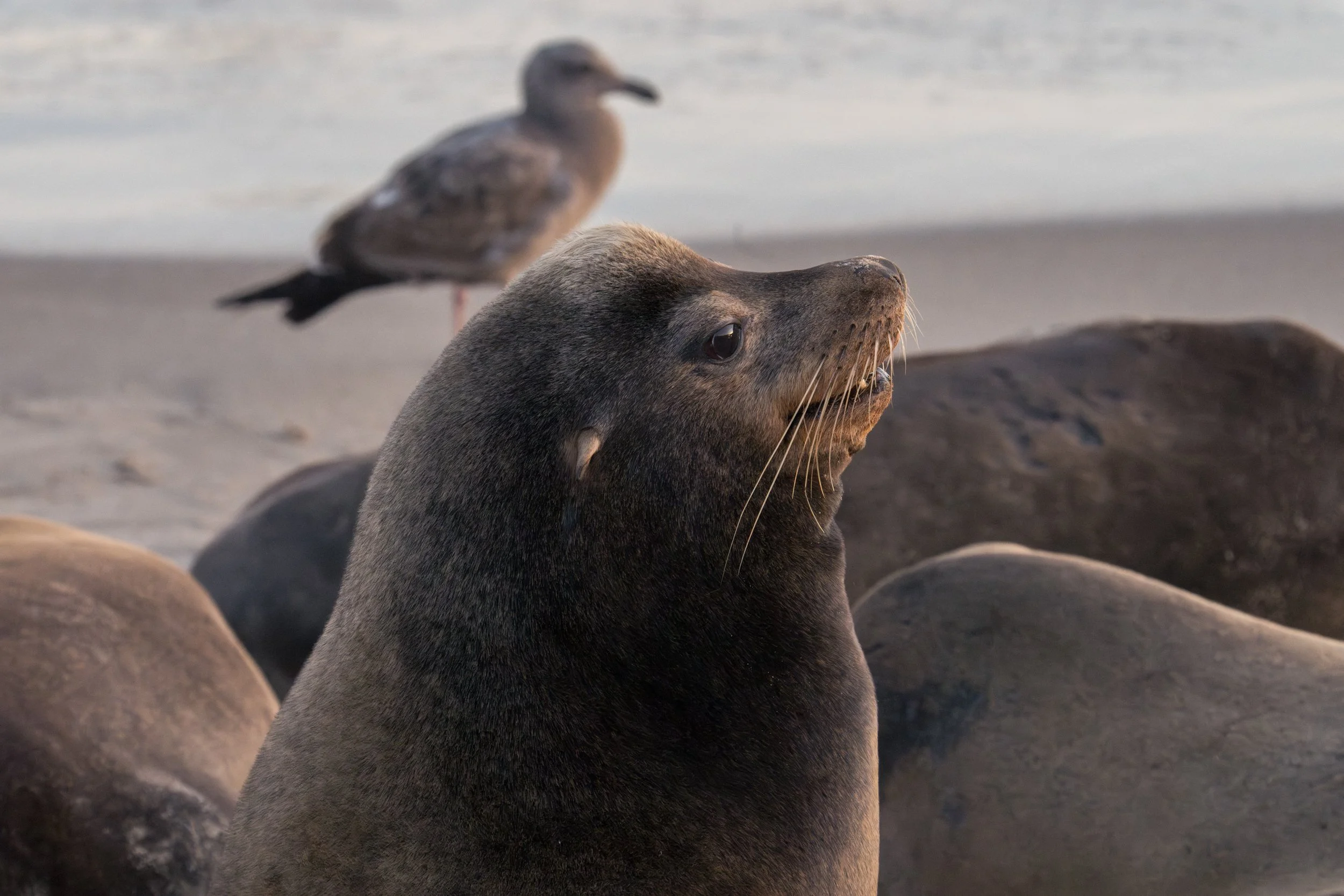
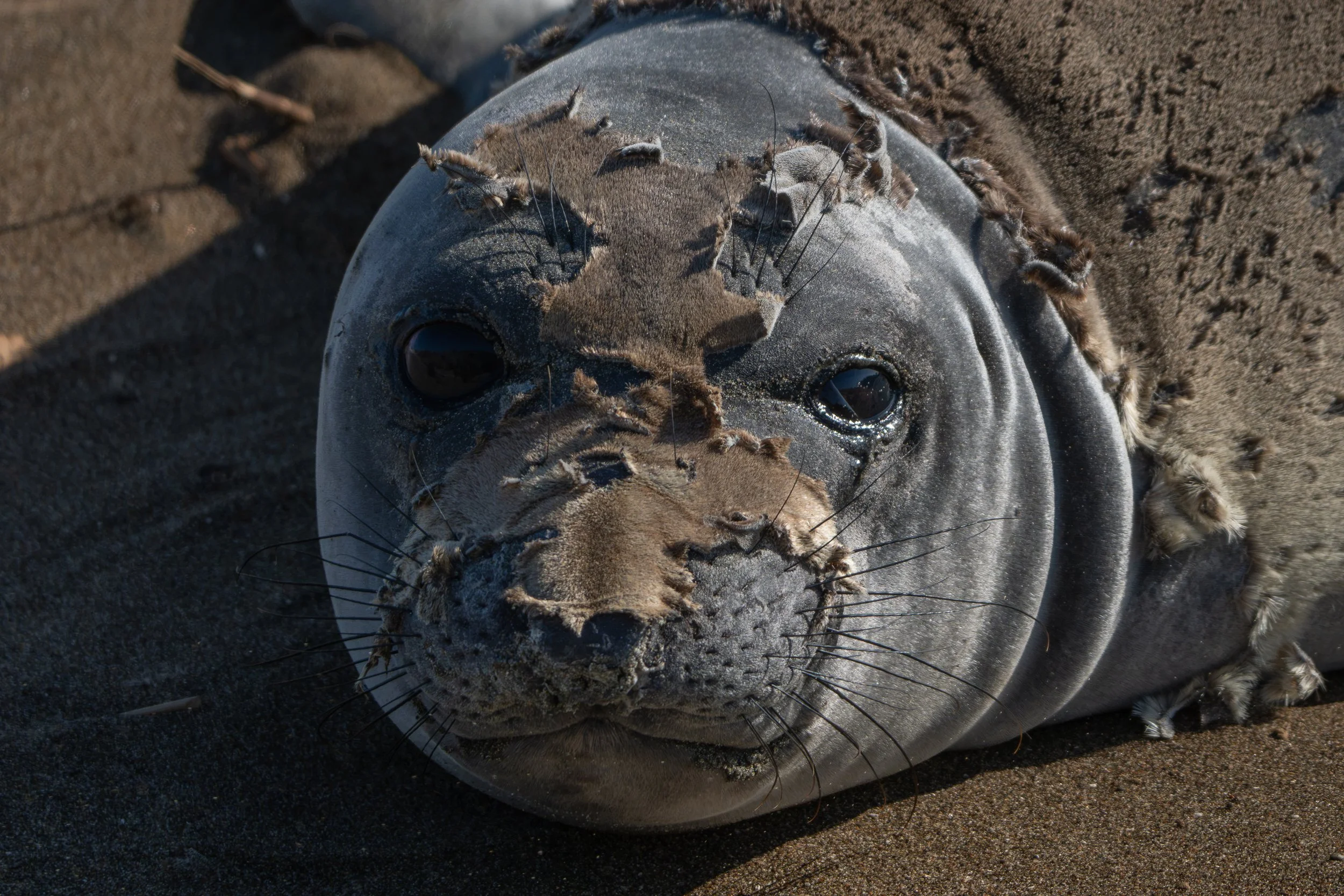
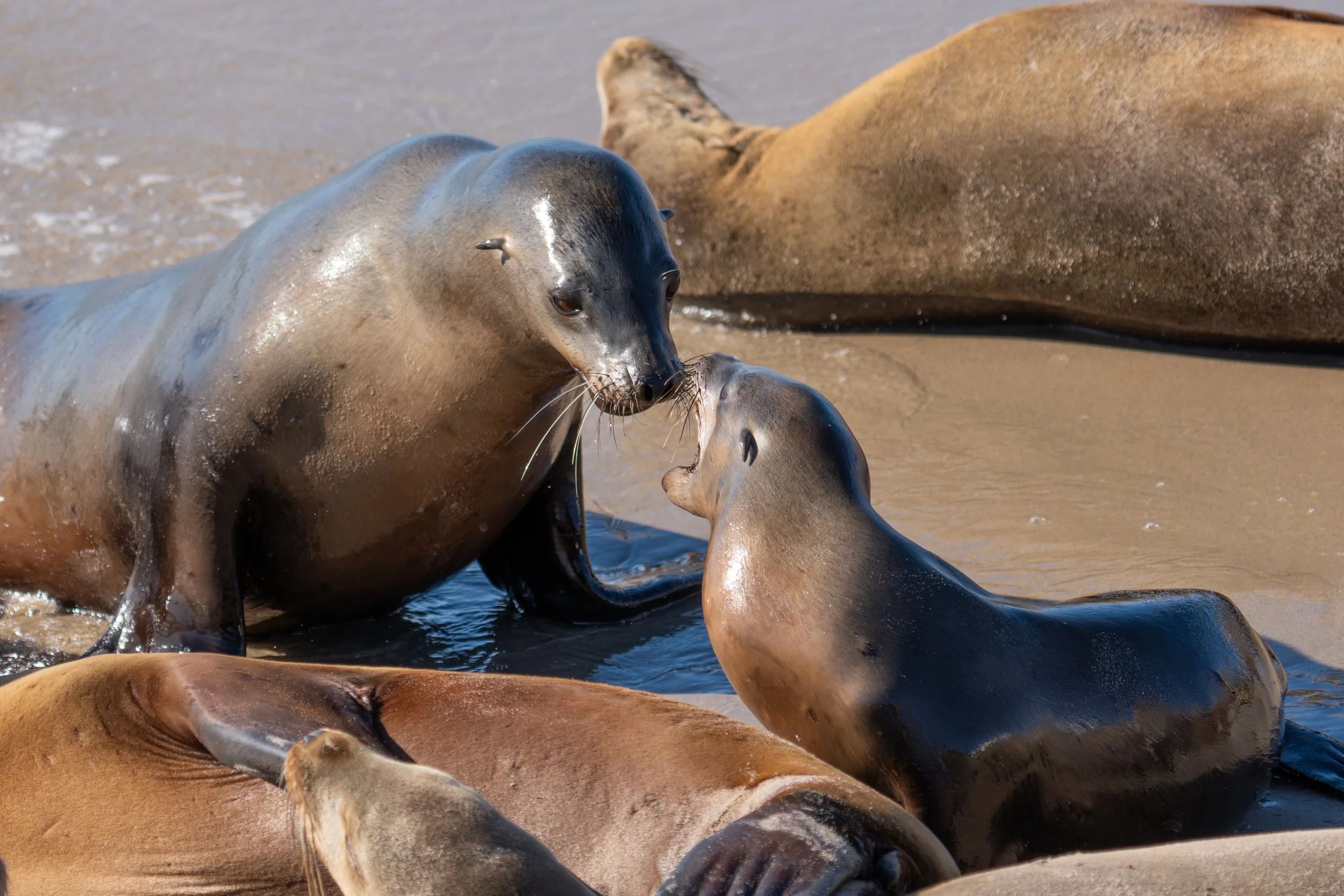
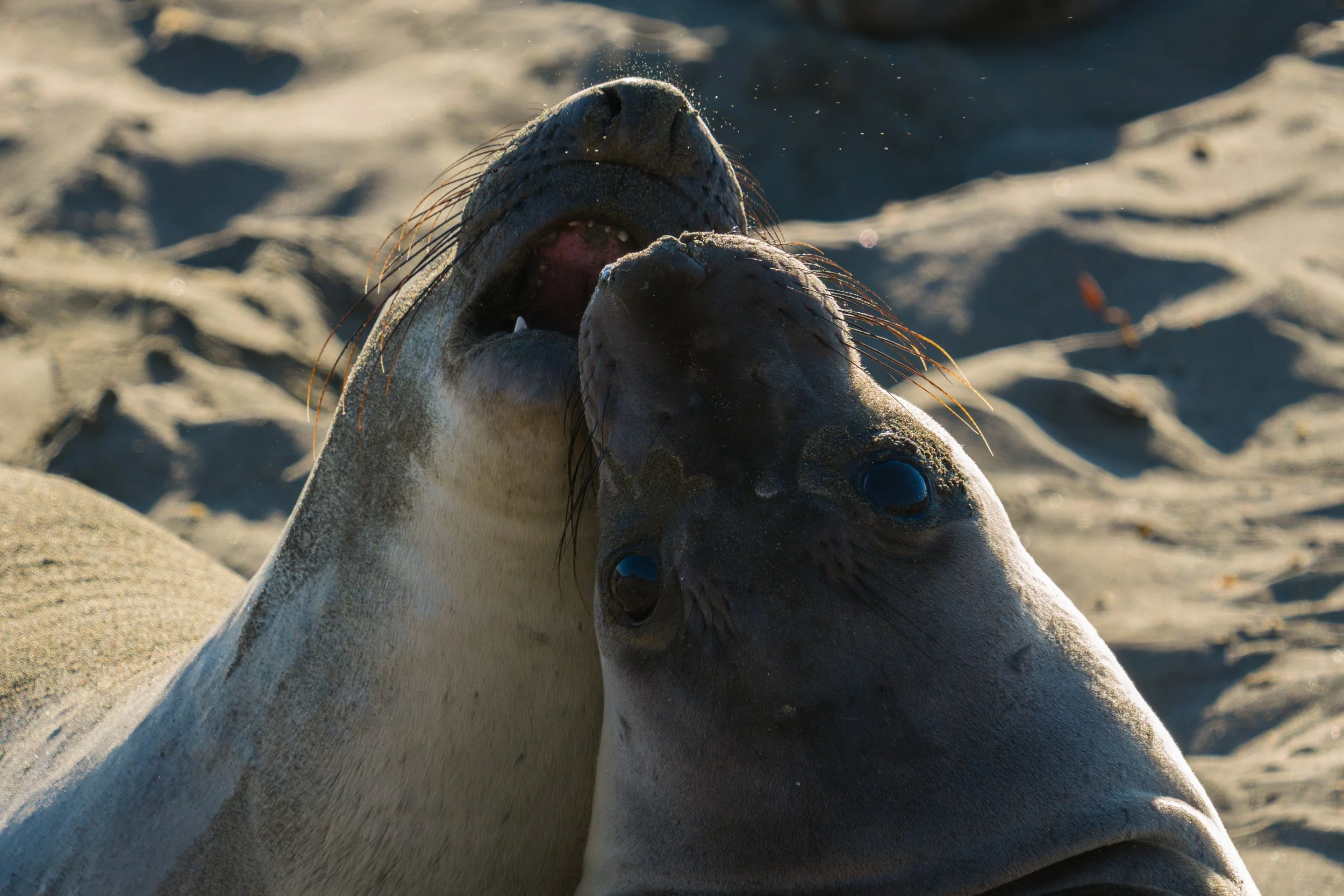
Observer’s Challenge: While some images in this sequence may appear similar at a glance, I encourage you to use the lightbox to explore the finer details. In the series featuring the pup and adult, a closer look reveals a progression of intimate moments: from tender nose-to-nose contact to a frame where the pup's mouth is open, showcasing the textures of its developing teeth.

Media Note: All photos on this page have been downresed for faster web loading. You can click on any image to open the lightbox for an expanded and zoomed view. Full-resolution files are available for licensed archival or professional use; please contact me for a rate sheet and access.

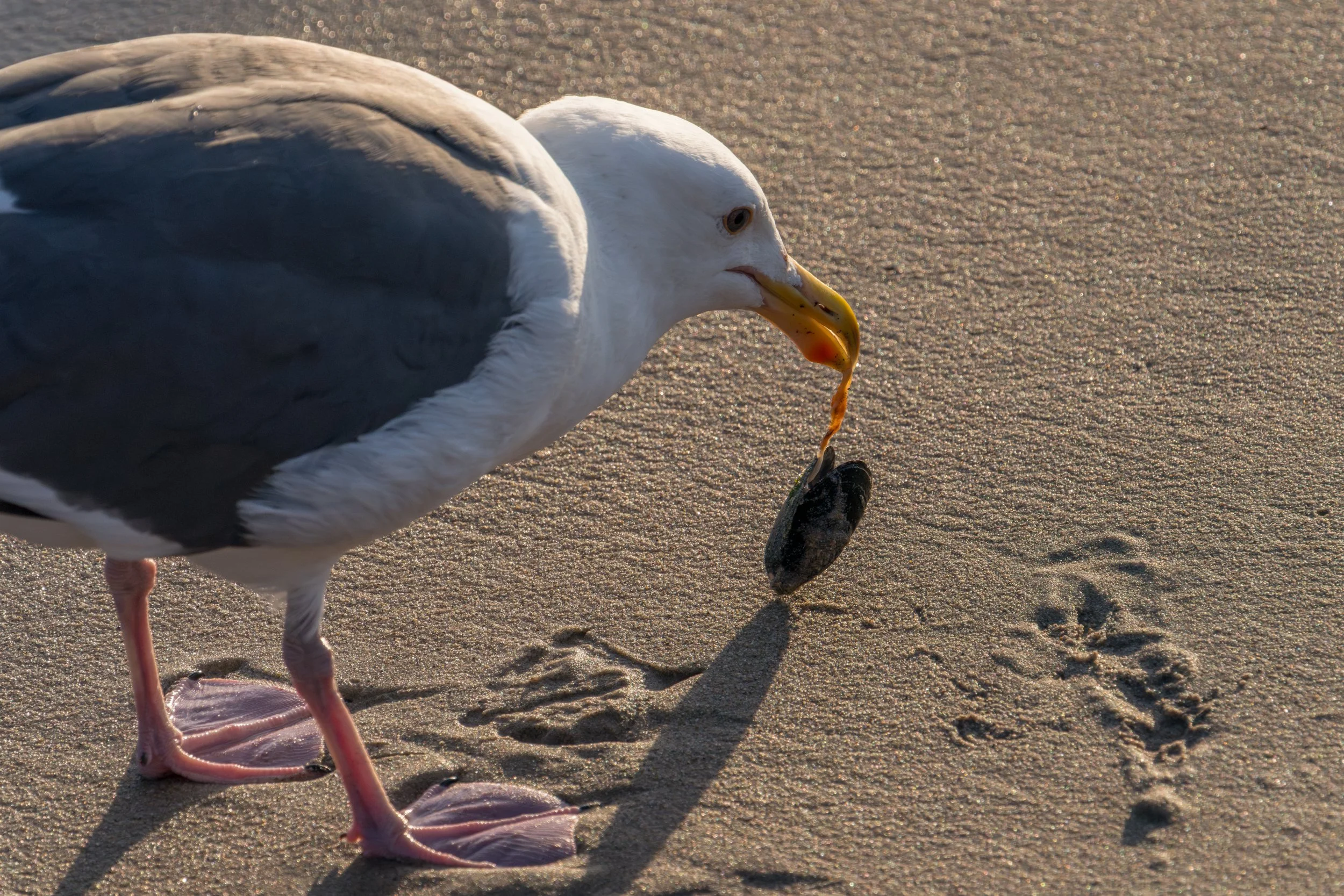
Ethical Documentation: Each image in this gallery was captured following our Admire from Afar methodology. By utilizing professional telephoto lenses and maintaining a respectful distance, we ensure that every animal remains undisturbed and unaware of our presence. We never use baiting or interference; these visuals are a genuine, non-intrusive record of natural behavior.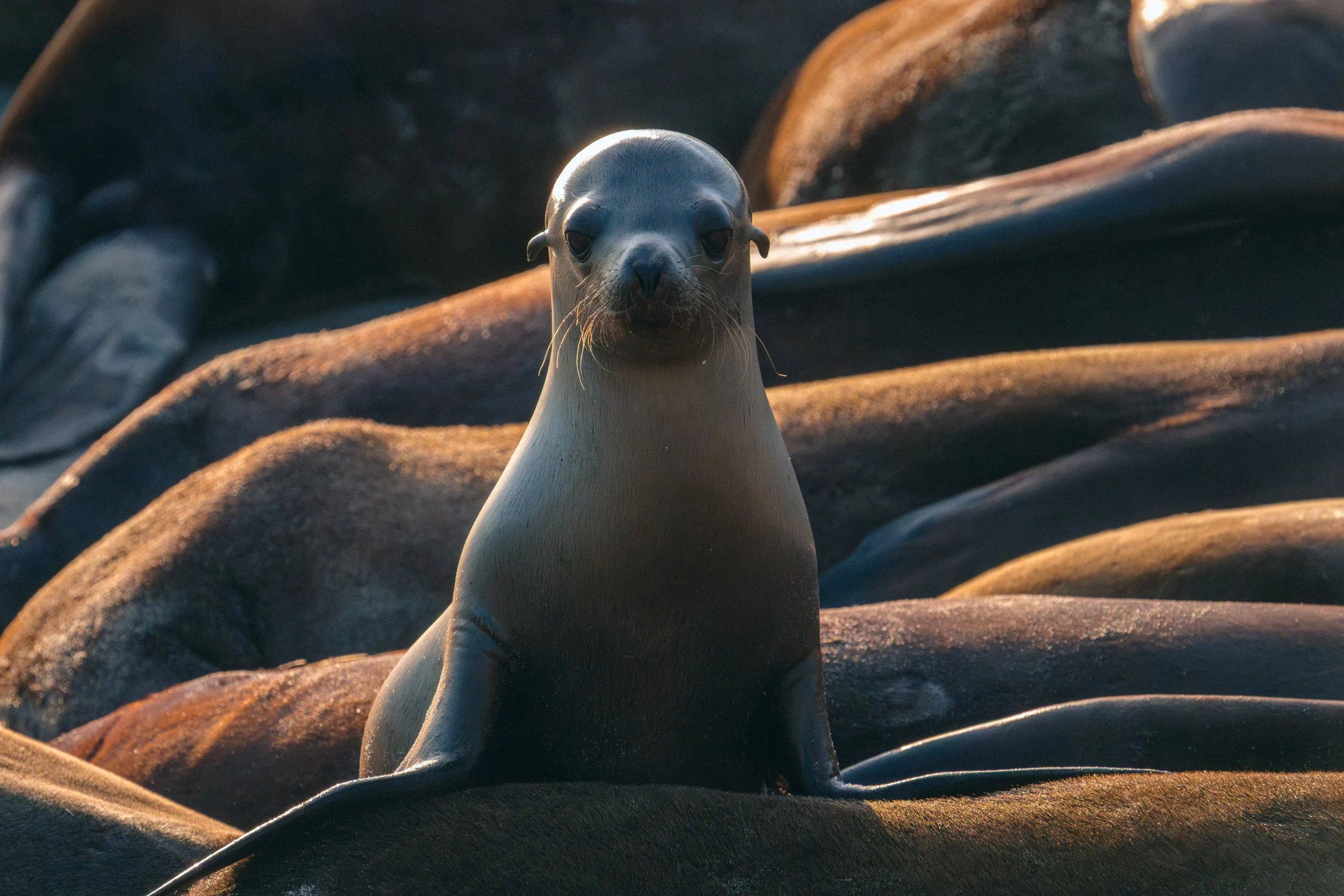
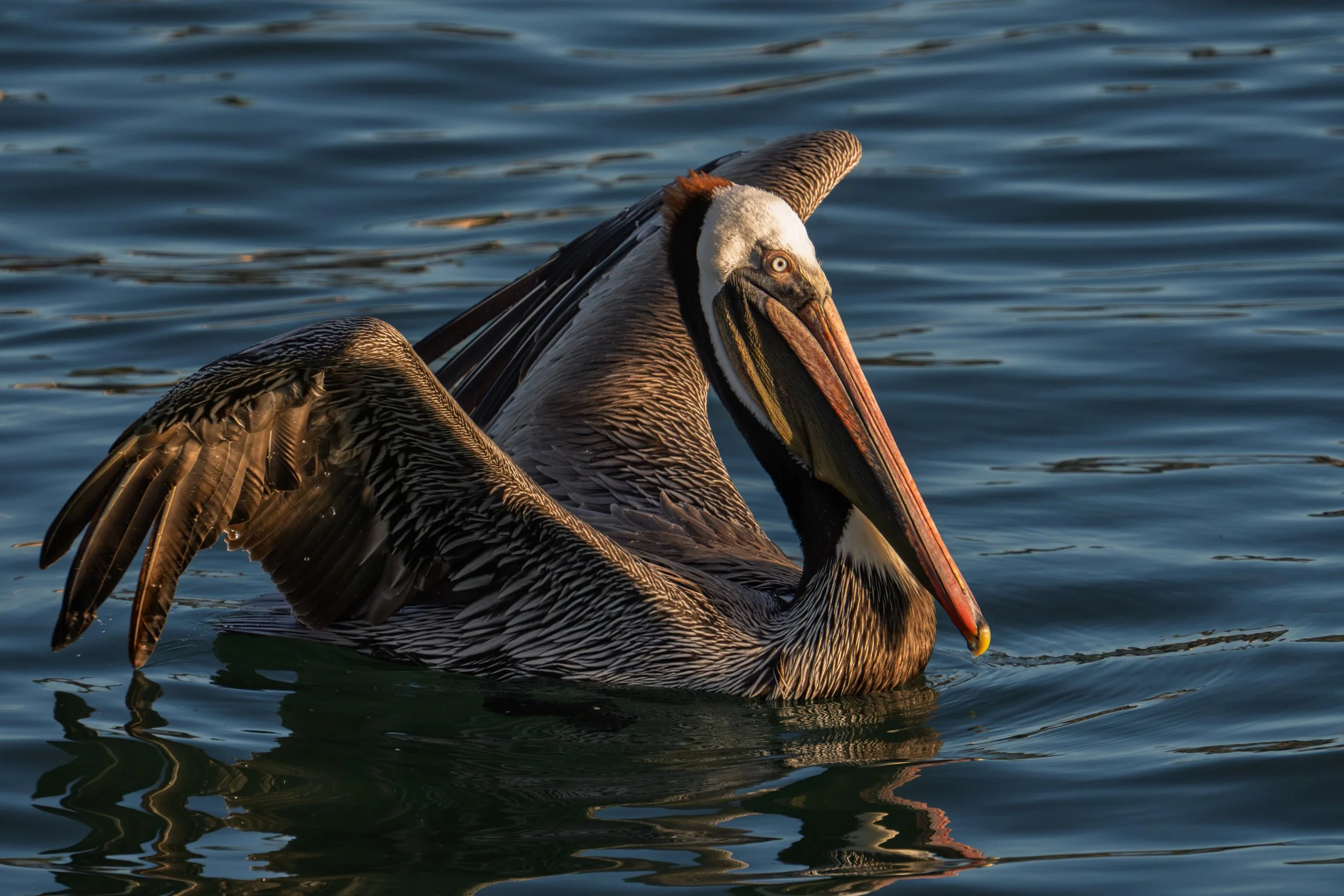
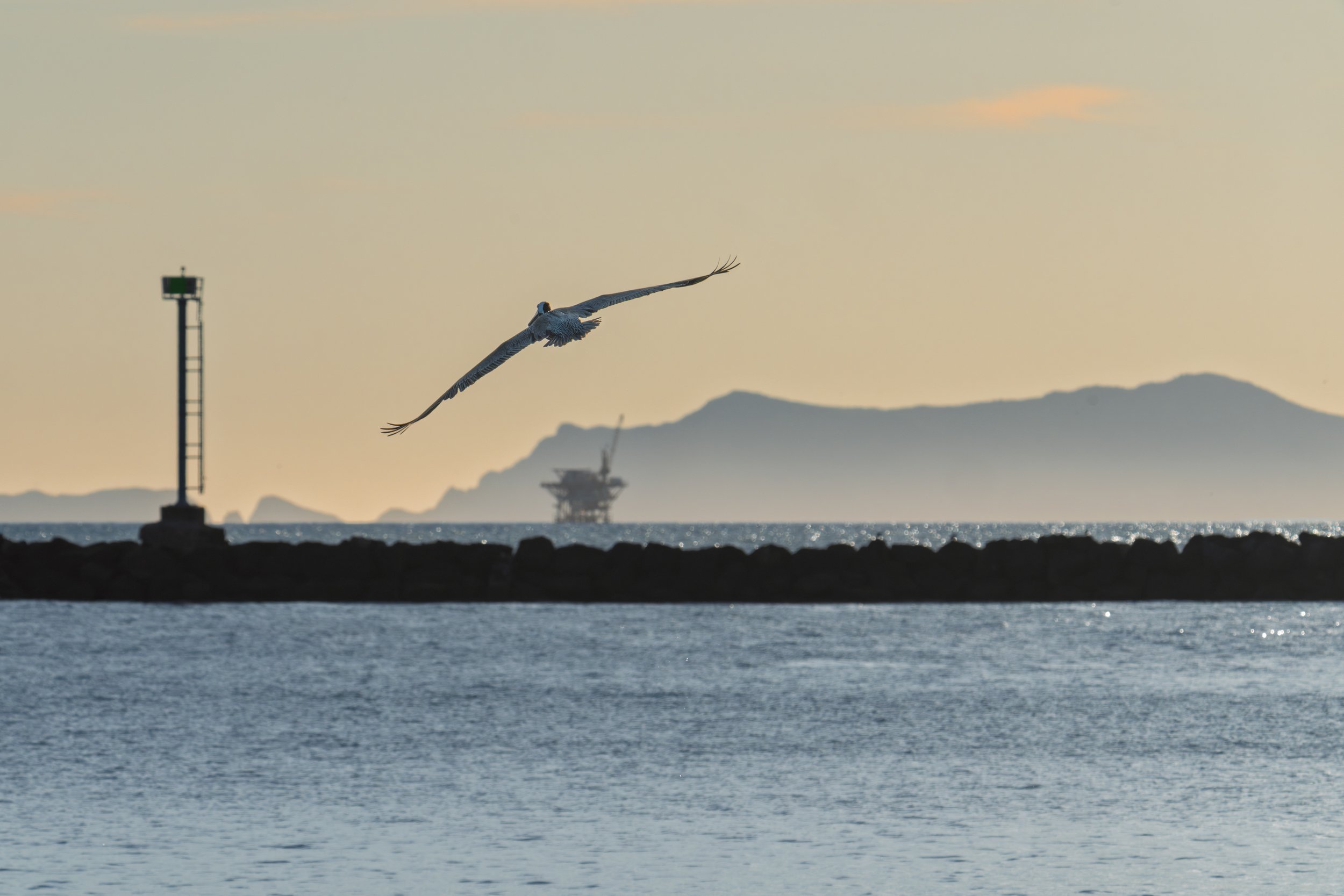
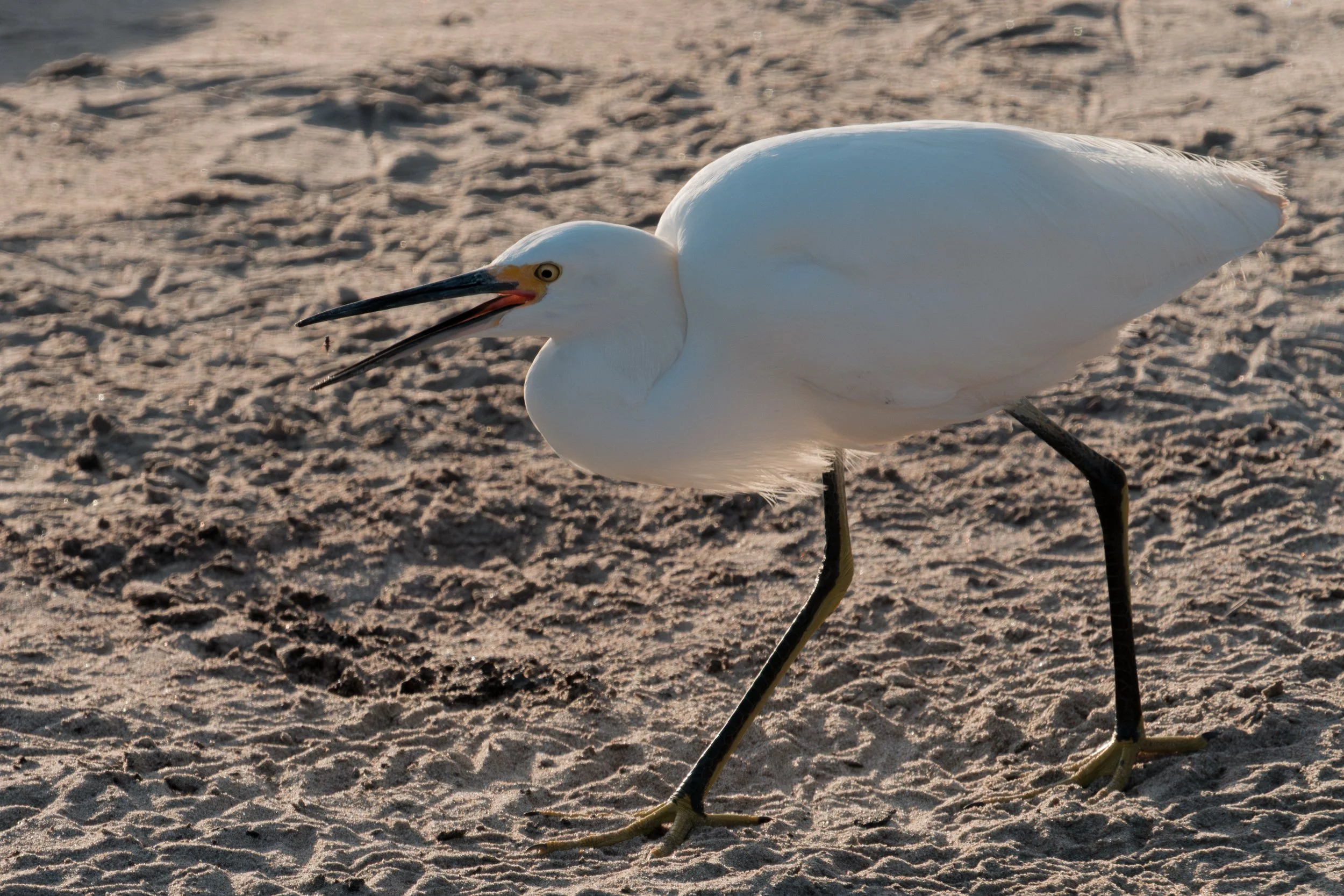
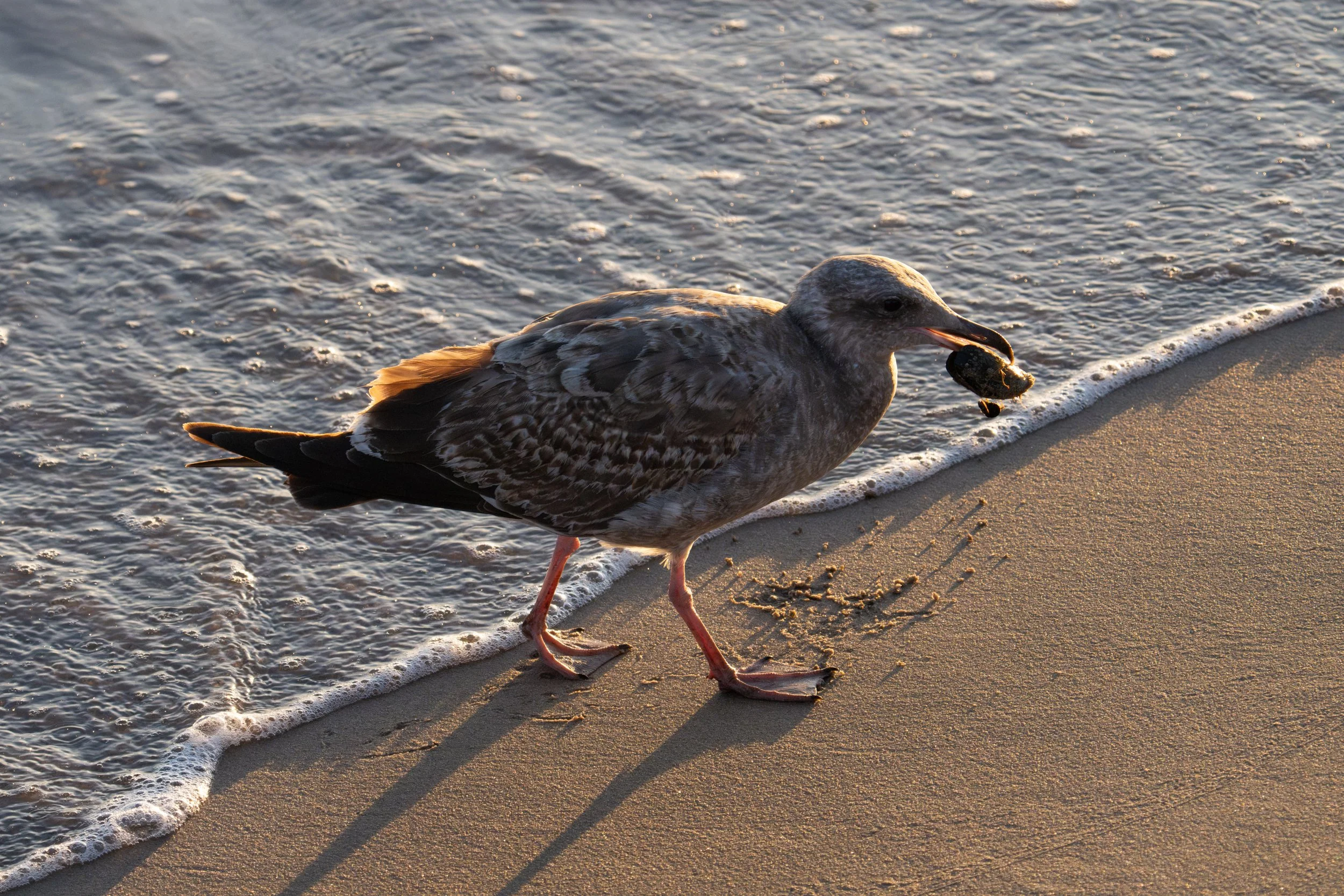


This year's Sea Otter Awareness Week runs September 20 to 26, and this post has the full lineup of events and viewing stations, from California to Oregon. It closes with my favorite images from the collection I donated to the week's organizers.