
Golden Hour at the Rookery: Elephant Seal Sparring & Sunset Light
Authentic Wildlife Stories, Coastal Adventures & Nature-Inspired Art | Marketing Consulting for Mission-Driven Brands
San Simeon, California // December 9th, 2025
☀
☀
Equipment
-
-
-
Tech:
Filters:
Camera Accessories:
Additional Gear:
Locations
📍 Piedras Blancas Elephant Seal Rookery — 18844 Cabrillo Hwy, San Simeon, CA 93452
The main viewing boardwalks are free, accessible, and offer plenty of room to spread out. No restrooms. Free parking, but the lot does occasionally fill at peak times.
A Golden Hour Detour
This gallery has been sitting in my queue for a while, and for good reason. Life at Salt + Noelle has been incredibly full lately.
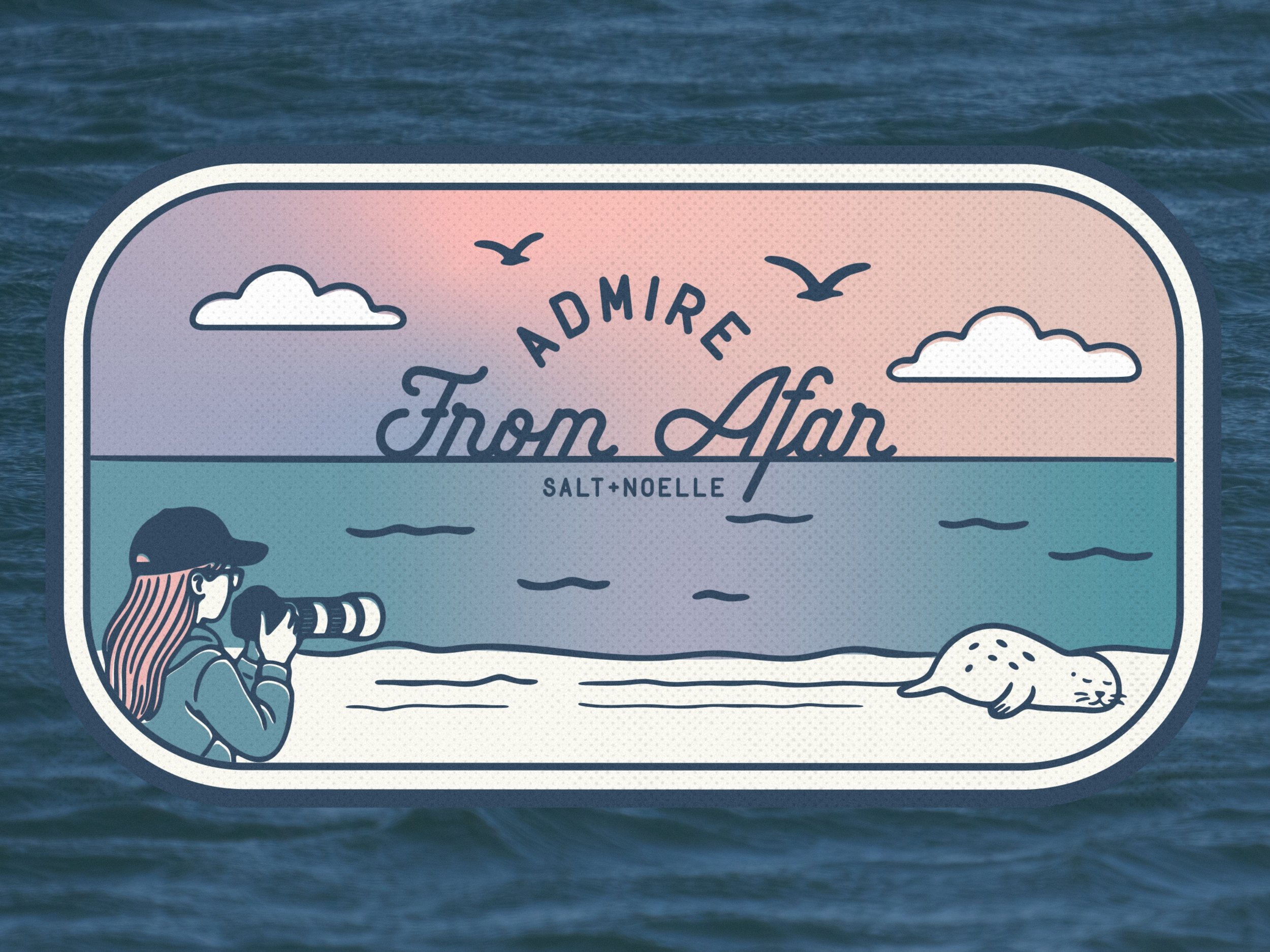
Between revamping our consulting services to better support our partners, finalizing the new "Admire from Afar" badging and watermarks (which you’ll see making their debut below!), and capturing a massive backlog of Whiskers in the Wild content that I am just now starting to edit, this Piedras Blancas gallery had to wait. But I’m finally sharing it today because this particular afternoon was just too special to keep in the archives.
In early October, after spending the earlier part of the day photographing sea otters in Morro Bay, we decided to extend the trip. We drove north along Highway 1, hugging the coastline as the afternoon light started to soften. We pulled into Piedras Blancas around 4:00 PM, just in time to catch the last few hours of daylight with the elephant seals.
The Fall Haul-Out
Unlike the stormy weather we've had recently, this day was perfectly clear. The conditions were calm, with a light haze lifting to reveal a bright, golden sunset that transformed the entire color palette of the beach.
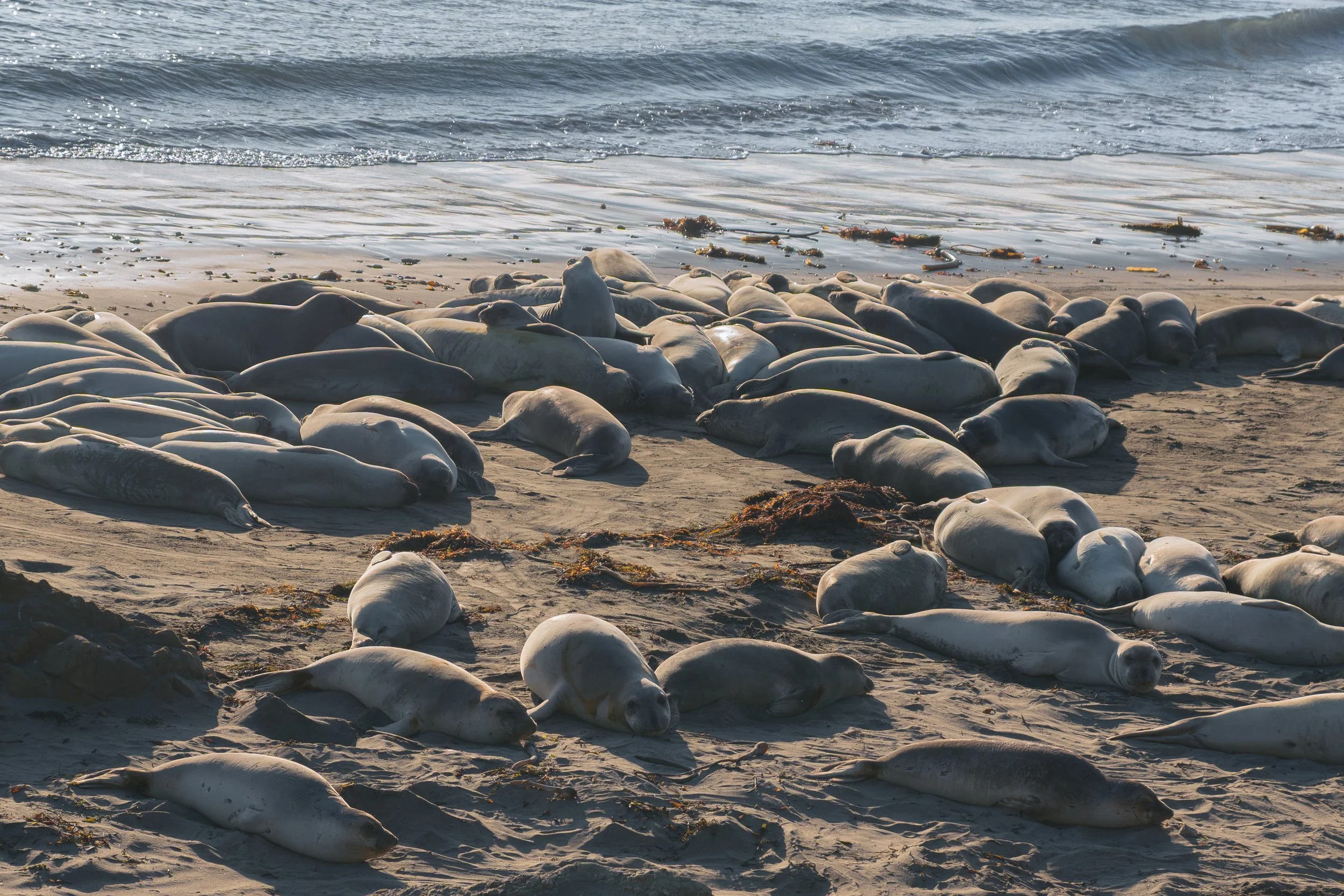
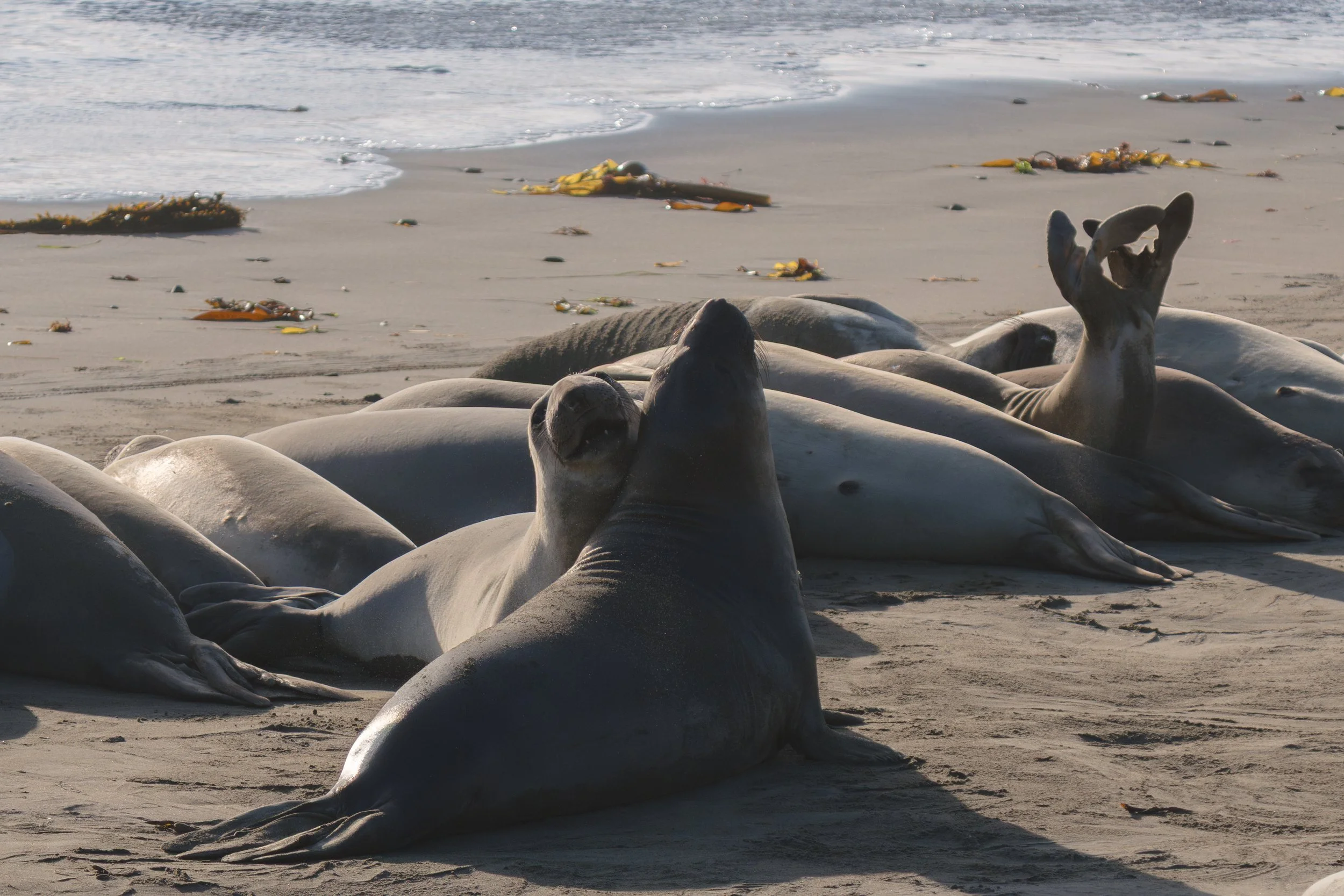
Visiting in October offers a completely different atmosphere than the chaotic energy of winter. This is the fall haul-out, a season defined by the presence of juveniles and subadults rather than the massive, battling beachmasters. The adult bulls, which can weigh up to 5,000 pounds, haven't arrived yet. Instead, the beach belongs to the younger generation.
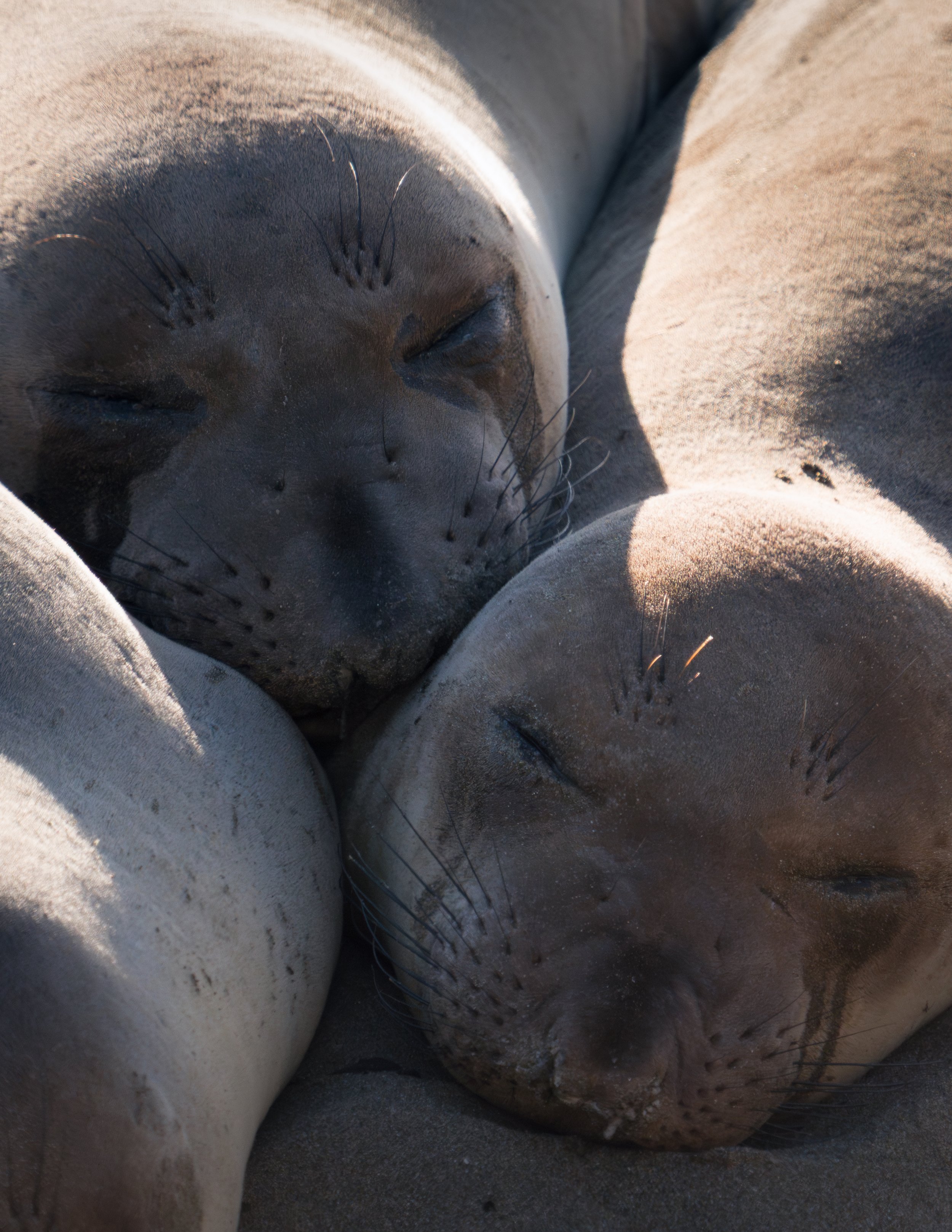
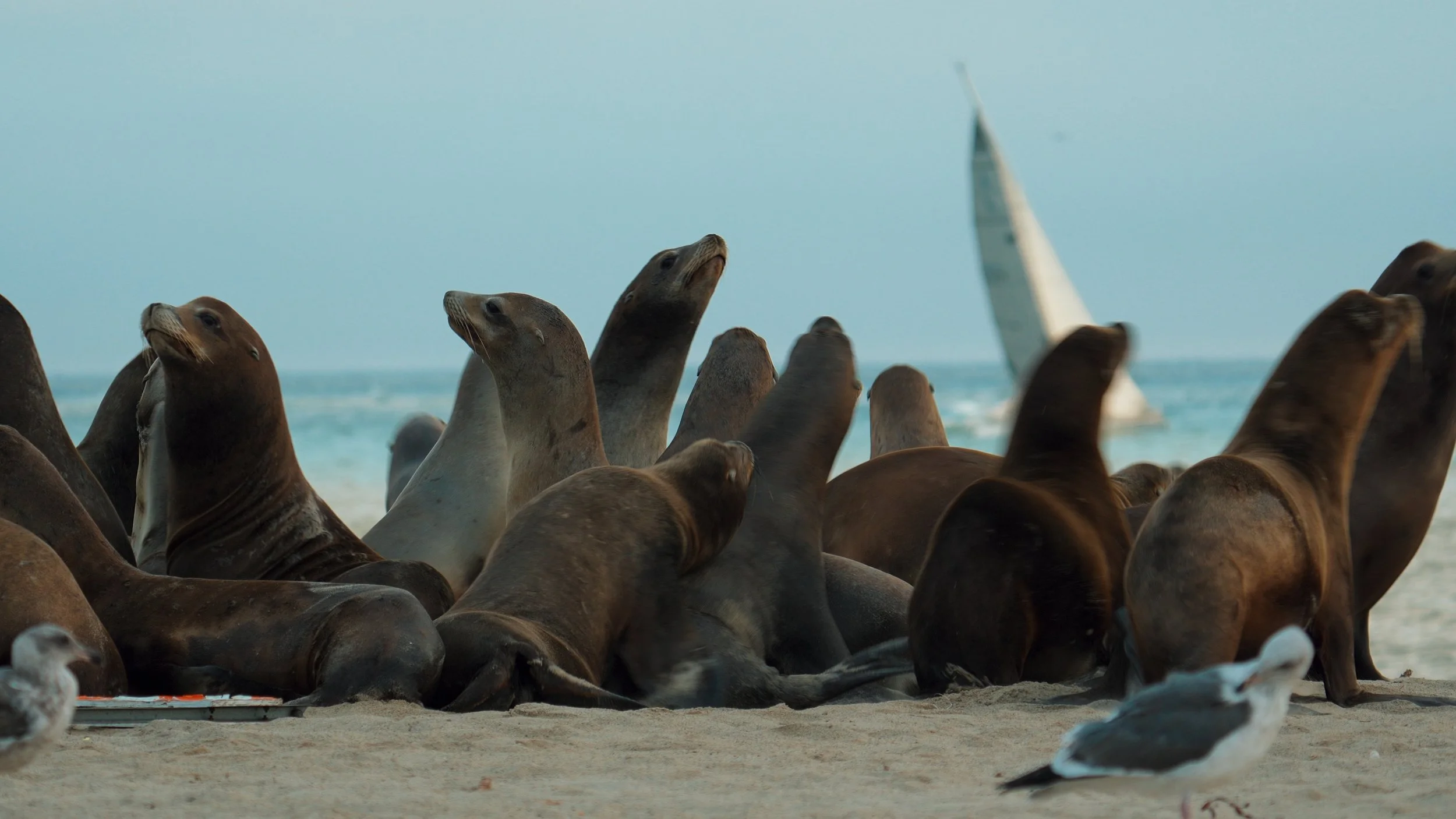
Without the high-stakes biological pressure of the breeding season, the colony was remarkably peaceful. Thousands of seals were stretched out across the sand, resting in tight clusters. Even though they appear to be simply lounging, these seals are undergoing a demanding physical fast. For their entire stay on land, they do not eat or drink. They rely entirely on metabolizing their stored blubber to produce the water and energy they need to survive until they return to the sea.
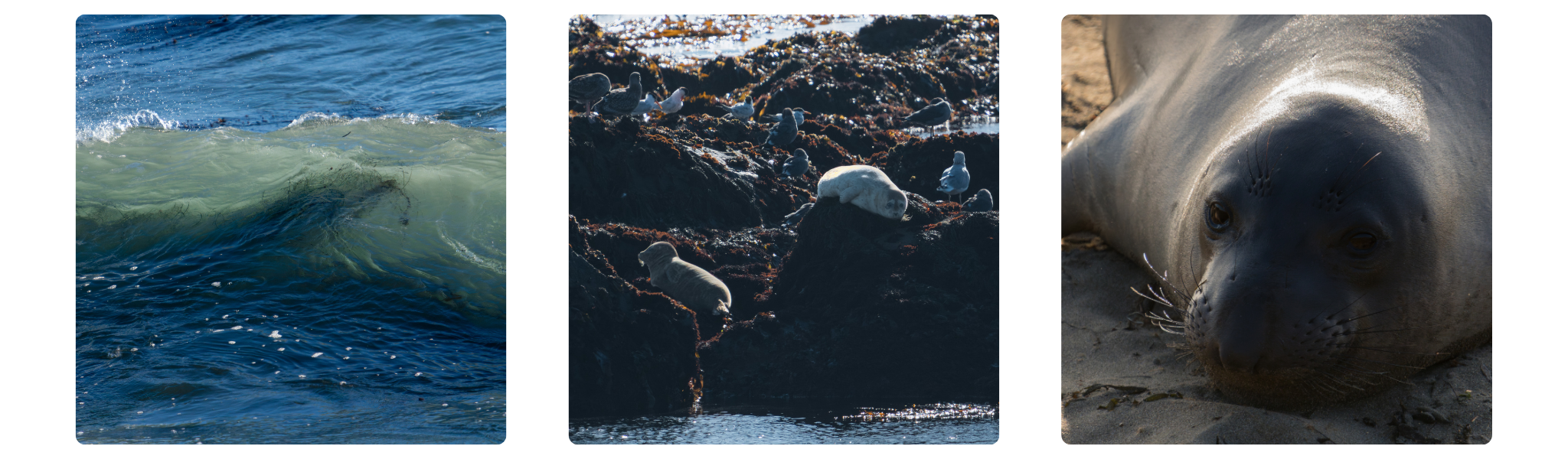
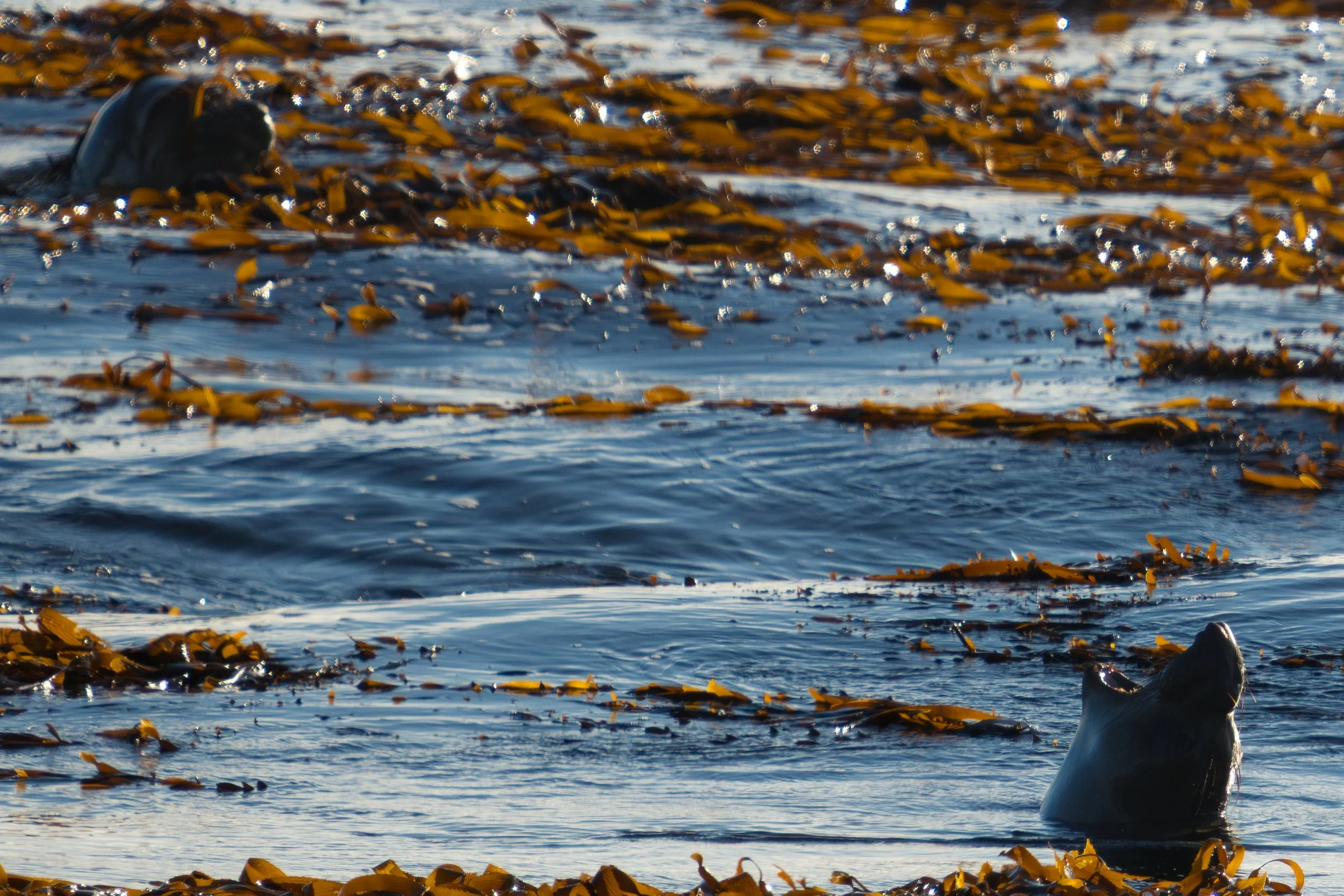
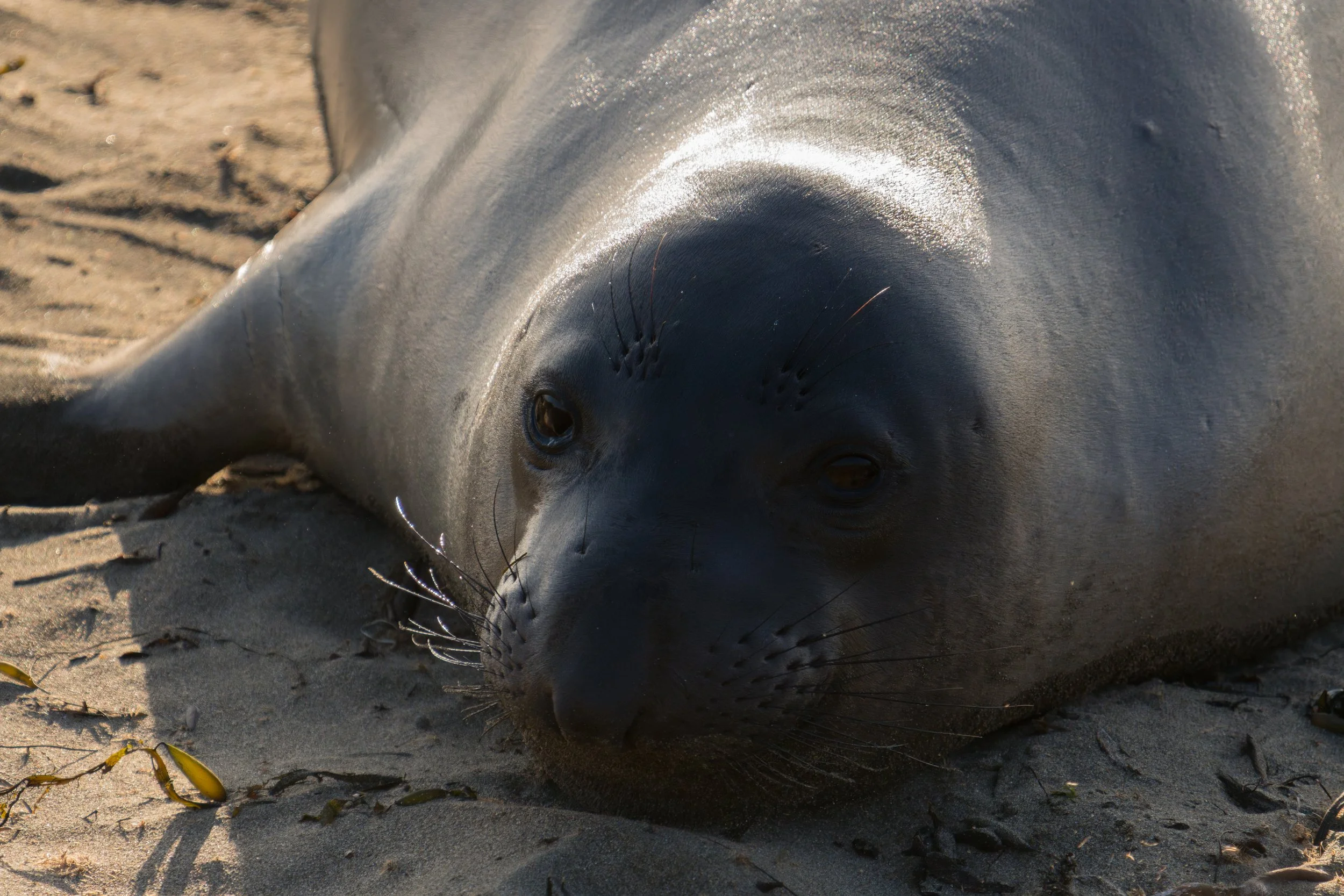
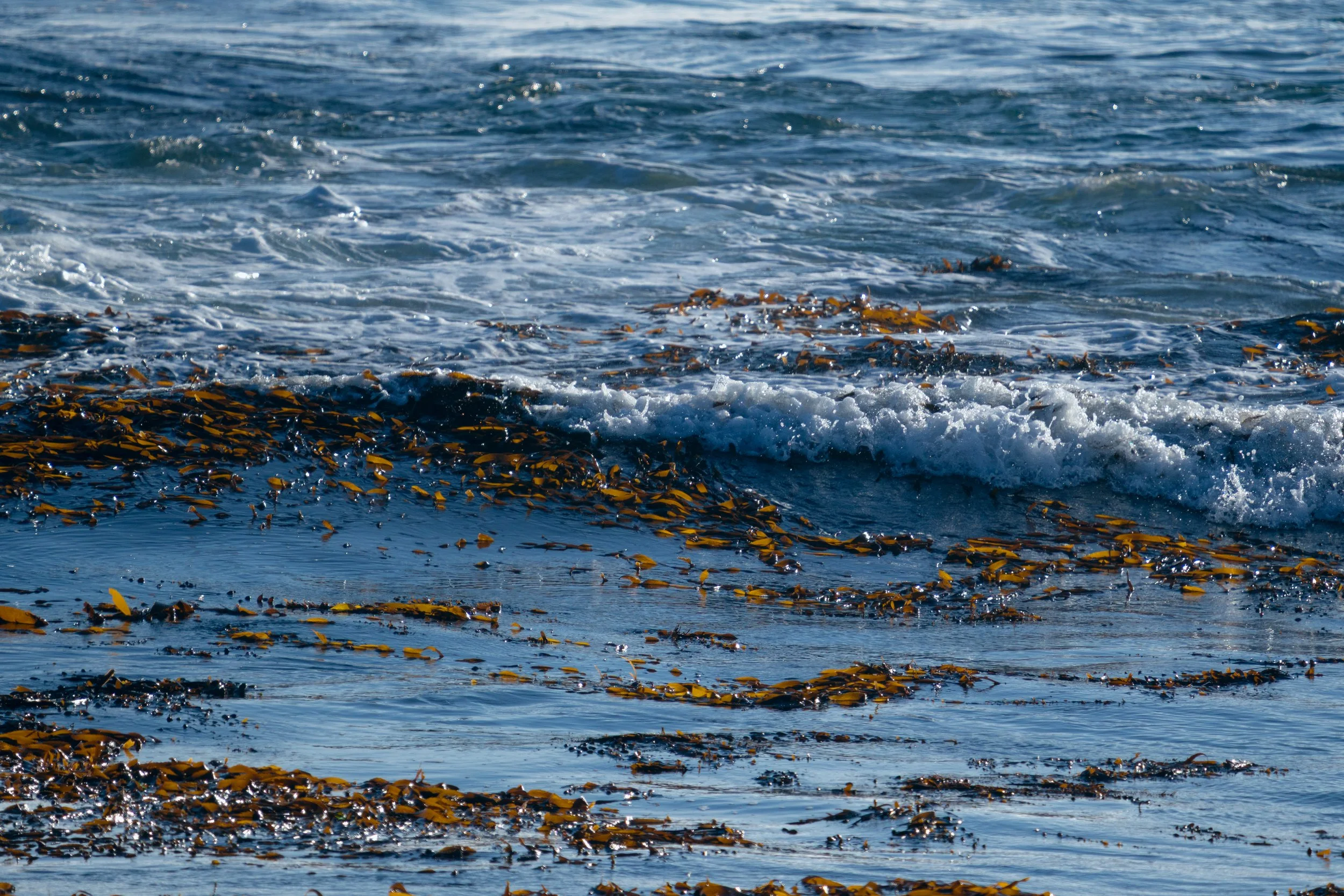
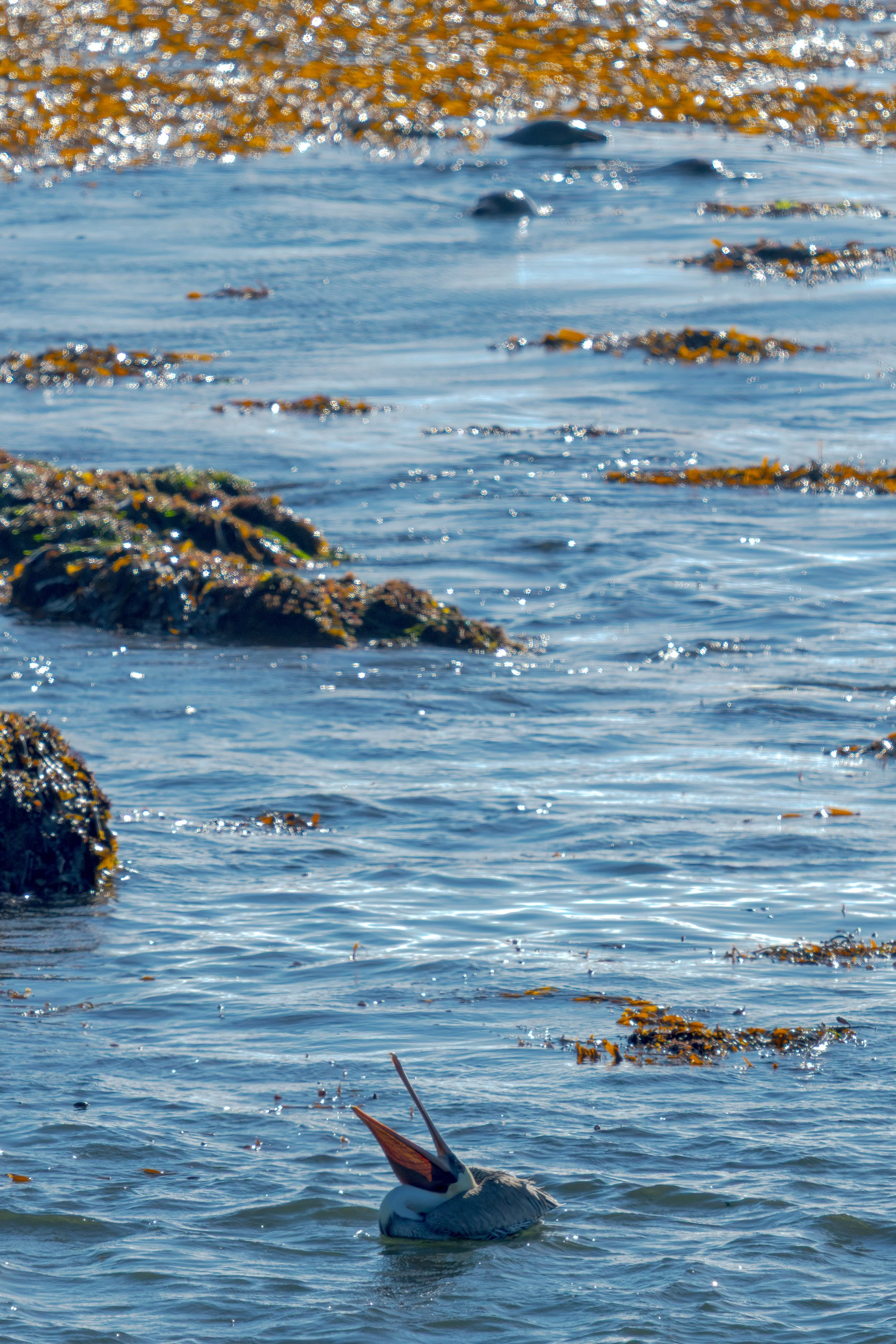
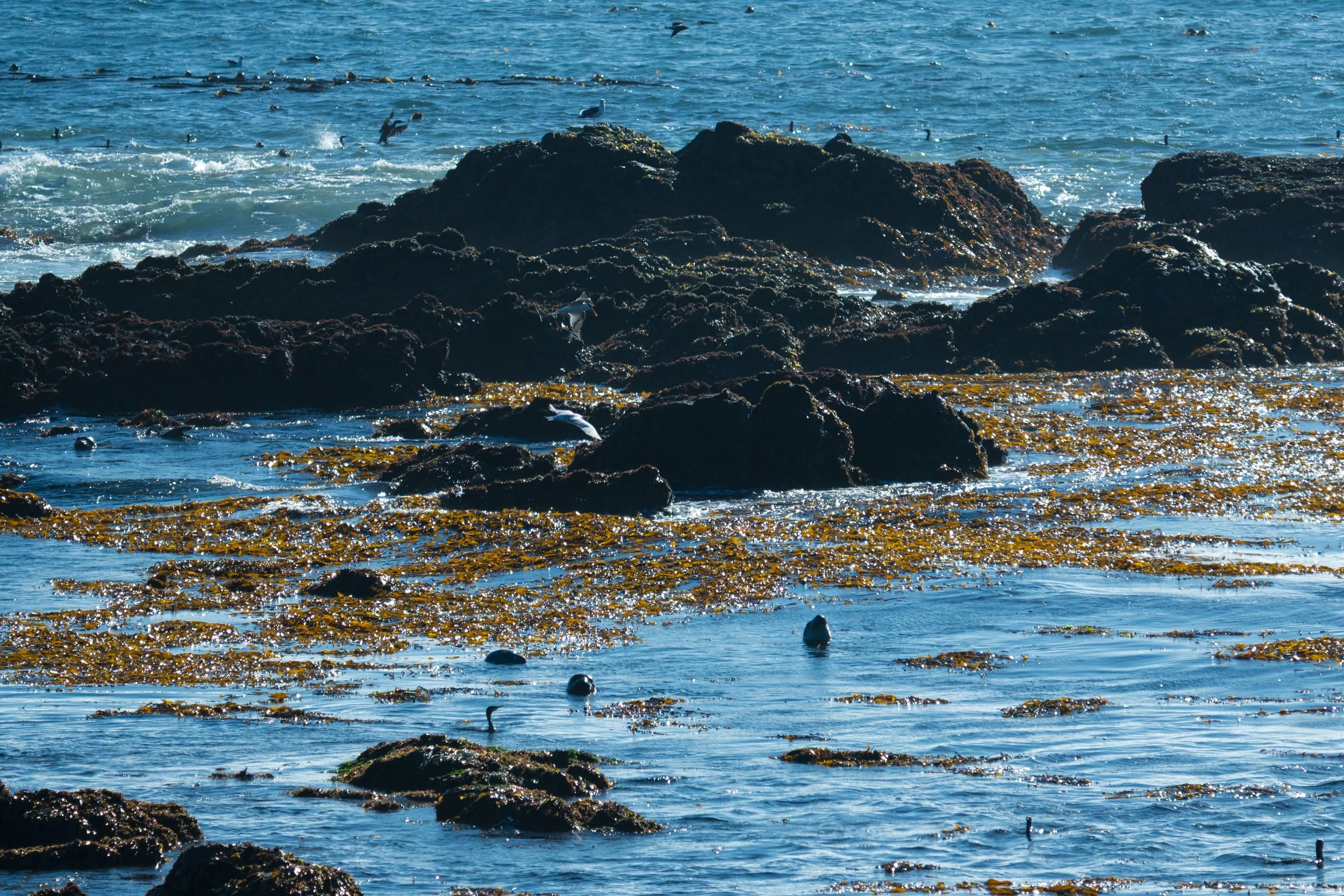
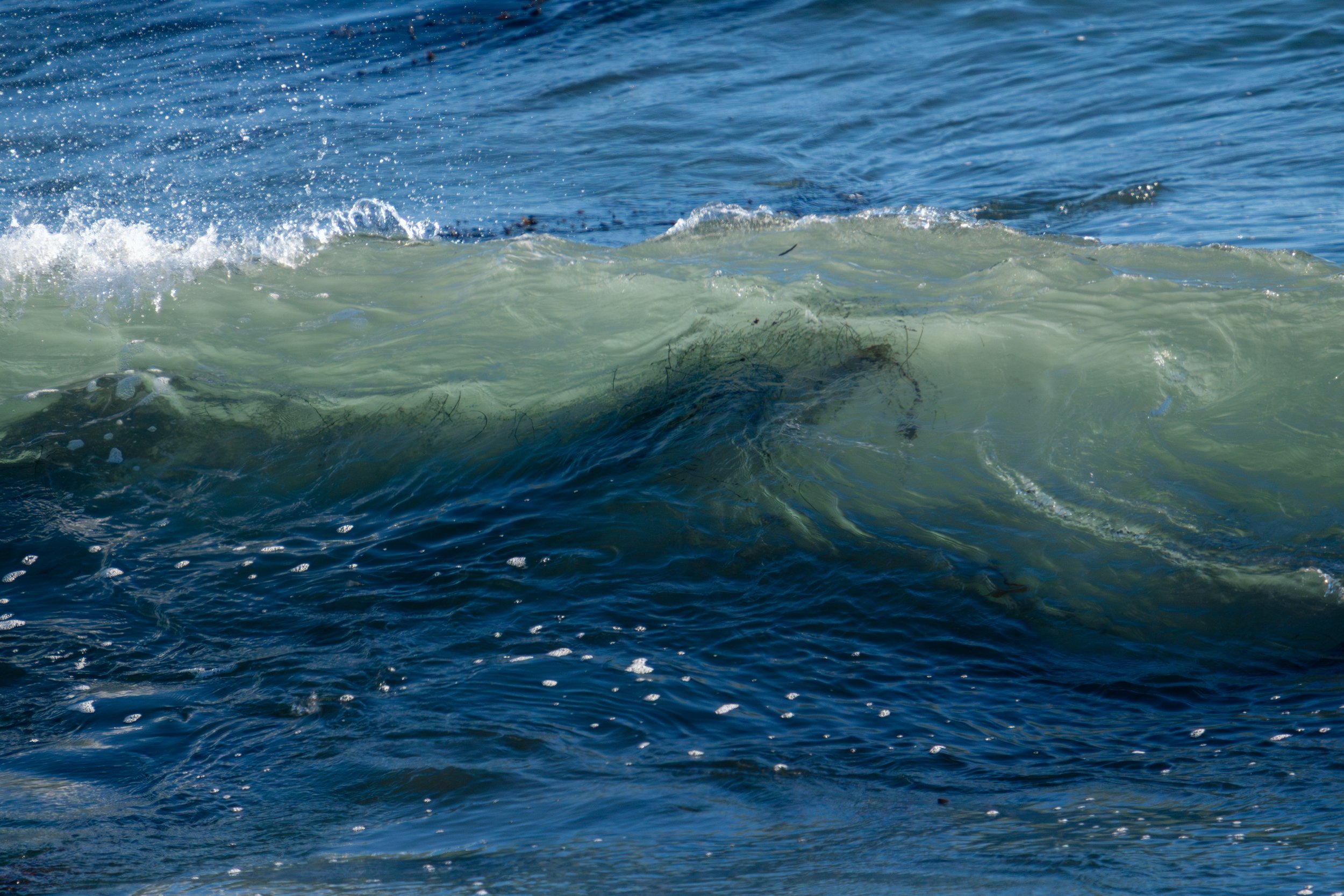
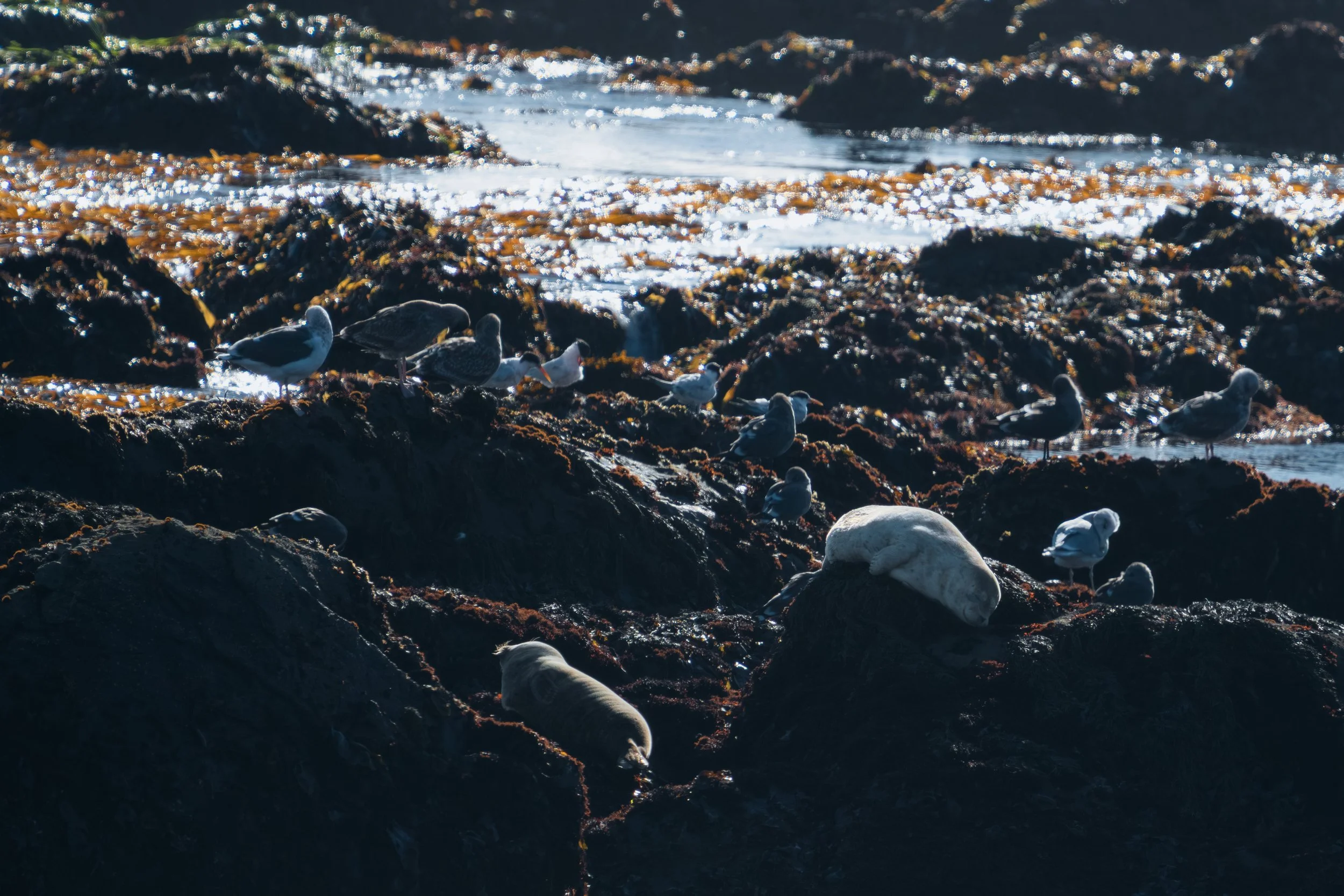
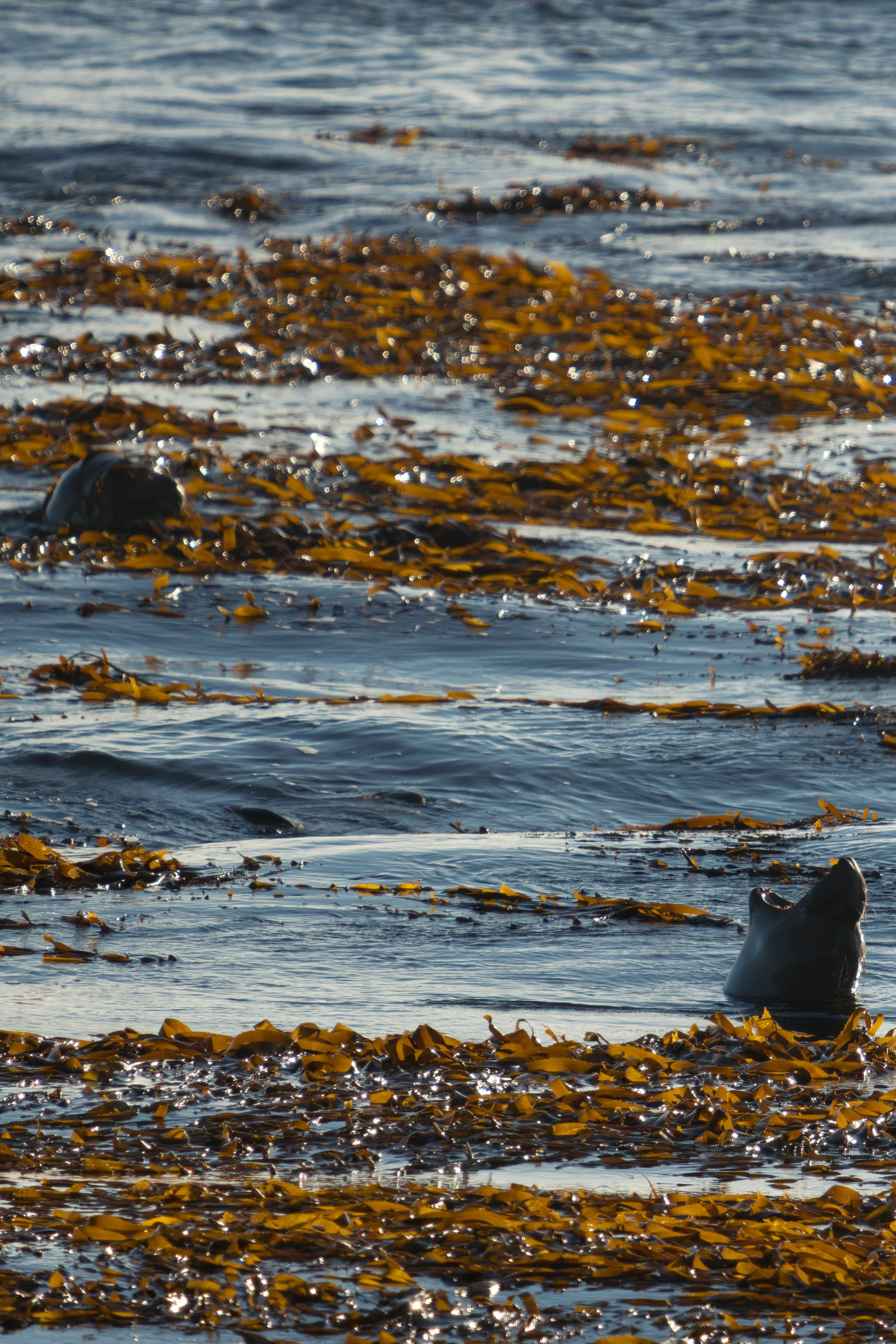
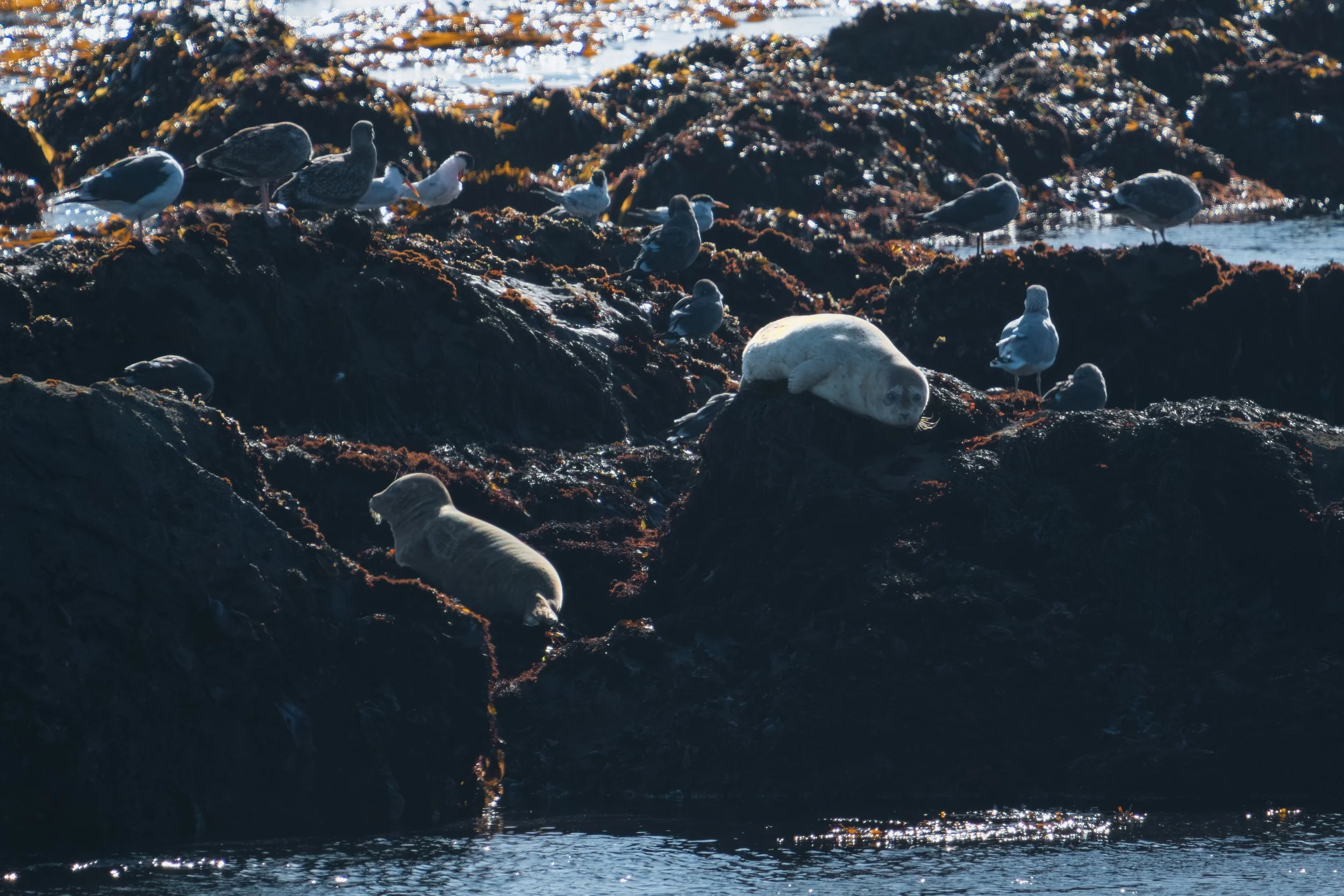
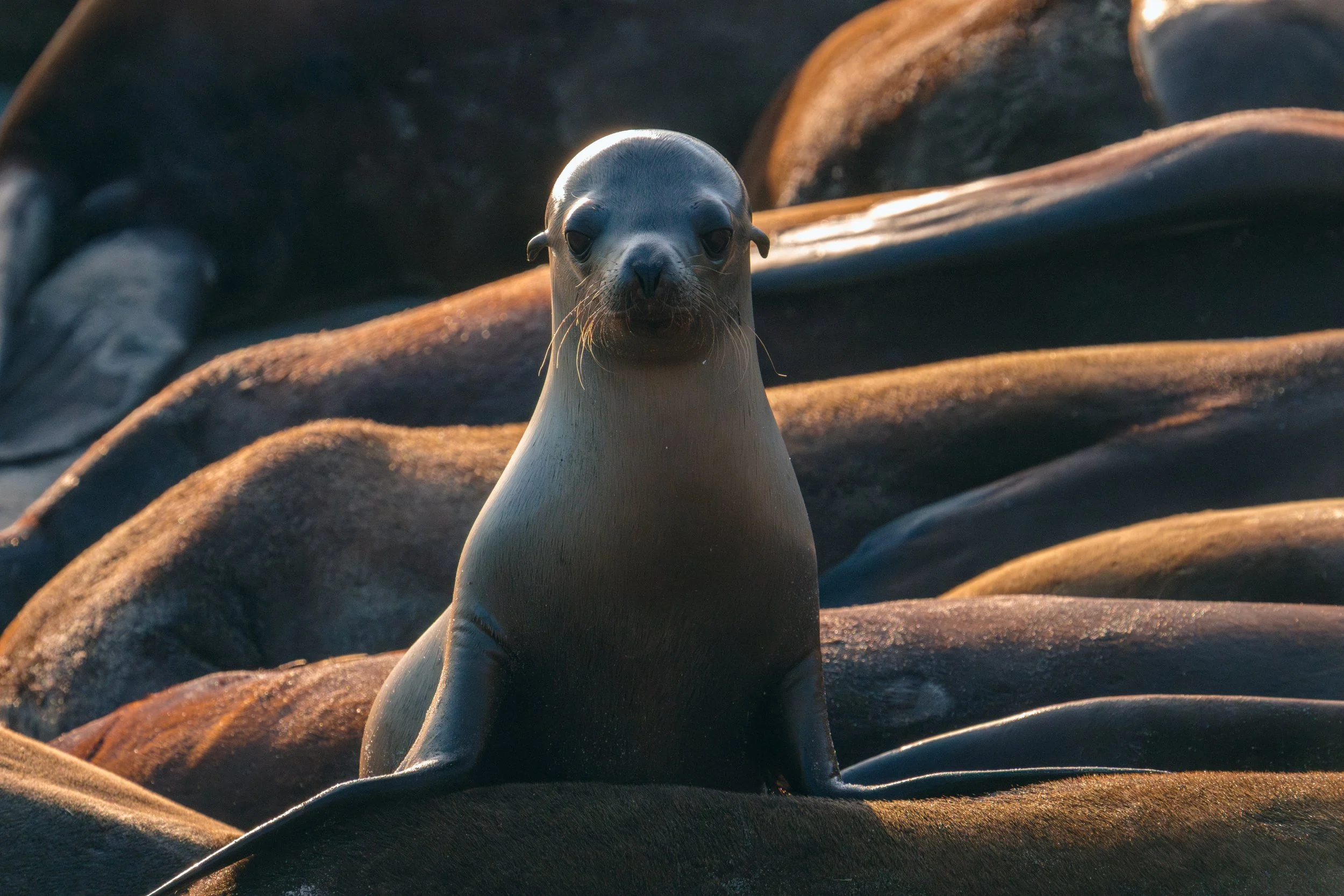
From left to right: Kelp in a breaking wave, harbor seals and shorebirds together on the rocks, and a juvenile elephant seal watching from the sand.
Sand Flipping & Deep Divers
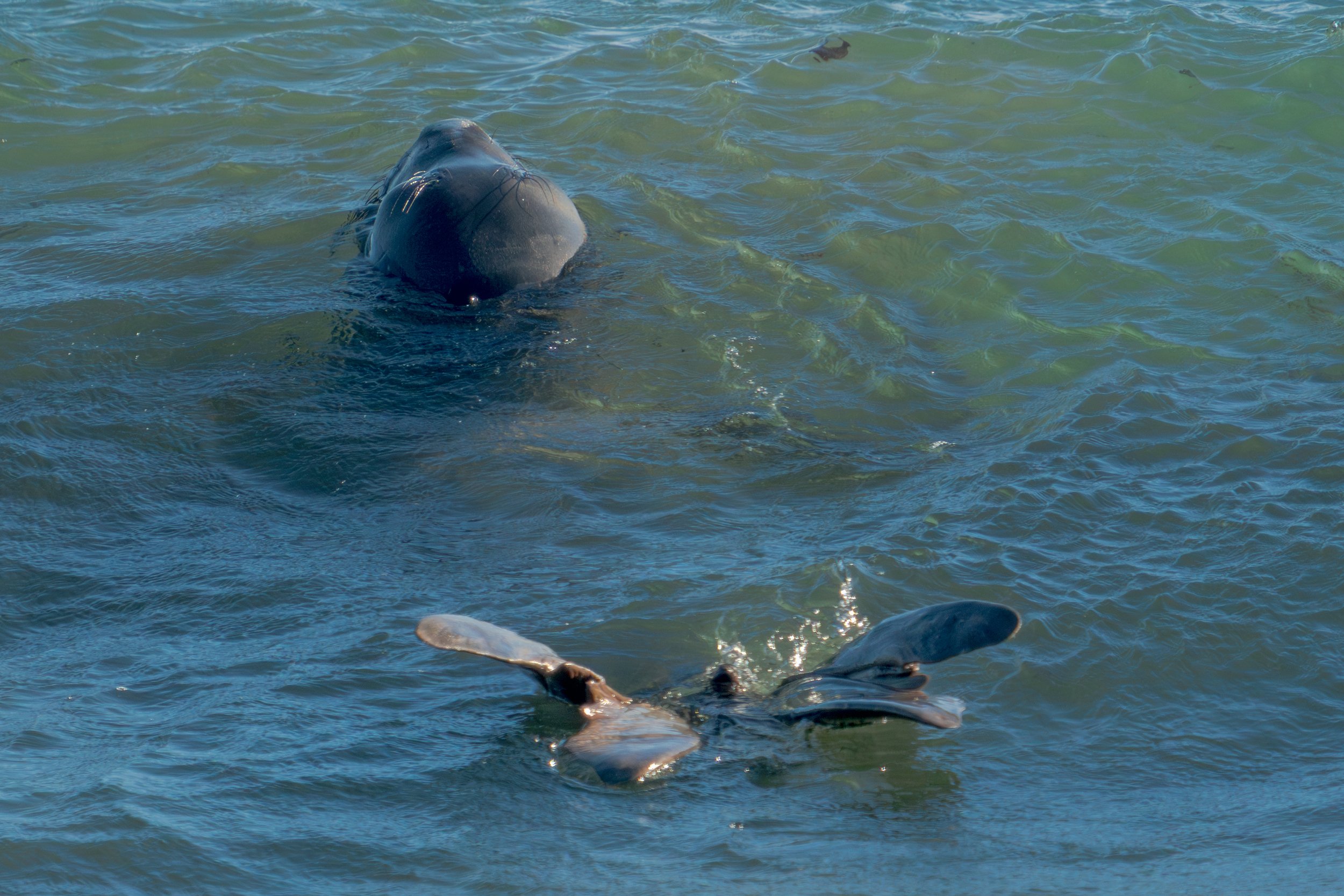
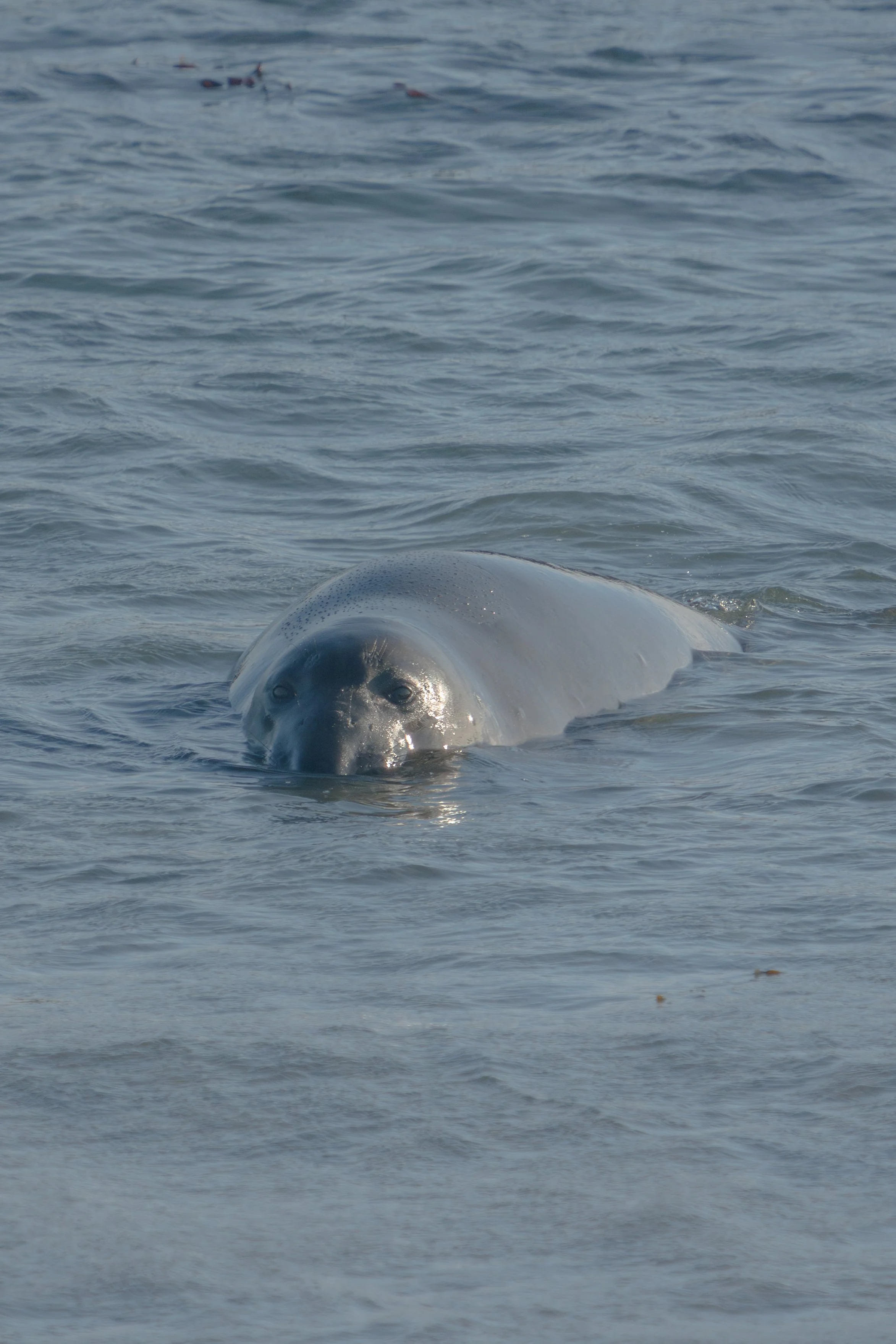
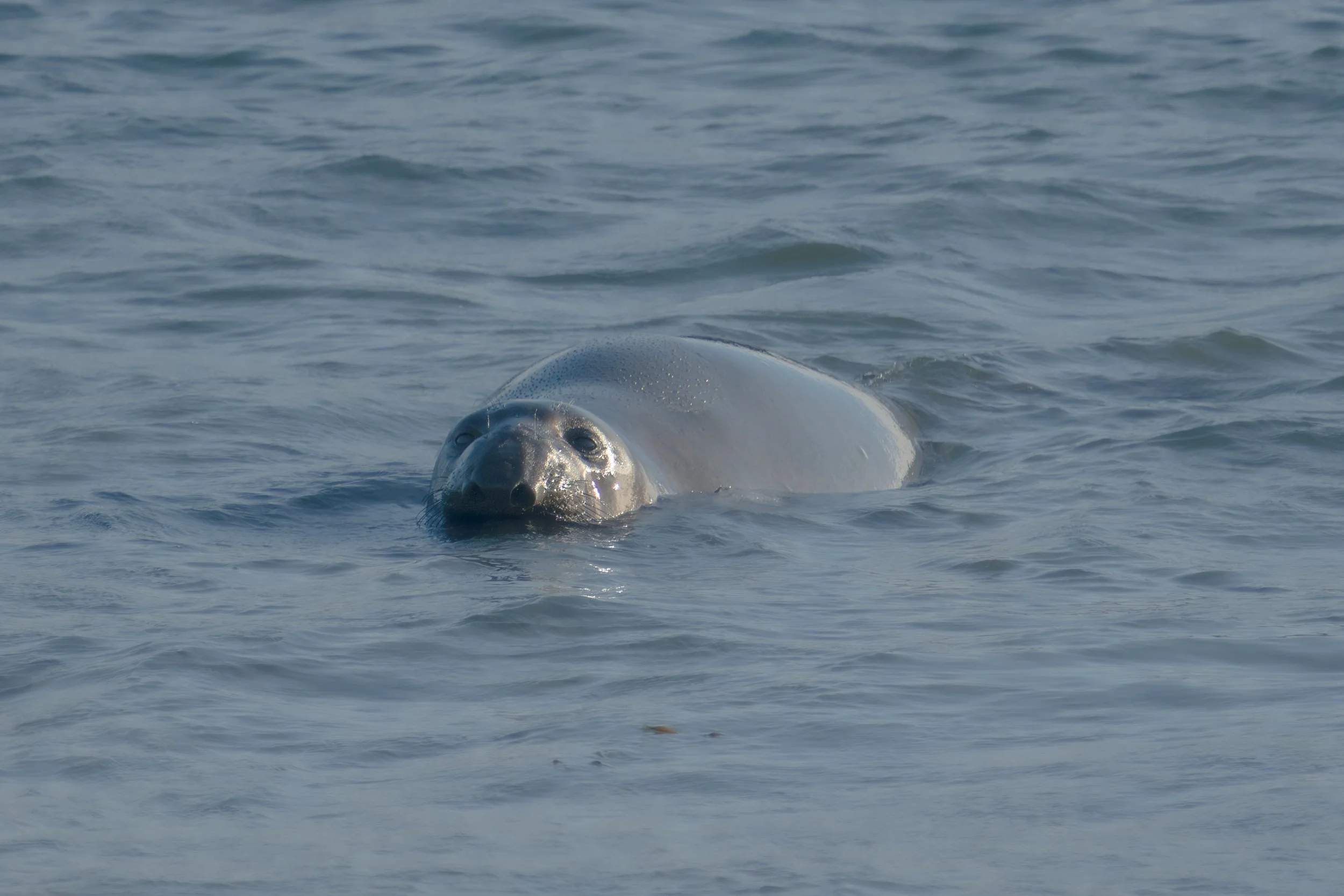
We spent a long time observing the smaller behaviors that are easy to miss when the beach is more crowded. In the water, seals were "bottling," a resting posture where they float vertically with just their snout exposed, allowing them to sleep while keeping their nostrils above the surface.
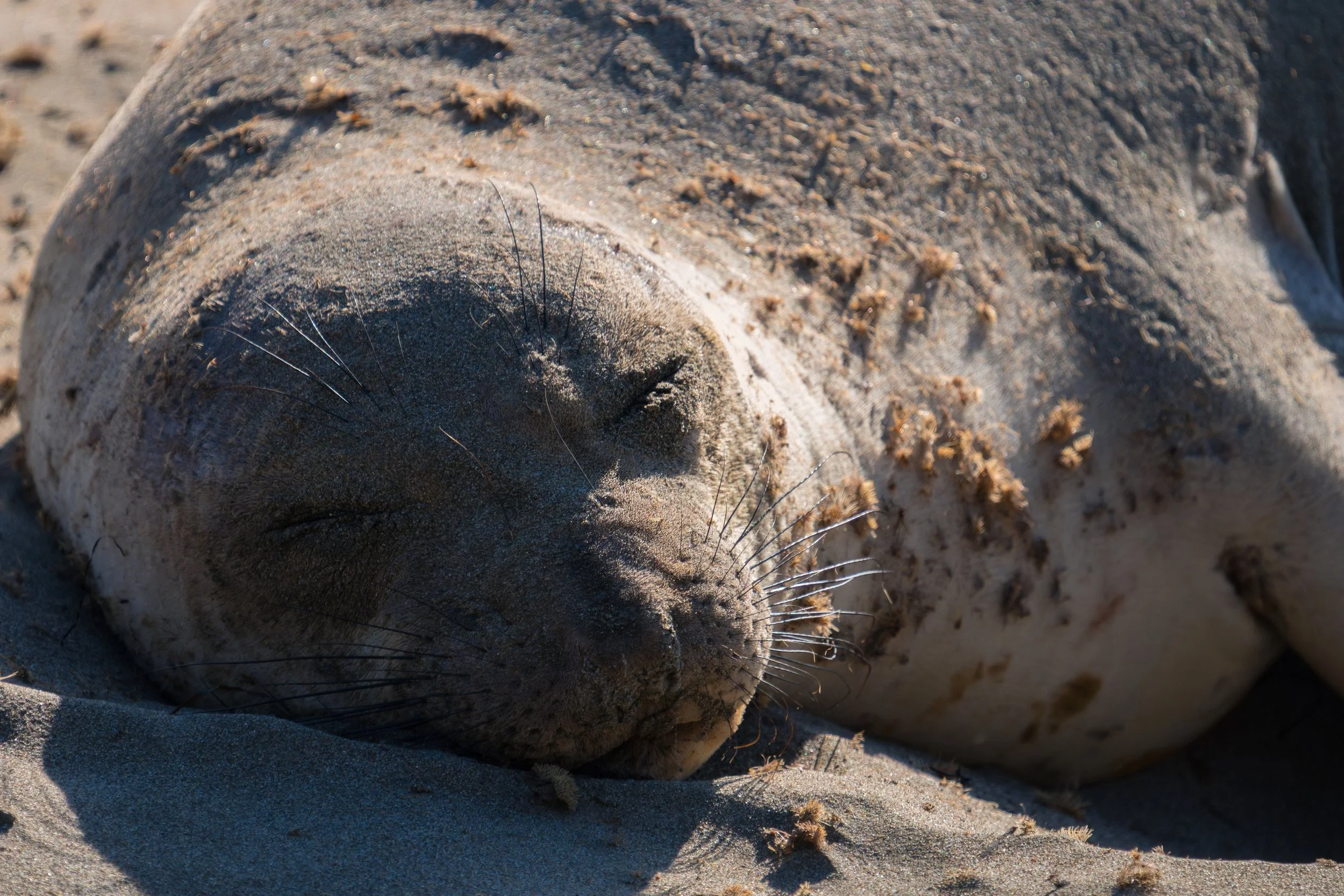
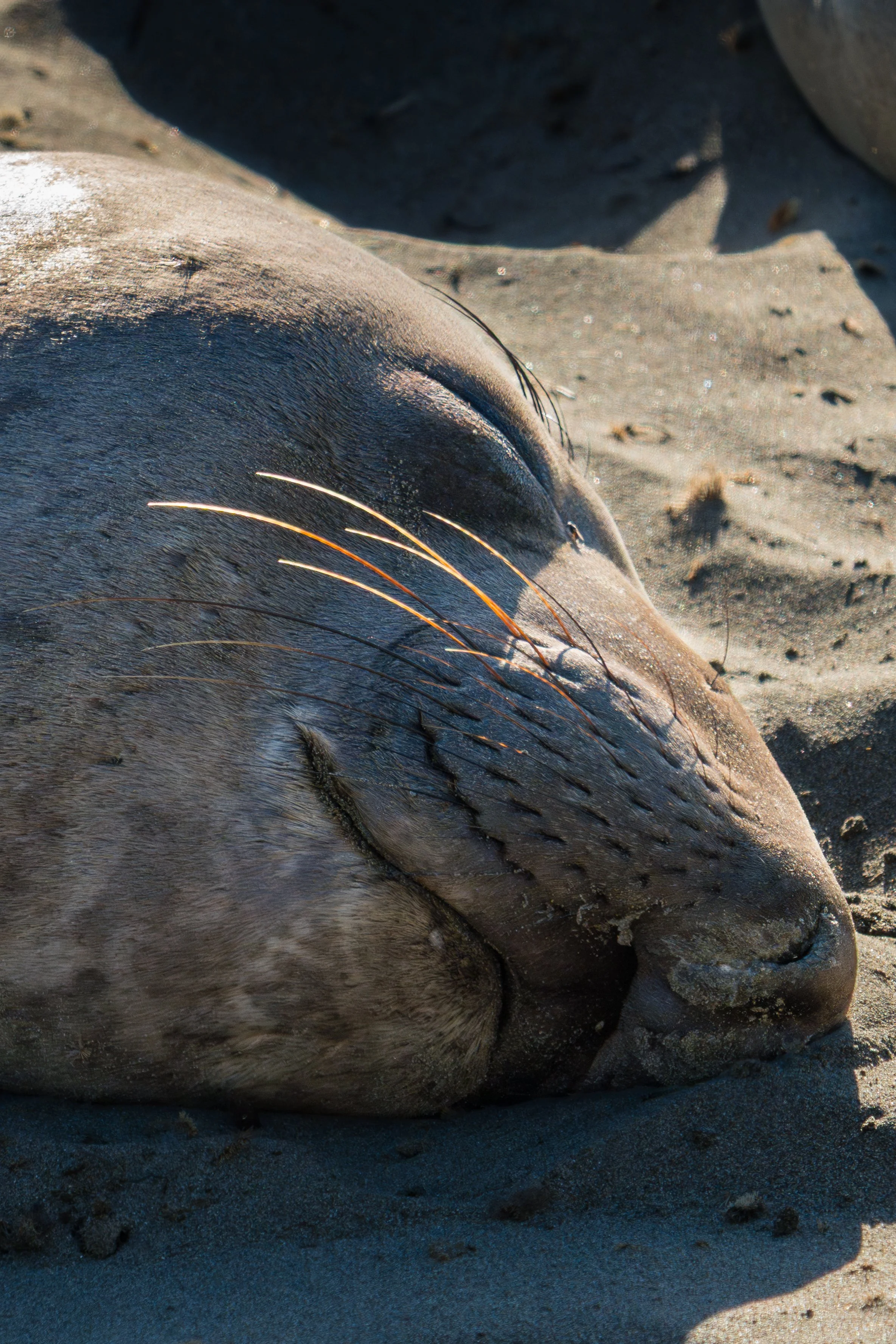
On land, you will notice seals repeatedly flinging cool, damp sand over their backs. This isn't just a habit; it is a critical survival mechanism. Because elephant seals are insulated by a thick layer of blubber designed for frigid deep-ocean temperatures, they can easily overheat on a sunny California beach. This "sand sunscreen" acts as a thermoregulator, helping them lower their body temperature while protecting their skin from solar radiation.
It is difficult to overstate just how adapted these animals are to the deep ocean. While they looked clumsy and heavy on the sand, the juveniles we watched are training to become elite divers. Research from Friends of the Elephant Seal notes that these animals average dives of 1,000 to 3,000 feet, and can reach depths exceeding 5,000 feet. Before they descend into the abyss, they actually exhale to empty their lungs, a physiological trick that prevents decompression sickness. Watching them doze in the shallow wash, it’s grounding to think about the extreme, dark places they explore for most of their lives - and it makes me value those land-based observation moments more than ever.
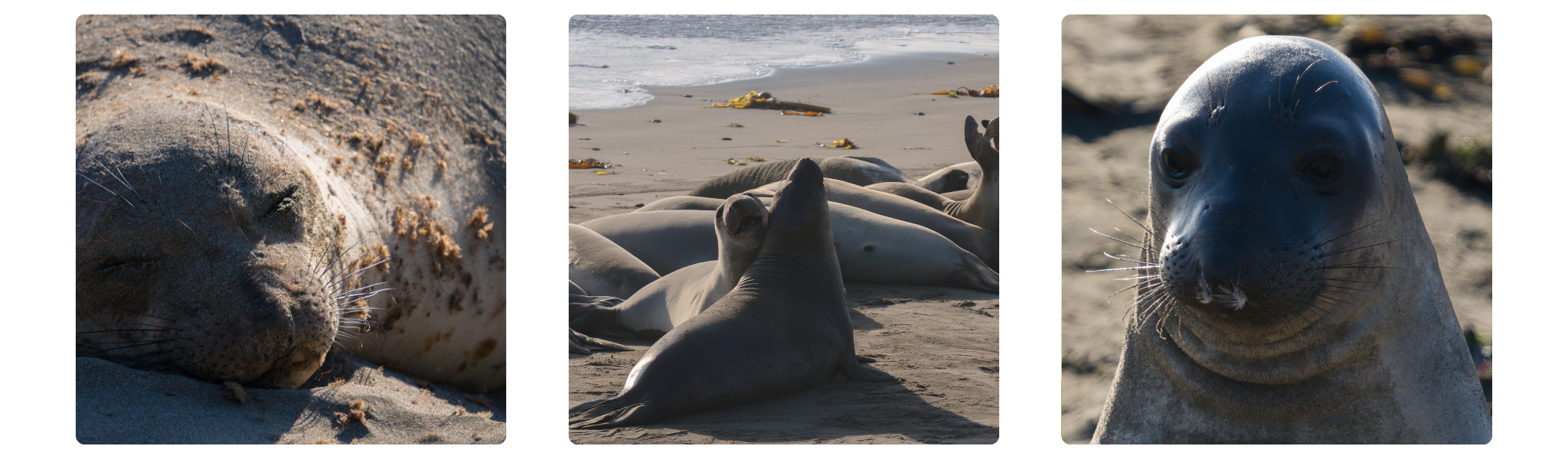
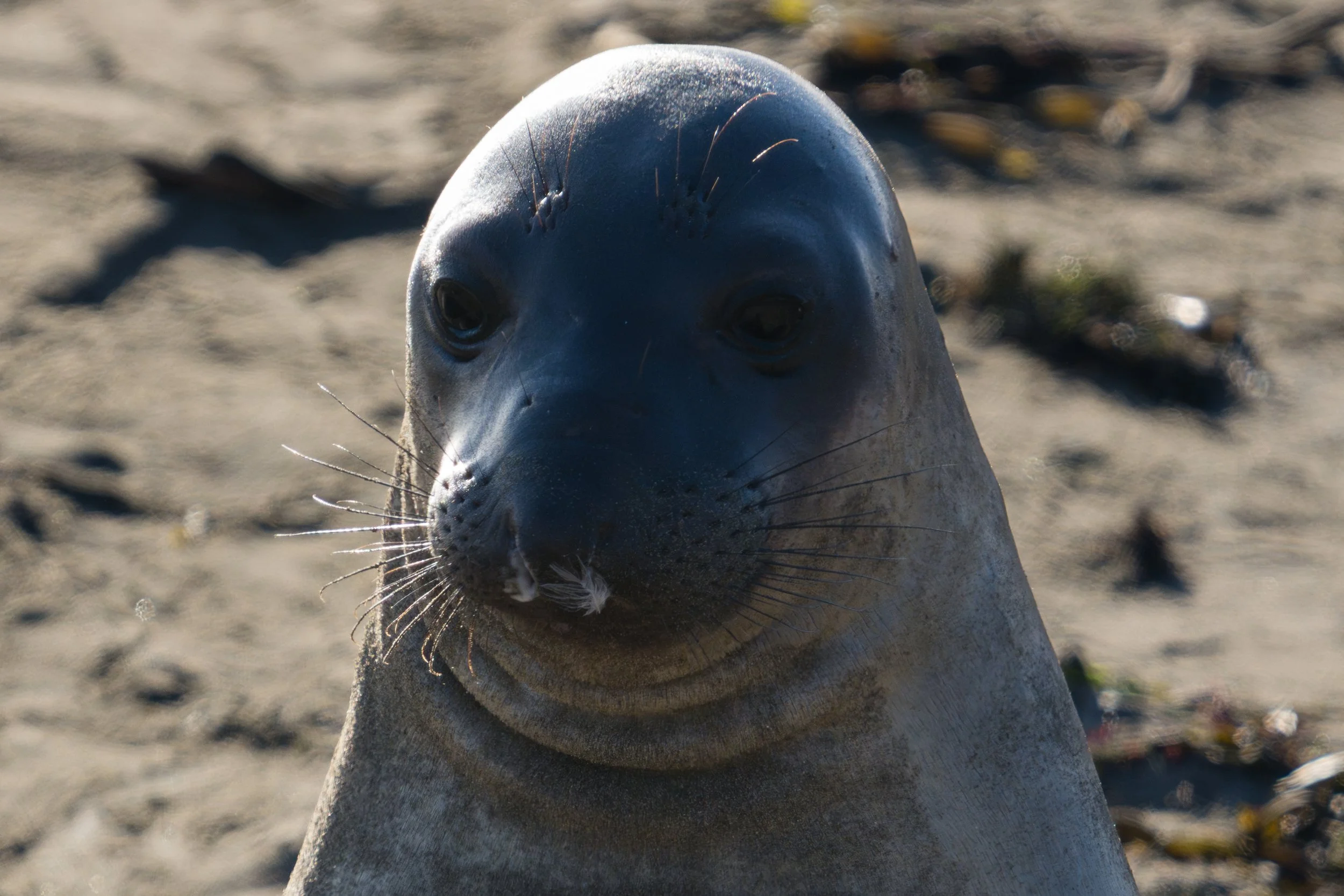
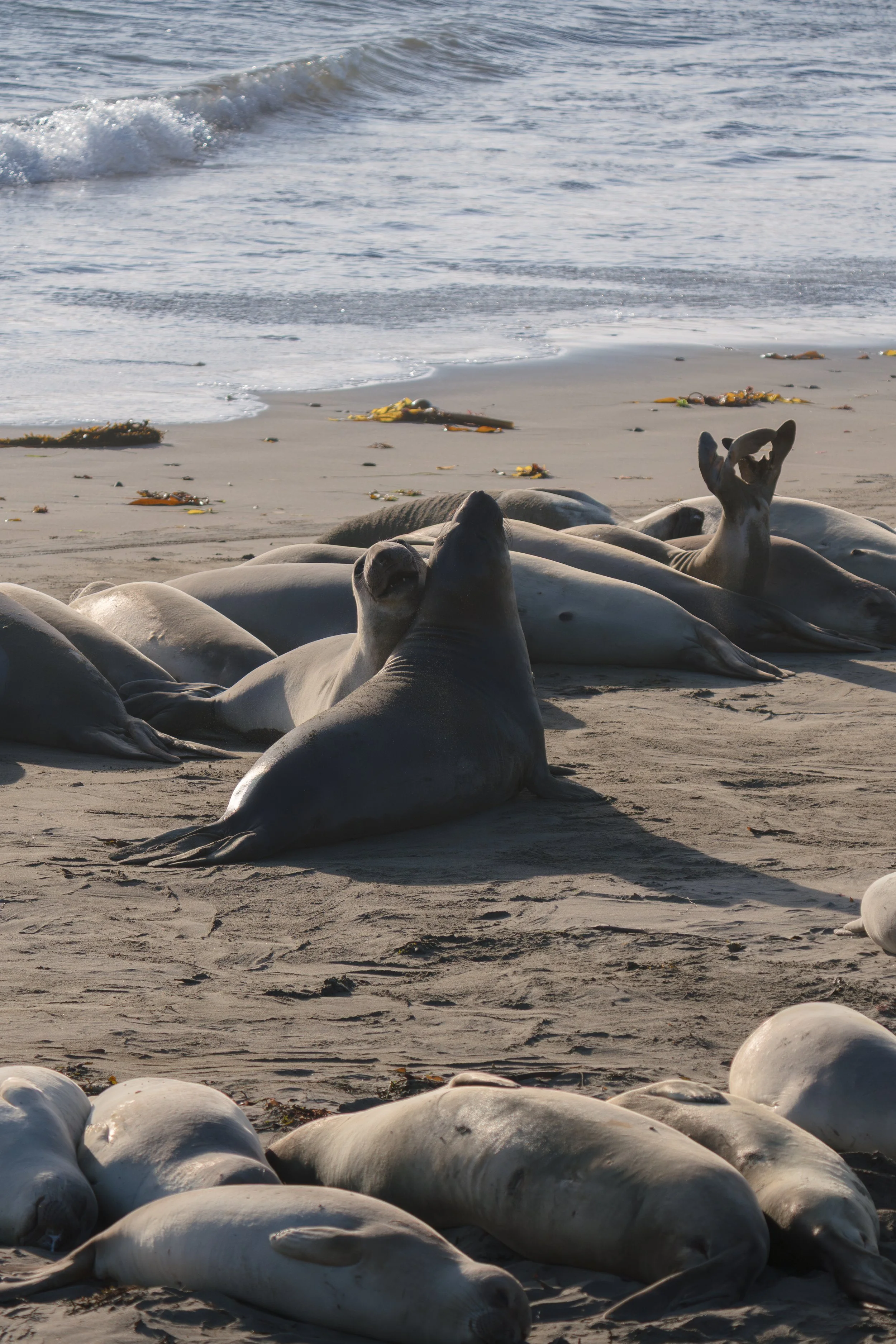
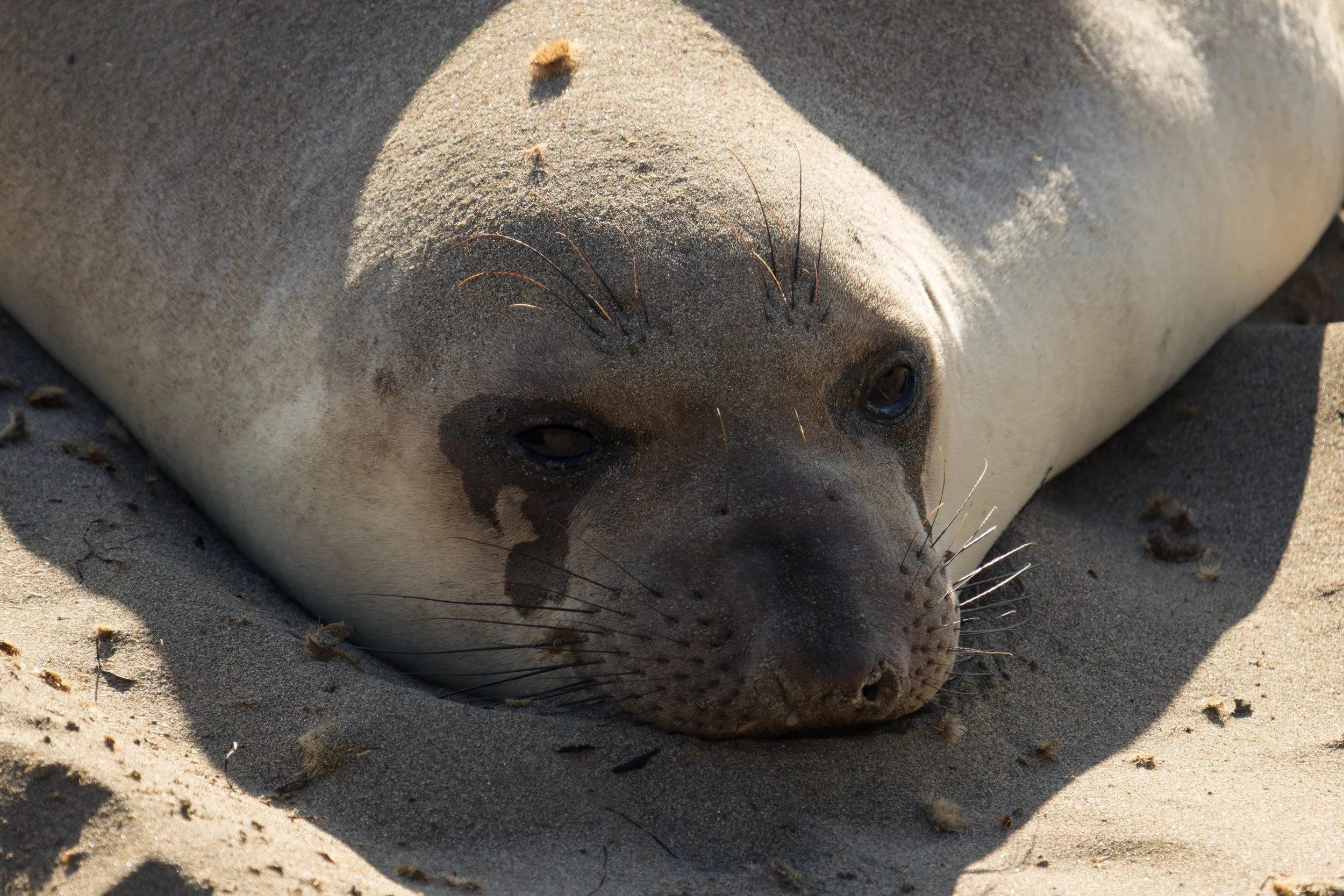
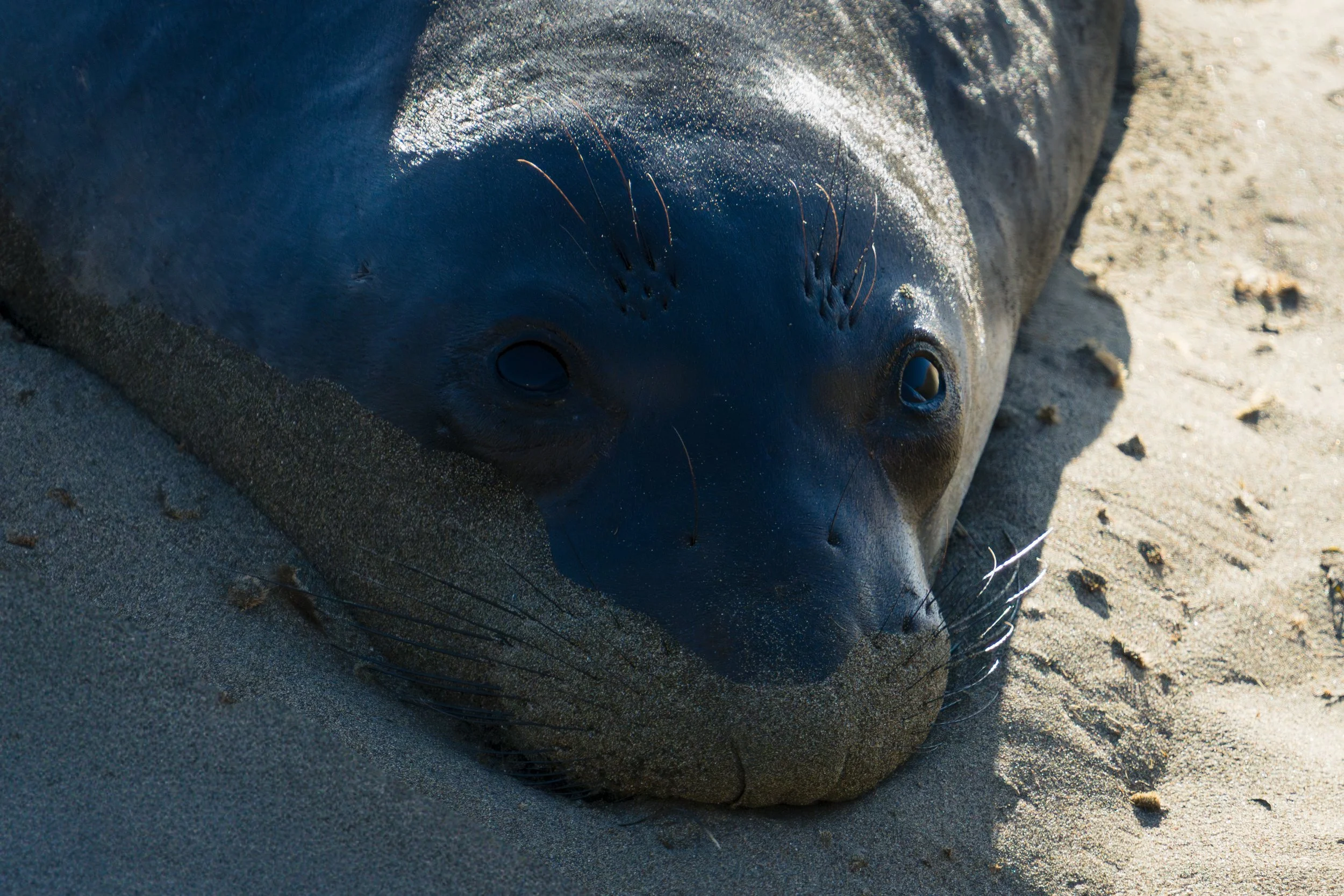
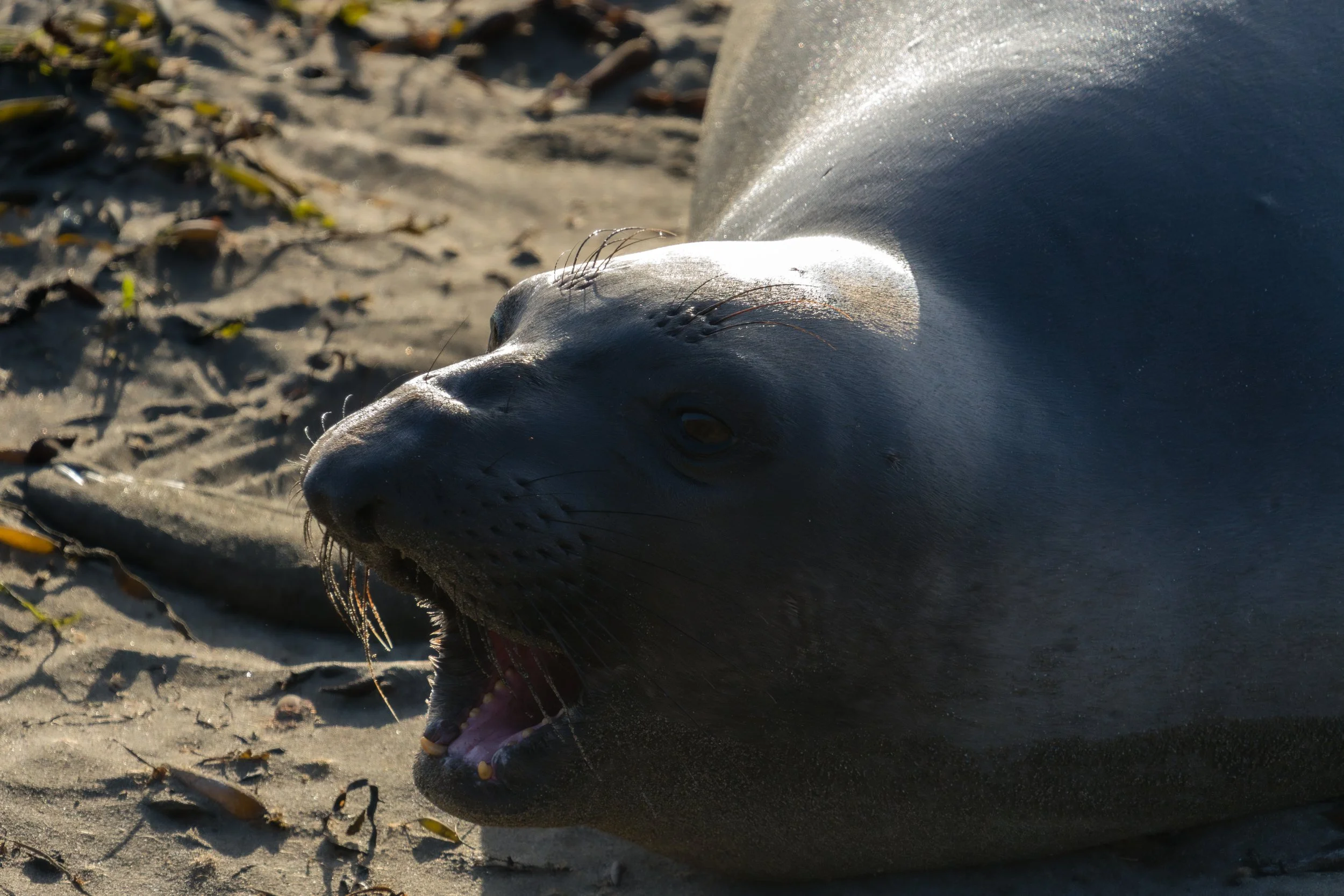
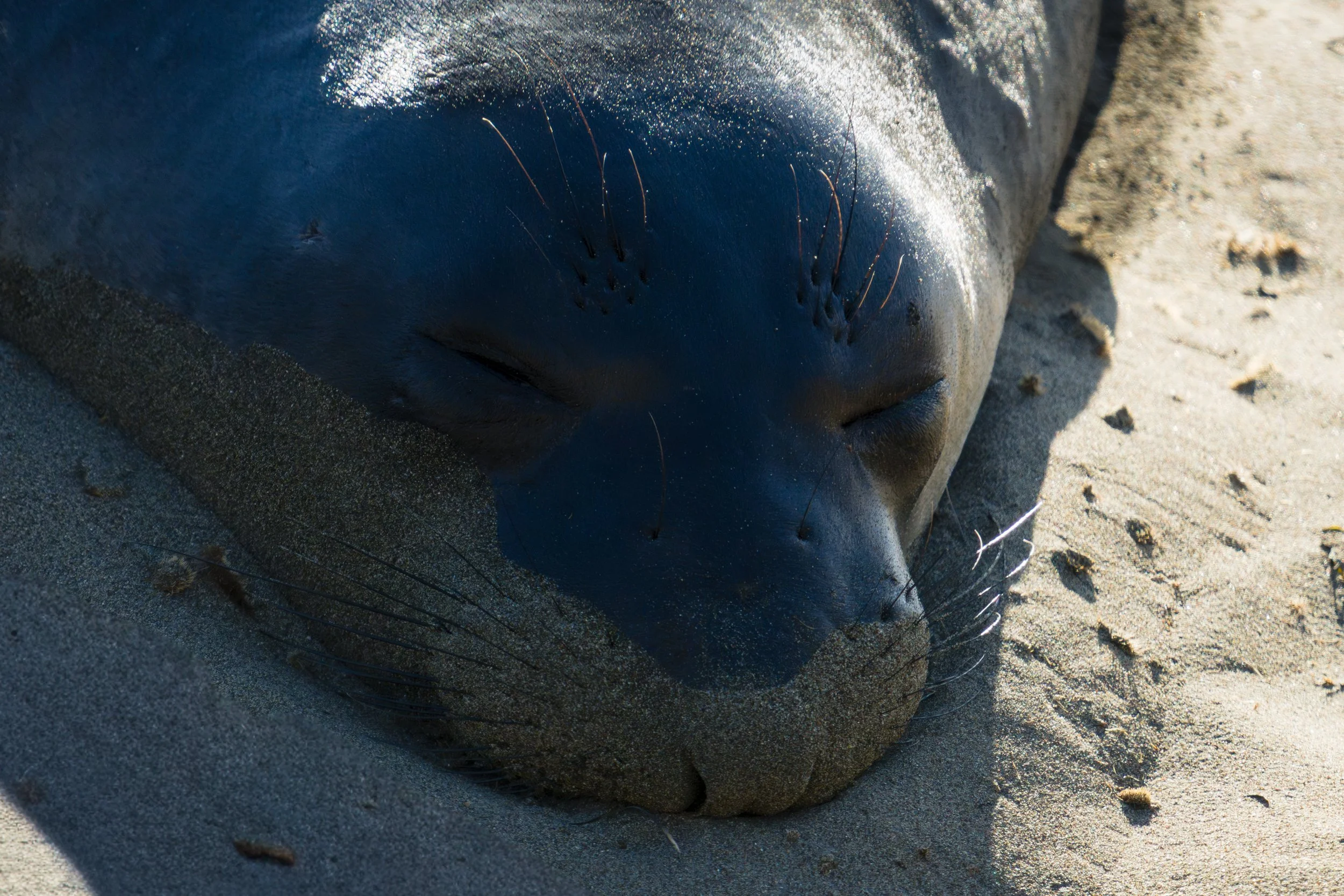
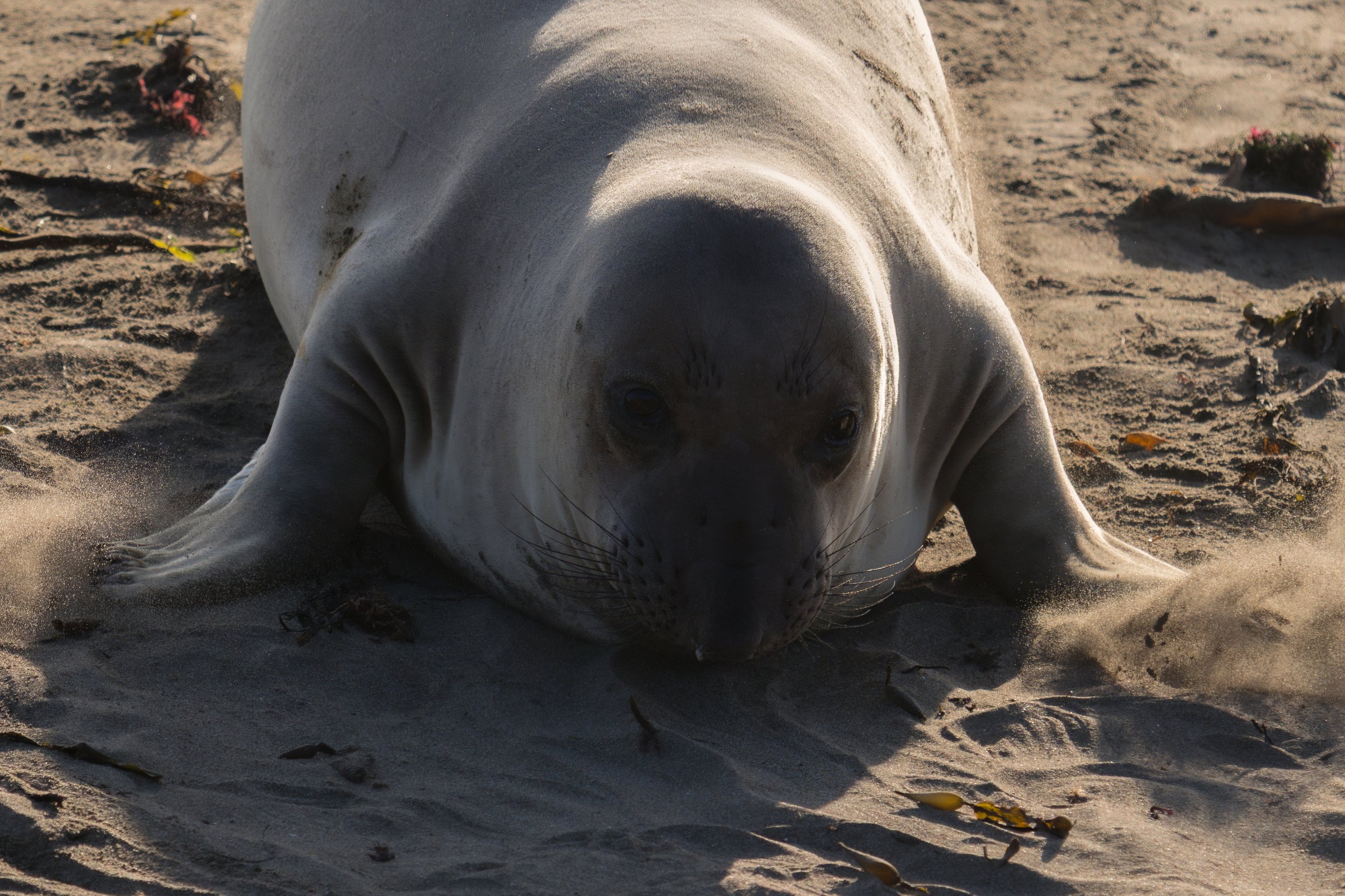
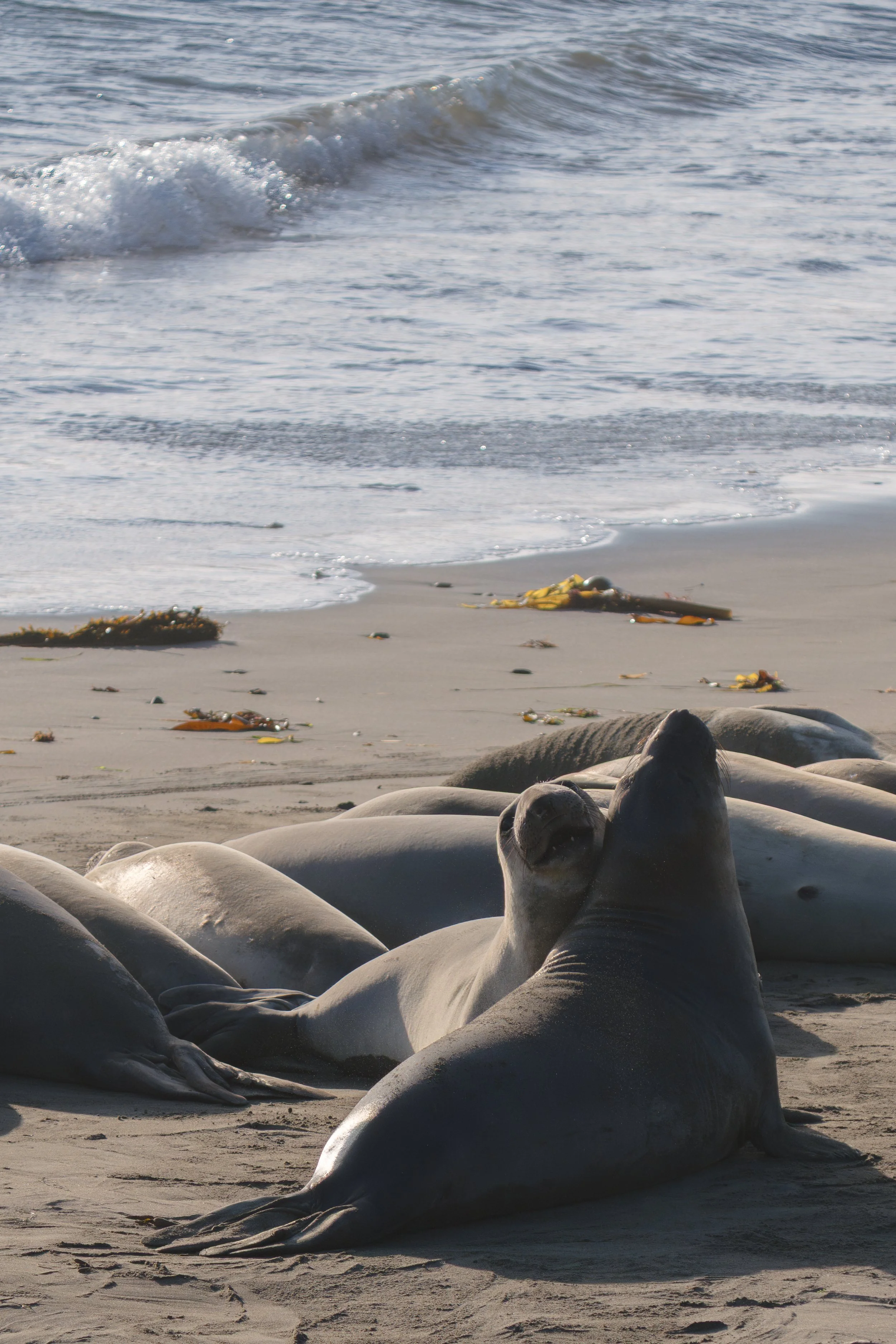
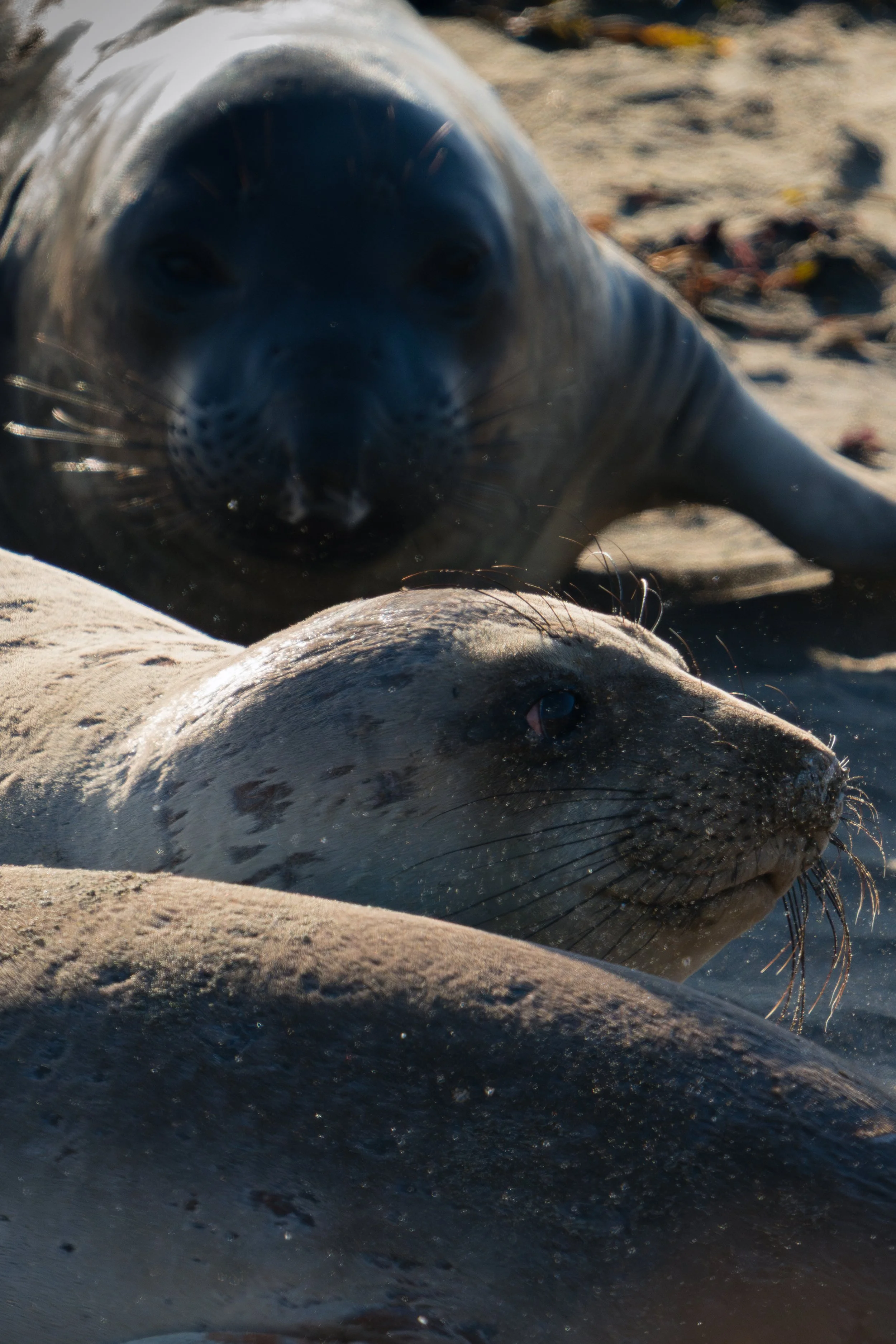
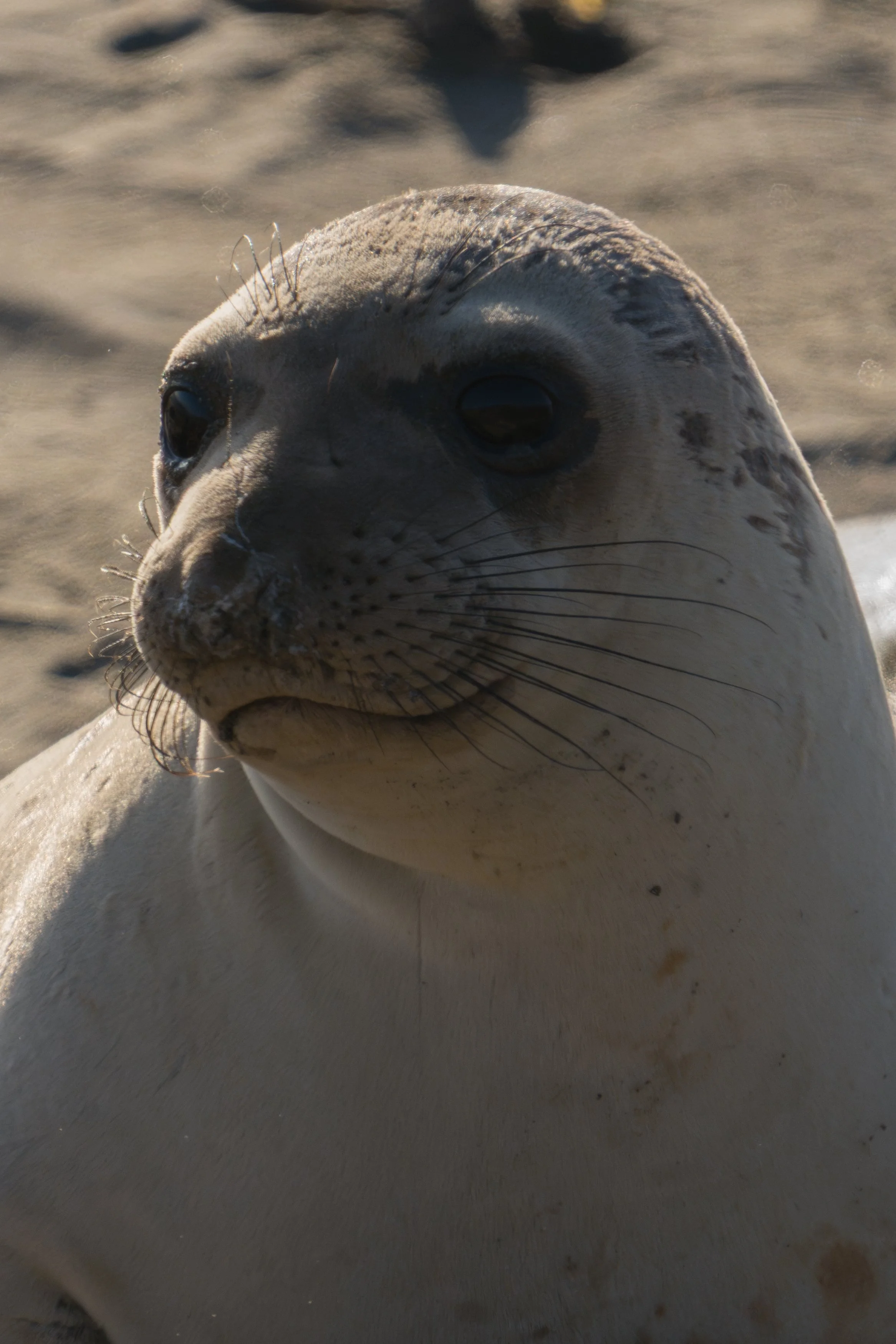
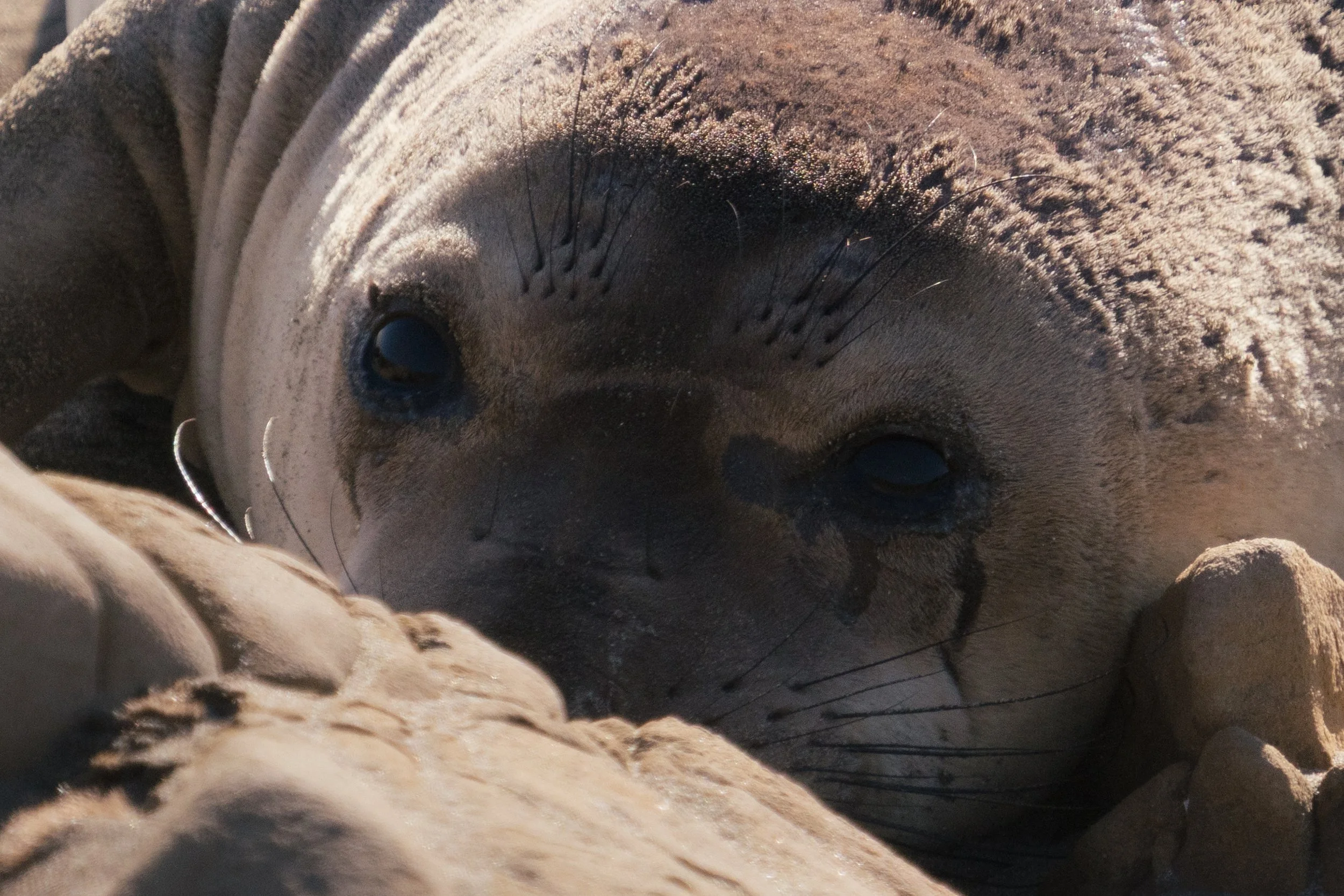
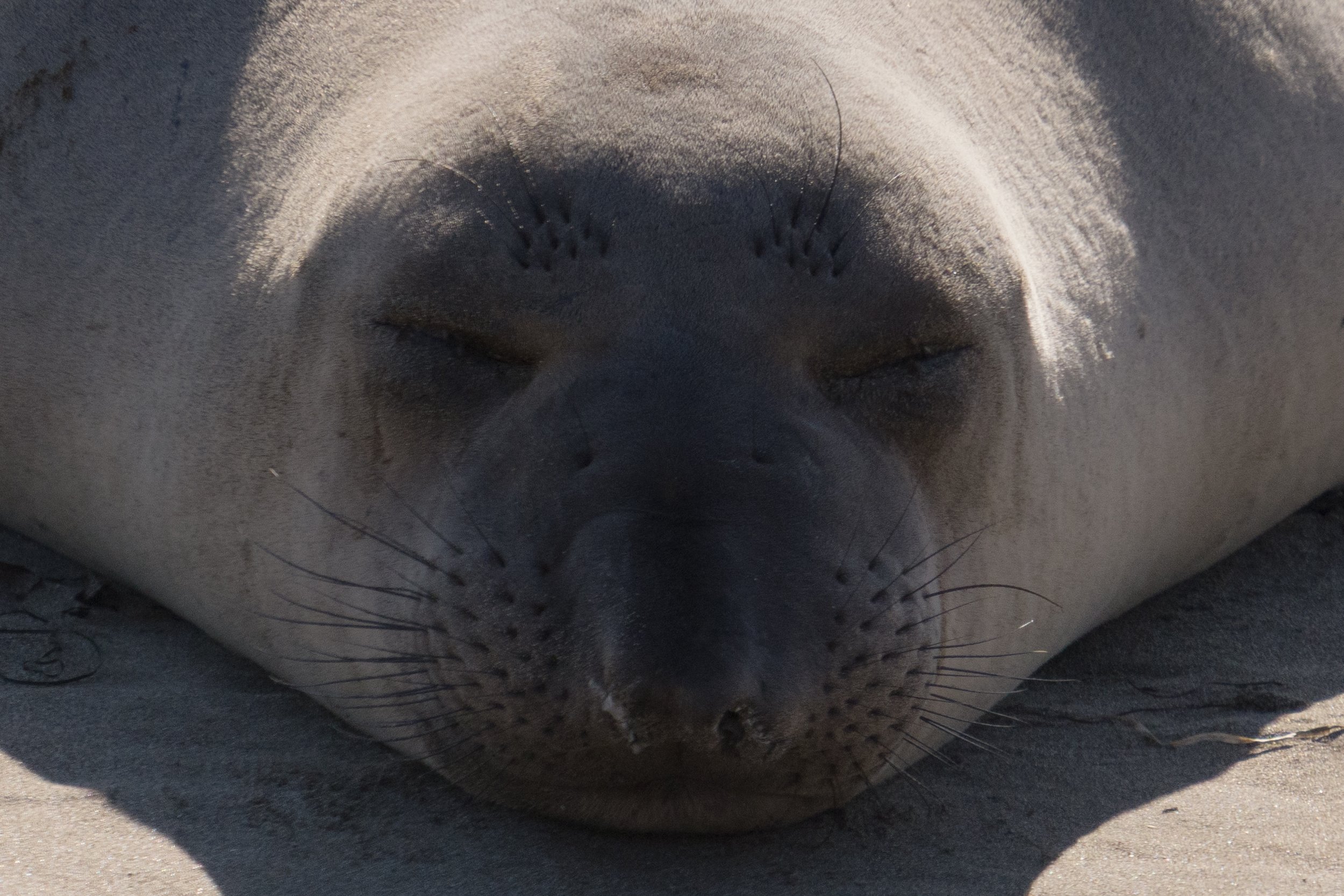
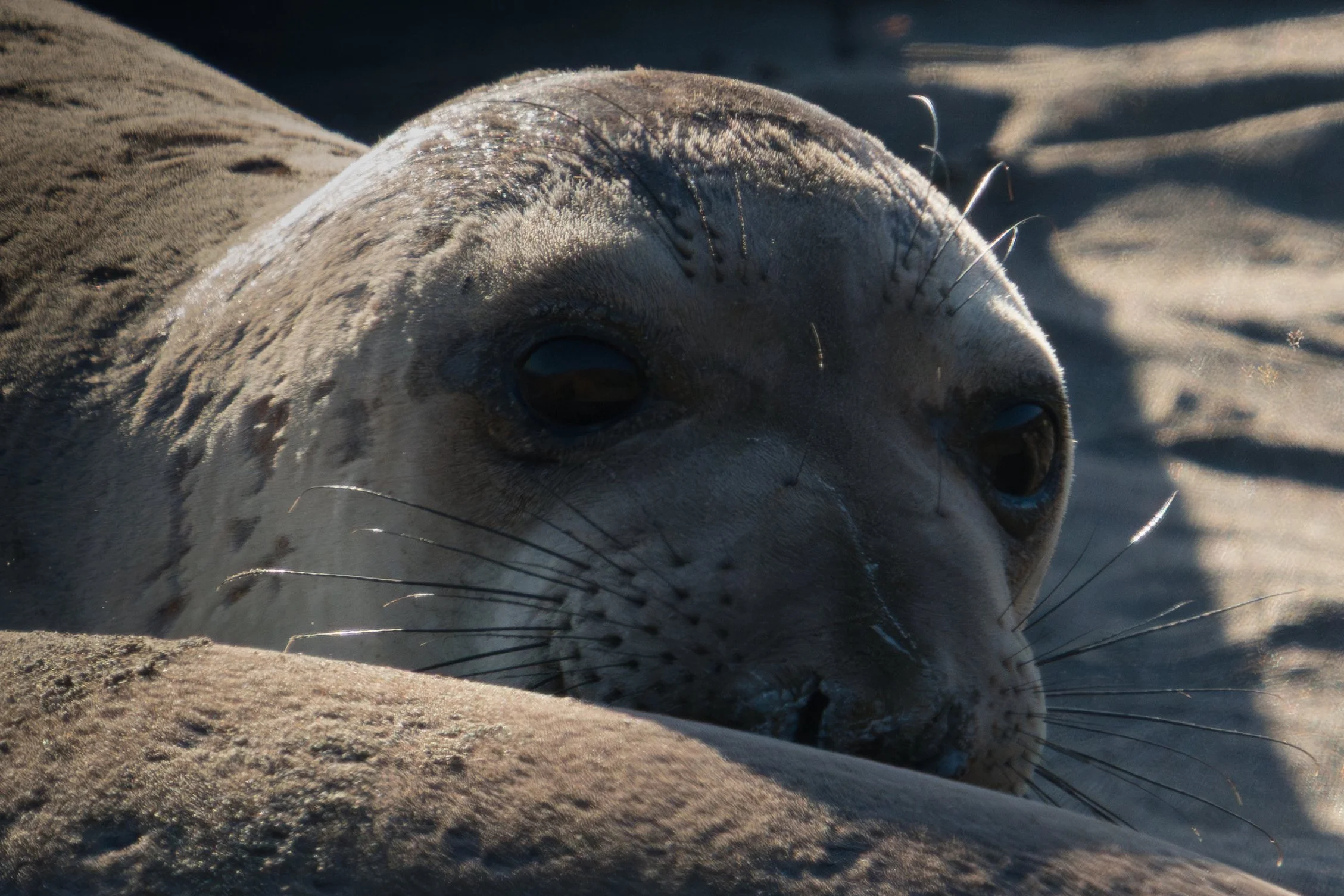
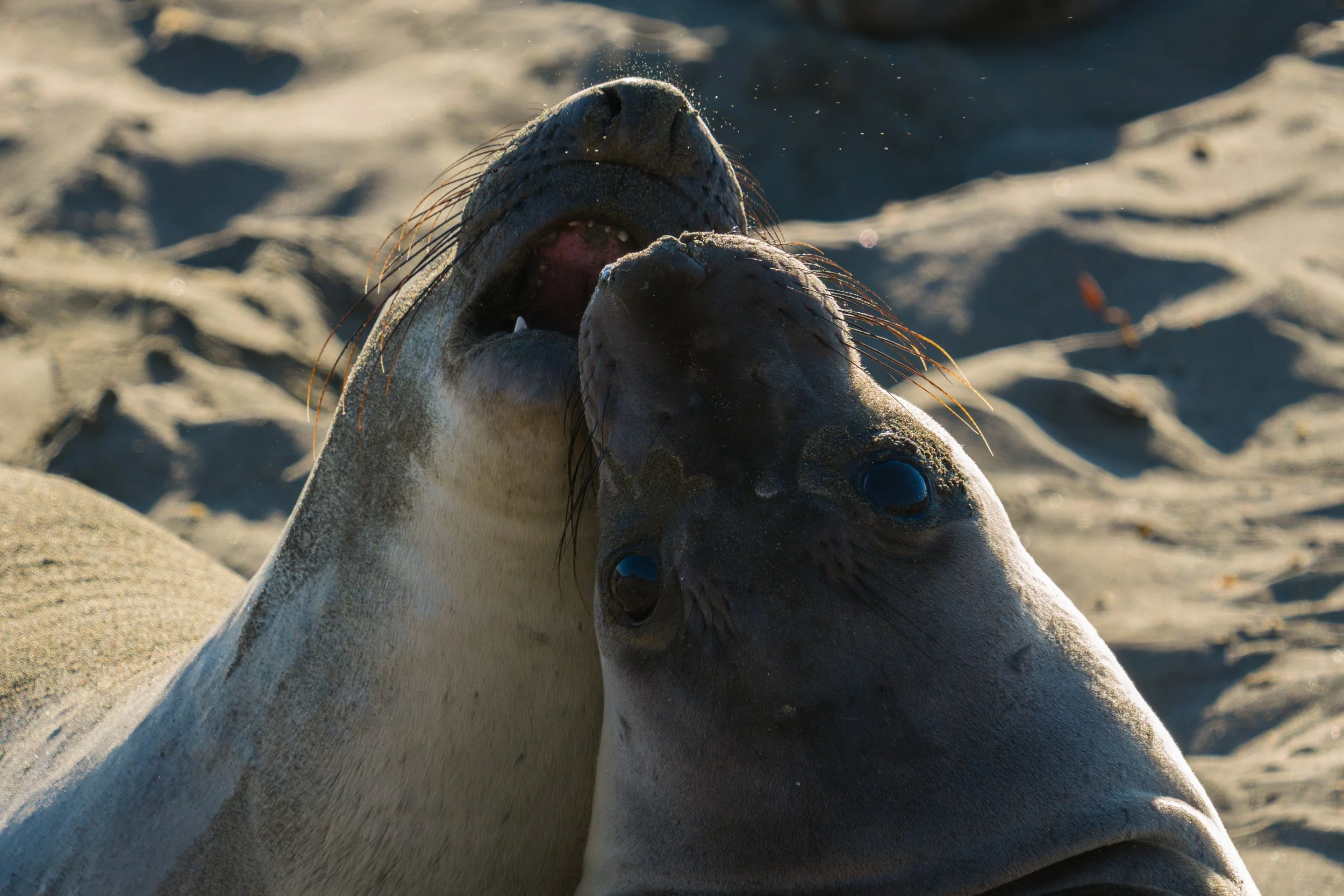
From left to right: A sand-covered seal napping in the sun, two juveniles sparring near the water's edge, and a curious portrait of a young elephant seal.
Mock Battles in the Surf
Despite the absence of the adult bulls, the instinct to spar was still very much alive in the younger males.
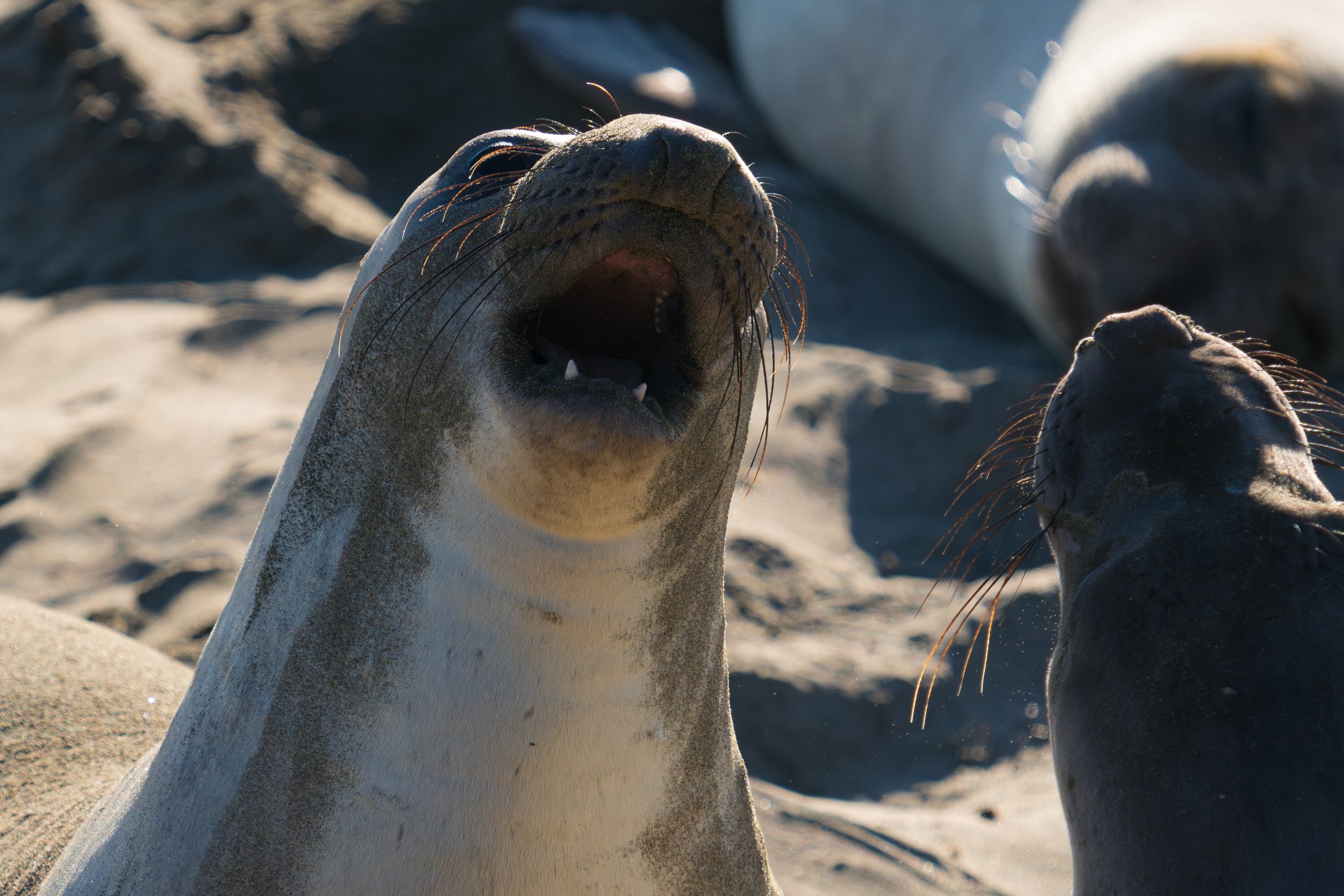
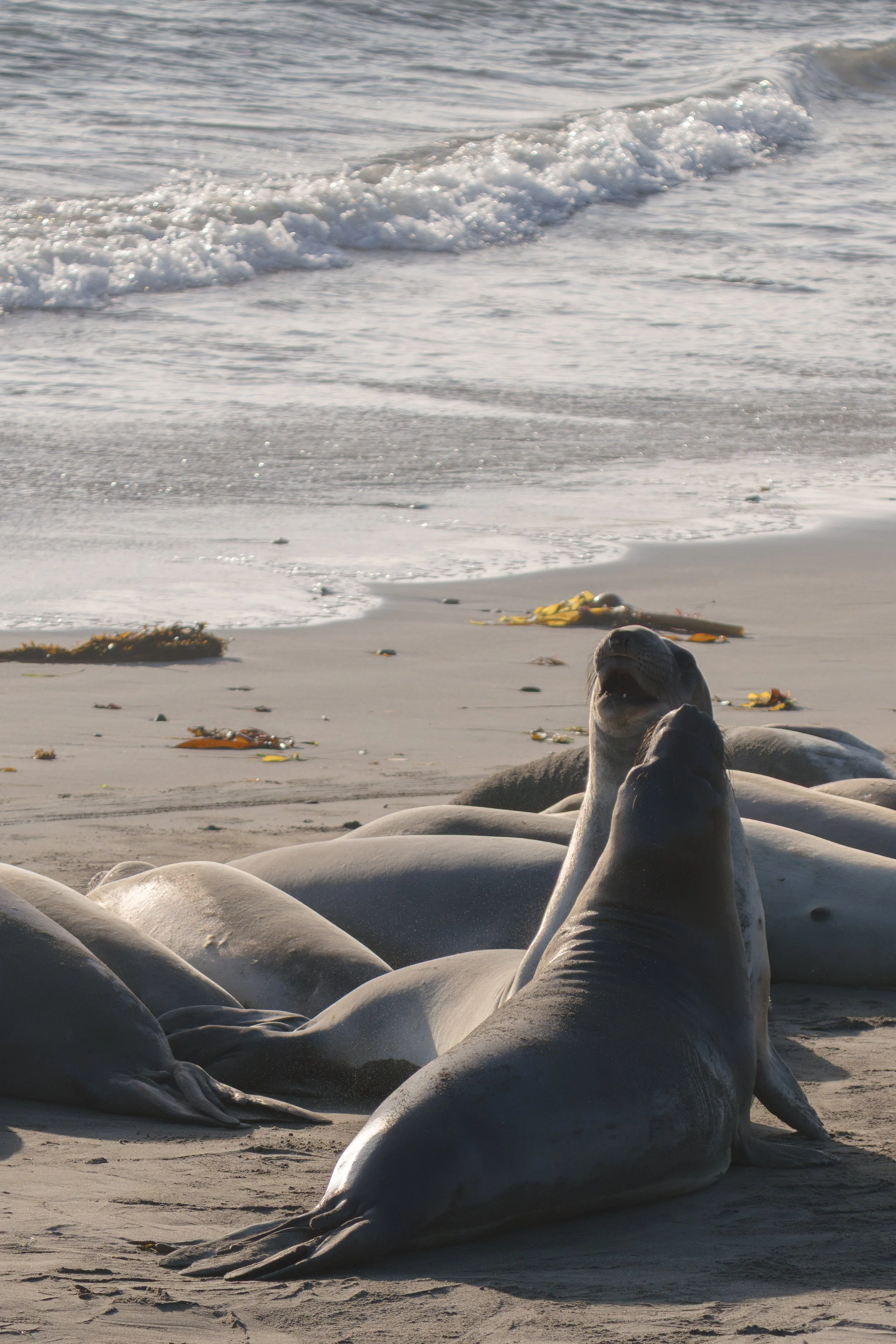
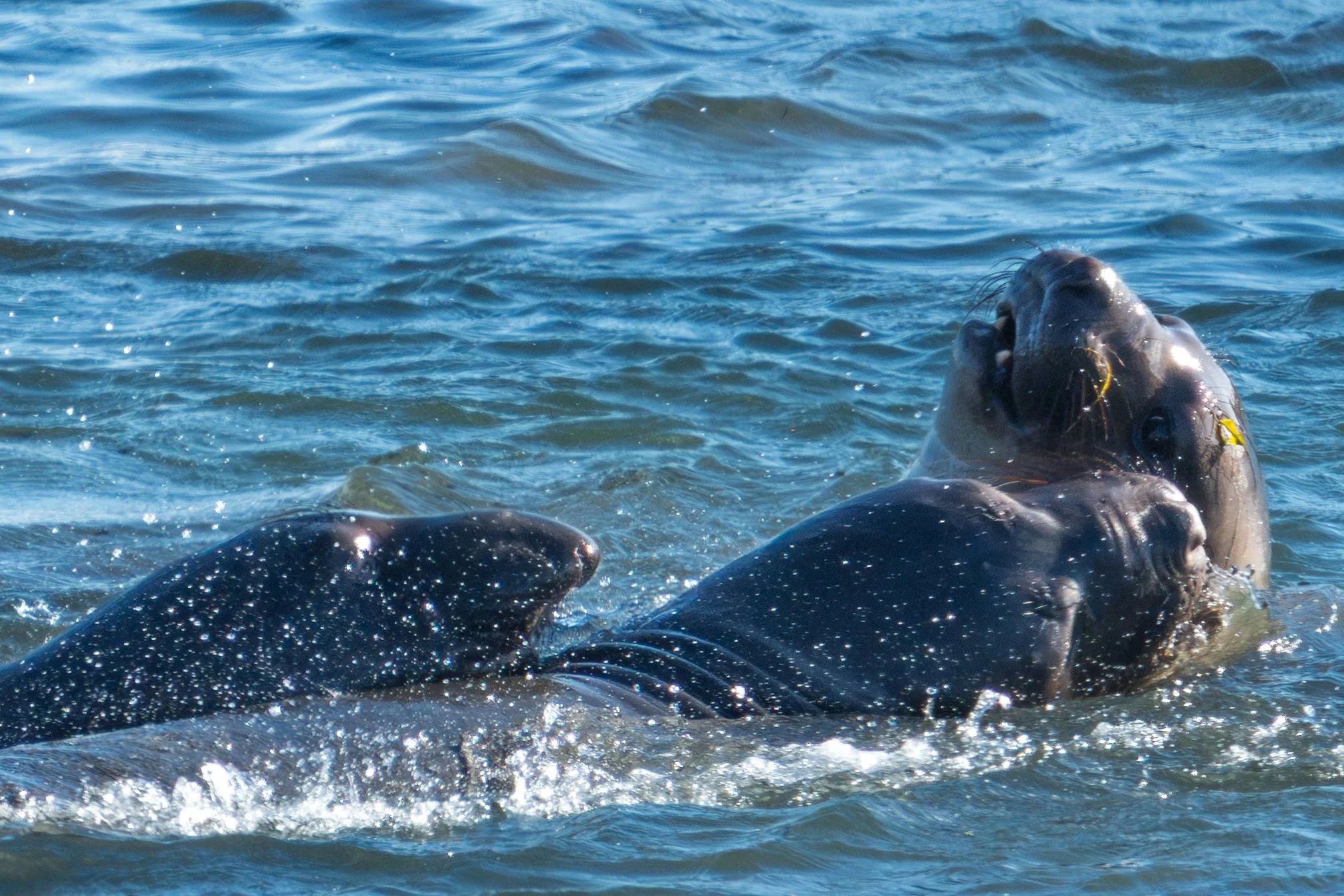
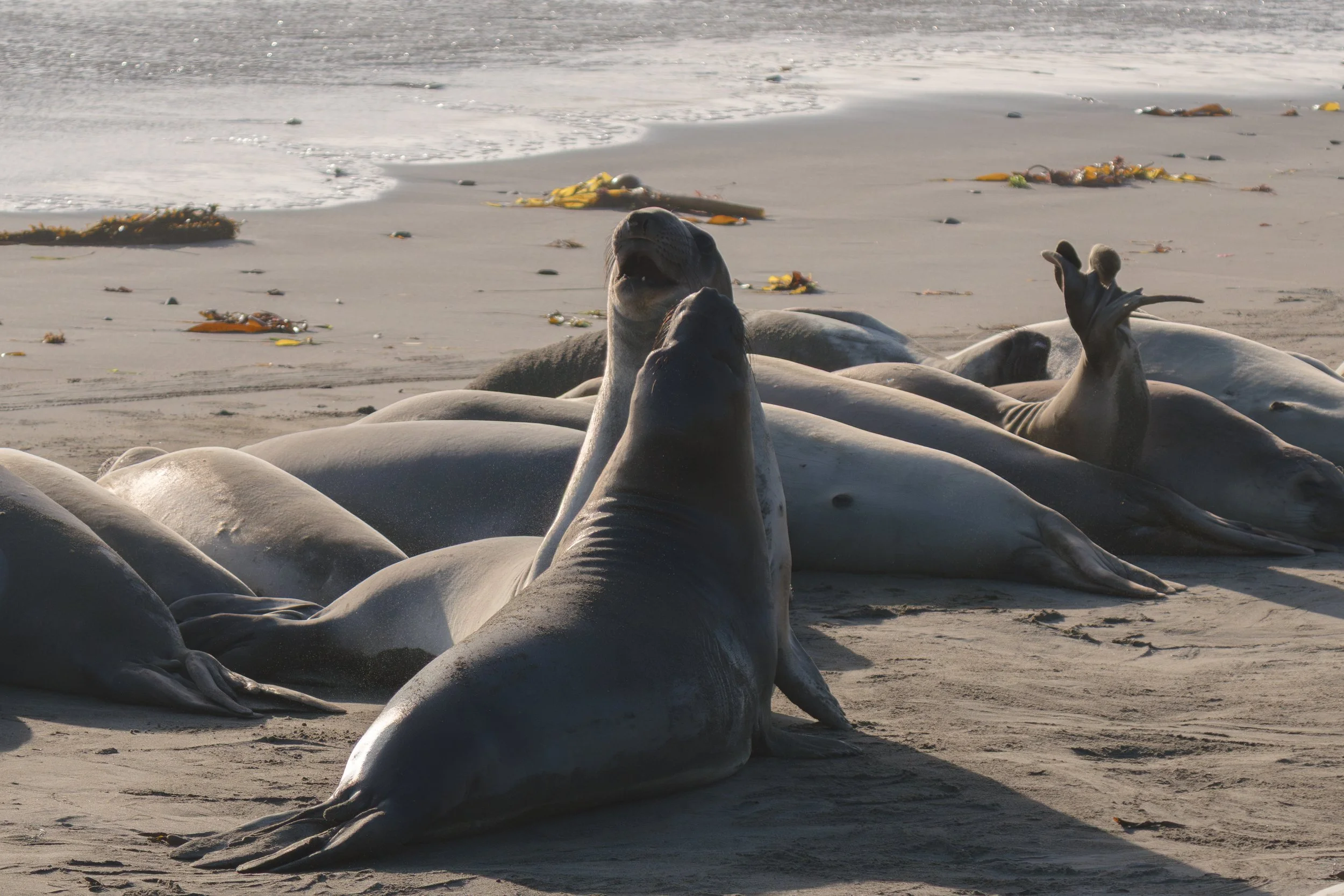
In the waist-deep surf, we watched pairs of subadult males engaging in mock battles. They would rise up chest-to-chest, throwing their heads back and displaying their open mouths to one another. At this age, these interactions are not true fights for dominance, but rather essential practice. They are strengthening their necks and learning the physical language they will need years from now when they must compete for a harem.
The lighting for these interactions was spectacular. The low angle of the sun created a warm backlight, catching the spray of water as they splashed and twisted. They would spar for a few minutes, then separate and drift apart, floating peacefully in the kelp as if the confrontation never happened.
A Conservation Miracle
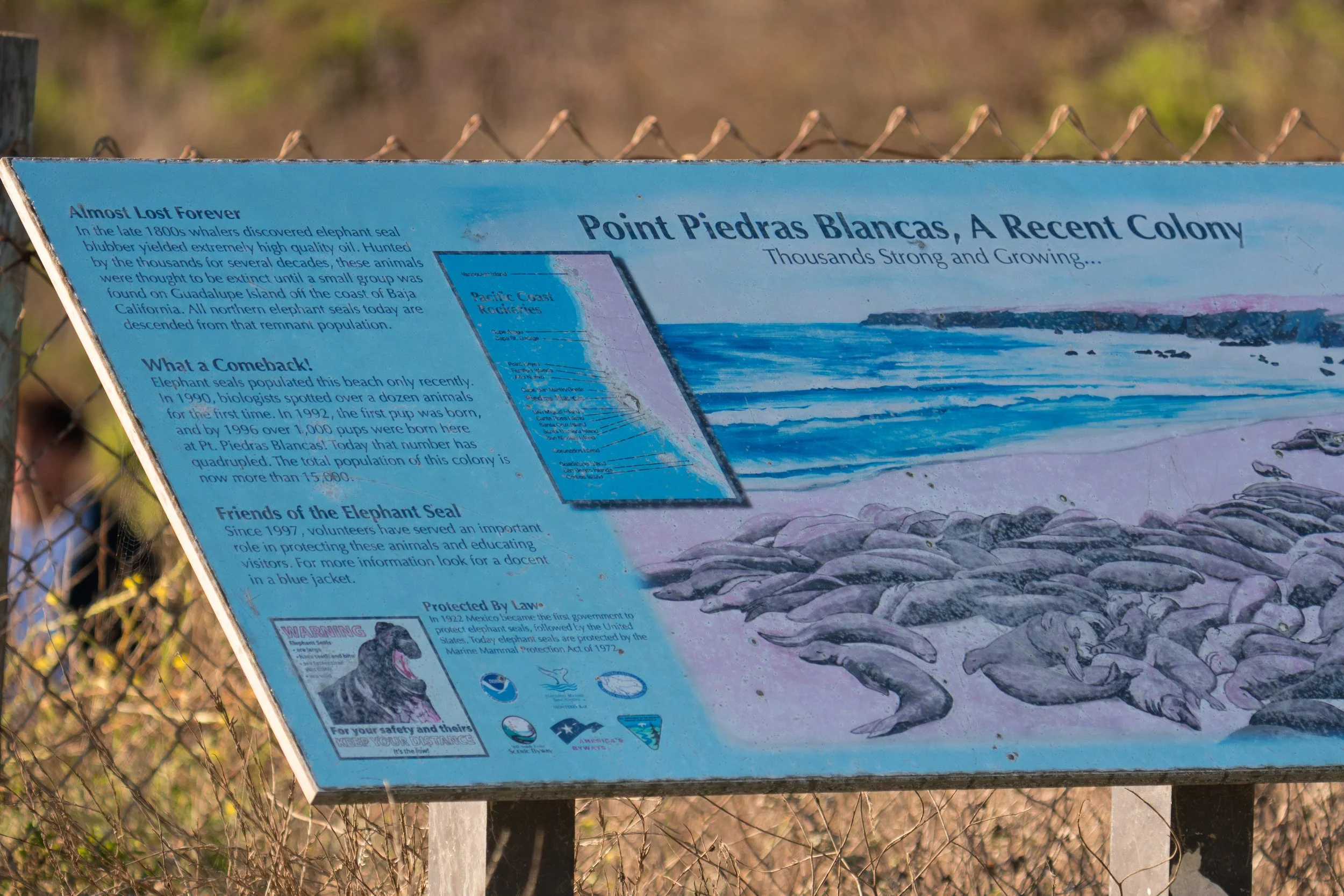
As the sun dipped lower, highlighting the texture of the kelp forests offshore, I paused to read the interpretive signs along the boardwalk. One titled "Point Piedras Blancas, A Recent Colony" offers a stark reminder of this species' history.
Looking at the thousands of animals stretching as far as the eye can see, it is hard to believe that in 1990, there were zero elephant seals on this beach. The first pup wasn't born here until 1992.
In the 1800s, commercial hunting for their oil-rich blubber pushed northern elephant seals to the absolute brink of extinction. The entire population we see today is descended from a tiny remnant group that survived on Guadalupe Island. The explosion of life at Piedras Blancas (now estimated at over 15,000 seals annually) is one of the most successful marine mammal recovery stories on our coast.
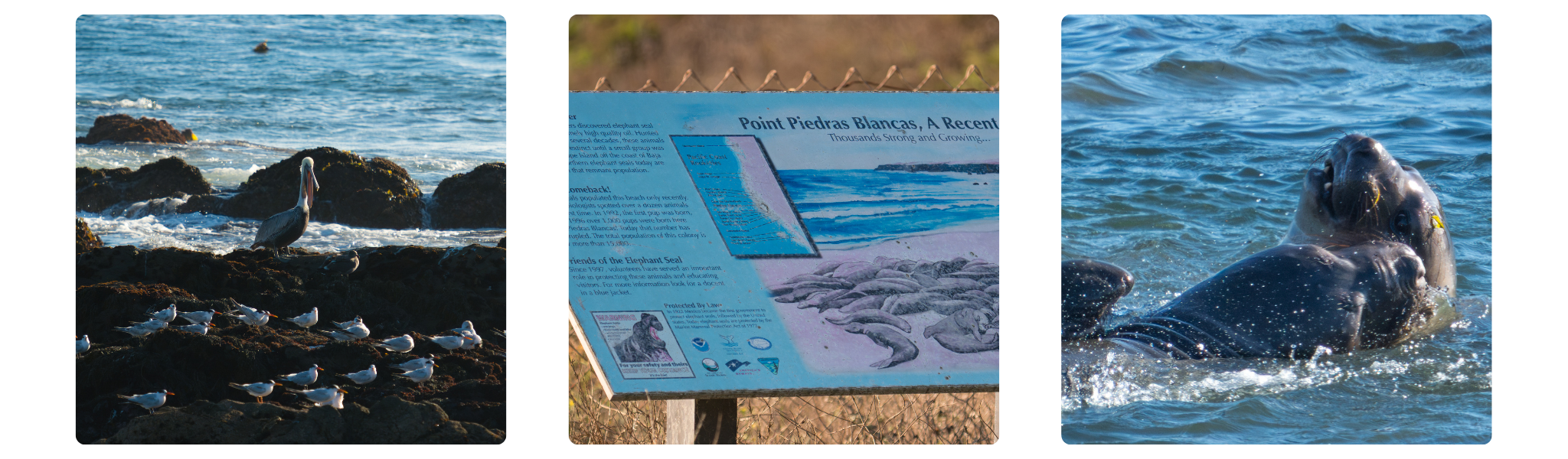
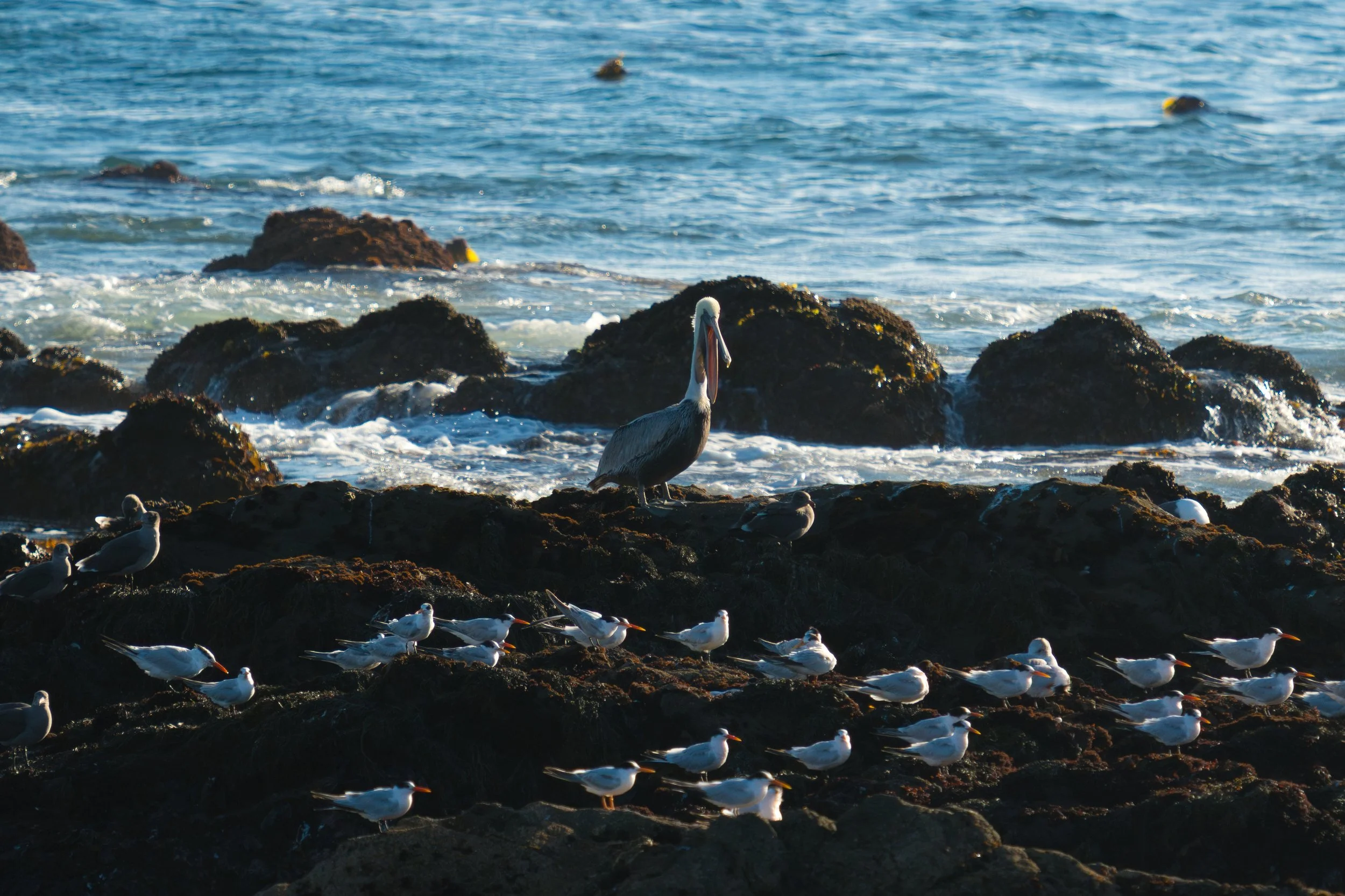
From left to right: A pelican standing watch over a flock of terns, the history of the colony, young male elephant seals splashing in the shallows.
Bird Life on the Rocks
While the pinnipeds were the main event, the bird activity provided a beautiful counterpoint to the scene.
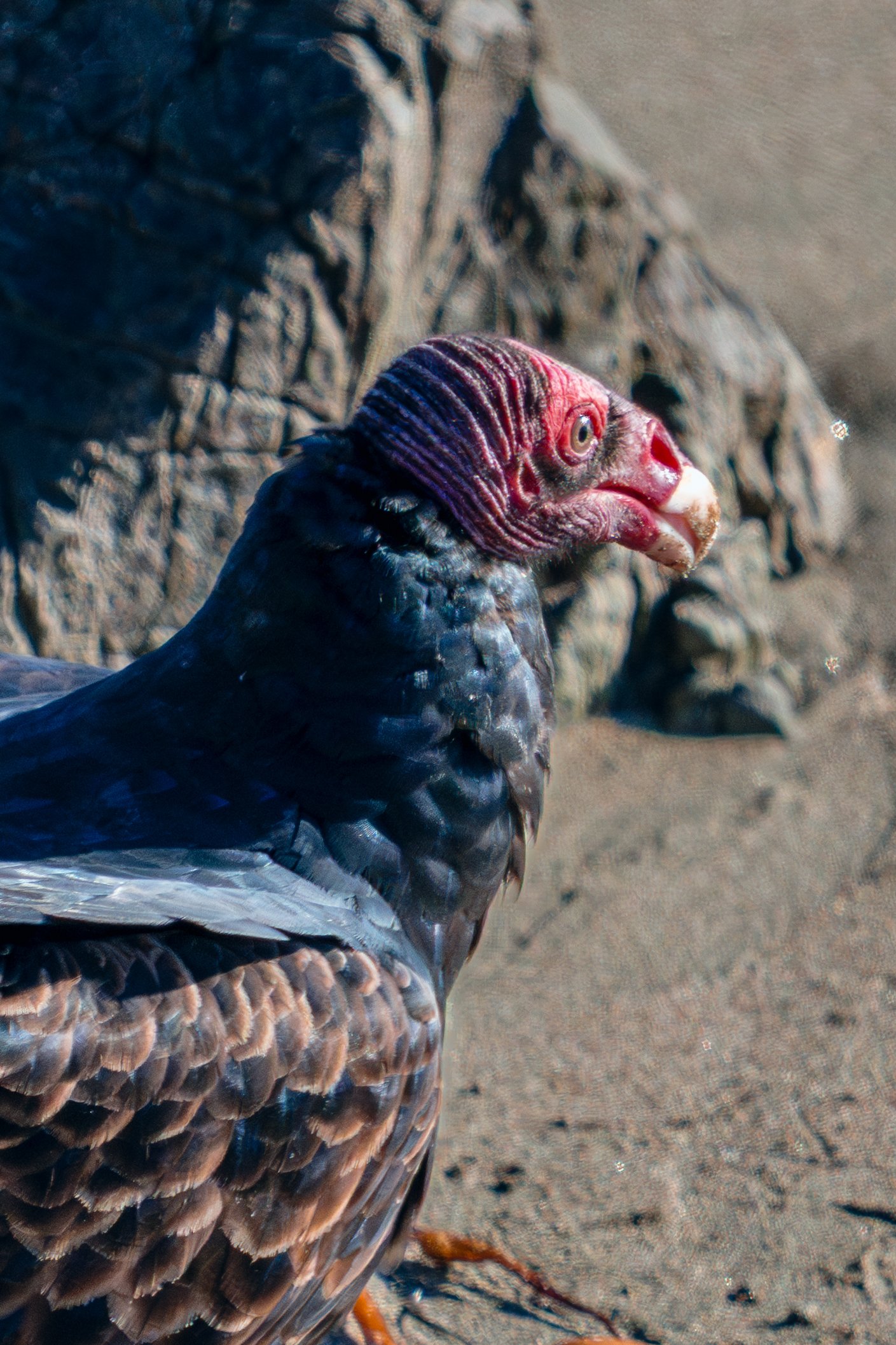
A Turkey Vulture patrolled the shoreline, its red head distinct against the sand as it scavenged near the rocks - a reminder of the natural life cycle that plays out on this beach every day.
Further out on the rocky shelves, a massive flock of Elegant Terns and gulls had gathered to rest. In the middle of the chaos, a single Brown Pelican stood at attention, towering over the smaller birds. I snapped a photo of this scene that always gives me a giggle, I call it ‘Pelican in Command.’
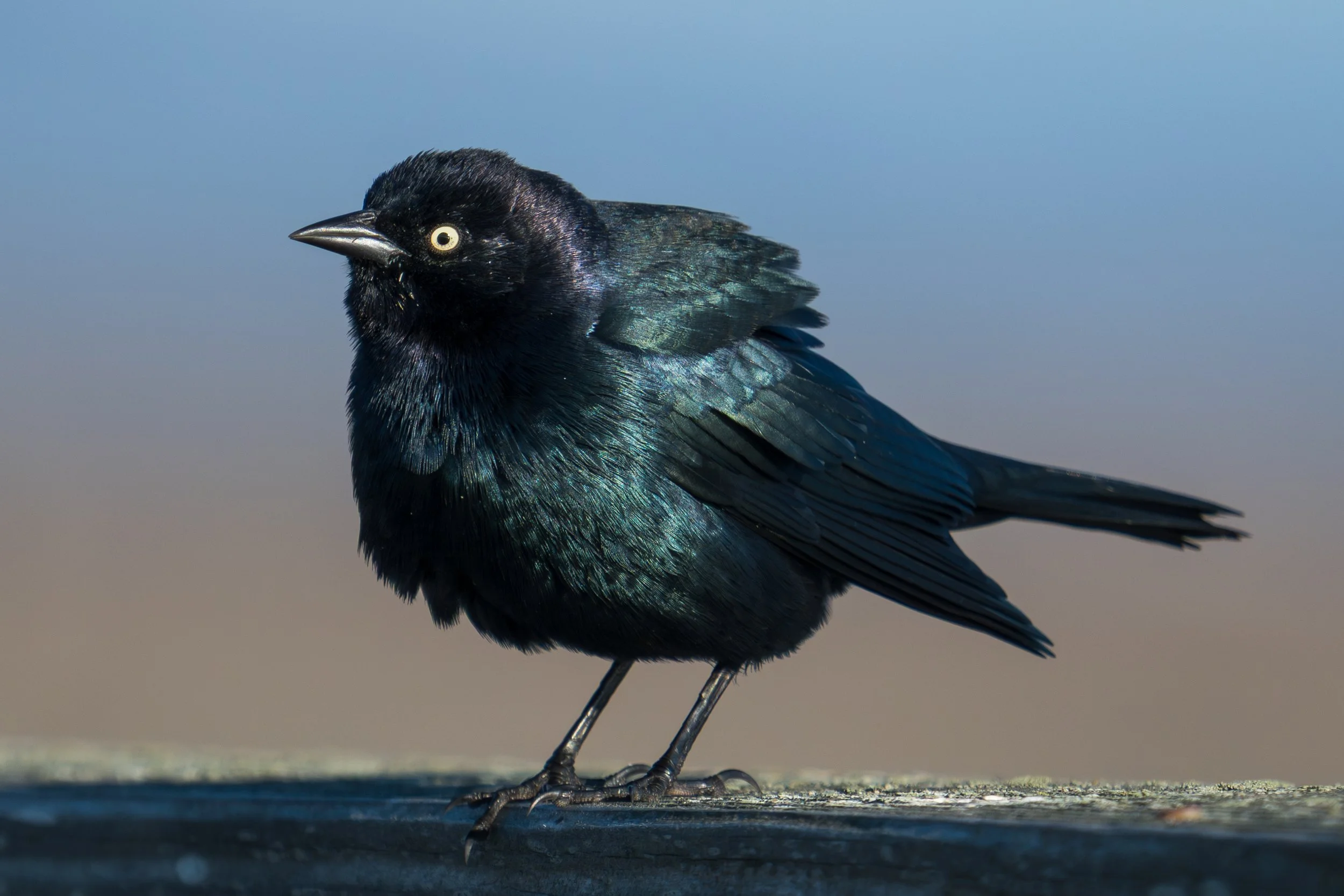
Back on land, a Brewer's Blackbird perched on the fence line, puffing its feathers and catching the light, its iridescent plumage flashing blue and purple in the direct sun. It was really special to hear their calls mixed in with the sounds of the elephant seals, and they brought a lot of great color to the scene.
Admire from Afar
As always, every photo in this gallery was taken from the safety of the designated boardwalks using a telephoto lens. The beauty of Piedras Blancas is that the infrastructure allows for incredible viewing without disturbing the animals' natural behaviors.
Support the Stewardship
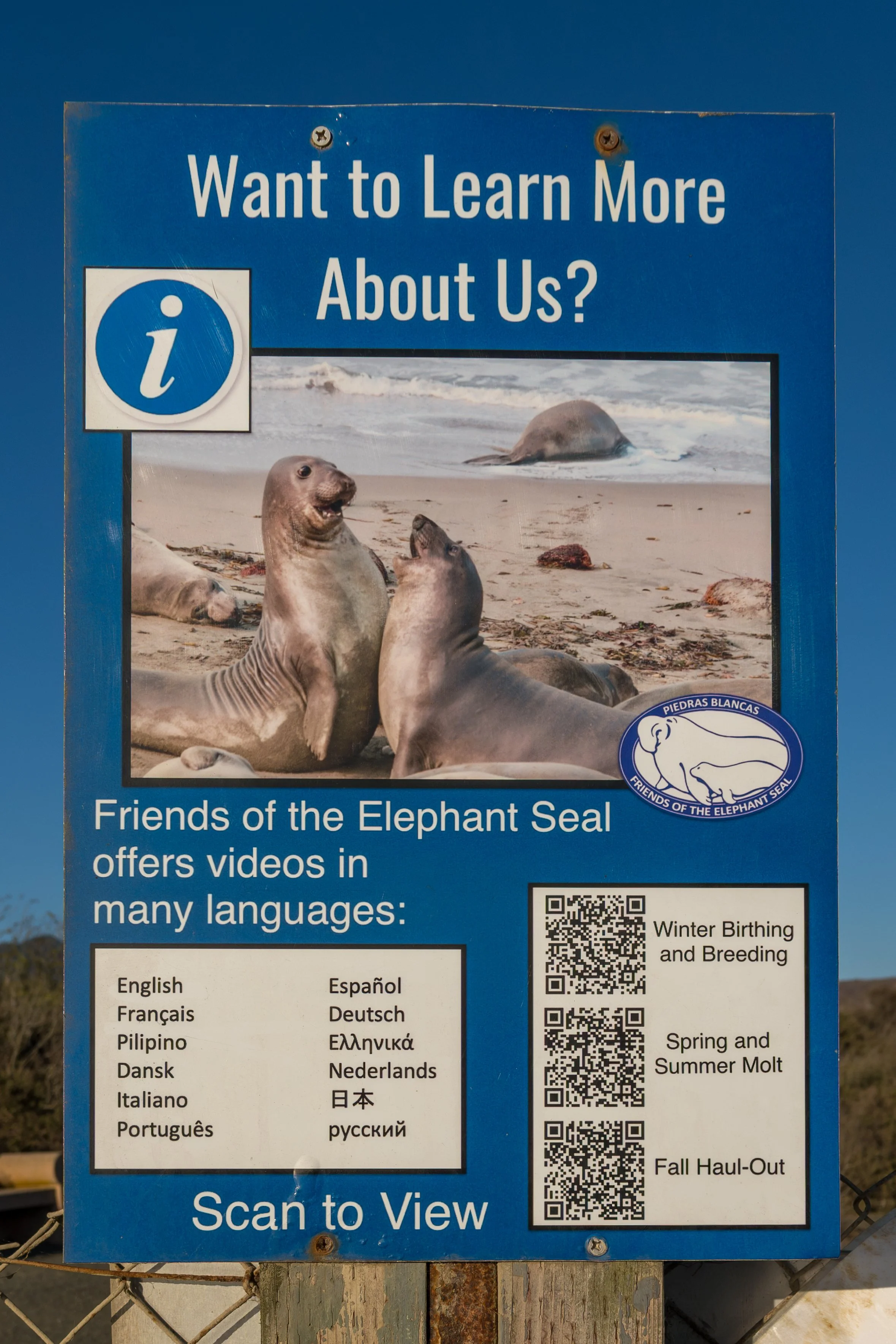
None of this access would be possible without the work of Friends of the Elephant Seal. They are the stewards of the rookery, dedicated to education and conservation. If you visit, you will likely see their docents in distinct blue jackets patrolling the boardwalks. They are a wealth of knowledge and are there to keep both you and the seals safe. If you enjoyed these stories or plan to visit, consider supporting their mission.
Coming Soon: San Miguel Island & More
Speaking of delays and busy schedules, I have a massive set of updates coming soon that I cannot wait to share.
We just returned from a bucket-list expedition to Point Bennett at San Miguel Island, traveling by zodiac to one of the most remote pinniped habitats in the world. That comes on top of my trip to San Miguel with Island Packers back in October, which I still need to share with you.
I also have a backlog of local Whiskers in the Wild updates to post, and we are putting the final touches on our refreshed store. I have terabytes of footage and photos to sort through, but I can promise you: it was worth the wait.
Until then, I hope you enjoy this sunset session from the mainland.

Gallery
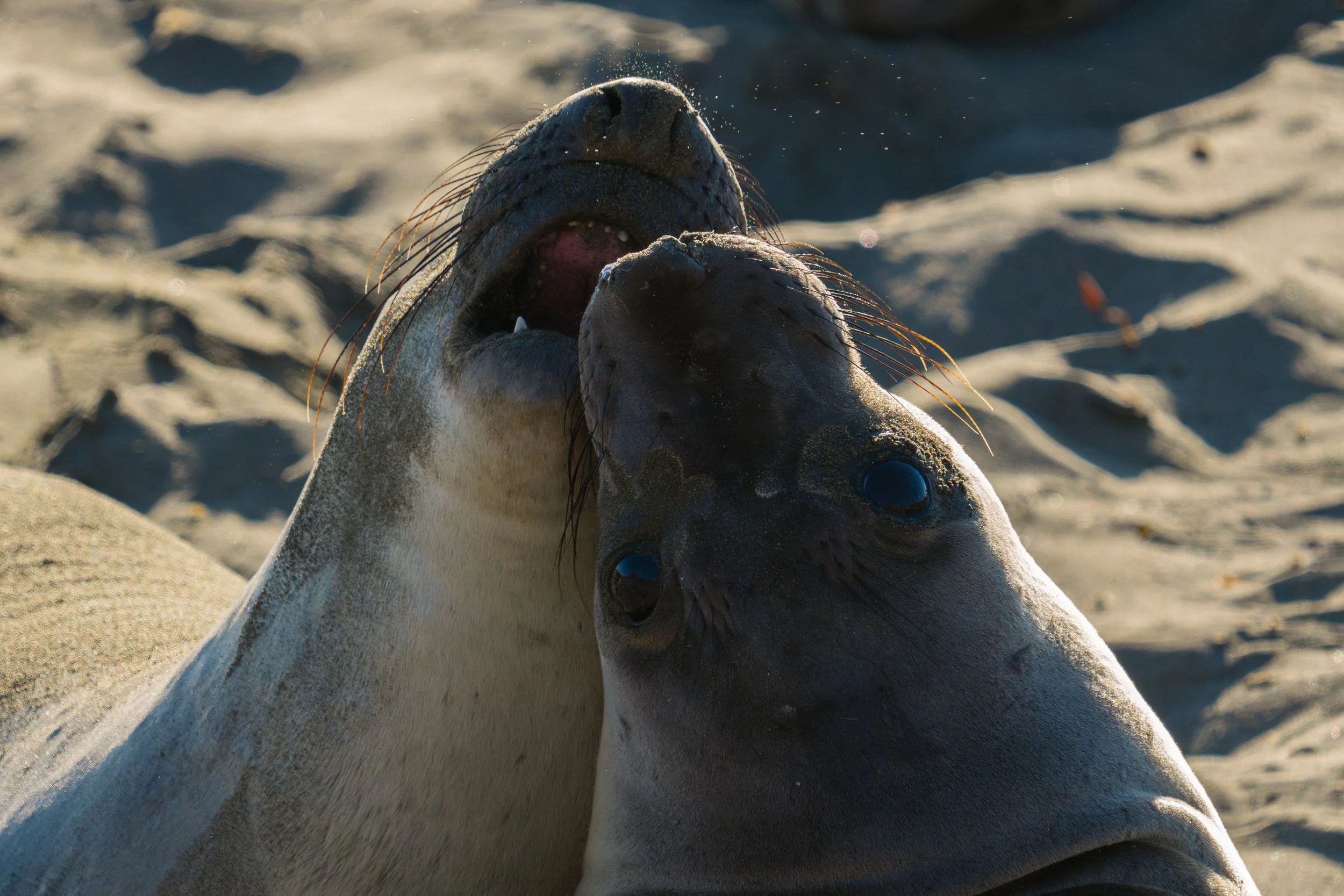
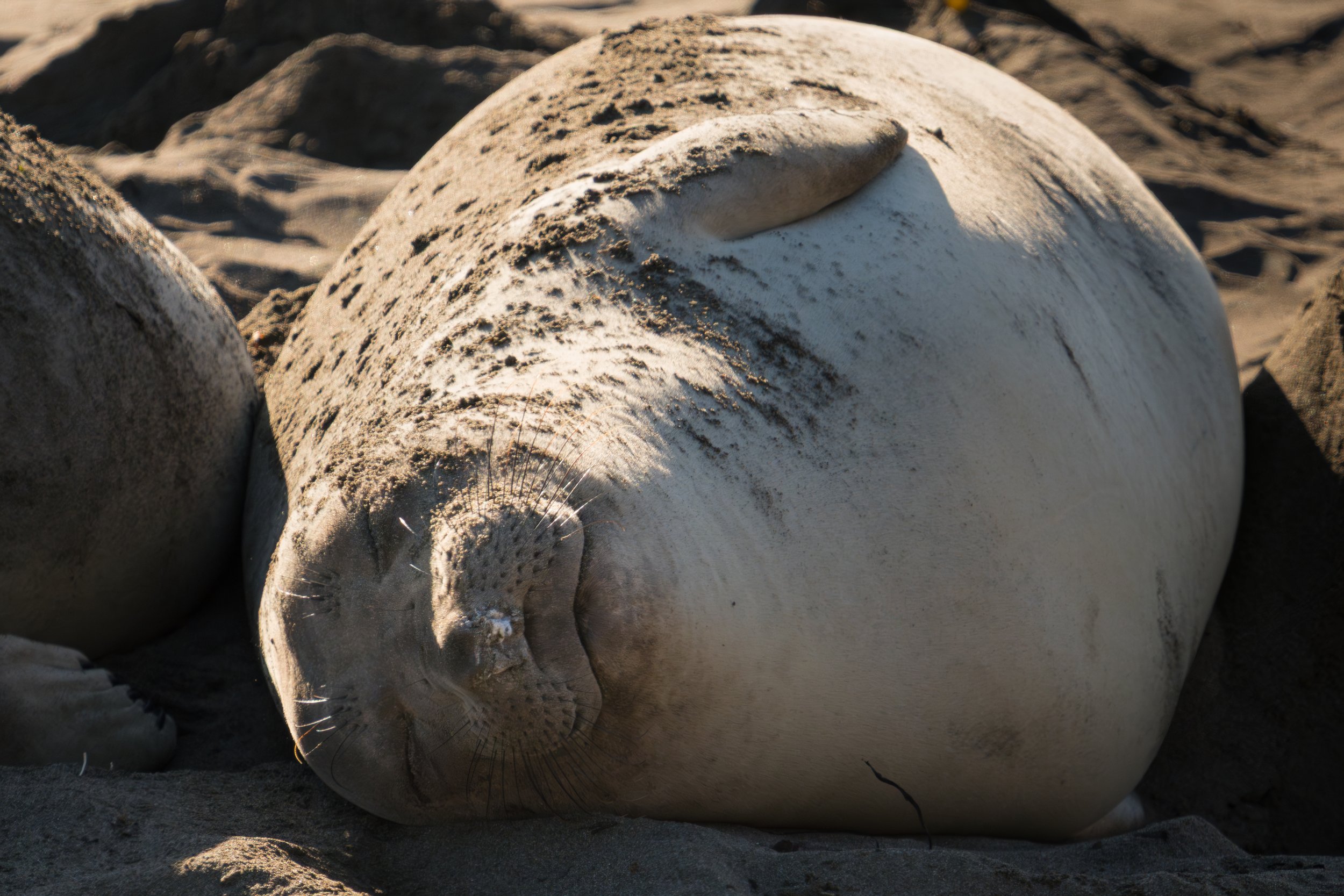
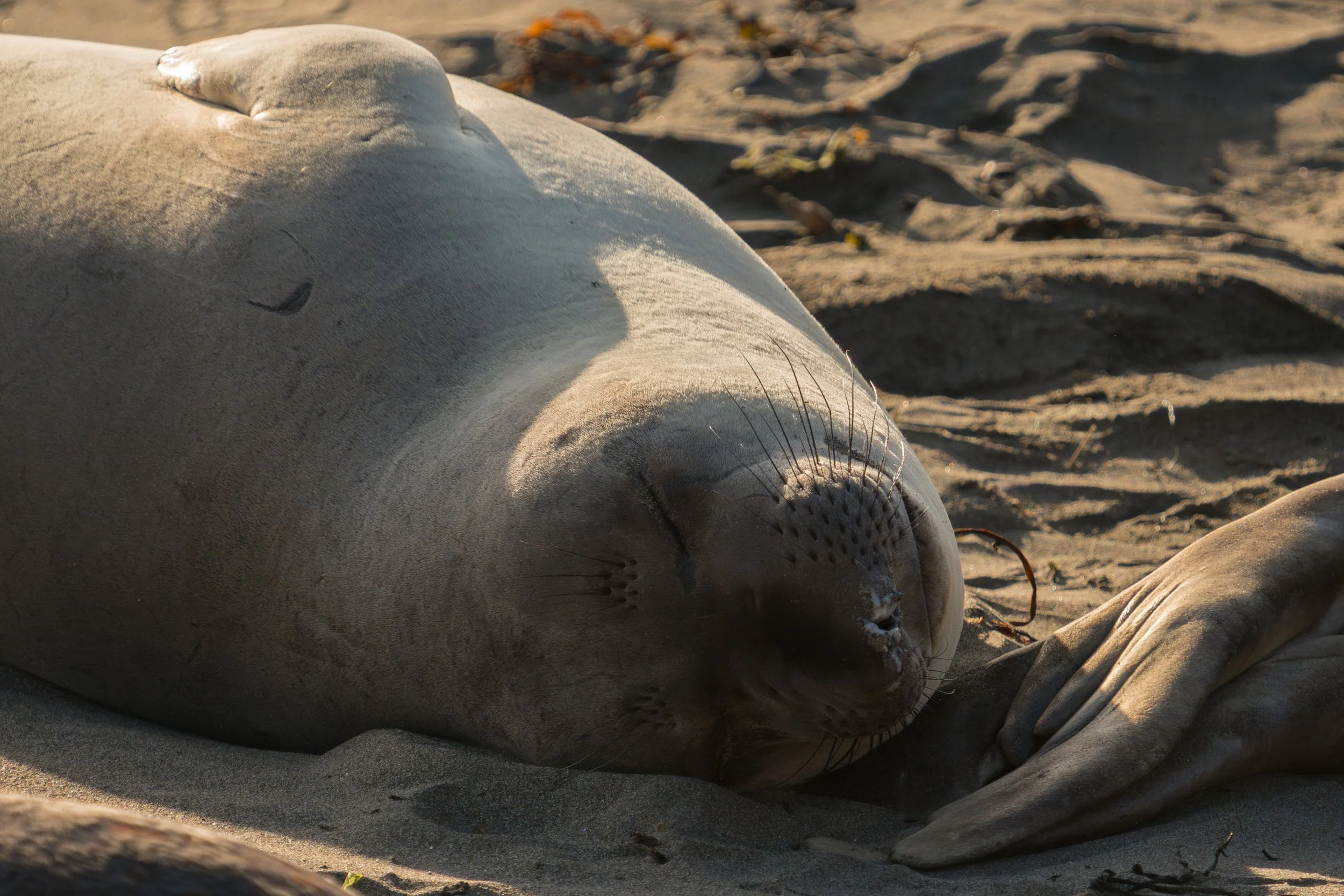

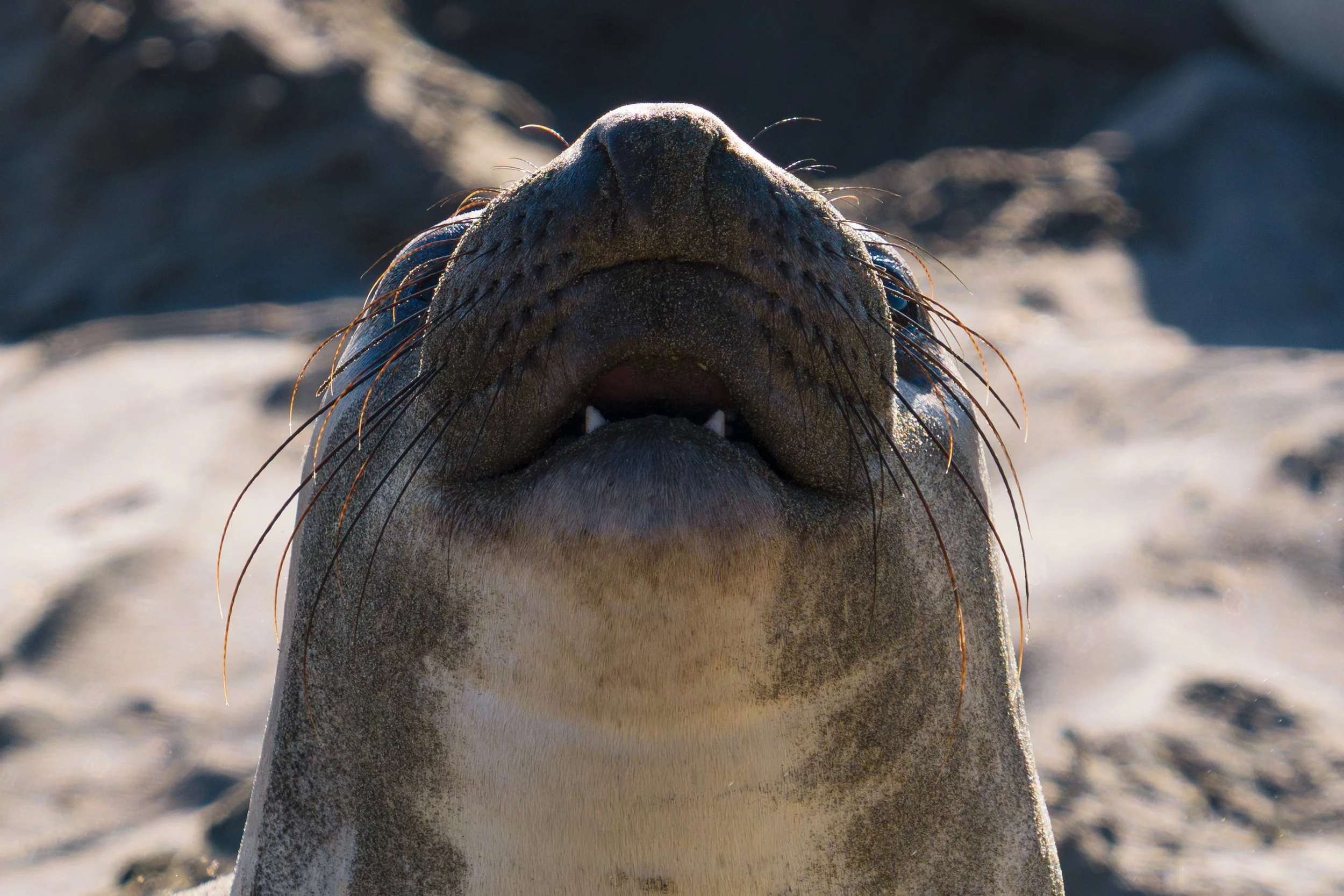
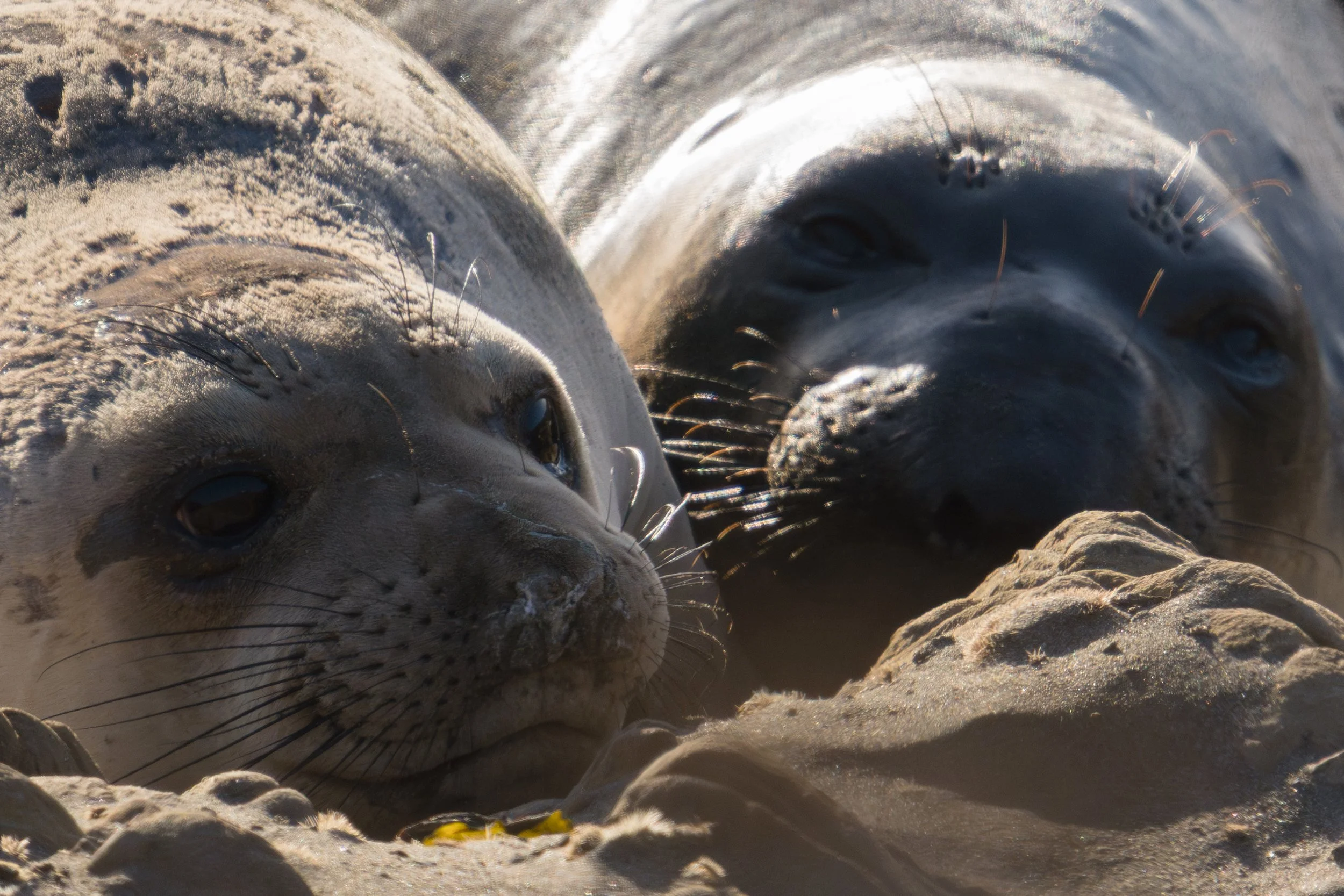



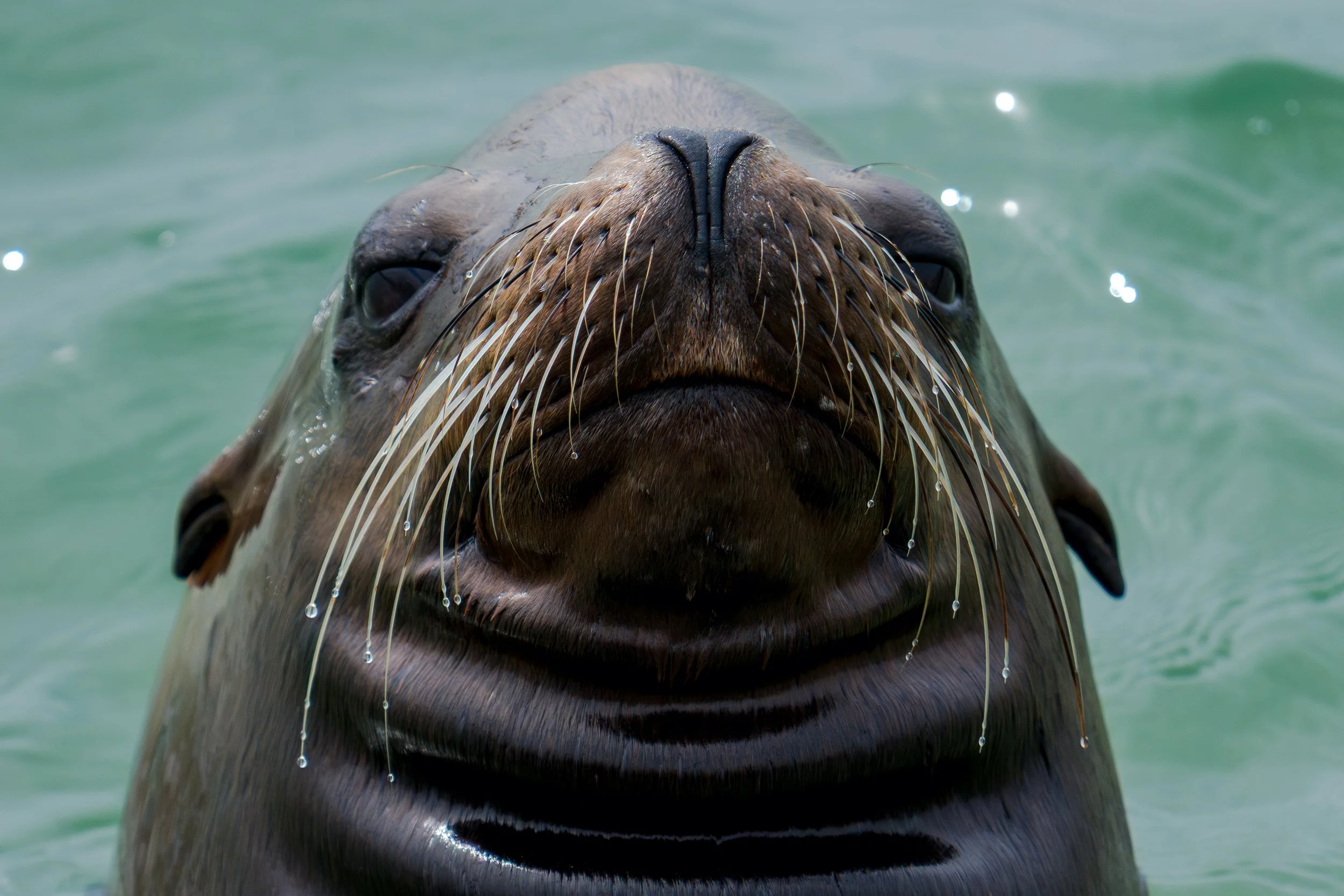
Old fur lifts off in patches, curling at the edges like dried Elmer's glue. Every May the elephant seals at Piedras Blancas shed their coats and the top layer of their skin, and it is nowhere near as dire as it looks.