
Peeling Season at Piedras Blancas: The Elephant Seal Molt
Documenting the places where people and wildlife meet.
Piedras Blancas Elephant Seal Rookery, San Simeon, California • Published on July 13th, 2026
☀
☀
Equipment
To Admire from Afar requires a diverse set of tools. We utilize a specialized range of equipment tailored to the nuances of each environment, selecting each piece for its ability to document in the field with precision while maintaining a low-profile presence.
Browse the full kit on our Amazon storefront. It's new and I'm adding to it as I go. This is an affiliate storefront, we may earn a small commission at no extra cost to you.
-
Primary Systems:
Sony a1 II
Sony α6700
iPhone 17 Pro
DJI Action Pro 5
Insta 360 X5 -
Field Optics:
Sony 400-800mm f/6.3-8 G OSS FE Lens
Sony FE 200-600mm F5.6-6.3 G OSS Super Telephoto Zoom Lens
Sony Alpha 70-350mm F4.5-6.3 G OSS Super-Telephoto APS-C Lens
Sony FE 24-105mm F4 G OSS
Sigma 18-50mm f/2.8Equipment:
Sony FE 1.4X Teleconverter -
The coast is a demanding workplace, and we only carry what has proven it can handle the salt, the spray, and the long hours of waiting. This list isn't just a collection of gear; it’s a selection of trusted essentials that meet our rigorous standards for field documentation. Whether we’re dockside or miles out at sea, these are the tools we rely on to keep the focus where it belongs: on documenting the wild exactly as it is.
Gear and Tech:
SIRUI P-325FS Monopod
SIRUI VA-5X Fluid Video
SmallRig HawkLock Quick Release Case
Peak Design Slide Camera Strap
INIU 140W Power Bank, 27000mAh
iShoot Replacement Lens Foot IS-THS260 for Sony FE 200-600mm
SMALLRIG Magnetic Metal Phone Mount with Cold Shoe Mount
SMALLRIG 9 in 1 CFexpress Type A Card Reader Docking Station
SmallRig x FILM RIOT 7-in-1 Folding Tool SetField Gear:
YETI 100L Panga Duffel
YETI 28L Panga Backpack
YETI 6L Dry Sidekick
YETI Large Rambler Bottle Sling
The North Face Recon Luxe Backpack
Therm-a-Rest Z Seat Cushion
Think Tank Emergency Rain Cover
LensCoat® Sony FE 200-600 G OSS
Grundens Deck-Boss Boots
Locations
-
📍 Piedras Blancas Elephant Seal Rookery — 18844 Cabrillo Hwy, San Simeon, CA 93452
Free, open sunrise to sunset, no reservations needed. Ample free parking. Accessible boardwalks and viewing platforms run both north and south from the lot, part of the California Coastal Trail, with benches at each end. No restrooms. Docents on site daily from 10 to 4 in royal blue. Drones are prohibited. -
📍 Friends of the Elephant Seal Visitor Center — Shops Plaza Del Cavalier, 250 San Simeon Ave Suite 5A, San Simeon, CA 93452
Open daily 10 to 4, about 8 miles south of the Vista Point. Free. Exhibits, gift shop, live seal cam feeds, and staff who will tell you everything there is to know about the rookery. Plenty of parking and the restrooms are excellent.
Back at the Rookery
The first time I photographed Piedras Blancas was December 2024, on a birthday trip up the coast to view sea otters. We stopped in Morro Bay, then kept driving north to the rookery, and I wrote at the time that it's a stop that's always worth it no matter how many times you've been.
I've been back a lot since. Most of those visits never made it onto the blog, and both of the ones that did were December posts, which means everything I've published from this beach shows the same few weeks of the seal calendar. This gallery is from early May, and elephant seal behavior in May is completely different than December.
We'd just come off the sea otter census, working alongside Gena Bentall of Sea Otter Savvy on her survey segment, and we left the field house at Rancho Marino and drove north to the rookery before heading back down to Morro Bay and then home to Channel Islands Harbor. One extremely taxing day. That census story is coming, along with a much longer one about where the studio has been. I'm constantly playing catch-up, and life has been a whirlwind, but I wouldn't trade a second of it.
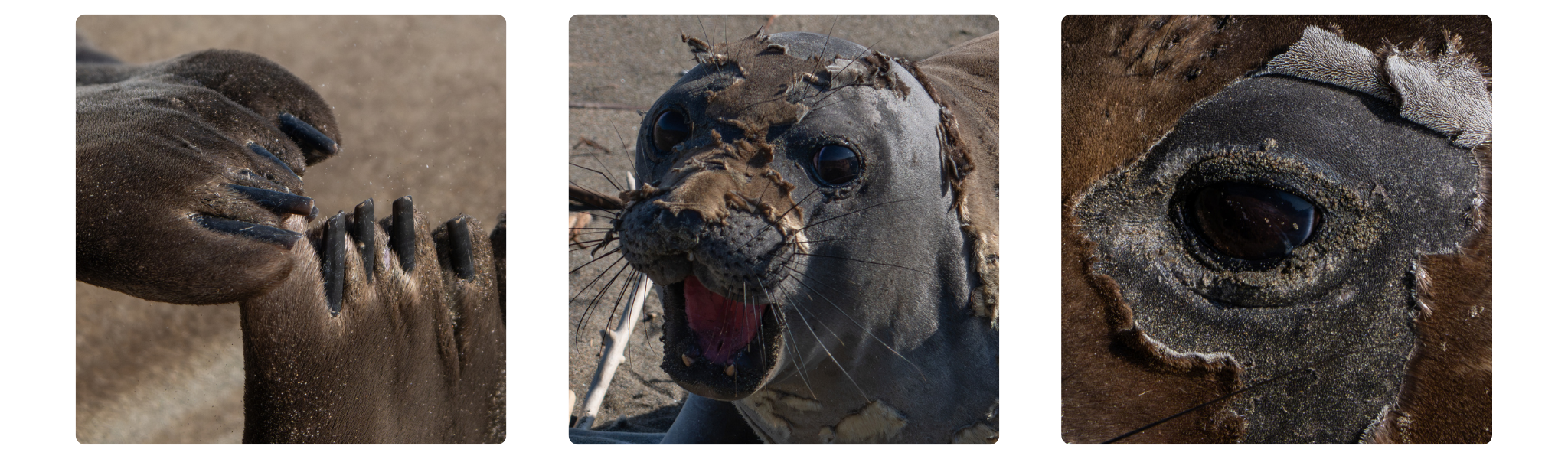
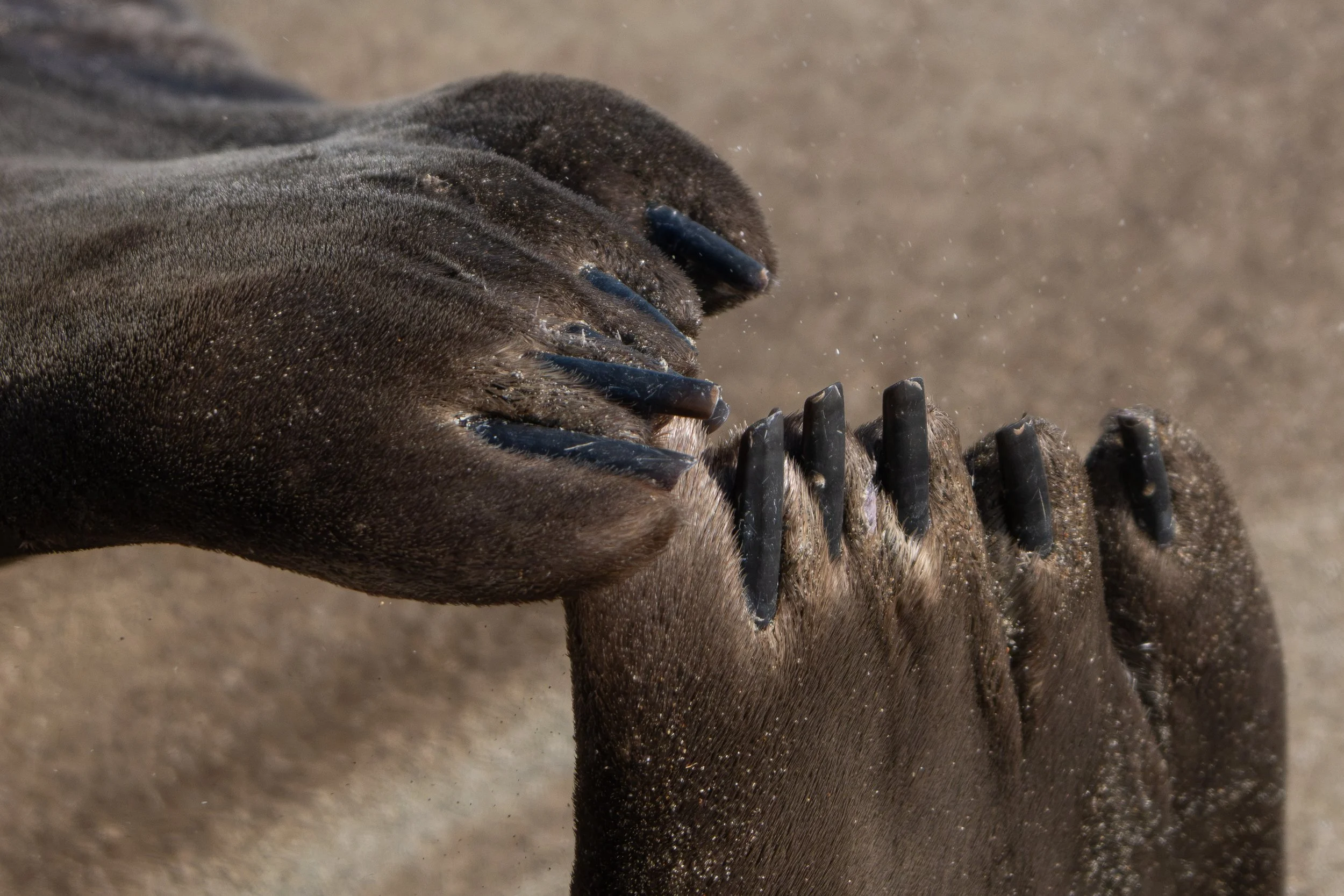
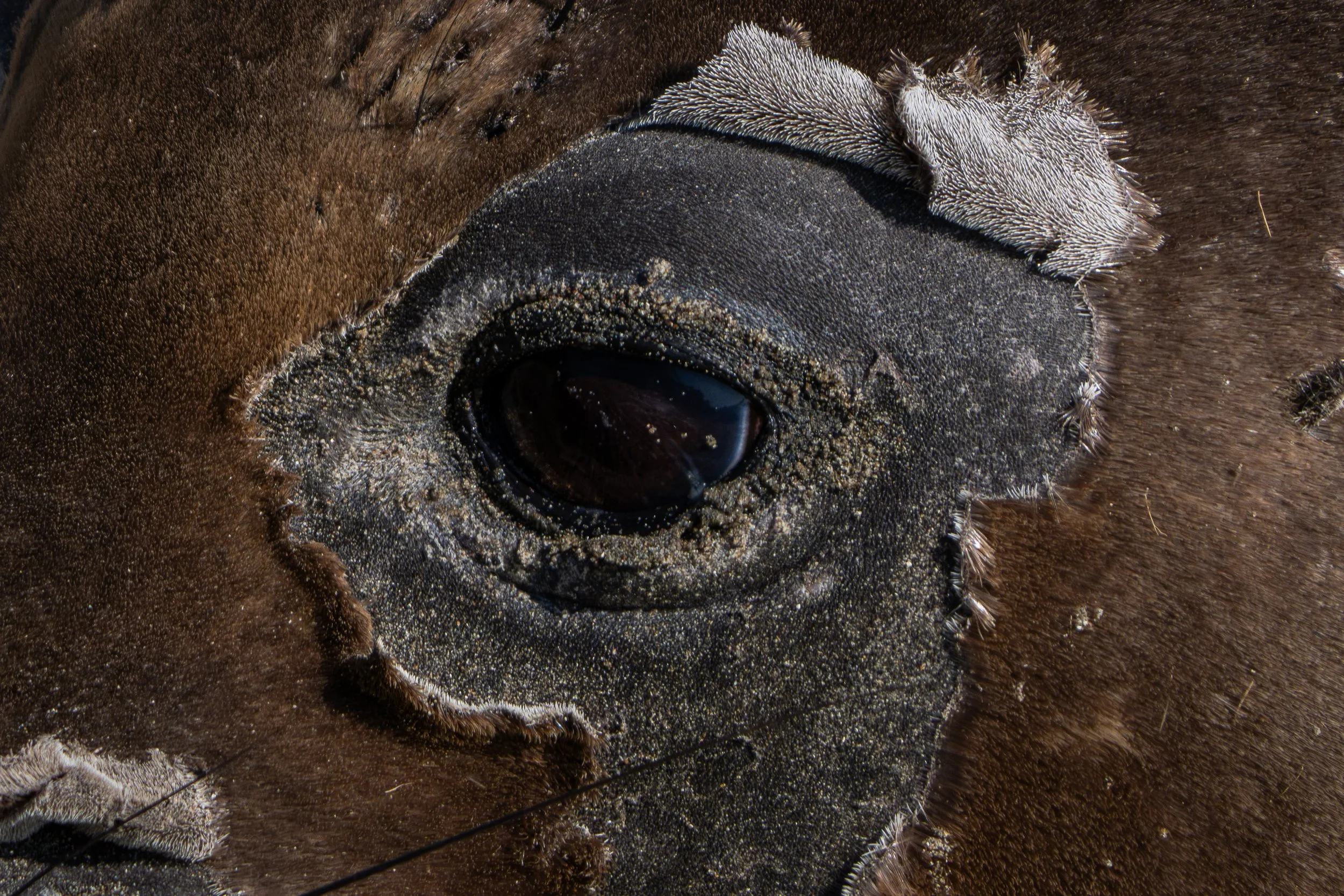
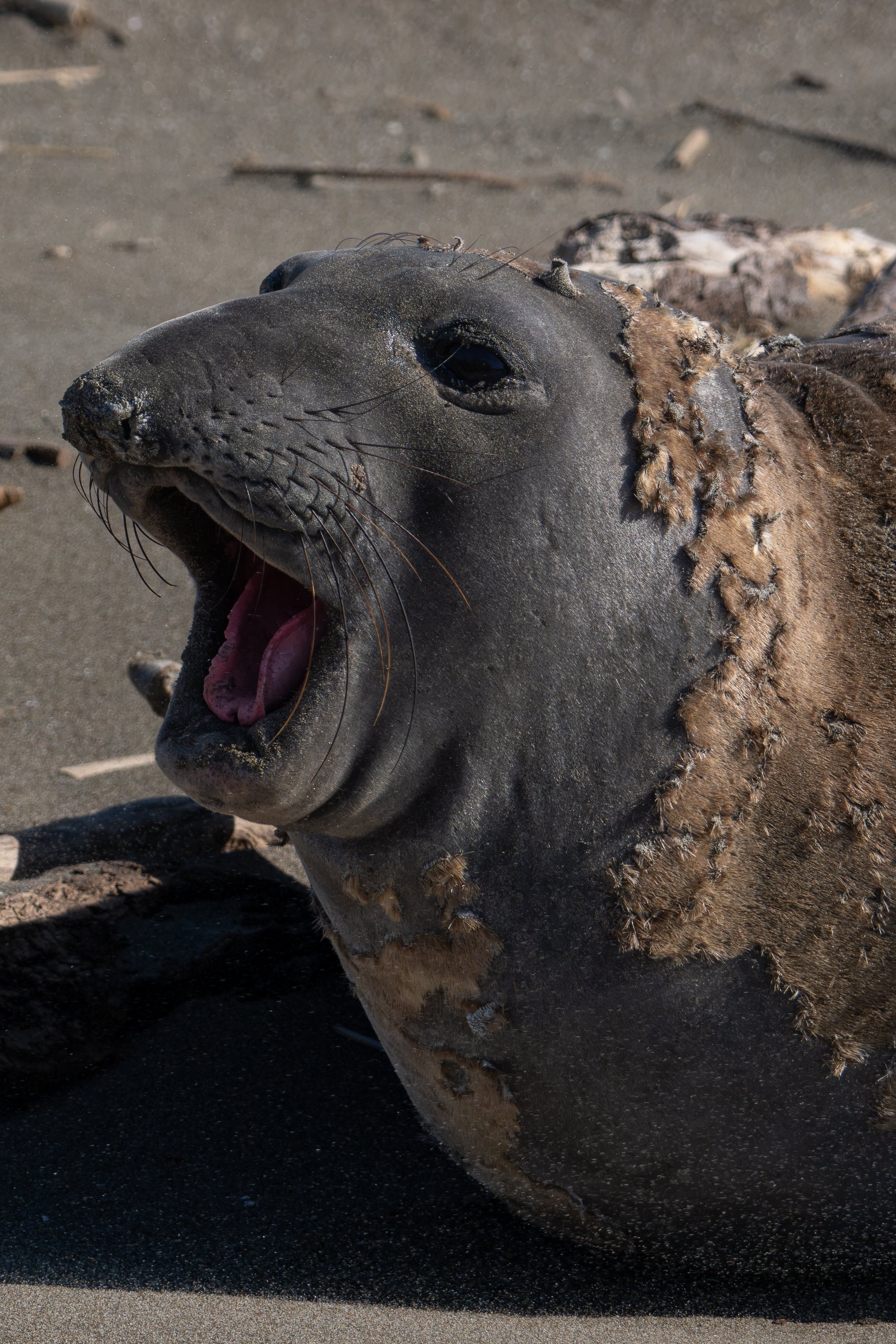
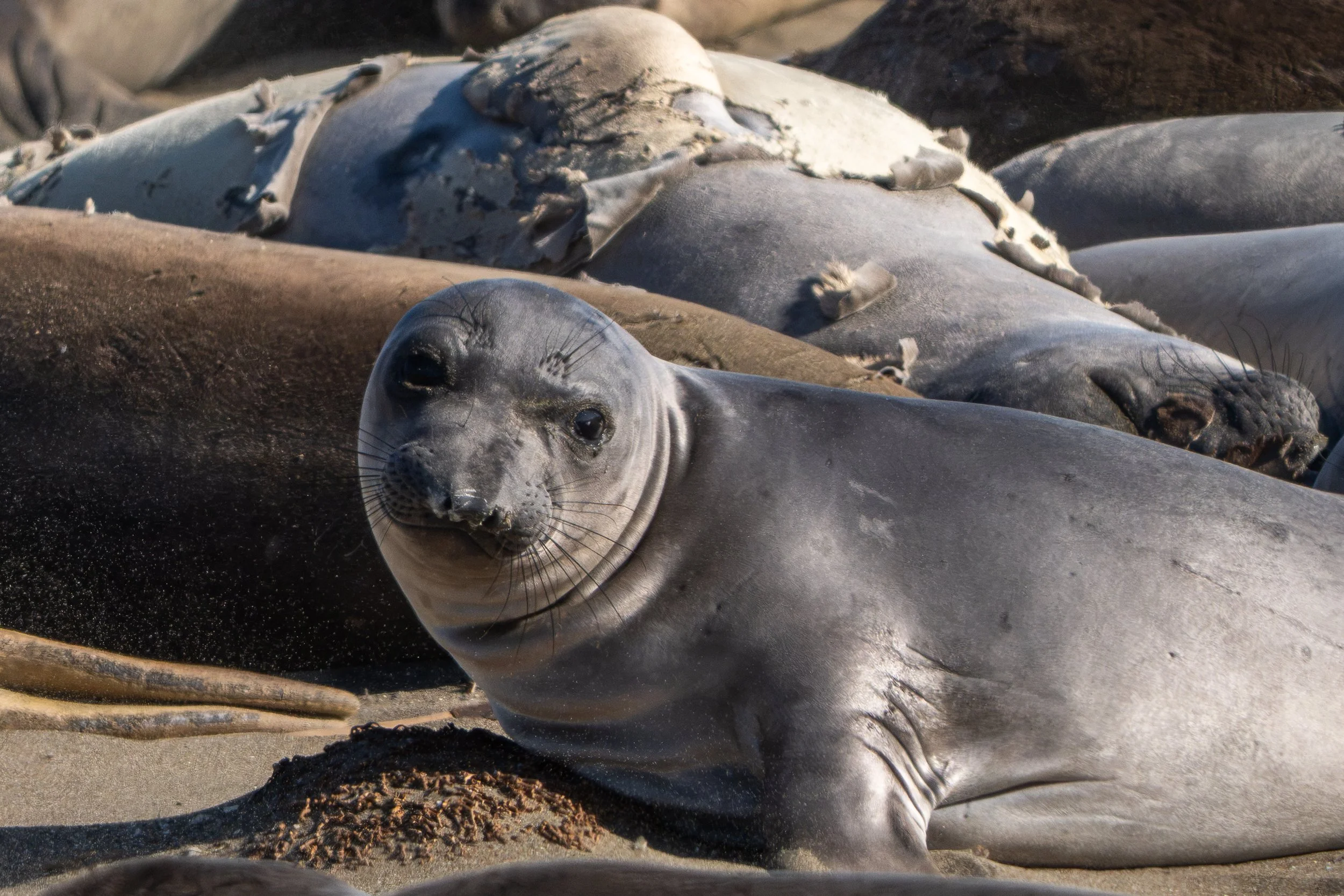
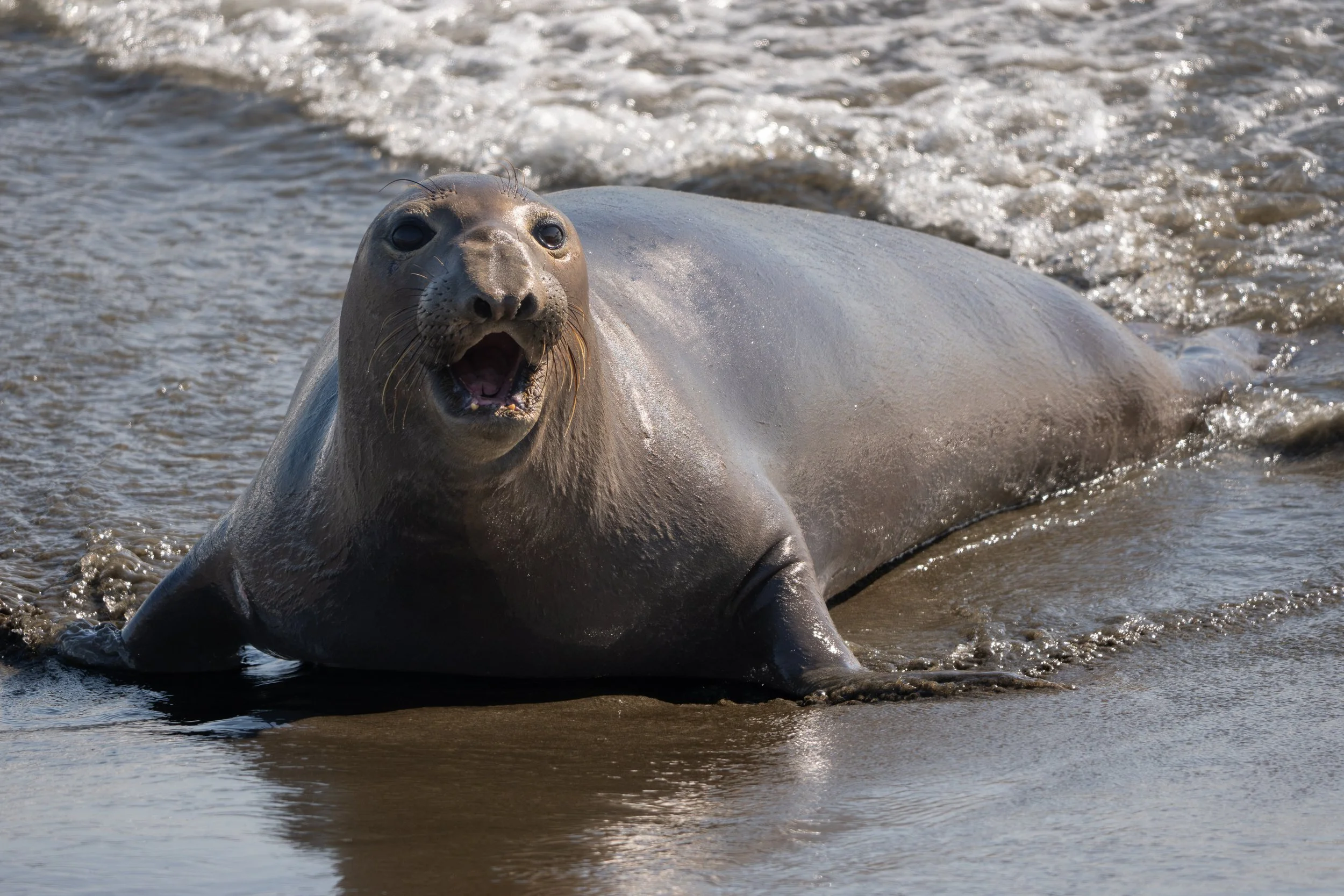
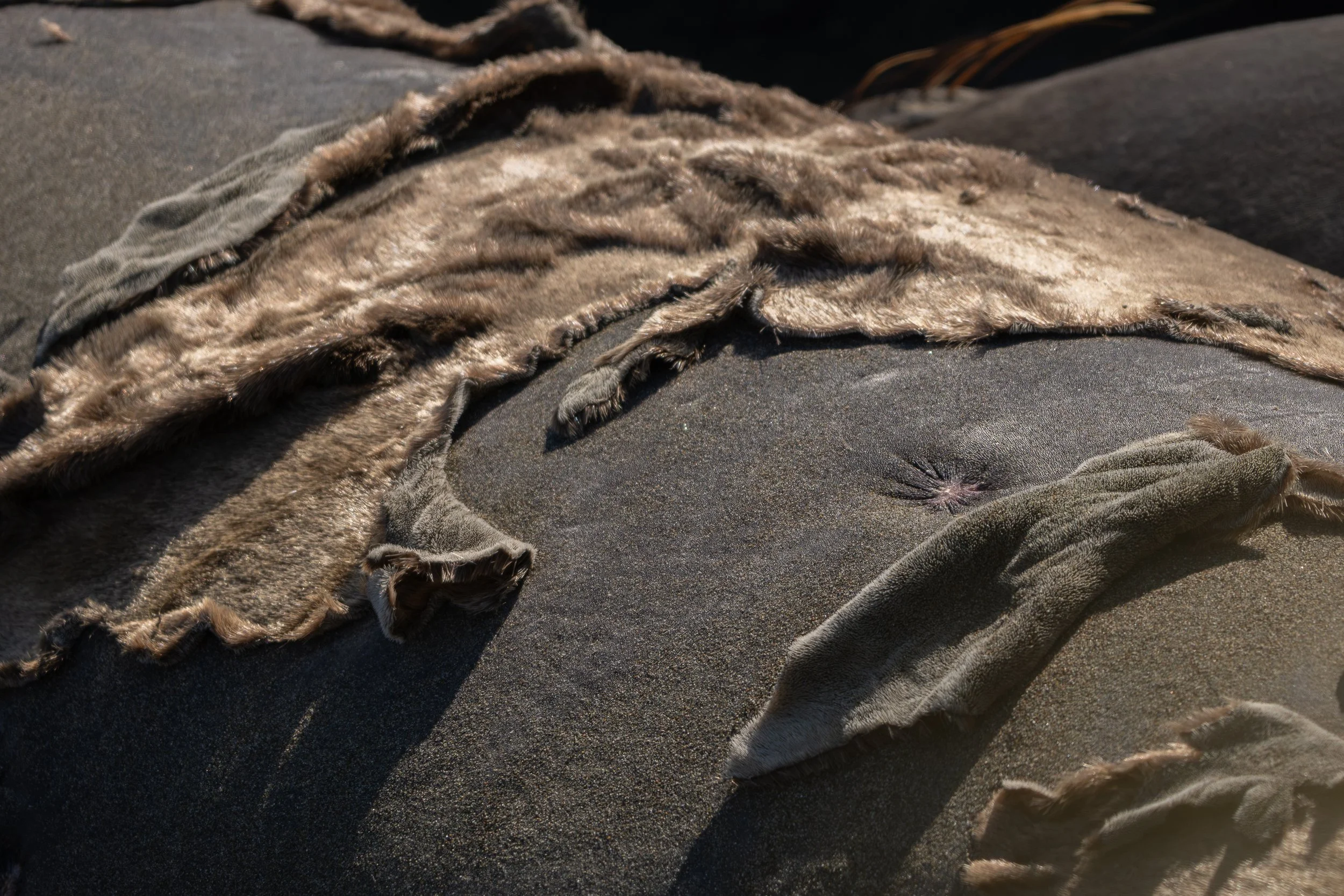
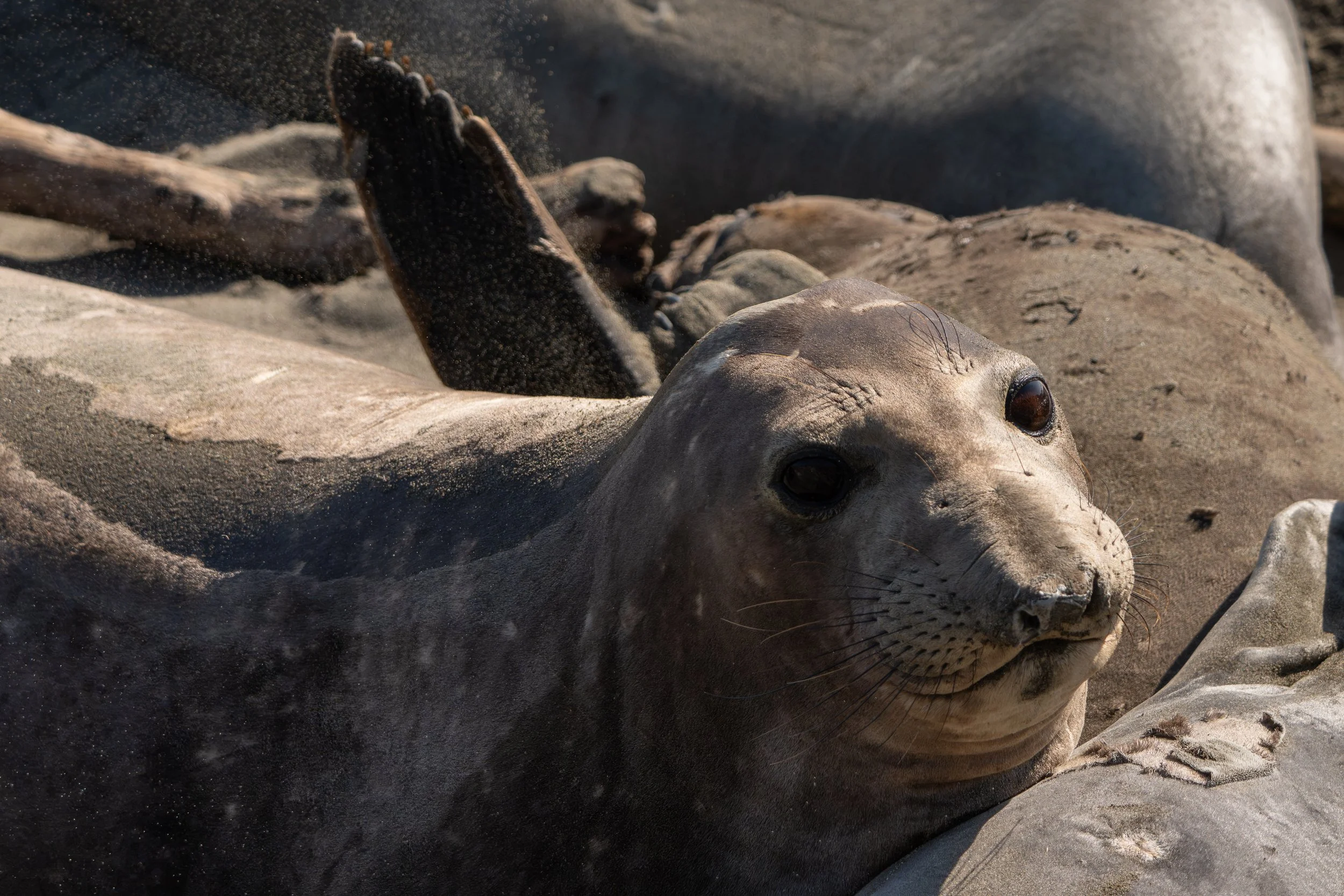
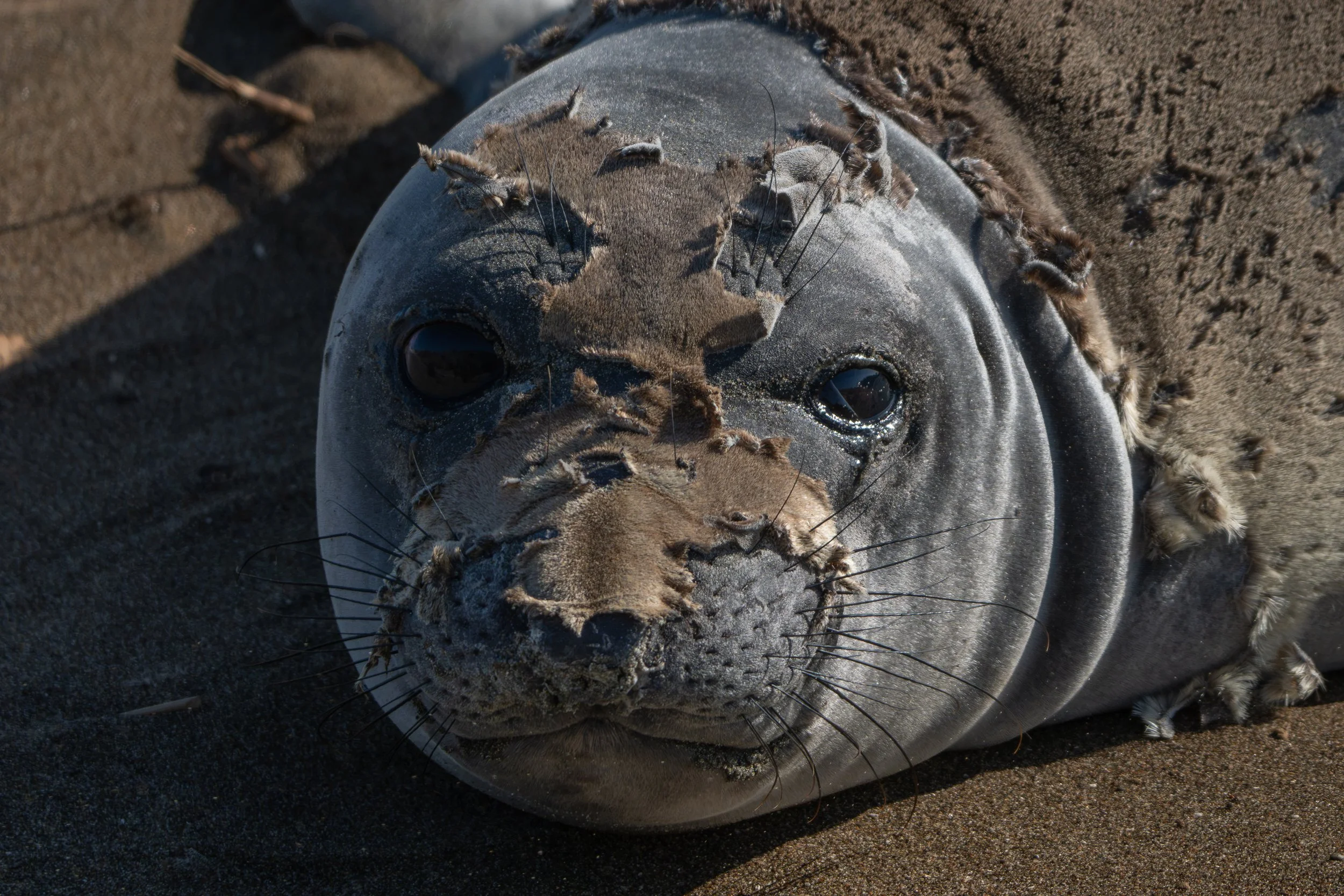
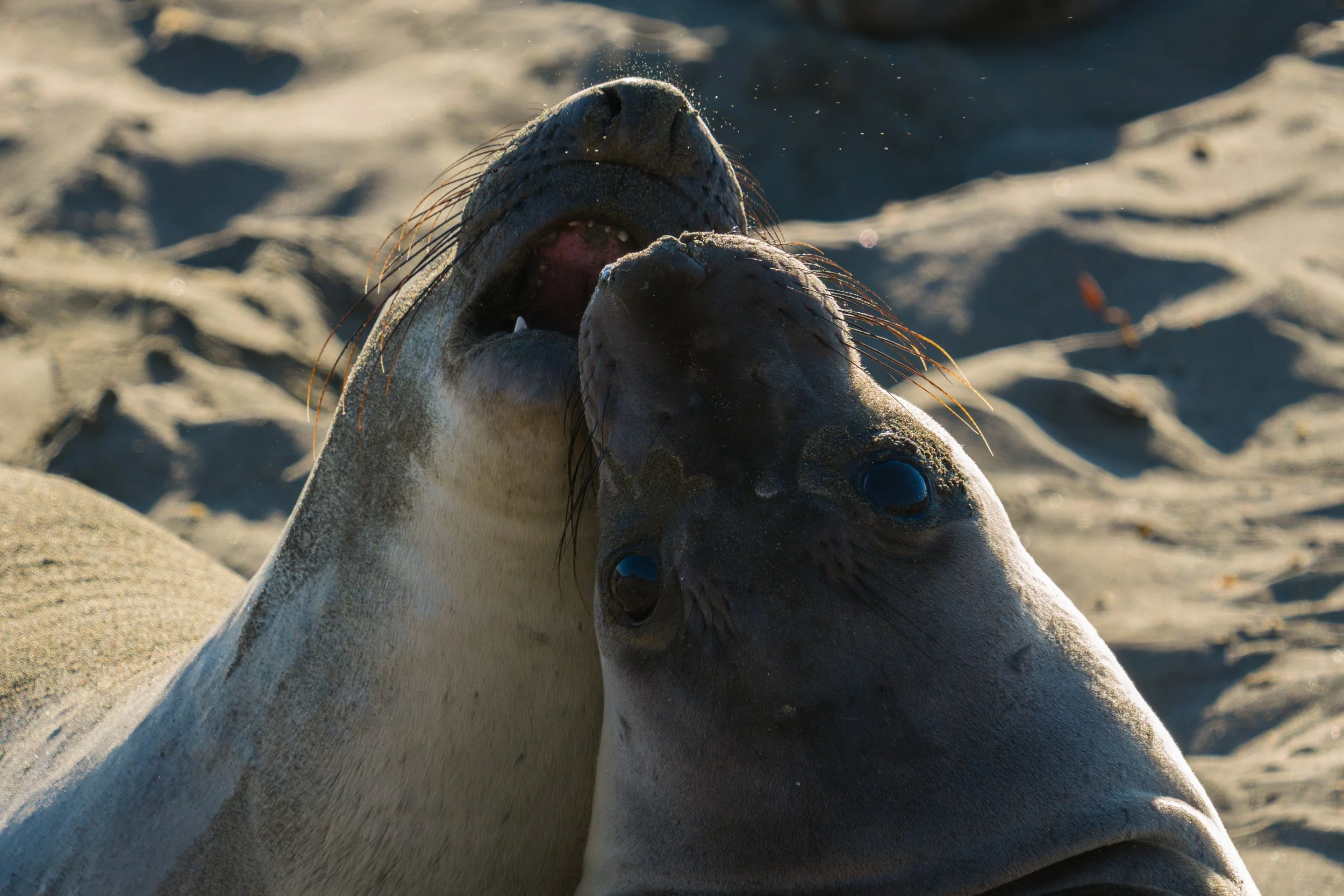
From left to right: the hind flippers of a northern elephant seal with dark claws extended, a juvenile seal facing the camera with its mouth open and old fur peeling in strips across its face, and a close view of a seal's eye ringed with sand as the old coat lifts away around it.
Catastrophic Molt
The wind at Piedras Blancas is always ripping, which is why nobody talks about the smell. Unless it's an unusually hot day, and it rarely is, the wind takes care of it and hands you sand instead. I spent the afternoon wiping grit out of my mouth and off my glasses. Besides the wind, it’s calmer than you'd expect. Unlike sea lions, elephant seals are rather quiet. What you get is a lot of long theatrical exhales, some grunting, and an odd clicking noise that would catch you off guard in a horror movie.
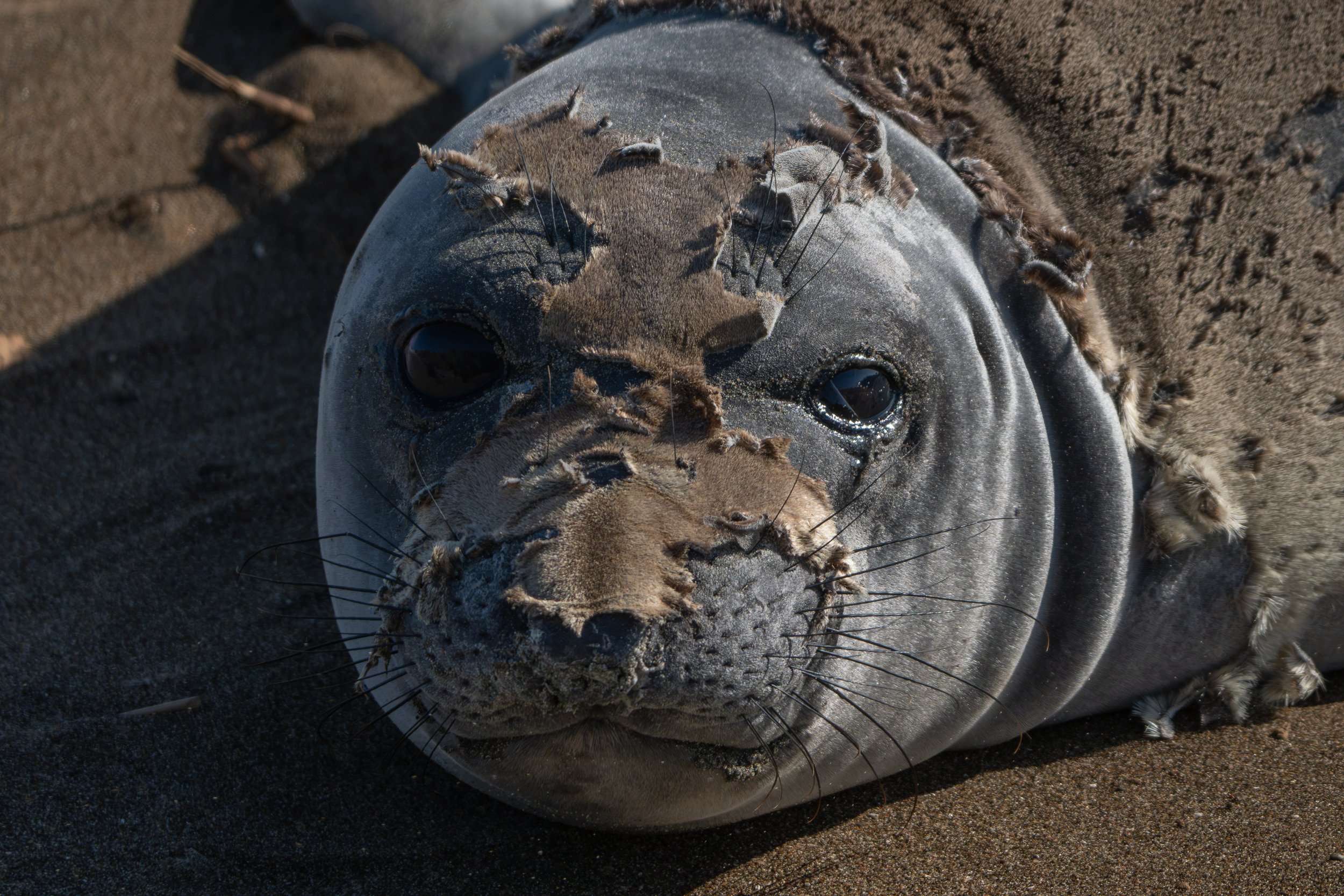
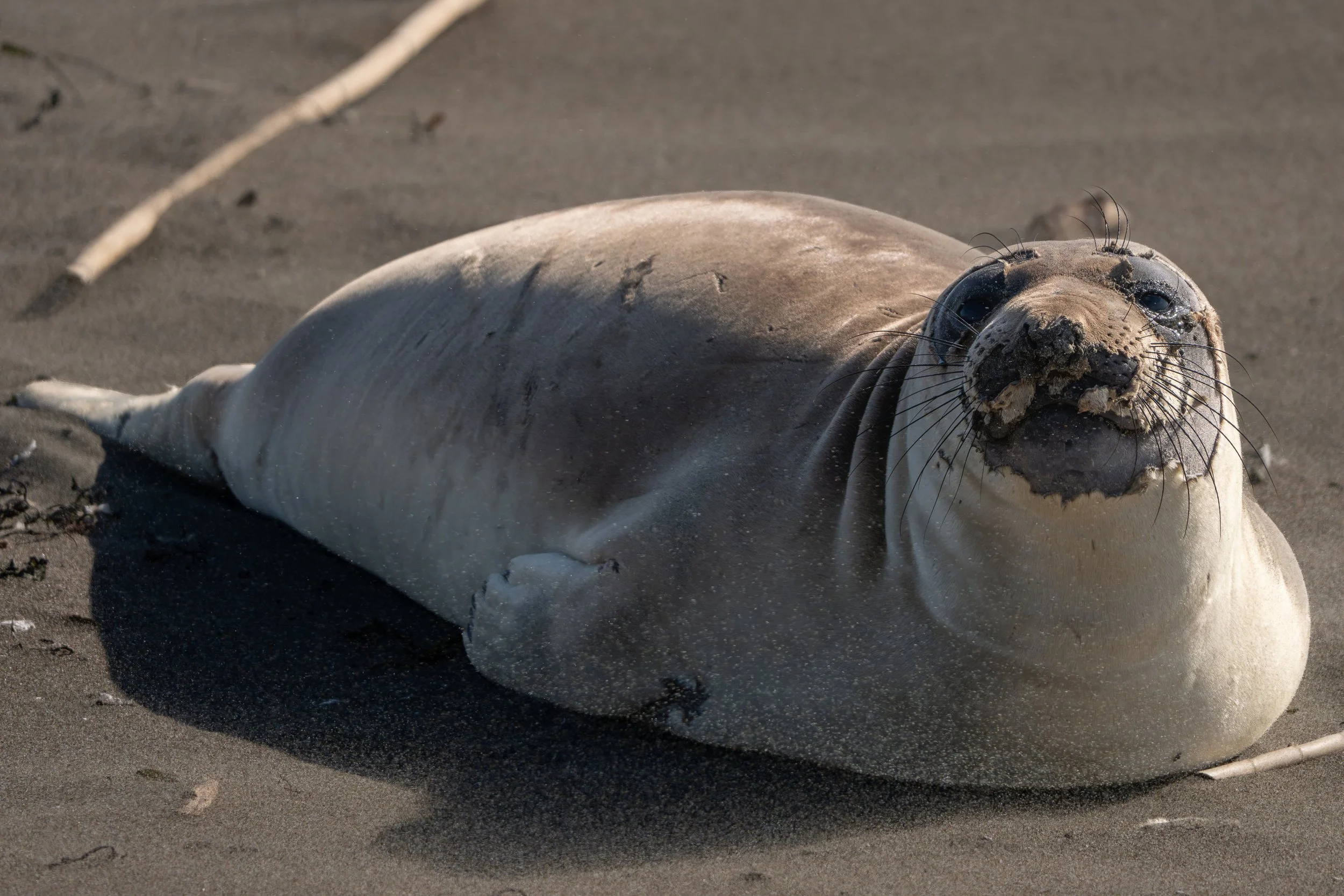
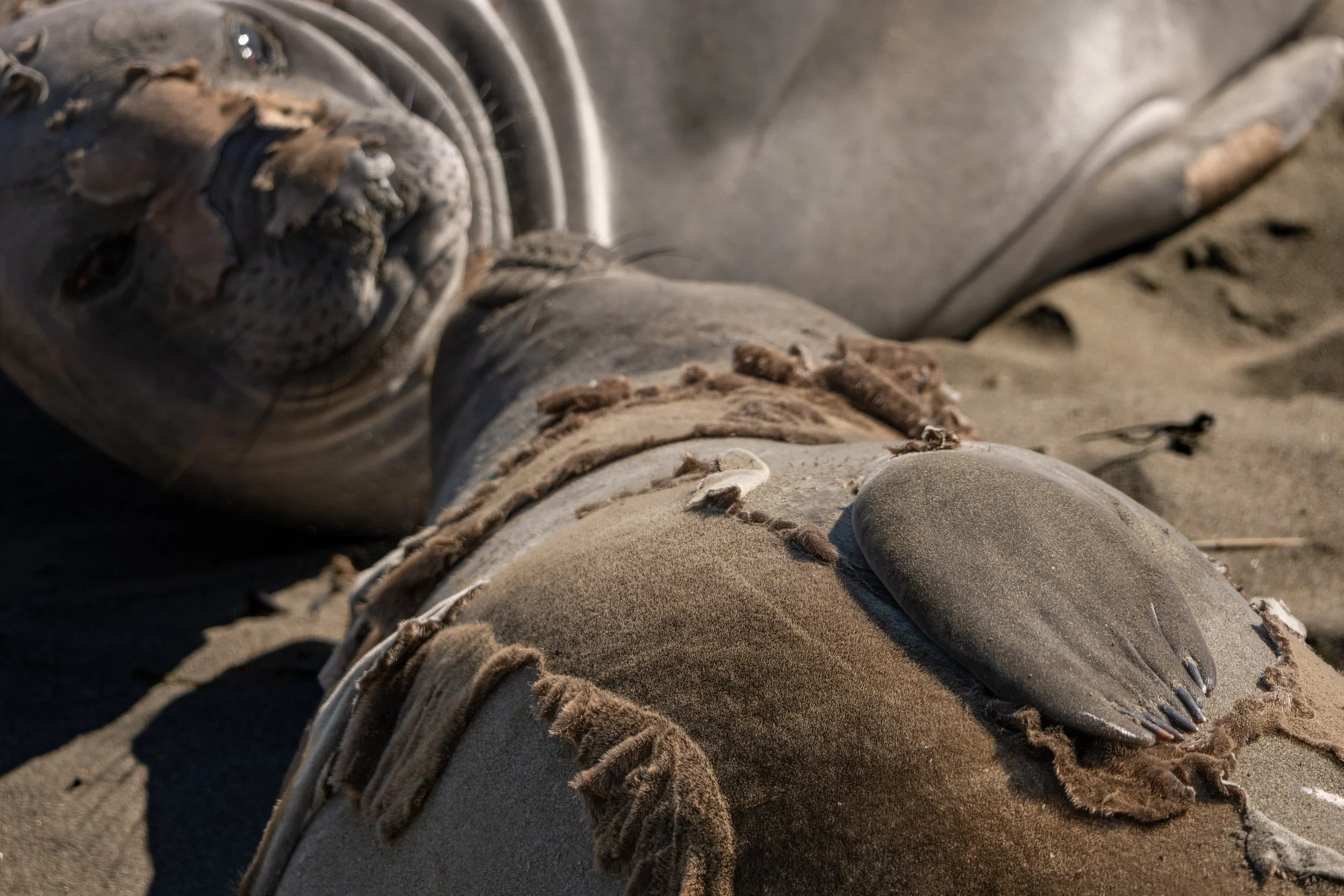
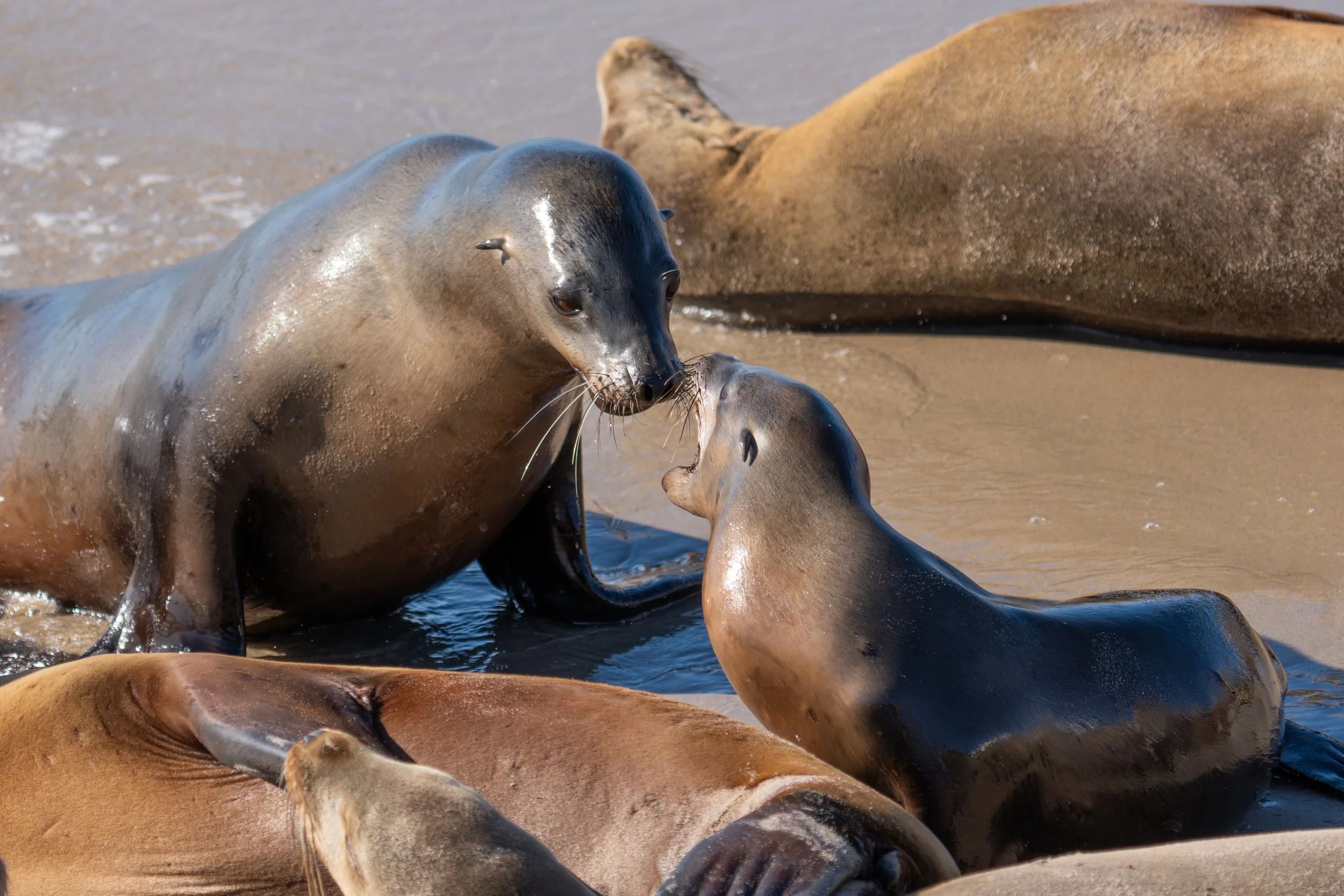
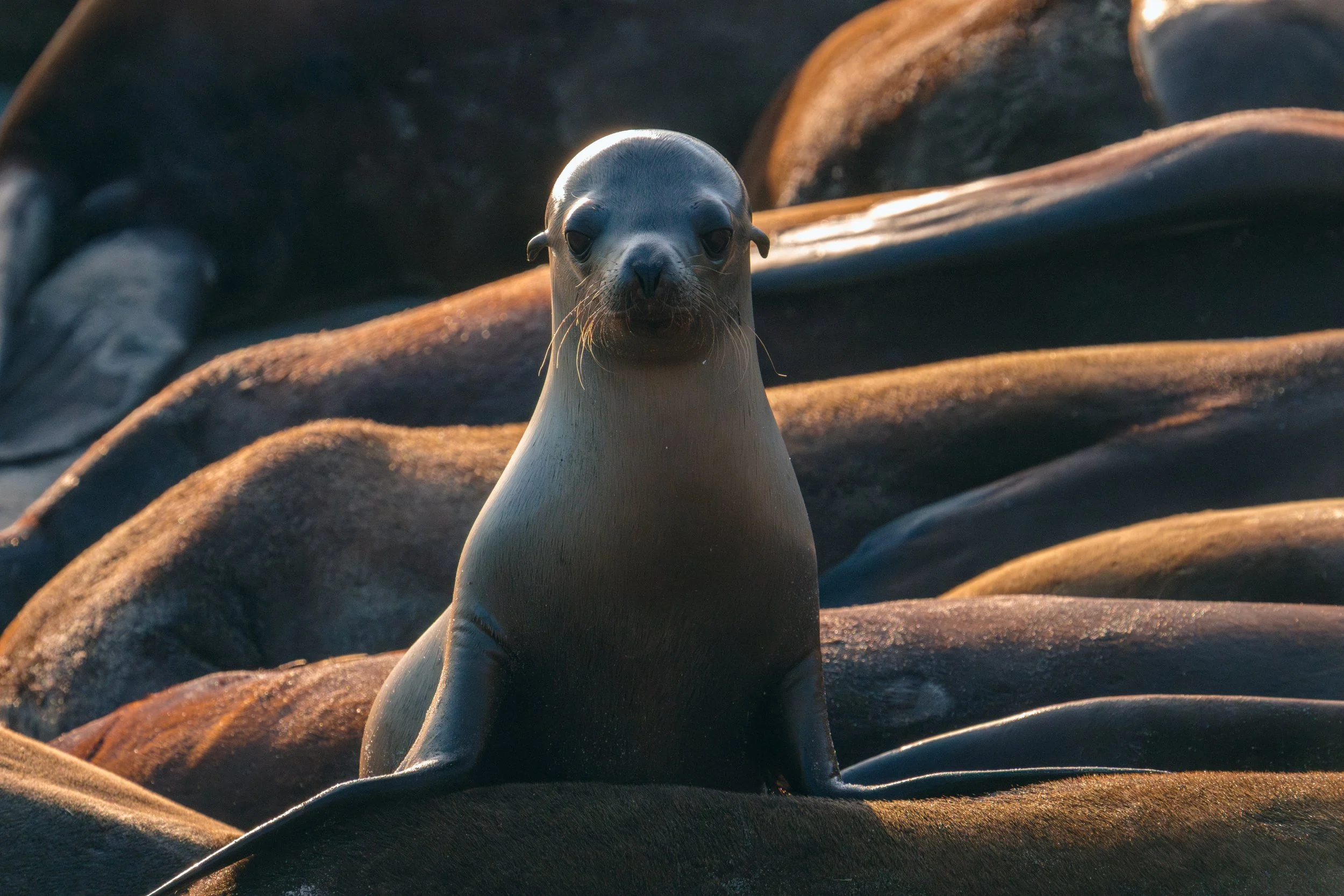
The animals themselves look like they're shedding old rugs. Whole panels of fur lift away from the new coat underneath, still attached along one edge, curling back where they've dried out. If you have ever peeled a layer of dried Elmer's glue off something, you already know the way this behaves, coming up in one satisfying sheet and then catching. Some of them have a tidy line across the shoulders where the old coat ends and the new one starts. Others are half and half down the face, one side sleek and gray, the other still wearing a ragged brown map of whatever's left.
This is the catastrophic molt. Northern elephant seals don't shed gradually the way most mammals do. They lose their fur along with the top layer of skin, in patches, over about four to five weeks (NOAA Fisheries; The Marine Mammal Center). Then they grow the whole thing back. New fur comes in dark gray and browns over time, and plenty of the seals wear both at once.
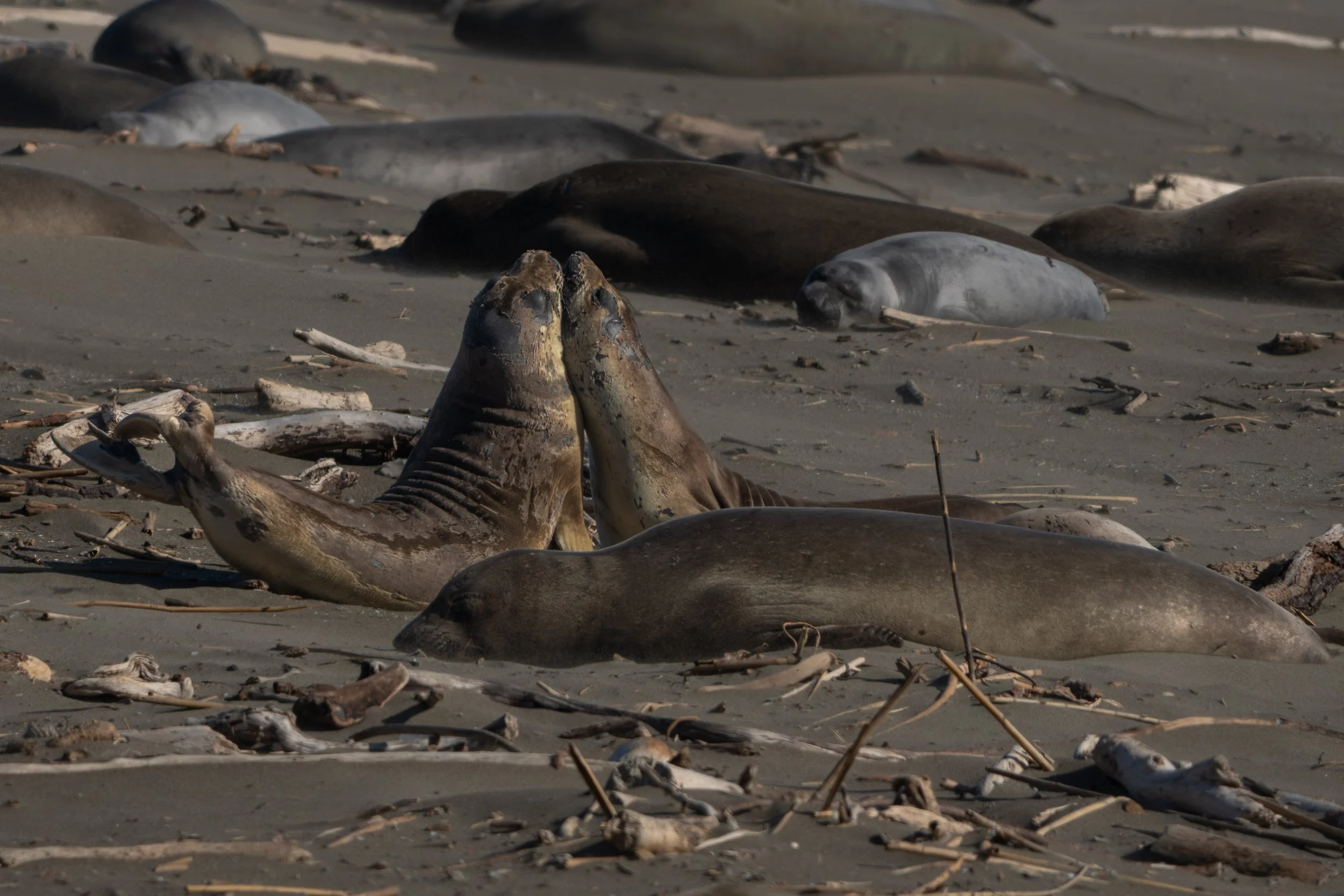
Timing matters, and I got lucky. Friends of the Elephant Seal tracks three peaks at the rookery each year: late January when most of the pups have been born, around the first of May for the height of the juvenile and adult female molt, and late October for the fall haul-out. We were there on May 7, right in the middle of the molt peak. Adult and subadult males don't come in for their turn until June through August.
Why It Looks Worse Than It Is
In the ocean, an elephant seal's body pulls blood inward, away from the skin and the flippers, keeping the core warm enough to function in cold water. Molting demands the reverse. Growing a new coat means pushing blood out to the surface of the skin to feed it, and doing that in the open ocean would chill them to the point of real danger. So they haul out and stay out, for about a month, until the coat has been fully replaced, and they fast the entire time they're ashore (National Park Service). As NOAA Fisheries puts it, molting seals look like they're in very poor shape, but this is normal. A seal with raw patches and skin lifting away from its eyes, looking like it's coming apart at the seams, is a healthy seal in the middle of a molt.
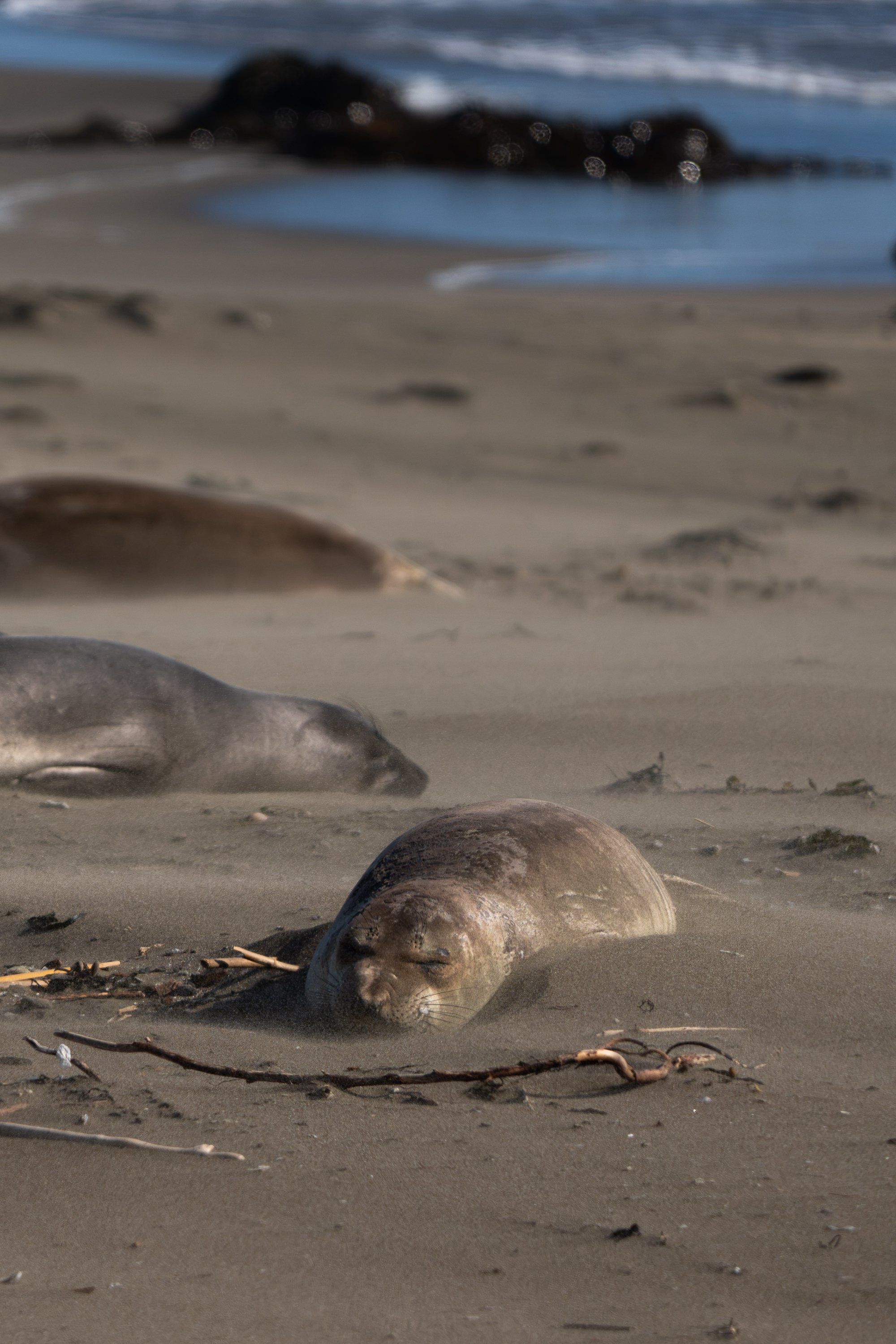
Not everyone is having an easy time of it, though. There was a juvenile out there that I'd guess was in its first molt, and it spent the whole time I watched it having a hard afternoon. It seemed green and a bit lost, and it kept trying to work its way into the pile and kept picking the wrong angle, which got it chased off by larger animals more than once. Then it would regroup and try again, before finally nestling in to a comfortable spot in the sand. It's the one I keep coming back to in the edit.
If you're at the rookery and something worries you, the docents in royal blue are there from 10 to 4 and they'll happily walk you through what you're seeing. If you witness actual harassment, State Park Rangers are at (805) 927-2068.
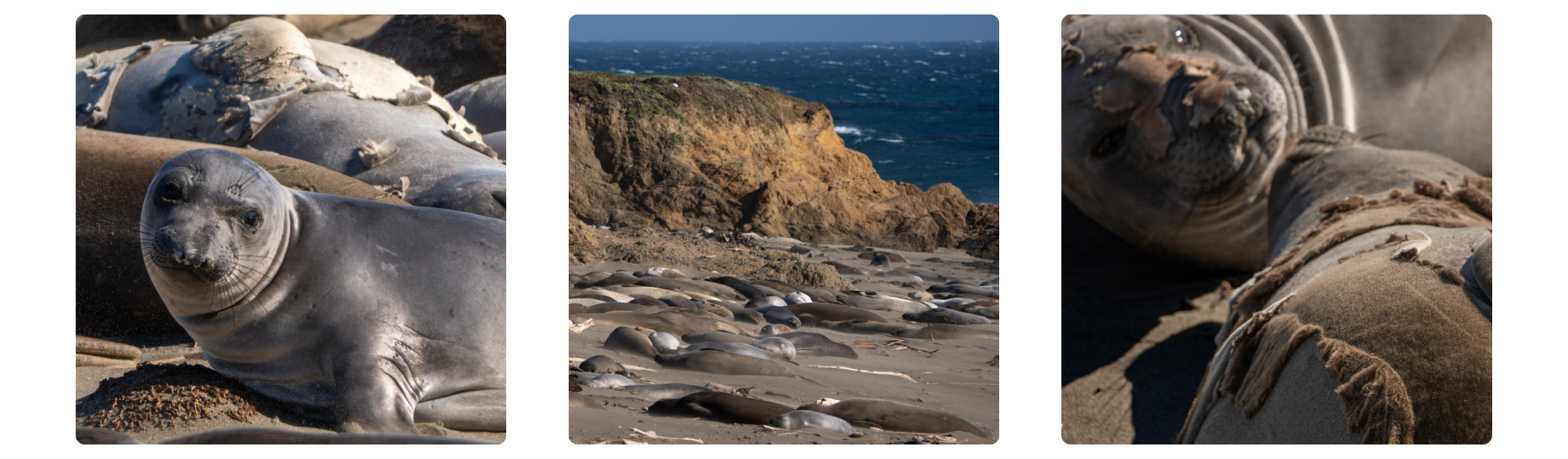
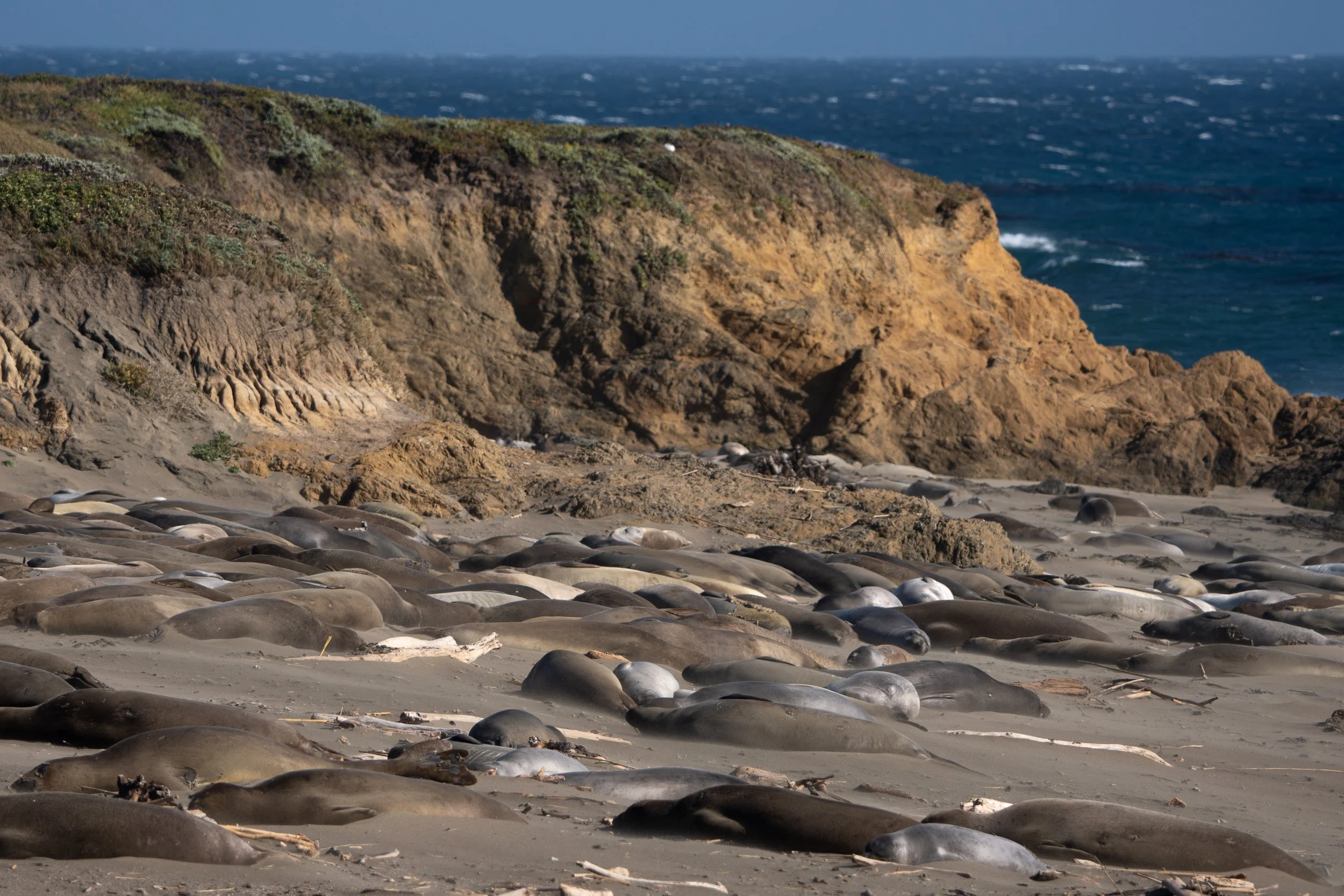
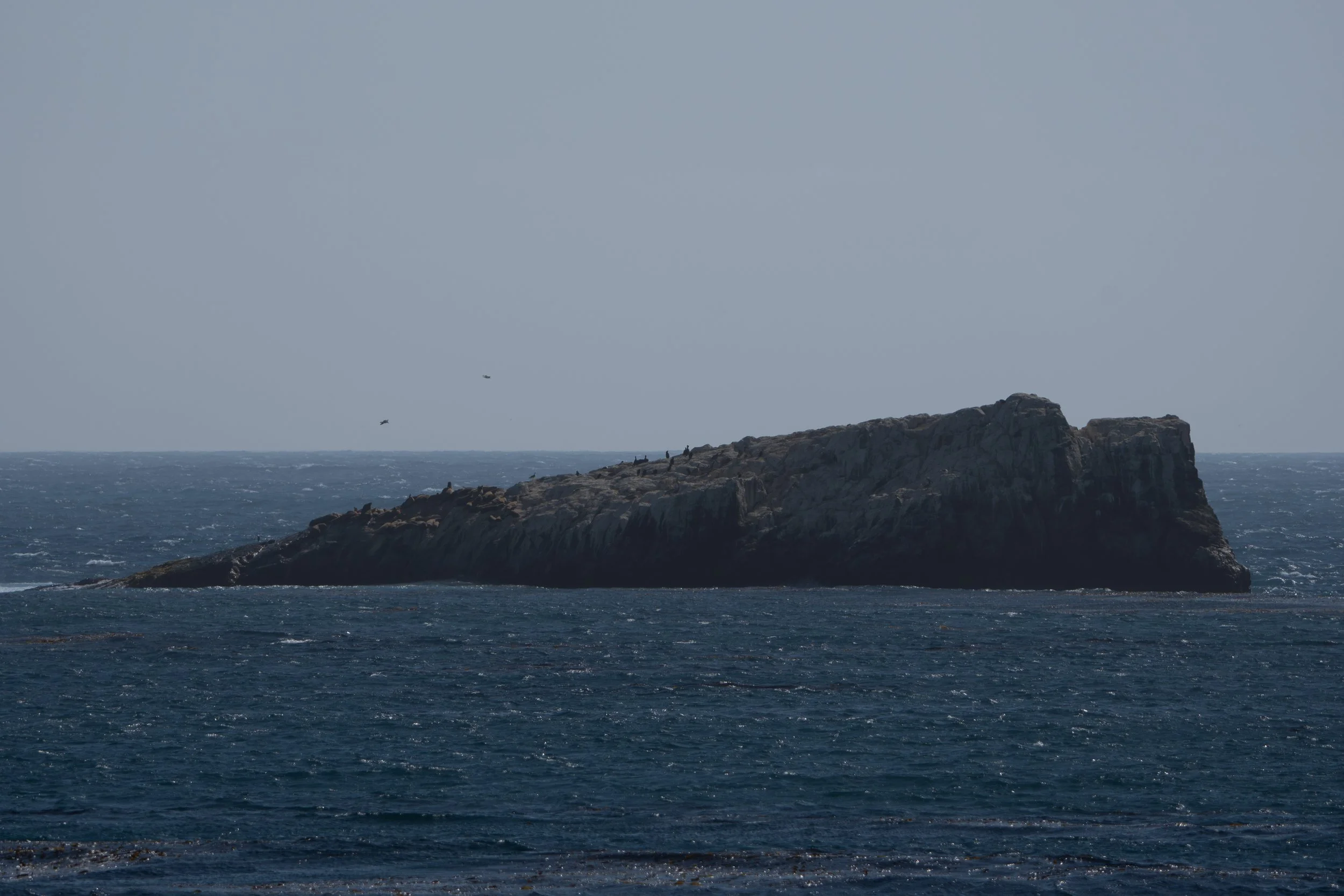
From left to right: a northern elephant seal with a smooth gray coat resting among molting animals, the colony spread across the sand below the bluff at Piedras Blancas, and a seal with sheets of old fur curling back from its face and shoulder.
Getting the Shot, and Not Getting in the Way
I shot this gallery with a rented Sony FE 400-800mm, which I'd been wanting to try, and I'm now trying to figure out how to buy one. I never once reached for the teleconverter. The extra light coming through at the long end made a real difference on a beach where I had no control over the time of day and was working with harsh sun and hard shadows. It's next on the list. That reach is also the whole point. Every frame in this gallery came from the public boardwalk with a telephoto, which is how I work everywhere.
One practical thing people miss: the parking lot sits in the middle, with boardwalks running both north and south from it. Those are two separate beaches with two separate groups of animals, and plenty of visitors do one side and head back to the car. Do both. I went back and forth across both all afternoon following where the light was landing, and what's hauled out on each side can be very different.
None of this access exists without Friends of the Elephant Seal. They run the docent program, the visitor center, the live cams, and the education that keeps roughly a million annual visitors and thousands of seals safely apart on the same stretch of coast. If these photos did anything for you, I’d love for you to share your support with them.
What's Next
The sea otter census from Rancho Marino is up next, which will be a longer, more casual piece on where I’ve been over the last few months. I also still owe you Gingerbread, the first pup of last season, who has been waiting patiently in my queue since December - alongside a handful of other collections. In the meantime, if you want to see what this same beach looks like in October, the golden hour post from last fall is here.

Gallery
All photos on this page have been downresed for faster web loading. You can click on any image to open the lightbox for an expanded view. Full-resolution files are available for licensed archival or professional use; please contact me for a rate sheet and access.

Ethical Documentation: Each image in this gallery was documented following our Admire from Afar ethical wildlife photography methodology. By utilizing professional telephoto lenses and maintaining a respectful distance, we ensure that every animal remains undisturbed and unaware of our presence. We never use baiting or interference; these visuals are a genuine, non-intrusive record of natural behavior.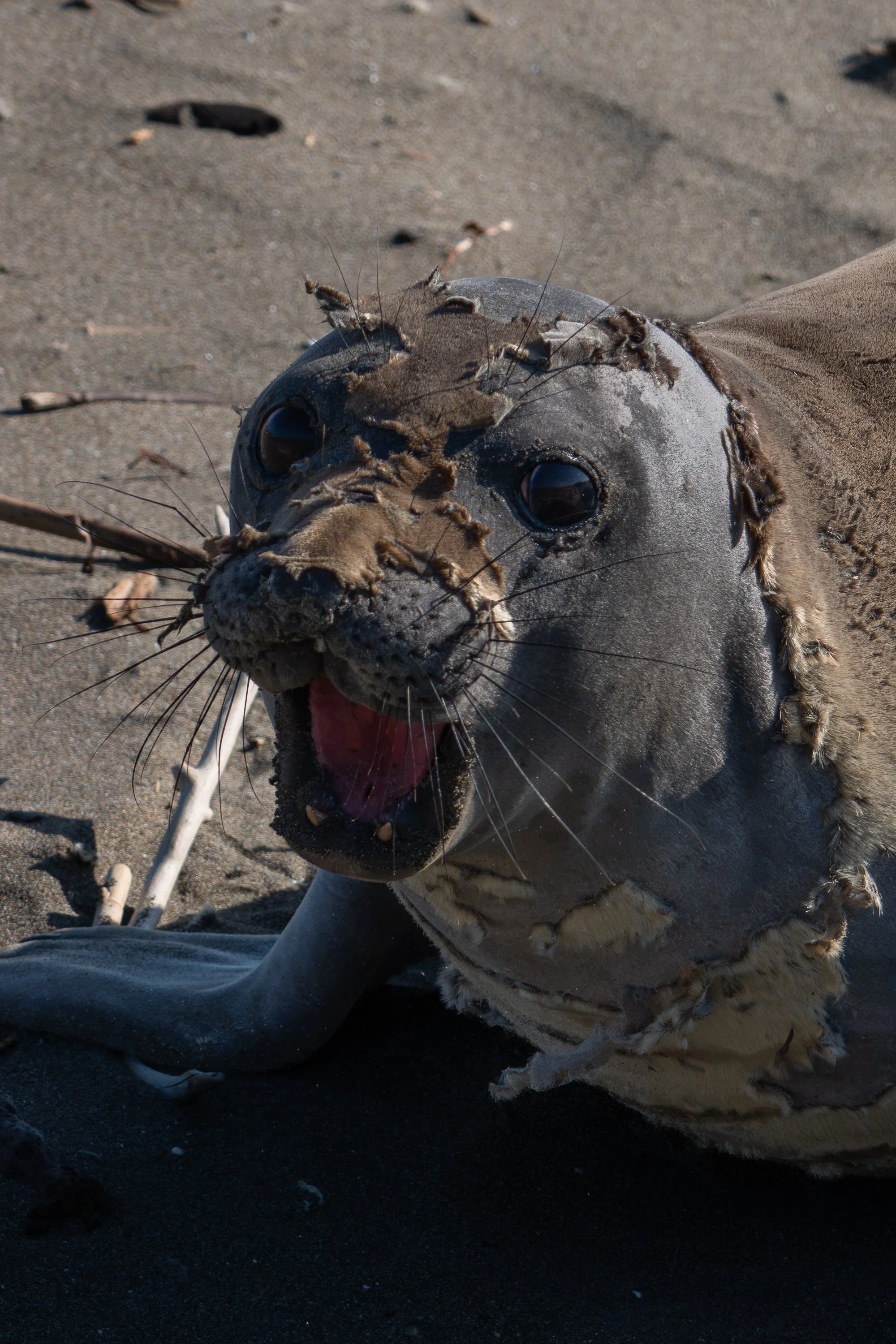


This year's Sea Otter Awareness Week runs September 20 to 26, and this post has the full lineup of events and viewing stations, from California to Oregon. It closes with my favorite images from the collection I donated to the week's organizers.