Beyond Punch the Monkey: Responsible Wildlife Content Consumption
Documenting the places where people and wildlife meet.
Learn About Salt + Noelle’s Ethics • February 28th, 2026
Before I Hit Play
You've probably seen the video by now. A seven-month-old Japanese macaque named Punch, clutching a stuffed orangutan like a lifeline, trying to find his place inside a troop of roughly 60 monkeys at Ichikawa City Zoo in Chiba Prefecture, Japan. The internet did what the internet does when a piece of content goes viral. Millions of views. Multiple press segments. The company that manufactured the plush toy hand-delivered 33 more of them to the zoo. #HangInTherePunch trended globally.
I didn't watch the videos.
I'd heard about Punch early on, the way most of us hear about viral animal stories now: fragments across platforms, screenshots in group chats, a few headlines. But the first thing I noticed wasn't the stuffed toy or the integration drama. It was the enclosure. Something about it looked off, and I wasn't going to engage with the content until I understood what I was actually looking at.
So I sat with it. Then I did the research… and now I'm a little upset.
For context: I don't typically document animals in captivity, and I don't visit facilities that house captive wildlife unless I know that the animals either cannot survive in the wild or are being actively rehabilitated for release. A harbor seal that's completely blind, for example, can't go back to the ocean. It deserves responsible, lifetime care from a facility equipped to provide it. The patients at the Marine Mammal Center in Sausalito are a different situation entirely. Every animal there is being stabilized, treated, and prepared for release back to the wild. If the animal can go home, the goal is to get it home. If it can't, the next steps are evaluated on a case-by-case basis by the professionals responsible for its care. That's the standard.
That's the lens I was already looking through when Punch showed up in my feed. And it's why the enclosure caught my eye before the stuffed toy did.
The Room He's In
Born Free USA, a wildlife advocacy organization that operates one of the largest primate sanctuaries in North America, published a detailed assessment of Punch's enclosure in late February. They described the facility as a largely concrete structure with limited natural elements for the 56 macaques living inside it. Multiple monkeys across the troop are exhibiting hair loss. The zoo itself acknowledged this in a public statement on February 25th, noting that three staff members have been working on improvement strategies since June 2025.
I want to be fair here. The zoo also stated that there are four back rooms behind the enclosure that are accessible to all the monkeys at all times, and that Punch uses these spaces to retreat when he needs to. They noted that trees planted for environmental enrichment are actively used by the younger macaques. They emphasized that animal welfare is their top priority and that radical changes to the environment during Punch's integration could destabilize the group and lead to bullying.
But here's what I keep coming back to. According to the Wisconsin National Primate Research Center's species profile on Japanese macaques, wild troops average about 41 animals and range across roughly 1.4 square miles of forest. Regional field studies put those numbers even higher. These are animals that live in deciduous and evergreen forests across three of Japan's four main islands. They teach each other how to wash food. They bathe in hot springs.Their social structure runs through the mothers, with daughters inheriting their mother's rank.
Sixty monkeys sharing a concrete mountain with four back rooms and some planted trees is not that. Even with the best intentions, even with staff working hard, there's a gap between what this species needs and what this facility provides. There's video of Punch clinging to a doorway in the rain. The zoo says four back rooms are available to all 60 animals. But access and acceptance aren't the same thing.
And then there's the audience. Visitor photos from the zoo show crowds packed three-deep against the railing on nearly every visible side of the enclosure, phones raised, during peak days that drew thousands of people. That's a seven-month-old, already navigating a troop of 60 without a mother, inside a concrete pit, surrounded on three sides by thousands of strangers. Japanese macaques are not adapted to that kind of sustained human pressure. Neither is any animal.
None of this requires a biology degree to see. It just requires looking.
Where All That Love Went
Here's the part that really gets me. Punch's story generated an enormous wave of attention. The zoo's daily traffic surged to roughly six times its typical average. Travel outlets published guides on how to visit, complete with flight recommendations from LAX. The stuffed toy sold out in multiple countries, with resale prices climbing past $350. A formal global advertising campaign has been launched around it.
So where did all of that attention, energy, and money actually land?
It went to the zoo. It went to brand equity for the manufacturer of the stuffed toy. It went to social media platforms generating ad revenue from engagement. It went to travel content sites running visit guides.
I'm sure some portion of that wave did reach responsible organizations. Born Free USA published a thoughtful piece on Punch with a donation link to their sanctuary. Individual donors who dug deeper probably found their way to legitimate conservation work. But the overwhelming current of attention and revenue flowed to the entities that were already benefiting from the situation, not to the ones working to change it.
Gena Bentall, the founder and senior scientist of Sea Otter Savvy, has identified the pattern that I keep returning to. In an essay called "Our Consumption of Wildness," she describes what happens when viral wildlife content meets an audience whose primary experience of animals has been through screens. She calls it "a viral torrent of naivete cloaked as affection." It's one of the most precise descriptions I've read of the gap between how we feel about wildlife content and what that content actually does.
She's watched the cycle play out firsthand. When sea otter 841 went viral for stealing surfboards in Santa Cruz, Sea Otter Savvy's field teams documented record disturbance at every study site along the central California coast. Not just Santa Cruz. Everywhere. The story generated curiosity, the curiosity generated proximity, and the animal's actual welfare disappeared inside the loop.
That's the disturbance side. The trade side tells its own story.
Research backs this up at a systemic level, too. A 2025 study published in Conservation Science and Practice (Fujihara et al.) used DNA forensics to trace the origins of captive otters in Japanese animal cafés and customs seizures. Seventy-five percent of them were traced to southern Thailand through what the researchers concluded was likely illegal trade. No legal imports from Thailand have been recorded since 1988. The study identified social media as the primary demand driver. This type of content didn't protect otters. It created a market for them.
Punch's story follows the same current. Content drives engagement. Engagement drives visitors. Visitors drive revenue. Without observation and action, the conditions stay the same.
Other Systems Exist
I'm not writing this to condemn Ichikawa City Zoo. I'm writing this because other models exist for this exact species, and the Punch conversation has barely acknowledged them.
Born Free USA Primate Sanctuary in Dilley, Texas sits on 175 acres and houses over 600 primates, including Japanese macaques descended from an original troop relocated from Kyoto in 1972. These macaques live in multi-acre free-ranging enclosures with vegetation, trees, and water access. They choose their own companions. They forage through actual plants. They sleep in actual trees. The sanctuary is GFAS-accredited, holds a 100% rating on Charity Navigator, and is not open to the public specifically to avoid causing stress to residents.
I want to be clear: Born Free USA is a sanctuary, not a rehabilitation facility. These animals are not being prepared for wild release. They're rescued from roadside zoos, the pet trade, and research labs, and they receive lifetime care in the best conditions humans can provide for animals that can never go home. It is, by a wide margin, better than what Punch has. But it's still captivity. The fact that the best-case scenario for a captive Japanese macaque is a 175-acre Texas ranch instead of a Japanese forest is part of the problem this piece is trying to name.
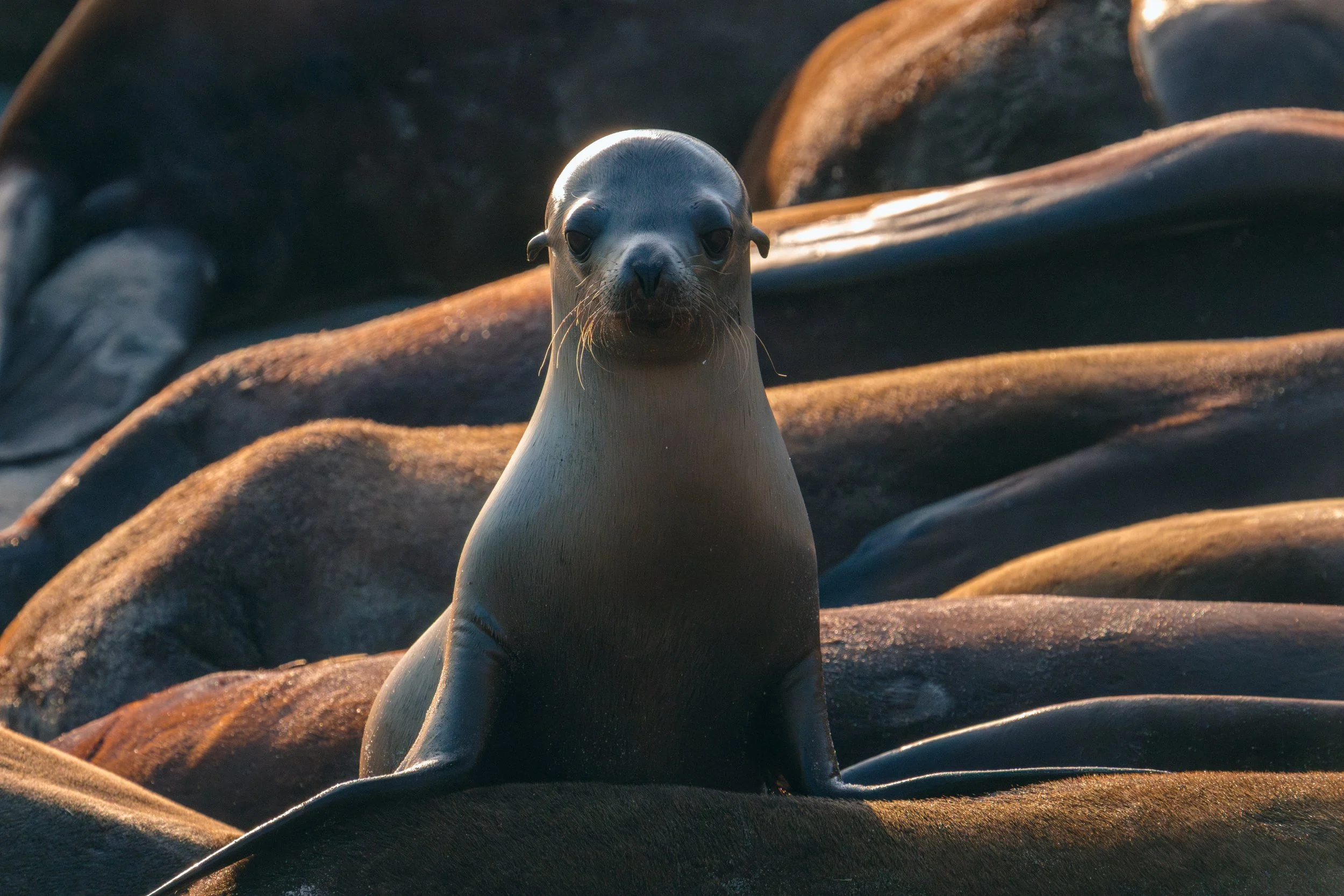
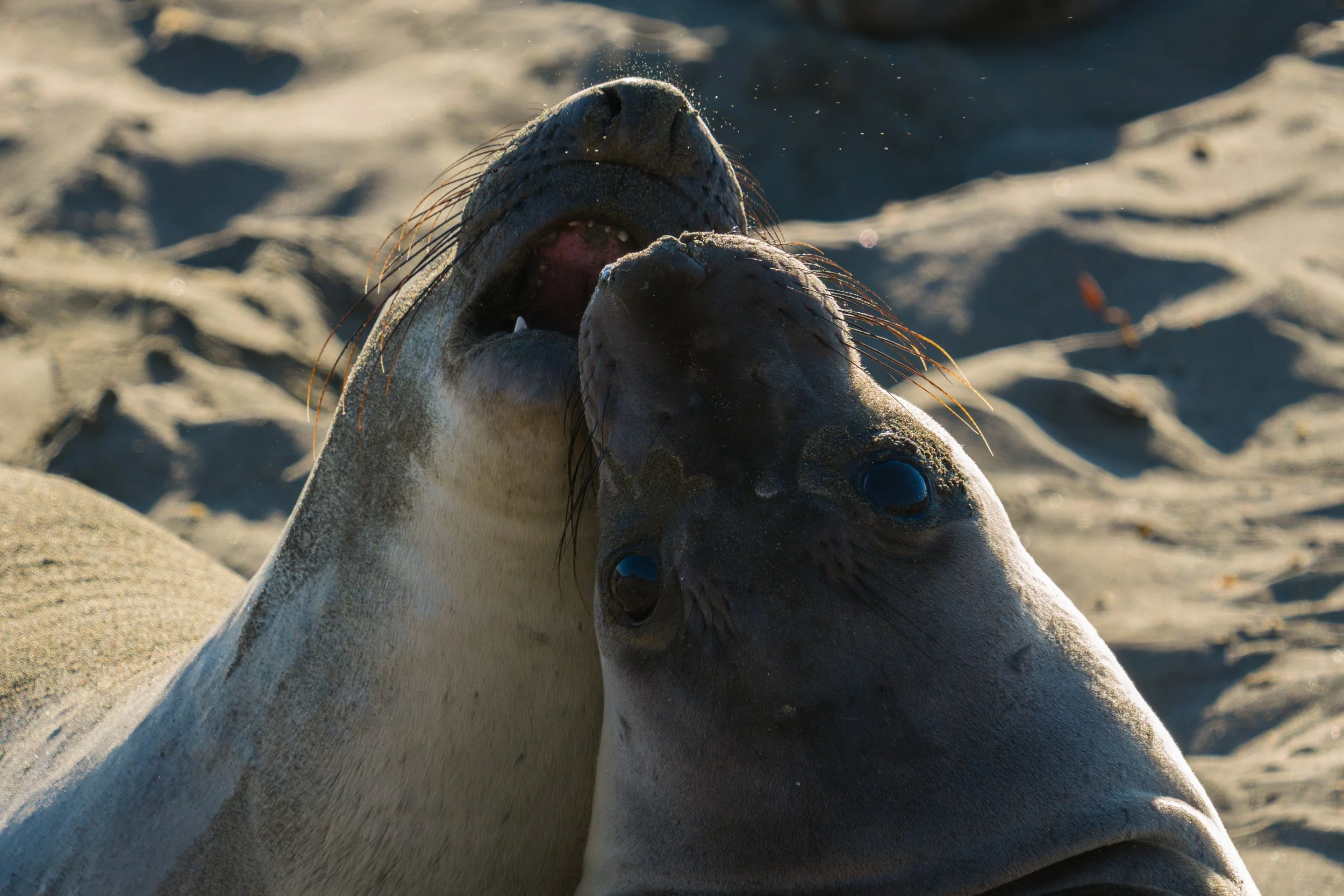
The Marine Mammal Center in Sausalito, California starts from a premise I believe in deeply: if the animal can be returned to the wild, you do everything in your power to make that happen. The world's largest marine mammal hospital has rescued and rehabilitated over 24,000 animals since 1975. Their facility is open to the public. You can watch the staff and volunteers providing care to real patients being actively prepared for release. You can attend releases and watch a rehabilitated sea lion or elephant seal return to the ocean. The animals in that building are not entertainment. They're patients. And the public gets to witness what responsible stewardship looks like in practice.
That model exists. It works. It doesn't need a viral moment to justify itself.
The GoFundMe Problem
This is the part I actually want to talk about, because it applies way beyond Punch.
When an animal story goes viral, money follows. And it follows the attention, not necessarily the need. A campaign raises $20,000 in its first 48 hours, blows past its goal, and keeps climbing to $200,000 while the organizations doing the daily, unglamorous, structurally sound work of rehabilitation and sanctuary care sit at 30% funded. Their phone lines are staffed by volunteers. Their operating budgets depend on a handful of recurring donors who never went viral.
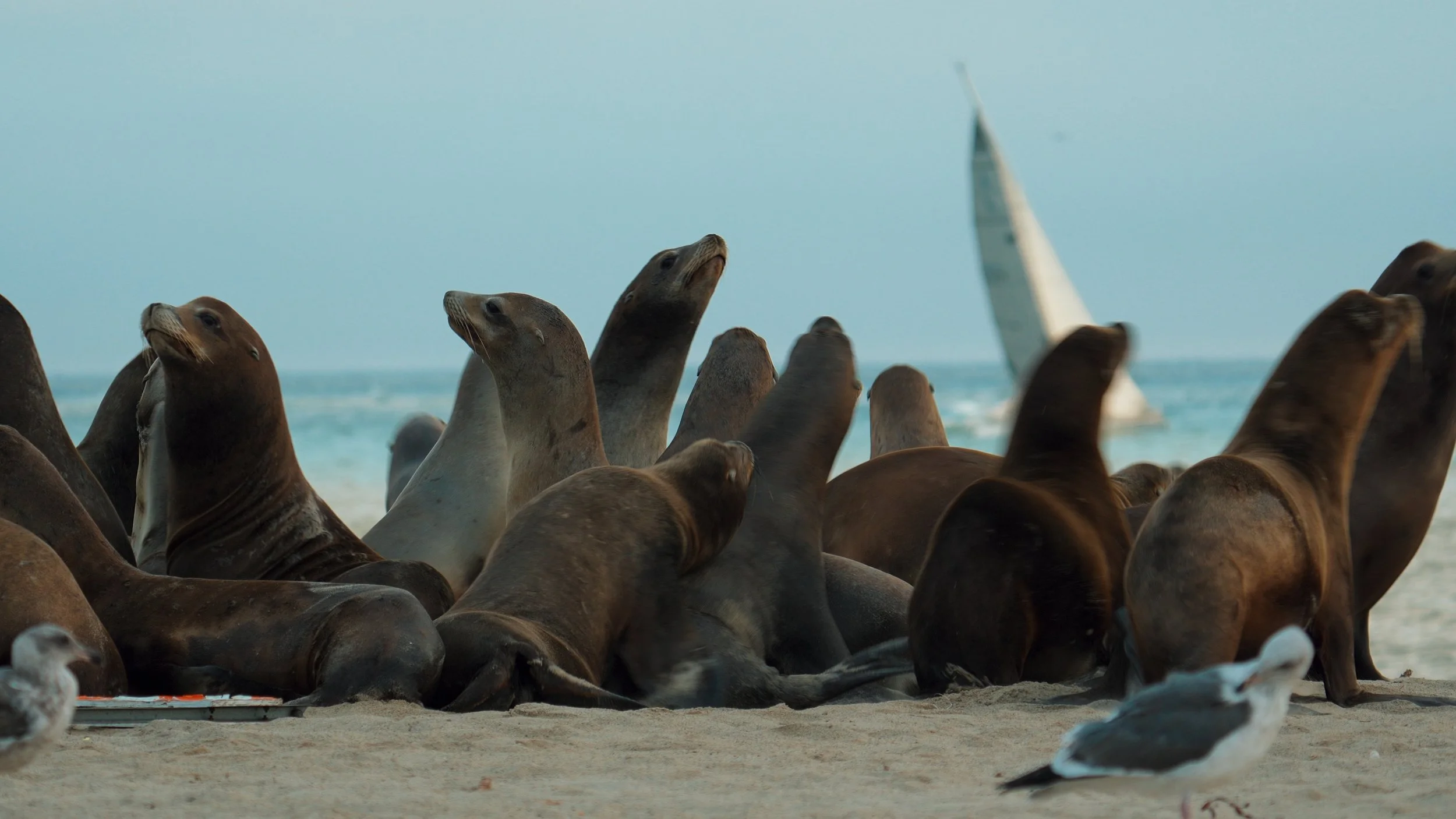
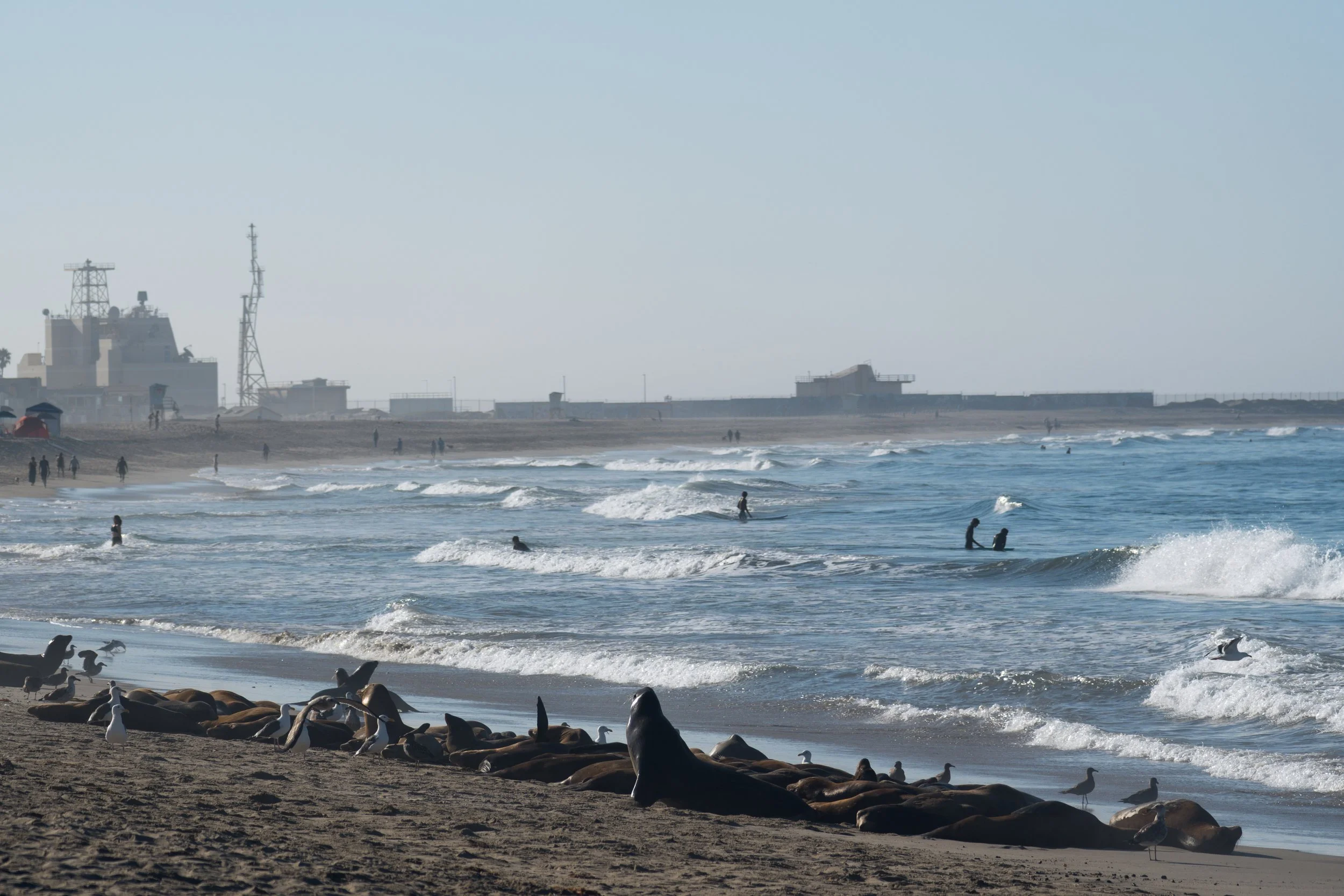
I've seen this gap in my own community. When we had two sick sea lion pups on the beach at Channel Islands Harbor in January, the local rescue network was red-lined. Rescues were handling hundreds of calls a day across miles of coastline. The hotline went down. Mailboxes were full. Michael and I stood on the sand for hours acting as a human barrier between the pups and weekend crowds while we worked back-channel triage calls to get someone there.
The organizations doing that work don't go viral. Their stories aren't built for algorithms. But they're the ones keeping animals alive.
So here's my ask, and it's not complicated. Before you donate to the campaign that's already exceeded its goal by ten times, take five minutes to look for the one that hasn't met it yet. Find the sanctuary that's been housing primates for decades on a shoestring. Find the wildlife care network in your region that's running on volunteer power and duct tape. Find the research program that's been rebuilding wild populations for 20 years with almost no public attention.
And before you like, share, or comment, take a beat. Look at what you're actually looking at. Ask whether the content you're about to amplify serves the animal or the system that created the situation. Your engagement is not neutral. Every view, every share, every comment is a vote for more of the same. In a world that isn't built to prioritize animal welfare, the least we can do is be deliberate about where we point our attention.
Why I'm Writing This
I run a conservation photography studio out of Channel Islands Harbor. I document marine mammals, coastal birds, and the ecosystem we share with them. I recently completed my CAWS (Community Active Wildlife Stewards) certification through Sea Otter Savvy, a credential built on the premise that how we observe and share wildlife content has measurable consequences for the animals.
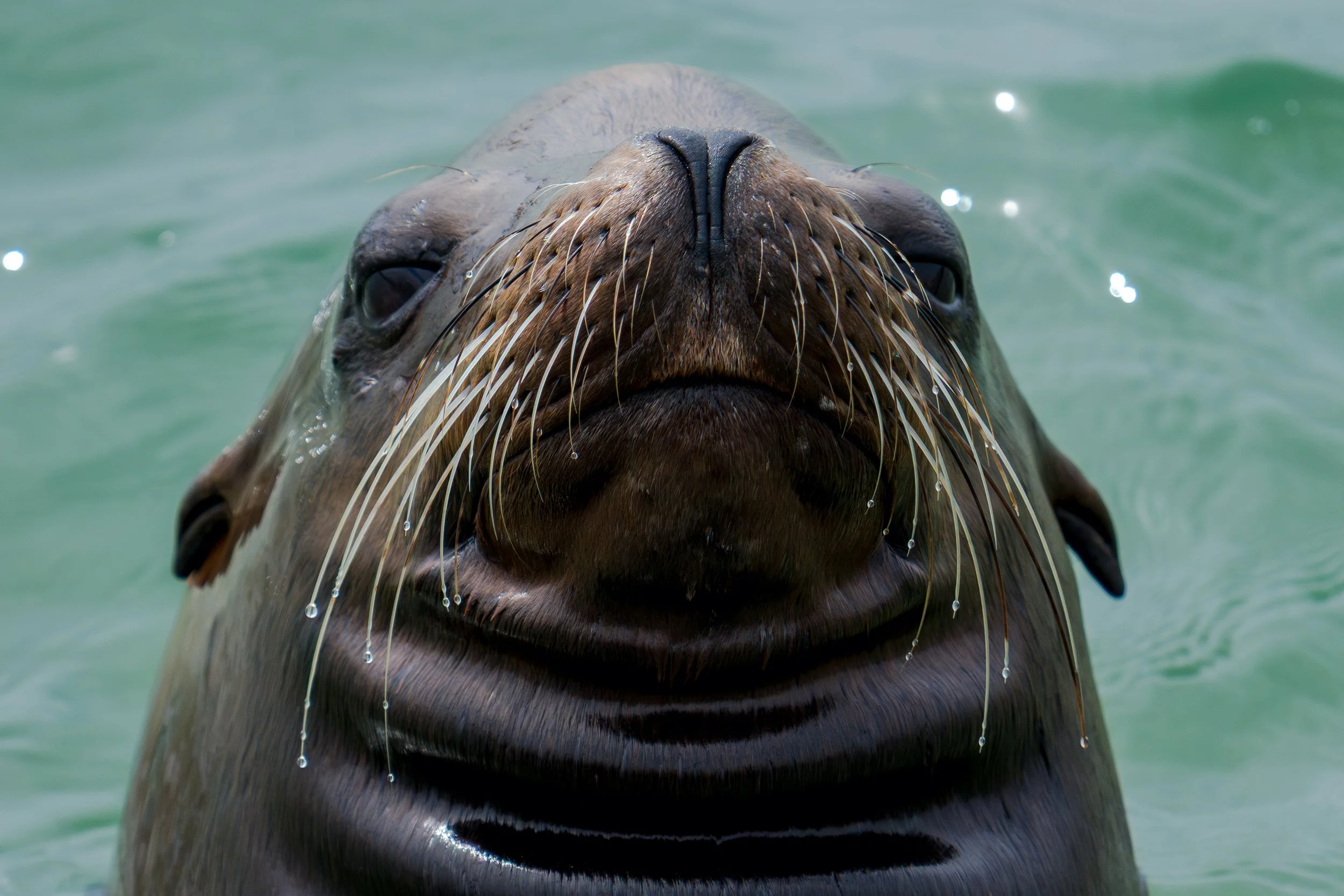
My methodology is called Admire from Afar. Long lenses, distance, zero interference. I produce robust photo essays instead of single viral shots because context matters more than spectacle.
I'm not writing this as an expert on Japanese macaques or zoo policy. I'm writing it as someone who watches wildlife every day and thinks a lot about the gap between how content makes us feel and what it actually funds. Punch's story made millions of people care about an animal. That's not nothing. But caring isn't the finish line. It's the starting point for a harder set of questions: Does your attention help the animal, or does it help the system that created the situation? Is the organization you're supporting working toward release, sanctuary, or spectacle? And are the ones doing the hardest work getting any of the resources they need?
You don't have to stop caring about Punch. You just have to keep looking after the feeling fades.
Where to Look
These organizations rescue, rehabilitate, research, and release. Some you can visit in person, others you can watch from home. All of them could use your support.
Sea Otter Savvy · Reducing human disturbance to wild sea otters through science, education, and community stewardship.
Born Free USA Primate Sanctuary · Permanent sanctuary for 600+ primates rescued from the pet trade and entertainment industry who can't be returned to the wild.
The Marine Mammal Center · The world's largest marine mammal hospital. 24,000+ animals rescued since 1975. Free self-guided tours in Sausalito. Livestreams patient releases at Point Reyes. Text RELEASE to 65179 for alerts. marinemammalcenter.org
Marine Mammal Care Center Los Angeles · The only marine mammal hospital in LA County. Free public visits Friday through Monday in San Pedro. Watch recovering seals and sea lions up close.
Vancouver Aquarium Marine Mammal Rescue · Canada's only marine mammal rehab facility. Rescues, rehabilitates, and releases seals, sea lions, and sea otters.
Wildlife Center of Virginia · A teaching hospital for native wildlife with live Critter Cams showing patients in recovery. Over 4,000 animals admitted per year.
Work With Salt + Noelle
This piece is part of my Founder's Journal, where I document what I'm learning and seeing while building Salt + Noelle from the water.
This is the kind of storytelling I do full time. I help tourism boards, research institutions, and conservation organizations turn field operations into content that builds authority and drives engagement, without compromising animal welfare. If your organization needs ongoing wildlife documentation, destination storytelling, or campaign-ready visual systems, visit my Partner With Us page to view services and rates. I'm currently open to fractional partnerships for 2026.
Visit the Blog for Immersive Photo Essays


Some links on this site are affiliate links, meaning we may earn a small commission at no extra cost to you, but we are not paid by companies for promotion - this simply helps support our work.